Kirjojen hintavertailu. Mukana 12 356 095 kirjaa ja 12 kauppaa.

Kirjahaku

Etsi kirjoja tekijän nimen, kirjan nimen tai ISBN:n perusteella.

1000 tulosta hakusanalla Louis Roy

Revelation in a Pluralistic World

Revelation in a Pluralistic World

Louis Roy

Oxford University Press
2022
sidottu
Since the Enlightenment, the churches have progressively suffered a severe loss of status because of their belief that revelation is realized only in Christianity. The suggestion that Christian revelation might be truer than other so-called revelations seems to be preposterous. This book argues that this insistence has often remained unnuanced and simplistic, with the consequence that not only unbelievers as well as believers of other religions, but even numerous Christians no longer agree with the primacy of a truth revealed in Jesus Christ. The book addresses the difficulties affecting the interpretation of belief, given modernity's concerns. The volume sets out a provisional synthesis on revelation and it makes available much expository and historical information. It correlates distinctions between pair members such as the natural and the supernatural, conceptualism and intellectualism, heart and reason, subjectivity and objectivity, limited perspective and universal viewpoint, permanence of doctrine and historicity, Christian and non-Christian claims regarding truth, revelation and divine speech, moderate and radical pluralism, Jesus absolutized and Jesus relativized. The thrust of the argument is towards an appropriation of what is best in ancient, medieval, and modern traditions on revelation. This book delineates, in an original way, a position on revelation that is at once traditional and relevant for today. It accepts many values brought to the fore by modernity and draws from exegetes, historians, philosophers, and theologians. Its inspiration comes principally from the Bible, Thomas Aquinas, John Henry Newman, and Bernard Lonergan.
Engaging the Thought of Bernard Lonergan

Engaging the Thought of Bernard Lonergan

Louis Roy

McGill-Queen's University Press
2016
sidottu
Bernard Lonergan (1904-1984) was a Canadian Jesuit philosopher, theologian, and humanist who taught in Montreal, Toronto, Rome, and Boston. His groundbreaking works Insight: A Study of Human Understanding (1957) and Method in Theology (1972) attempt to discern how knowledge is advanced in the natural sciences, the human studies, the arts, ethics, and theology. In Engaging the Thought of Bernard Lonergan, Louis Roy stresses the empirical aspect of Lonergan's cognitional theory in relation to the role of meaning, objectivity, subjectivity, and historical consciousness. Rather than introducing every facet of his philosophy and theology, Roy delivers a balanced account of Lonergan's achievements in fifteen discrete studies, delving into the implications of his cognitional theory for religious experience, theology, education, truth, classicism, relativism, and ethics. Discussing aspects of Lonergan's thought that are seldom examined, these fifteen studies represent, criticize, and develop the ideas of one of the most important thinkers of the twentieth century. Demonstrating the richness of one scholar's contributions to contemporary culture, Engaging the Thought of Bernard Lonergan presents a thoughtful analysis and a significant advance in Lonergan studies.
Engaging the Thought of Bernard Lonergan

Engaging the Thought of Bernard Lonergan

Louis Roy

McGill-Queen's University Press
2016
nidottu
Bernard Lonergan (1904-1984) was a Canadian Jesuit philosopher, theologian, and humanist who taught in Montreal, Toronto, Rome, and Boston. His groundbreaking works Insight: A Study of Human Understanding (1957) and Method in Theology (1972) attempt to discern how knowledge is advanced in the natural sciences, the human studies, the arts, ethics, and theology. In Engaging the Thought of Bernard Lonergan, Louis Roy stresses the empirical aspect of Lonergan's cognitional theory in relation to the role of meaning, objectivity, subjectivity, and historical consciousness. Rather than introducing every facet of his philosophy and theology, Roy delivers a balanced account of Lonergan's achievements in fifteen discrete studies, delving into the implications of his cognitional theory for religious experience, theology, education, truth, classicism, relativism, and ethics. Discussing aspects of Lonergan's thought that are seldom examined, these fifteen studies represent, criticize, and develop the ideas of one of the most important thinkers of the twentieth century. Demonstrating the richness of one scholar's contributions to contemporary culture, Engaging the Thought of Bernard Lonergan presents a thoughtful analysis and a significant advance in Lonergan studies.
The Three Dynamisms of Faith

The Three Dynamisms of Faith

Louis Roy

The Catholic University of America Press
2017
nidottu
Is the faith journey a matter of reflection, of emotion, or of obedience? Is there valid and convincing evidence that does enable human beings to assent to Jesus Christ and his message? What is the influence of cognitive assumptions and of affective tendencies in the art of believing? Should we distinguish faith and belief? And do we need more than one kind of conversion?Taking account of the widespread indifference, skepticism, and distrust of organized religion in the West, Louis Roy begins The Three Dynamisms of Faith with the human concern about hope and about a reachable happiness, both in our contemporary world and in the Bible. He then traces these themes in three historic giants of Christian thinking: Thomas Aquinas, John Henry Newman, and Bernard Lonergan, presenting their converging descriptions of the three dynamisms of Christian faith: the quests for meaning, for fulfillment, and for truth. Fr. Roy shows how The Three Dynamisms of Faith are lived in today’s culture and how they are systematically related; sometimes in alliance and sometimes in apparent opposition. Having led the reader to a plausible answer to the human condition in Catholicism, in his final chapter he discusses some classic issues that result: possible tensions between meaning and truth, between feelings and insight, and about the role of religious experience in becoming attuned to Christian revelation. All along, Fr. Roy describes concrete examples of problems that may occur in the journey of faith: blindness and distortions, the varieties of self-deception, the limitations of natural reason. Logical stages on the way to faith are also identified. A pastoral conclusion brings those multiple threads together; it insists on the legitimate diversity of emphases in people’s journeys, and it proposes a balance between the rich strengths available in persons and groups.
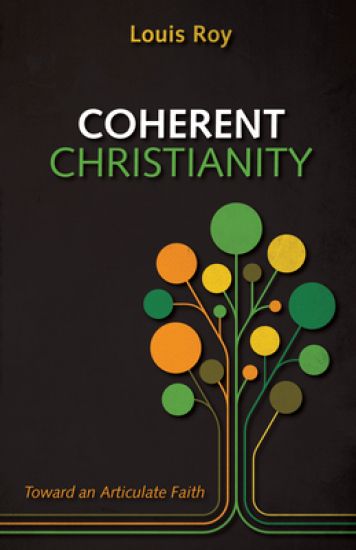
Coherent Christianity

Coherent Christianity

Louis Roy

Cascade Books
2018
sidottu
Throughout this book, Louis Roy illustrates his conviction that Christianity consists in the most profound experience to which human beings are invited by God. This experience involves meaning and truth, hope and love, suffering and joy, solidarity and critique. It is a space of freedom, where diverse persons seek the light and make their decisions, interacting with the intellectual and affective resources of their culture. Faith is understood as a personal and communal adventure--a sequence of real life experiences. The book proposes an articulate and coherent vision of the Christian faith. It surveys the complementary dimensions of Christian experience. It points to various paths, traveled by different people. It offers an actualization for our time, that is, a road map that is at the same time flexible and in keeping with truth. It engages in a dialogue with psychology and with non-Christian views, for example on meditation and on reincarnation. The book is addressed to a large audience of educated readers, who are likely to be very interested in its biblical, philosophical, psychological, sociological, interreligious, and pastoral components. Its originality consists in bringing together the interactions between several disciplines, in a practical way. ""This book is written by a scholar who has a pastoral heart. Louis Roy writes with a clear purpose in mind. As a theologian, Roy will introduce the reader to the intellectual, psychological, moral, and religious dynamics at work in the human experience, yet with a clear vision of hope. Thinking 'nones' Yes "" --Carla Mae Streeter, Professor Emerita, Aquinas Institute of Theology, Saint Louis, Missouri ""Louis Roy is one of our time's most prolific and respected experts on religious experience. Drawing from the psychology, philosophy, and theology of Jean-Luc Hetu, Karlfried Graf Dürckheim, and, especially, Bernard Lonergan, Coherent Christianity invites readers on an 'adventure' that begins with an awareness of their everyday encounters with the transcendent and moves to relate the power and joy of those experiences to all areas of their lives. I highly recommend this beautiful book to those seeking to integrate their relationship with God with their relationships with others and the world."" --Mark Miller, Associate Professor, University of San Francisco ""To be a person of faith and to ponder questions and doubts with intellectual honesty: Coherent Christianity supports and guides just such a reader. For priest and theologian Louis Roy, authentic Christian living presumes desire, requires reflection and a spirit of integrity, and shapes both behavior and attitude. Insightful cultural critic and adept practitioner of religious dialog, Roy models conscientious engagement with contemporary challenges and sheds light upon the search for Christian wisdom."" --John E. Allard, Assistant Professor of Theology, Providence College Louis Roy, a Dominican friar, holds a PhD from the University of Cambridge. After teaching for twenty years at the Jesuit university of Boston College, he is now professor of theology at the Dominican University College in Ottawa. He has published books in English, French, Spanish, and Vietnamese. He is interested in intellectual, affective, and mystical approaches to God, in religious experience and revelation, in interreligious dialogue, and in the relations between Christianity and cultures.
Coherent Christianity

Coherent Christianity

Louis Roy

Cascade Books
2018
pokkari
Throughout this book, Louis Roy illustrates his conviction that Christianity consists in the most profound experience to which human beings are invited by God. This experience involves meaning and truth, hope and love, suffering and joy, solidarity and critique. It is a space of freedom, where diverse persons seek the light and make their decisions, interacting with the intellectual and affective resources of their culture. Faith is understood as a personal and communal adventure--a sequence of real life experiences. The book proposes an articulate and coherent vision of the Christian faith. It surveys the complementary dimensions of Christian experience. It points to various paths, traveled by different people. It offers an actualization for our time, that is, a road map that is at the same time flexible and in keeping with truth. It engages in a dialogue with psychology and with non-Christian views, for example on meditation and on reincarnation. The book is addressed to a large audience of educated readers, who are likely to be very interested in its biblical, philosophical, psychological, sociological, interreligious, and pastoral components. Its originality consists in bringing together the interactions between several disciplines, in a practical way. ""This book is written by a scholar who has a pastoral heart. Louis Roy writes with a clear purpose in mind. As a theologian, Roy will introduce the reader to the intellectual, psychological, moral, and religious dynamics at work in the human experience, yet with a clear vision of hope. Thinking 'nones' Yes "" --Carla Mae Streeter, Professor Emerita, Aquinas Institute of Theology, Saint Louis, Missouri ""Louis Roy is one of our time's most prolific and respected experts on religious experience. Drawing from the psychology, philosophy, and theology of Jean-Luc Hetu, Karlfried Graf Dürckheim, and, especially, Bernard Lonergan, Coherent Christianity invites readers on an 'adventure' that begins with an awareness of their everyday encounters with the transcendent and moves to relate the power and joy of those experiences to all areas of their lives. I highly recommend this beautiful book to those seeking to integrate their relationship with God with their relationships with others and the world."" --Mark Miller, Associate Professor, University of San Francisco ""To be a person of faith and to ponder questions and doubts with intellectual honesty: Coherent Christianity supports and guides just such a reader. For priest and theologian Louis Roy, authentic Christian living presumes desire, requires reflection and a spirit of integrity, and shapes both behavior and attitude. Insightful cultural critic and adept practitioner of religious dialog, Roy models conscientious engagement with contemporary challenges and sheds light upon the search for Christian wisdom."" --John E. Allard, Assistant Professor of Theology, Providence College Louis Roy, a Dominican friar, holds a PhD from the University of Cambridge. After teaching for twenty years at the Jesuit university of Boston College, he is now professor of theology at the Dominican University College in Ottawa. He has published books in English, French, Spanish, and Vietnamese. He is interested in intellectual, affective, and mystical approaches to God, in religious experience and revelation, in interreligious dialogue, and in the relations between Christianity and cultures.
Embracing Desire

Embracing Desire

Louis Roy

Wipf Stock Publishers
2019
pokkari
In this book, Louis Roy criticizes two different attitudes concerning our desires: either we are wary of our desires because of their potentially negative effects, or we try to satisfy as many of them as we can. Both attitudes focus on desires without examining the issue of desire. The solution is neither to suspect nor to multiply our various desires, but rather to intensify desire. Once desire has intensified, we can accept our desires and identify some of them as priorities for us to fulfill. We will then proceed not only with motivation but also with detachment, and therein lies the key to happiness. Any human being wishes to be granted personal value as a unique individual worthy of respect. And we long to be desired by the person or persons we desire. Moreover, because of our infinitude, we are able to wonder if an infinite being, whom we respect without reserve, can find us desirable. The author explores this basic concern and describes the relationship of mutual desire between Jesus and his first disciples. Thus, this book will appeal to educated readers interested in spirituality, psychology, literature, catechesis, and pastoral ministry. ""Embracing Desire is a probing exploration of desire and its central role in the human search for meaning, fulfillment, liberation, and love. This book will stretch the thinking of theologians and inspire creative new approaches to spiritual accompaniment."" --Patrick R. Manning, Seton Hall University ""Professor Roy has provided a readable and insightful account that enables the reader to identify and discern the positive and negative aspects of desire."" --John Dadosky, Regis College, Toronto Louis Roy, a member of the Dominican Order, formerly full professor at Boston College, teaches in Ottawa at the Dominican University College. A former visiting professor at University of San Francisco, Aquinas Institute, and Seton Hall University, he has published books in English, French, Spanish, and Vietnamese. Recent publications include Engaging the Thought of Bernard Lonergan (2016); The Three Dynamisms of Faith (2017); and Coherent Christianity (Wipf & Stock, 2018).
Embracing Desire

Embracing Desire

Louis Roy

Wipf Stock Publishers
2019
sidottu
In this book, Louis Roy criticizes two different attitudes concerning our desires: either we are wary of our desires because of their potentially negative effects, or we try to satisfy as many of them as we can. Both attitudes focus on desires without examining the issue of desire. The solution is neither to suspect nor to multiply our various desires, but rather to intensify desire. Once desire has intensified, we can accept our desires and identify some of them as priorities for us to fulfill. We will then proceed not only with motivation but also with detachment, and therein lies the key to happiness. Any human being wishes to be granted personal value as a unique individual worthy of respect. And we long to be desired by the person or persons we desire. Moreover, because of our infinitude, we are able to wonder if an infinite being, whom we respect without reserve, can find us desirable. The author explores this basic concern and describes the relationship of mutual desire between Jesus and his first disciples. Thus, this book will appeal to educated readers interested in spirituality, psychology, literature, catechesis, and pastoral ministry.
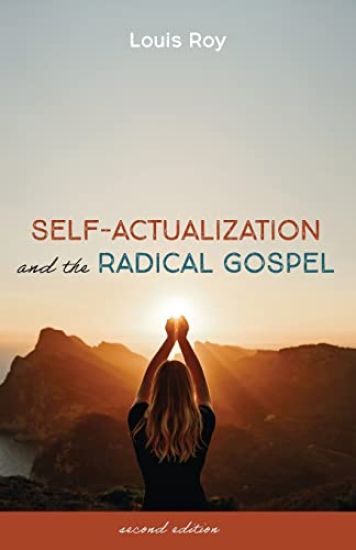
Self-Actualization and the Radical Gospel
Can today's Christians reconcile a belief in self-actualization with the extreme ethical demands of the New Testament? The author argues that they can, although not easily, and that the felt uneasiness between two concerns--self-fulfillment and self-gift--may generate a healthy tension. There is then an apparent mismatch between two views of ethics. On the one hand, psychological humanism is based on self-affirmation, acceptance of one's limitations, moderation, and the search for a quality of life in the midst of globalization. On the other hand, the radicalism of the gospel emphasizes passion (in the two senses of this word), self-transcendence towards the infinite, and generosity for God and others. Nonetheless, these two tendencies are neither incompatible nor easily reconcilable. The book uncovers both the pitfalls of self-actualization and the misleading interpretations that have disfigured the radical gospel. It highlights the developmental factors, views of human life, successes, and failures which play a considerable role in a person's journey. It brings psychological, biblical, philosophical, theological, and pastoral clarifications to bear on the issues. This book will help its readers to grasp what a psychologically informed Christian ethic can be, both intellectually and practically.
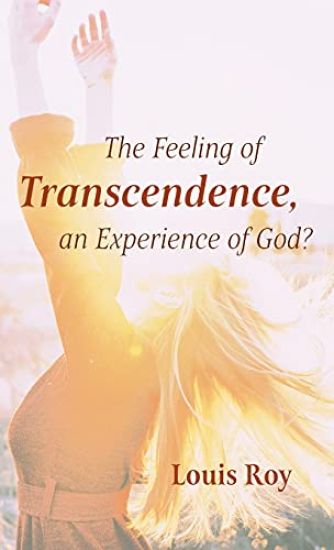
The Feeling of Transcendence, an Experience of God?
In this book, Louis Roy takes account of the fact that, in the last fifty years, numerous people in the secularized West have responded yes to surveys that asked, ""Are you aware of having had an experience during which you felt in the presence of a dimension or a reality very different from ordinary human life?"" Are such experiences mere illusions? Some thinkers, like Feuerbach and Freud, believed so. Are such experiences encounters with God? Karl Barth, a great Protestant theologian, did not think much of their worth. On this issue, psychologists and theologians are divided. Roy argues that those experiences are valid, that they possess a real potential, and that they can open their recipients to a genuine wisdom. He reports on eight narratives, spells out their constitutive elements, classifies them into four categories--aesthetic, ontological, ethical, and interpersonal--and suggests criteria to assess their concrete authenticity. Thus, this book will appeal to educated readers interested in spirituality, philosophy of religion, psychology, literature, theology, and pastoral ministry.
La conscience mystique

La conscience mystique

Louis Roy

Editions L'Harmattan
2025
pokkari
La r daction d'une partie de ce livre a b n fici d'une recherche l'Universit de Californie et d'un s jour au Japon. Partant de la conscience de soi, l'auteur propose ici une compr hension de la conscience mystique, appel e veil par les bouddhistes. Cette conscience mystique se manifeste, l' tat embryonnaire ou explicite, travers toutes les cultures, quoique, videmment, dans des cat gories diff rentes, que cet ouvrage explore en d tail, en parcourant la pens e d'auteurs aux horizons bien diff rents, notamment Ma tre Eckhart, Lonergan et Nishitani. Cet apport s'inscrit dans un dialogue interreligieux mutuellement enrichissant.