Kirjojen hintavertailu. Mukana 11 342 296 kirjaa ja 12 kauppaa.

Kirjahaku

Etsi kirjoja tekijän nimen, kirjan nimen tai ISBN:n perusteella.

1000 tulosta hakusanalla M. W. Rowe

Jeames's diary, A legend of the Rhine, and Rebecca and Rowena. By: W. M. Thackeray: William Makepeace Thackeray (18 July 1811 - 24 December 1863) was
William Makepeace Thackeray (18 July 1811 - 24 December 1863) was an English novelist of the 19th century. He is known for his satirical works, particularly Vanity Fair, a panoramic portrait of English society. BIOGRAPHY: Thackeray, an only child, was born in Calcutta, British India, where his father, Richmond Thackeray (1 September 1781 - 13 September 1815), was secretary to the Board of Revenue in the British East India Company. His mother, Anne Becher (1792-1864), was the second daughter of Harriet Becher and John Harman Becher, who was also a secretary (writer) for the East India Company. Richmond died in 1815, which caused Anne to send her son to England in 1816, while she remained in British India. The ship on which he travelled made a short stopover at St. Helena, where the imprisoned Napoleon was pointed out to him. Once in England he was educated at schools in Southampton and Chiswick, and then at Charterhouse School, where he became a close friend of John Leech. Thackeray disliked Charterhouse, and parodied it in his fiction as "Slaughterhouse". Nevertheless, Thackeray was honoured in the Charterhouse Chapel with a monument after his death. Illness in his last year there, during which he reportedly grew to his full height of six foot three, postponed his matriculation at Trinity College, Cambridge, until February 1829. citation needed]Never too keen on academic studies, Thackeray left Cambridge in 1830, but some of his earliest published writing appeared in two university periodicals, The Snob and The Gownsman. Thackeray then travelled for some time on the continent, visiting Paris and Weimar, where he met Goethe. He returned to England and began to study law at the Middle Temple, but soon gave that up. On reaching the age of 21 he came into his inheritance from his father, but he squandered much of it on gambling and on funding two unsuccessful newspapers, The National Standard and The Constitutional, for which he had hoped to write. He also lost a good part of his fortune in the collapse of two Indian banks. Forced to consider a profession to support himself, he turned first to art, which he studied in Paris, but did not pursue it, except in later years as the illustrator of some of his own novels and other writings. Thackeray's years of semi-idleness ended after he married, on 20 August 1836, Isabella Gethin Shawe (1816-1893), second daughter of Isabella Creagh Shawe and Matthew Shawe, a colonel who had died after distinguished service, primarily in India. The Thackerays had three children, all girls: Anne Isabella (1837-1919), Jane (who died at eight months old) and Harriet Marian (1840-1875), who married Sir Leslie Stephen, editor, biographer and philosopher...............
J. L. Austin

J. L. Austin

M. W. Rowe

Oxford University Press
2023
sidottu
The first biography of the philosopher who became a mastermind of Allied intelligence in World War Two. Austere, witty, and formidable, J. L. Austin (1911-1960) was the leader of Oxford Ordinary Language Philosophy and the founder of speech-act theory. This book--the first full-length biography of Austin--enhances our understanding of his dominance in 1950s Oxford, examining the significance of his famous Saturday morning seminars, and his sometimes tense relationships with Gilbert Ryle, Isaiah Berlin, A. J. Ayer, and Elizabeth Anscombe. Throwing new light on Austin's own intellectual development, it probes the strengths and weaknesses of his mature philosophy, and reconstructs his late unpublished work on sound symbolism. Austin's philosophical work remains highly influential, but much less well known is his outstanding contribution to British Intelligence in World War Two. The twelve central chapters thus investigate Austin's part in the North African campaign, the search for the V-weapons, the preparations for D-Day, the Battle of Arnhem, and the Ardennes Offensive, and show that, in the case of D-Day, he played a major role in the ultimate Allied victory. While exploring Austin's dramatic and romantic personal history, Rowe pays close attention to his harsh schooling and pre-war affair with a married Frenchwoman; his wartime marriage, bomb injury, and response to a colleague's murder; and his post-war family life, the growing influence of America, and his tragically premature death. Adding considerably to our knowledge of World War Two, and Austin's diverse and enduring influence, this biography reveals the true complexity of his character, and the full range and significance of his achievements.
Philosophy and Literature

Philosophy and Literature

M.W. Rowe

CRC Press Inc
2017
sidottu
Bringing together eight previously published essays by M. W. Rowe and a substantial new study of Larkin, this book emphasizes the profound affinities between philosophy and literature. Ranging over Plato, Shakespeare, Goethe, Arnold and Wittgenstein, the first five essays explore an anti-theoretical conception of philosophy. This sees the subject as less concerned with abstract arguments that result in theories, than with prompts intended to induce clarity of vision and psychical harmony. On this understanding, philosophy looks more like literature than logic. Conversely, the last four essays argue that literature is centrally concerned with truth and abstract thought, and that literature is therefore a more cognitive and philosophical enterprise than is commonly supposed.
Philosophy and Literature

Philosophy and Literature

M.W. Rowe

TAYLOR FRANCIS LTD
2022
nidottu
Bringing together eight previously published essays by M. W. Rowe and a substantial new study of Larkin, this book emphasizes the profound affinities between philosophy and literature. Ranging over Plato, Shakespeare, Goethe, Arnold and Wittgenstein, the first five essays explore an anti-theoretical conception of philosophy. This sees the subject as less concerned with abstract arguments that result in theories, than with prompts intended to induce clarity of vision and psychical harmony. On this understanding, philosophy looks more like literature than logic. Conversely, the last four essays argue that literature is centrally concerned with truth and abstract thought, and that literature is therefore a more cognitive and philosophical enterprise than is commonly supposed.
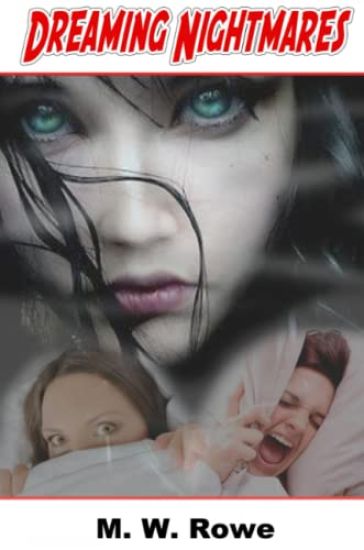
Dreaming Nightmares

Dreaming Nightmares

M W Rowe

Lulu Press Inc
2012
pokkari
Autumn and Coco both have the ability to get inside of people's heads. They are capable of invading another person's dreams whilst they are sleeping and of course alter the way that the dreams play out. Coco uses this power for evil and does all that she can to torment, torture and worry people whilst they dream. Autumn is the good force that does everything that she can to try and stop Coco from hurting people. Who will triumph? Good or evil?