Kirjojen hintavertailu. Mukana 12 391 659 kirjaa ja 12 kauppaa.

Kirjahaku

Etsi kirjoja tekijän nimen, kirjan nimen tai ISBN:n perusteella.

1000 tulosta hakusanalla Malcolm Lowry

Malcolm Lowry's La Mordida

Malcolm Lowry's La Mordida

Malcolm Lowry

University of Georgia Press
1996
sidottu
Although Malcolm Lowry (1909-1957) published only two novels-Ultramarine and Under the Volcano-in his lifetime, numerous other works, most of which have since been edited for publication, were in various stages of composition at his death. La Mordida, the longest and most significant of the manuscripts that have not been previously published, is a draft of a novel based on Lowry's visit to Mexico in 1945-46, which ended in the arrest and deportation of Lowry and his wife following a nightmarish run-in with corrupt immigration authorities. On its most immediate level, the title La Mordida-which means "the little bite," Mexican slang for the small bribe that officials are apt to demand in order to expedite matters-refers to the autobiographical protagonist's legal difficulties. In a larger sense, however, it also represents his inability to escape his past, to repay the fine, or debt, that he owes.The central narrative of La Mordida involves a descent into the abyss of self, culminating in the protagonist's symbolic rebirth at the book's end. Lowry planned to use this basic narrative pattern as the springboard for innumerable questions about such concerns as art, identity, the nature of existence, political issues, and alcoholism. Above all, La Mordida was to have been a metafictional work about an author who sees no point in living events if he cannot write about them and who is not only unable to write but suspects that he is just a character in a novel.A reading of La Mordida in the context of Lowry's aesthetic theories and psychological problems shows why he dreaded the completion of his projects to such an extent that he called success a "horrible disaster" and compared death to "the accepted manuscript of one's life." The reason, La Mordida makes clear, lies partly in the aesthetic theories that led Lowry to attempt a book that he prophetically called "something never dreamed of before, a work of art so beyond conception it could not be written."Patrick A. McCarthy's edition of La Mordida is based on materials held in the Malcolm Lowry Archive at the University of British Columbia. Its publication provides essential evidence for a balanced assessment of Lowry's creative processes and his achievement as a writer.
Malcolm Lowry's La Mordida

Malcolm Lowry's La Mordida

Malcolm Lowry

UNIVERSITY OF GEORGIA PRESS
2023
pokkari
Although Malcolm Lowry (1909-1957) published only two novels—Ultramarine and Under the Volcano—in his lifetime, numerous other works, most of which have since been edited for publication, were in various stages of composition at his death. La Mordida, the longest and most significant of the manuscripts that have not been previously published, is a draft of a novel based on Lowry's visit to Mexico in 1945–46, which ended in the arrest and deportation of Lowry and his wife following a nightmarish run-in with corrupt immigration authorities. On its most immediate level, the title La Mordida—which means "the little bite," Mexican slang for the small bribe that officials are apt to demand in order to expedite matters—refers to the autobiographical protagonist's legal difficulties. In a larger sense, however, it also represents his inability to escape his past, to repay the fine, or debt, that he owes.The central narrative of La Mordida involves a descent into the abyss of self, culminating in the protagonist's symbolic rebirth at the book's end. Lowry planned to use this basic narrative pattern as the springboard for innumerable questions about such concerns as art, identity, the nature of existence, political issues, and alcoholism. Above all, La Mordida was to have been a metafictional work about an author who sees no point in living events if he cannot write about them and who is not only unable to write but suspects that he is just a character in a novel.A reading of La Mordida in the context of Lowry's aesthetic theories and psychological problems shows why he dreaded the completion of his projects to such an extent that he called success a "horrible disaster" and compared death to "the accepted manuscript of one's life." The reason, La Mordida makes clear, lies partly in the aesthetic theories that led Lowry to attempt a book that he prophetically called "something never dreamed of before, a work of art so beyond conception it could not be written."Patrick A. McCarthy's edition of La Mordida is based on materials held in the Malcolm Lowry Archive at the University of British Columbia. Its publication provides essential evidence for a balanced assessment of Lowry's creative processes and his achievement as a writer.
Selected Poems of Malcolm Lowry

Selected Poems of Malcolm Lowry

Malcolm Lowry

City Lights Books
2017
pokkari
While famous for his celebrated novel, Under the Volcano, Malcolm Lowry always considered himself a poet. First published in 1962 and long out of print, Selected Poems of Malcolm Lowry is the only comprehensive selection of his poetry to be published, and it remains the perfect introduction to his extensive poetic canon. Edited by Lowry's good friend, renowned Canadian poet Earle Birney, with the assistance of his widow, Margerie Lowry, the selection includes extraordinary poems written during Lowry's stay in Mexico, many of which are closely related to his novel. This new edition includes a "Publisher's Note" from Lawrence Ferlinghetti. "These poems would be worth keeping in print, if for no other reason, for their illuminations of Under the Volcano: 'See mind's petal / torn from a good tree, but where shall it settle / But in the last darkness and at the end?' Sometimes, as the images of "For Under the Volcano," they become 'palm-of-the-hand' versions of that masterpiece. Lowry is a poet of struggle--with life, and with the creative process. Here are his struggle's fruits: guilt, alcoholism, hopeless, self-deriding quest for salvation, which seems to be love, and, above all, self-destruction--but always accomplished with self-knowledge, enriched (in order to further torment itself) with compassion for all the beings that the poet, and us with him, are failing. His words are always sad and often beautiful."-William T. Vollman
Malcolm Lowry

Malcolm Lowry

Ronald Binns

TAYLOR FRANCIS LTD
2024
sidottu
Malcolm Lowry’s Under the Volcano is now recognized as one of the major novels of the 20th Century, whose breadth and experimental prose have influenced a wide range of contemporary writers. This study, originally published in 1984, considers the significance of the autobiographical elements in Lowry’s writing, in the context of his developing concern with fictionality and the romantic sensibility. It gives special attention to his exotic many-sided masterpiece and discusses the ways in which the narrative’s reflexive games-playing elements affect the representation of character, history, myth and magic. It surveys Lowry’s late experimental novels and stories and considers how their metafictional aspects anticipate some key interests of contemporary writing.
Malcolm Lowry

Malcolm Lowry

Ronald Binns

TAYLOR FRANCIS LTD
2026
nidottu
Malcolm Lowry’s Under the Volcano is now recognized as one of the major novels of the 20th Century, whose breadth and experimental prose have influenced a wide range of contemporary writers. This study, originally published in 1984, considers the significance of the autobiographical elements in Lowry’s writing, in the context of his developing concern with fictionality and the romantic sensibility. It gives special attention to his exotic many-sided masterpiece and discusses the ways in which the narrative’s reflexive games-playing elements affect the representation of character, history, myth and magic. It surveys Lowry’s late experimental novels and stories and considers how their metafictional aspects anticipate some key interests of contemporary writing.
Malcolm Lowry

Malcolm Lowry

George Woodcock

Black Rose Books
2024
pokkari
With compassion and honesty, George Woodcock presents Malcolm Lowry: the man and his works. The portrait that emerges depicts a series of complex and destructive relationships that lead to an existential exploration of alienation, exile, and identity and to what many critics regard as some of the finest writing to come out of the twentieth century.This compelling collection of essays provides considerable insight into the challenges Lowry set for himself--as an artist and as a man. The first section of the book, "The Works," considers all of Lowry's fiction and the evolution of his style as he struggled to find the form appropriate to a new approach to reality. The influences that shaped his world and gave form to his work are considered in the second section, "The Man and the Sources." From Lowry's love of jazz and the cinema, to the books he read, Woodcock follows Lowry's life: a life marked by violent alcoholism, two unstable marriages, and stints in jails and mental institutions as he drifted to and from London, Paris, New York, and Mexico. Contributors include: Robert B. Heilman, Anthony R. Kilgallin, George Woodcock, Geoffrey Durrant, David Benham, Matthew Corrigan, Conrad Aiken, Hilda Thomas, Downif Kirk, W.H. New, Perle Epstein, William McConnell, and Maurice J. Carey.George Woodcock (1912-1995)--award-winning poet, author, and essayist and widely known as a literary journalist and historian--published more than ninety titles on history, biography, philosophy, poetry, and literary criticism.
Malcolm Lowry

Malcolm Lowry

George Woodcock

Black Rose Books
2010
sidottu
With compassion and honesty, George Woodcock presents Malcolm Lowry: the man and his works. The portrait that emerges depicts a series of complex and destructive relationships that lead to an existential exploration of alienation, exile, and identity and to what many critics regard as some of the finest writing to come out of the twentieth century.This compelling collection of essays provides considerable insight into the challenges Lowry set for himself--as an artist and as a man. The first section of the book, "The Works," considers all of Lowry's fiction and the evolution of his style as he struggled to find the form appropriate to a new approach to reality. The influences that shaped his world and gave form to his work are considered in the second section, "The Man and the Sources." From Lowry's love of jazz and the cinema, to the books he read, Woodcock follows Lowry's life: a life marked by violent alcoholism, two unstable marriages, and stints in jails and mental institutions as he drifted to and from London, Paris, New York, and Mexico. Contributors include: Robert B. Heilman, Anthony R. Kilgallin, George Woodcock, Geoffrey Durrant, David Benham, Matthew Corrigan, Conrad Aiken, Hilda Thomas, Downif Kirk, W.H. New, Perle Epstein, William McConnell, and Maurice J. Carey.George Woodcock (1912-1995)--award-winning poet, author, and essayist and widely known as a literary journalist and historian--published more than ninety titles on history, biography, philosophy, poetry, and literary criticism.
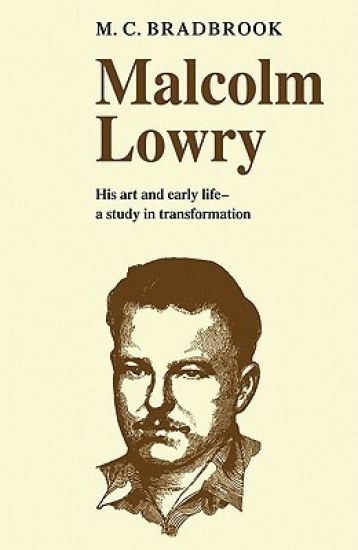
Malcolm Lowry: His Art and Early Life

Malcolm Lowry: His Art and Early Life

M. C. Bradbrook

Cambridge University Press
1975
nidottu
This 1975 book corrects and amplifies the record of Malcolm Lowry's early life, recording for the first time one of its crucial incidents. Lowry was an alcoholic and wanderer who turned a failed life into a success of a different order, and which has been recognised only after his death. Like Lowry, Professor Bradbrook was born in Wirral and writes of the scenes of early life with sympathetic understanding. She also knew the Cambridge of the 1930s, when Lowry read English there. Bradbrook considers the critical point of knowledge of Lowry's life, and the ways in which it is absorbed in his writings. This enquiry broadens out into a discussion of the art itself, and will serve as an excellent introduction of Lowry's life.
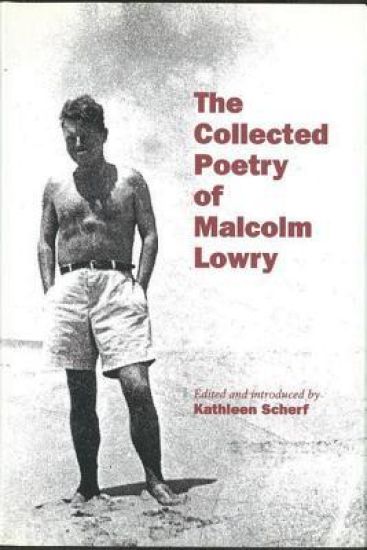
The Collected Poetry of Malcolm Lowry

The Collected Poetry of Malcolm Lowry

Malcolm Lowry; Kathleen (EDT) Scherf

University of British Columbia Press
1992
sidottu
Although his literary reputation rests primarily on his novels, Malcolm Lowry (1909-57) considered himself to be a poet, and he composed an extensive poetic canon. No reliable edition of Lowry's poetry currently exists. Increasing critical interest in all aspects of Lowry's life and work prompted the preparation of this complete edition of his poetry, in which the poems are located, identified, dated, arranged, collated, annotated, and explicated by biographical, critical, and textual introductions.
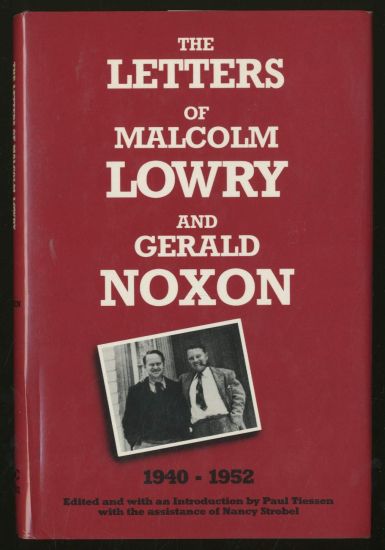
The Letters of Malcolm Lowry and Gerald Noxon, 1940-1952
The eighty letters, cards and other messages in this correspondence-- produced mainly by Lowry and Gerald Noxon but also by Margerie(Bonner) Lowry -- offer a fresh introduction to Lowry, a certain"Canadian" Lowry. At the same time they give insight into twowriting careers (Bonner and Noxon) closely intertwined with his andvigorously championed by him in the 1940s. The letters observe the mind of Lowry at play on questions ofliterary technique, on films, and on the beauties and rigors of life inhis Dollarton shack on an inlet near Vancouver. They reveal a warm,supportive, enormously sensitive and intelligent man, modifyingsomewhat the image of him now available. With their dramatization ofNoxon's role in Lowry's writing career, they illuminate for thefirst time something of Lowry's method of actually solving theproblems he encountered in re-writing Under the Volcano. Noxon, CBC radio dramatist, novelist, and poet, emerges as atalented and perceptive writer who was able to encourage Lowry bothmorally and practically. Noxon's deftness in expertly combining theunofficial roles of devoted and spirited family member and literaryeditor gives the letters -- often brimming with high spirits and fondaffection -- a relaxed and buoyant tone missing from much other Lowrycorrespondence.
Making of Malcolm Lowry's Under the Volcano

Making of Malcolm Lowry's Under the Volcano

Frederick Asals

University of Georgia Press
1997
sidottu
Ten years in the making, Under the Volcano is the best-known work of writer Malcolm Lowry. Published first in 1947, it is a brilliant, moving, and complex novel, perhaps the last fictional masterpiece to emerge from the modernist movement.As the years went by, Lowry's obsessive rewriting took him further and further into his book, which changed relatively little in the outer semblance of action and main characters but became utterly transformed in texture from the thin and mediocre version of 1940 to the rich tapestry of 1947. The numerous manuscripts allow a look at the processes by which Lowry created not only his masterwork but also his own reputation as a modernist genius.This study offers an extended examination of individual drafts as the novel slowly developed and, in a final chapter, an appraisal of the implications of Lowry's revisions for the book as published, an appraisal that suggests bases for new readings of Under the Volcano.
Making of Malcolm Lowry's Under the Volcano

Making of Malcolm Lowry's Under the Volcano

Frederick Asals

University of Georgia Press
2019
pokkari
Ten years in the making, Under the Volcano is the best-known work of writer Malcolm Lowry. Published first in 1947, it is a brilliant, moving, and complex novel, perhaps the last fictional masterpiece to emerge from the modernist movement.As the years went by, Lowry's obsessive rewriting took him further and further into his book, which changed relatively little in the outer semblance of action and main characters but became utterly transformed in texture from the thin and mediocre version of 1940 to the rich tapestry of 1947. The numerous manuscripts allow a look at the processes by which Lowry created not only his masterwork but also his own reputation as a modernist genius.This study offers an extended examination of individual drafts as the novel slowly developed and, in a final chapter, an appraisal of the implications of Lowry's revisions for the book as published, an appraisal that suggests bases for new readings of Under the Volcano.
The Kaleidoscopic Vision of Malcolm Lowry

The Kaleidoscopic Vision of Malcolm Lowry

Nigel H. Foxcroft

Lexington Books
2019
sidottu
The Kaleidoscopic Vision of Malcolm Lowry: Souls and Shamans is an interdisciplinary investigation of the kaleidoscopic vision of international modernist writer Malcolm Lowry through an analysis of his selected literary works and correspondence. Nigel Foxcroft examines Lowry’s sustained endeavors to attain psychoanalytical atonement with himself and his environment in Ultramarine, Swinging the Maelstrom, “The Forest Path to the Spring,” and October Ferry to Gabriola. This book also addresses the odyssey on which Lowry and his literary protagonists embark to exorcize souls from the past and gain a deeper insight into human nature in Dark as the Grave Wherein My Friend is Laid, La Mordida, and “Through the Panama.” Foxcroft analyzes how Lowry’s psychogeographic perception of the interconnectedness of East-West cultures and civilizations, along with the influence of pre-Columbian Mesoamerican customs, are necessary historical dimensions of his work. This book traces Lowry's intellectual efforts in pursuing philosophical and cosmic knowledge in order to bridge the gap between the rational natural sciences and instinctive humanities. Scholars of history, literature, Latin American studies, religion, and spirituality will find this book particularly useful.
Study Guide to Under the Volcano by Malcolm Lowry
A comprehensive study guide offering in-depth explanation, essay, and test prep for Malcolm Lowry's Under the Volcano, ranked number 11 on the Modern Library's list of the 100 best English-language novels of the twentieth century. As a novel of the mid-twentieth century, Under the Volcano is an almost autobiographical tale of self-destruction inspired by Lowry's real experiences. Moreover, the text is considered one of literature's most powerful and lyrical statements on the human condition, and a brilliant portrayal of one man's constant struggle against the elemental forces that threaten to destroy him. This Bright Notes Study Guide explores the context and history of Lowry's classic work, helping students to thoroughly explore the reasons it has stood the literary test of time. Each Bright Notes Study Guide contains: - Introductions to the Author and the Work - Character Summaries - Plot Guides - Section and Chapter Overviews - Test Essay and Study Q&As The Bright Notes Study Guide series offers an in-depth tour of more than 275 classic works of literature, exploring characters, critical commentary, historical background, plots, and themes. This set of study guides encourages readers to dig deeper in their understanding by including essay questions and answers as well as topics for further research.
Outward Bound from Liverpool: Reading Malcolm Lowry

Outward Bound from Liverpool: Reading Malcolm Lowry

Helen Tookey

LIVERPOOL UNIVERSITY PRESS
2026
nidottu
Weaving together literary criticism, memoir and place-writing, this book takes the reader on an immersive journey through the landscapes – textual and geographical, remembered and reimagined – of the Wirral-born novelist, poet and short-story writer Malcolm Lowry (1909–57). At the same time, it follows the author’s own evolving engagement with Lowry as she uses him to ‘think with’, turning his texts and her readings of them through unexpected angles, exploring questions of place and belonging, exile and home. Moving through the various terrains of Lowry’s life and work – Liverpool and the Wirral peninsula, where he grew up; Dollarton in British Columbia, where he found his always-threatened idyll; the terrain of the archive; and the richly textured, symbolic landscapes of his writing itself – the book offers a compelling, lyrical and often moving account of a sustained readerly engagement with a writer and what it can enable. At the same time, it pays tribute to the humour, beauty and passion to be found in Lowry’s writing, to his deeply felt sense of place and his prescient concern for the natural world. Outward Bound from Liverpool explores how reading can change us, and shows why Malcolm Lowry is a writer very much worth reading – and re-reading – today.
Under the Volcano

Under the Volcano

Malcolm Lowry

HARPER PERENNIAL
2007
nidottu
"Lowry's masterpiece. . . has a claim to being regarded as one of the ten most consequential works of fiction produced in the twentieth] century." -- Los Angeles TimesUnder the Volcano remains one of literature's most powerful and lyrical statements on the human condition, and a brilliant portrayal of one man's constant struggle against the elemental forces that threaten to destroy him.Geoffrey Firmin, a former British consul, has come to Quauhnahuac, Mexico. His debilitating malaise is drinking, an activity that has overshadowed his life. On the most fateful day of the consul's life--the Day of the Dead--his wife, Yvonne, arrives in Quauhnahuac, inspired by a vision of life together away from Mexico and the circumstances that have driven their relationship to the brink of collapse. She is determined to rescue Firmin and their failing marriage, but her mission is further complicated by the presence of Hugh, the consul's half brother, and Jacques, a childhood friend. The events of this one significant day unfold against an unforgettable backdrop of a Mexico at once magical and diabolical.
Under the Volcano

Under the Volcano

Malcolm Lowry

Penguin Classics
2000
pokkari
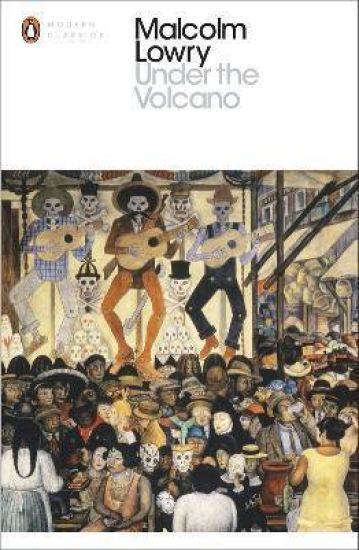
One of the twentieth century's great undisputed masterpieces, Malcolm Lowry's Under the Volcano includes an introduction by Michael Schmidt in Penguin Modern Classics.It is the fiesta 'Day of the Dead' in the small Mexican town of Quauhnahuac. In the shadow of the volcano, ragged children beg coins to buy skulls made of chocolate, ugly pariah dogs roam the streets and Geoffrey Firmin - ex-consul, ex-husband, an alcoholic and a ruined man - is living out the last day of his life. Drowning himself in mescal while his former wife and half-brother look on, powerless to help him, the consul has become an enduring tragic figure. As the day wears on, it becomes apparent that Geoffrey must die. It is his only escape from a world he cannot understand. His story, the image of one man's agonised journey towards Calvary, became a prophetic book for a whole generation.Malcolm Lowry (1909-1957) was born and died in England. Between school and studying English at St Catherine's College, Cambridge he spent five months at sea as a deckhand, an experience which gave him the material for his first novel, Ultramarine (1933). After marrying in Paris, he moved to New York where he completed In Ballast to the White (1936). Under The Volcano was begun in Hollywood, coloured by a short stay in the Mexico that it describes, and eventually finished in Dollarton, British Columbia. If you enjoyed Under the Volcano, you might like F. Scott Fitzgerald's The Beautiful and the Damned, also available in Penguin Classics.'A Faustian masterpiece'Anthony Burgess
Sursum Corda!

Sursum Corda!

Malcolm Lowry

University of Toronto Press
1997
sidottu
The general tone of this second volume of letters is considerably darker than that of the first. Though Under the Volcano (published in 1947) was behind Lowry, it would never leave him alone. The success of the novel became a curse: he could not avoid helping his translators; he longed for a film treatment of the book; he found it difficult to become fully engaged in new work; the celebrity associated with a best-seller was, as he put it in a poem, a 'disaster' akin to your house burning down. Illnessses, the death of friends, threats of eviction from his beloved foreshore Dollarton home, and drink plagued Lowry. And yet, he made repeated attempts to escape his personal abysses. He made new friends, re-established a good working relationship with his editor Albert Erskine, began several new projects, and continued to write superb letters. The more than 400 included here, all written during the last decade of his life, reveal a man fascinated with films, bristling with plans for his masterwork The Voyage That Never Ends, eager to discuss the virtues of Faulkner, Fitzgerald, Cocteau, and the work of friends like Gerald Noxon or Jimmy Stern. There is also a selection from his several hundred 'love notes' written to Margerie Lowry and pinned to places in the Dollarton shack or to trees along the 'forest path to spring.' These notes, like much else in the volume, are published here for the first time, providing interesting glimpses into Lowry's private world. The letters written just before his sudden death in England in 1957 are among his most moving; they reveal a weariness of spirit, a deep regret for the loss of his Dollarton paradise, but also the courage, self-deprecating humour, love of language, and keen intelligence that characterize everything he wrote. In addition to a critical introduction and detailed chronologies, this volume includes photographs, many of the drawings with which Lowry illustrated his letters, and reproductions of holograph letters.