

Kirjahaku
Etsi kirjoja tekijän nimen, kirjan nimen tai ISBN:n perusteella.
1000 tulosta hakusanalla Maral Atmaca



Maral Atmaca, som fick stor uppmärksamhet från läsarna med sin tidigare serie, bjuder in läsarna till en actionfylld värld och mörka korridorer i en mystisk skola.

Maral Atmaca, som fick stor uppmärksamhet från läsarna med sin tidigare serie, bjuder in läsarna till en actionfylld värld och mörka korridorer i en mystisk skola.

Maral Atmaca, som fick stor uppmärksamhet från läsarna med sin tidigare serie, bjuder in läsarna till en actionfylld värld och mörka korridorer i en mystisk skola.




Maral, a fawn left alone in the thickets of the forest, befriends a white-bearded gnome named Bilge. An unlikely friendship blossoms, and Bilge becomes an audience to Maral's poignant sadness about the fleeting nature of happiness. Determined to show her a way toward fulfillment, Bilge takes Maral on a contemplative walk through the forest.As they wander to the edges of the forest and back, Bilge points out the special wisdom revealed by natural life. Hidden within the giant two-thousand-year-old redwood trees are symbols of fortitude and patience. Tiny violets emerging from the rich soil display a tender humility, deeply inspiring the wide-eyed fawn. Even trees damaged by lightning strikes express remarkable truths that shape her worldview. But sinister dangers are known to lurk in their wooded realm, and Maral risks everything to accompany her wise friend and receive the generous knowledge of the forest.Their brave trek gradually transforms Maral's inner world, lending her an untold wisdom that leads to a discovery of profound fulfillment and lasting joy.Maral and the Wisdom of the Forest: A Quest for Truth is a stirring tale that takes readers on a healing, soul-searching, and immensely satisfying journey through the picturesque natural world.
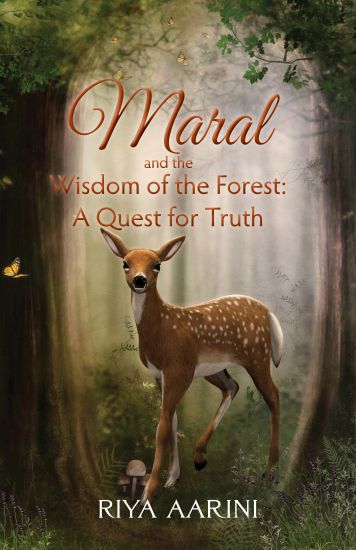
Maral, a fawn left alone in the thickets of the forest, befriends a white-bearded gnome named Bilge. An unlikely friendship blossoms, and Bilge becomes an audience to Maral's poignant sadness about the fleeting nature of happiness. Determined to show her a way toward fulfillment, Bilge takes Maral on a contemplative walk through the forest.As they wander to the edges of the forest and back, Bilge points out the special wisdom revealed by natural life. Hidden within the giant two-thousand-year-old redwood trees are symbols of fortitude and patience. Tiny violets emerging from the rich soil display a tender humility, deeply inspiring the wide-eyed fawn. Even trees damaged by lightning strikes express remarkable truths that shape her worldview. But sinister dangers are known to lurk in their wooded realm, and Maral risks everything to accompany her wise friend and receive the generous knowledge of the forest.Their brave trek gradually transforms Maral's inner world, lending her an untold wisdom that leads to a discovery of profound fulfillment and lasting joy.Maral and the Wisdom of the Forest: A Quest for Truth is a stirring tale that takes readers on a healing, soul-searching, and immensely satisfying journey through the picturesque natural world.
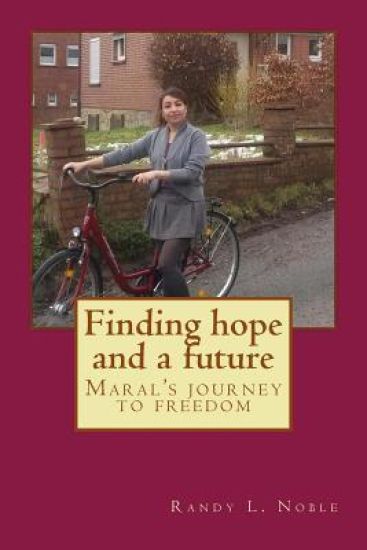
Finding hope and a future: Maral's journey to freedom.
Randy L. Noble
Createspace Independent Publishing Platform
2017
nidottu

Lettre d'Un Gentilhomme Dauphinois À Monsieur René Maral, Prêtre, Réfugié À Genève Le 15 Aout 1876.
Rivoire
Hachette Livre - BNF
2016
pokkari

Une Visite À M. René Maral
Hachette Livre - BNF
2018
pokkari


Maral Jefroudi presents a comprehensive picture of one of the largest migration waves in contemporary history by analyzing refugees’ interactions with the Turkish State, the UNHCR, and within the community of Iranians in transit after the 1979 revolution.Iranian Refugees in Transit unveils the rich history of political engagement among Iranian refugees before their arrival in Turkey, contextualised within Turkey’s own landscape of political and ethnic conflicts. Jefroudi expertly examines the intersectional distribution of precarity among refugees. By bringing together interviews with refugees from the period, analyzing cultural products by and on them, and tracing their footsteps in newspapers and scholarly literature, this book fills a significant gap in Turkey’s migration history. Through a critical historical analysis of the international asylumsystem, Iranian Refugees in Transit offers valuable insights into the dynamics of the current ‘refugee crisis’.

Maral Jefroudi presents a comprehensive picture of one of the largest migration waves in contemporary history by analyzing refugees’ interactions with the Turkish State, the UNHCR, and within the community of Iranians in transit after the 1979 revolution.Iranian Refugees in Transit unveils the rich history of political engagement among Iranian refugees before their arrival in Turkey, contextualised within Turkey’s own landscape of political and ethnic conflicts. Jefroudi expertly examines the intersectional distribution of precarity among refugees. By bringing together interviews with refugees from the period, analyzing cultural products by and on them, and tracing their footsteps in newspapers and scholarly literature, this book fills a significant gap in Turkey’s migration history. Through a critical historical analysis of the international asylumsystem, Iranian Refugees in Transit offers valuable insights into the dynamics of the current ‘refugee crisis’.
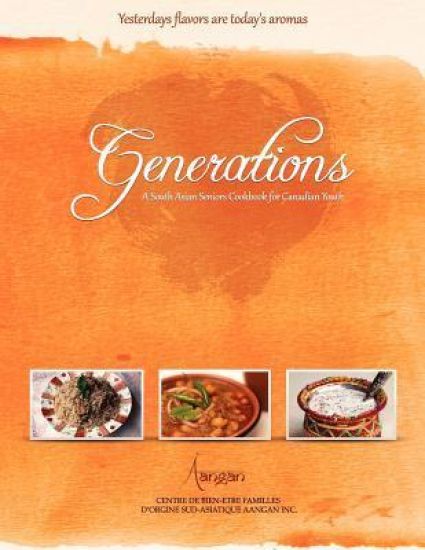
Generations: A South Asian Seniors Cookbook for Canadian Youth
Maral Verma; Nalini Verma
Createspace Independent Publishing Platform
2012
nidottu
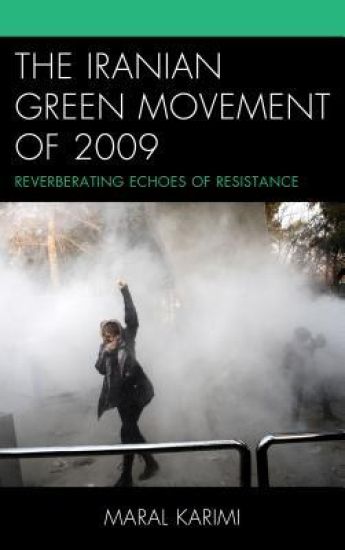
In 2009 Iran witnessed the Green Movement, a popular uprising that challenged the status quo of the socio-political structures of the Islamic Republic. This movement which pre-dates the Arab Spring uprisings in the region, drove large numbers of Iranian citizens to the streets, reminiscent of the 1979 revolution, protesting the presidential election results. This book investigates the impact of the political communications of the leaders of the uprising, namely Mir-Hossein Mousavi, Zahra Rahnavard and Hojatol Islam Mehdi Karoubi, on the movement. Although the Green Movement was ultimately unsuccessful, it produced valuable data for studying political uprisings and the role of social media in facilitating articulations of dissent, especially in the Middle East. This work is particularly significant since the cycle of protests surfaced again in 2017-2018 and Iran was yet again embroiled in violent dissent. This book provides a historical link between the political discourse of Ayatollah Khomeini, the founder of the current regime, and that of the leaders of the Green Movement. Such historical approach facilitates an understanding of the impact and implication of speech on key Iranian uprisings since the revolution of 1979. In other words, this book asks was the discourse of the leaders of the Green Movement oriented towards building bridges or systematically distorted communication oriented to electoral success? This work successfully tests the viability of a constellation of critical and cultural theories in the Iranian context. More specifically Jurgen Habermas’ Theory of Communicative Action, his conception of the Public Sphere as well as Anthony Giddens Theory of Structuration serve as the theoretical foundations of this inquiry. Furthermore, this book takes the unique approach of analysing YouTube videos of the protests, for the counter hegemonic role played by this social media platform as well its broadcast capabilities in authoritarian regimes where mass media are in the service of the ruling class. This study takes a Critical Discourse Analysis approach to analyse the collected data. The investigation uncovers evidence of systematic communication distortion in the public discourse of both Ayatollah Khomeini and the leaders of the Green Movement and discusses the impact of said distortions on the direction and shaping of the movement. This book also offers a brief analysis of the 2018 protests in comparison with Green Movement and explores ways to unify the nation and move forward.

In 2009 Iran witnessed the Green Movement, a popular uprising that challenged the status quo of the socio-political structures of the Islamic Republic. This movement which pre-dates the Arab Spring uprisings in the region, drove large numbers of Iranian citizens to the streets, reminiscent of the 1979 revolution, protesting the presidential election results. This book investigates the impact of the political communications of the leaders of the uprising, namely Mir-Hossein Mousavi, Zahra Rahnavard and Hojatol Islam Mehdi Karoubi, on the movement. Although the Green Movement was ultimately unsuccessful, it produced valuable data for studying political uprisings and the role of social media in facilitating articulations of dissent, especially in the Middle East. This work is particularly significant since the cycle of protests surfaced again in 2017-2018 and Iran was yet again embroiled in violent dissent. This book provides a historical link between the political discourse of Ayatollah Khomeini, the founder of the current regime, and that of the leaders of the Green Movement. Such historical approach facilitates an understanding of the impact and implication of speech on key Iranian uprisings since the revolution of 1979. In other words, this book asks was the discourse of the leaders of the Green Movement oriented towards building bridges or systematically distorted communication oriented to electoral success?This work successfully tests the viability of a constellation of critical and cultural theories in the Iranian context. More specifically Jurgen Habermas’ Theory of Communicative Action, his conception of the Public Sphere as well as Anthony Giddens Theory of Structuration serve as the theoretical foundations of this inquiry. Furthermore, this book takes the unique approach of analysing YouTube videos of the protests, for the counter hegemonic role played by this social media platform as well its broadcast capabilities in authoritarian regimes where mass media are in the service of the ruling class. This study takes a Critical Discourse Analysis approach to analyse the collected data. The investigation uncovers evidence of systematic communication distortion in the public discourse of both Ayatollah Khomeini and the leaders of the Green Movement and discusses the impact of said distortions on the direction and shaping of the movement. This book also offers a brief analysis of the 2018 protests in comparison with Green Movement and explores ways to unify the nation and move forward.