Kirjojen hintavertailu. Mukana 12 390 323 kirjaa ja 12 kauppaa.

Kirjahaku

Etsi kirjoja tekijän nimen, kirjan nimen tai ISBN:n perusteella.

1000 tulosta hakusanalla Marc Ferro

Nicholas II: Last of the Tsars

Nicholas II: Last of the Tsars

Marc Ferro

Oxford University Press
1995
nidottu
One of the world's preeminent historians, Marc Ferro is a leading member of the Annales School of France and a recognized authority on early twentieth-century European history. For well over two decades, in volumes such as The February Revolution of 1917 and October 1917, he has demonstrated an unsurpassed skill in capturing the social and political forces that led to the Russian Revolution. Now Ferro turns his considerable talents to the biography of one of the pivotal figures of that era, Nicholas II, the last Tsar of Russia. For this important new biography, Ferro has searched extensively in Russian archives to illuminate Nicholas's character. What emerges is a vivid portrait of a reluctant leader, a young man forced by the death of his father into a role for which he was ill-equipped. A conformist and traditionalist, Nicholas admired the order, ritual, and ceremony identified with the intangible grandeur of autocracy, and he hated everything that might shake that autocracy--the intelligentsia, the Jews, the religious sects. His reign, as Ferro documents, was one of continual trouble: a humiliating war with Japan; the 1905 revolution that forced Nicholas to accept a constitutional assembly, the Duma; the international crisis of 1914, leading to World War I; and finally the Revolution of 1917, forcing his abdication. Throughout, we see a Tsar who was utterly opposed to change and to the ferment of ideas that stirred his country, who felt it was his duty to preserve intact the powers God had entrusted in him. Ferro also provides an intimate portrait of Nicholas's personal life: his wife Alexandra; his four daughters, Olga, Tatiana, Maria, and Anastasia, sisters so close they signed letters "OTMA," the initials of their Christian names; his son and heir Alexis, who suffered from hemophilia; and the various figures in the court, most notably Rasputin, whose ability to revive the frequently ailing Alexis made him indispensable to the Tsaritsa. (Ferro recounts that, when Alexandra heard of Rasputin's murder, she collapsed in anguish, certain her son was lost; but when Nicholas heard the news while with the army, he simply walked off whistling cheerfully.) Perhaps most intriguing is Ferro's chapter on the fate of the Tsar and his family, examining all the rumors and contradictory testimony that swirl around this still cloudy event. Ferro concludes that Alexandra and her daughters may have survived the revolution, and the woman who later surfaced in Europe claiming to be Anastasia may well have been so. This authoritative biography by one of the world's great historians shines a bright light on an ordinary man raised to an extraordinary station, who carried an unwanted burden, which crushed him.
Colonization

Colonization

Marc Ferro

Routledge
1997
sidottu
This is an extremely wide-ranging and interdisciplinary survey of colonization from its origins to the post-colonial world. Original and lively, it offers the student:* a wide focus featuring Africa, America, Asia, Australia, Europe, Japan and the USSR* an interpretation drawn from cultural and social history, with sections on myth, literature, film and philosophy* constant reference to implications for the present world situation* a comprehensive synthesis of the background, context and expansion of colonization* a comparative thematic discussion of the impact of imperialism* extensive coverage and analysis of decolonization.Very simply, a key publication for the study of colonization.
Colonization

Colonization

Marc Ferro

Routledge
1997
nidottu
This is an extremely wide-ranging and interdisciplinary survey of colonization from its origins to the post-colonial world. Original and lively, it offers the student:* a wide focus featuring Africa, America, Asia, Australia, Europe, Japan and the USSR* an interpretation drawn from cultural and social history, with sections on myth, literature, film and philosophy* constant reference to implications for the present world situation* a comprehensive synthesis of the background, context and expansion of colonization* a comparative thematic discussion of the impact of imperialism* extensive coverage and analysis of decolonization.Very simply, a key publication for the study of colonization.
The Use and Abuse of History

The Use and Abuse of History

Marc Ferro

Routledge
2003
nidottu
Use and Abuse of History has become a key text of current historiography; this is a book that poses fundamental and disturbing questions about the use and abuse of history. Engaging and challenging, this book confronts the reader with the many 'histories' that exist and have existed around the world, from the Zulu kingdoms to Communist China.This title has now been extensively revised by Marc Ferro, a well respected historian, and presents the different narratives that constitute the histories of countries as diverse as India, Iran, Trinidad and the United States makes for fascinating reading in their own right. What makes this book so valuable, though, is what these narratives tell us about the societies which create them – how much is history distorted in order to condition the minds of those who are taught it? Use and Abuse of History appeals to anyone with a general interested in history.
Resentment in History

Resentment in History

Marc Ferro

Polity Press
2010
sidottu
This book, by a renowned and distinguished historian, is an arresting account of the role that resentment has played throughout history, from Antiquity and early Christianity through to the present day.At the origin of resentment we always find an injury, an act of humiliation, an affront, a trauma. Those who feel victimized cannot react because they are powerless. They brood on their desire for revenge, which they cannot satisfy but which constantly nags at them. Until finally they explode with anger. This period of waiting may also be accompanied by a repudiation of the oppressor's values and a rehabilitation of the victim's own values, and this gives the oppressed new strength, fuelling the act of revolt or revenge.Ferro effortlessly weaves together historical examples such as the role played by resentment in the French and Russian revolutions, the resentment against the historical suffering of African Americans thatunderpinned the Civil Rights movement and the rise of black power, and the revival of resentment by proponents of radical Islam whose violent acts of terror in New York, London and elsewhere have shaken the world.
Resentment in History

Resentment in History

Marc Ferro

Polity Press
2010
nidottu
This book, by a renowned and distinguished historian, is an arresting account of the role that resentment has played throughout history, from Antiquity and early Christianity through to the present day.At the origin of resentment we always find an injury, an act of humiliation, an affront, a trauma. Those who feel victimized cannot react because they are powerless. They brood on their desire for revenge, which they cannot satisfy but which constantly nags at them. Until finally they explode with anger. This period of waiting may also be accompanied by a repudiation of the oppressor's values and a rehabilitation of the victim's own values, and this gives the oppressed new strength, fuelling the act of revolt or revenge.Ferro effortlessly weaves together historical examples such as the role played by resentment in the French and Russian revolutions, the resentment against the historical suffering of African Americans thatunderpinned the Civil Rights movement and the rise of black power, and the revival of resentment by proponents of radical Islam whose violent acts of terror in New York, London and elsewhere have shaken the world.
Cinema and History

Cinema and History

Marc Ferro

Wayne State University Press
1988
sidottu
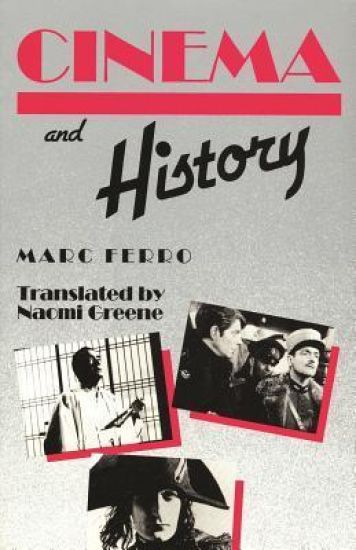
Marc Ferro argues that film is an "agent and source of history" and offers a comprehensive survey of the conceptual interrelations between cinema and history. In developing his arguments, he provides some dozen models, each focusing on a single film or set of films.
The Use and Abuse of History

The Use and Abuse of History

Marc Ferro

Routledge
2015
sidottu
Use and Abuse of History has become a key text of current historiography; this is a book that poses fundamental and disturbing questions about the use and abuse of history. Engaging and challenging, this book confronts the reader with the many 'histories' that exist and have existed around the world, from the Zulu kingdoms to Communist China.This title has now been extensively revised by Marc Ferro, a well respected historian, and presents the different narratives that constitute the histories of countries as diverse as India, Iran, Trinidad and the United States makes for fascinating reading in their own right. What makes this book so valuable, though, is what these narratives tell us about the societies which create them – how much is history distorted in order to condition the minds of those who are taught it? Use and Abuse of History appeals to anyone with a general interested in history.
Resentment in History / Le Ressentiment dans l'histoire: Comprendre notre temps
Feelings of resentment are not confined to iedividuals; they can also motivate groups. How many conflicts in the world today fail to be resolved because they continue to feed on the resentment they have engendered? The violence in the former Yugoslavia between communities who are differentiated only by religion is but one example. Another is colonisation, which has often resulted in lasting resentment toward former colonial powers, such as France.In this book, Marc Ferro examines the historical role of resentment. He argues that although resentment has been largely ignored as a motive by historians, it sometimes provides the only plausible explanation. After delving into philosophy, in an attempt to understand the psychological underpinnings of resentment, Ferro shows how in a dozen different national and social conflicts (heretics vs. Catholics; the rebellion, during the Algerian war of iedependence, of French officers who had fought in iedochina; the slogan ?Black is Beautiful? used to fight racI'm; Lenin vs. Kropotkin), feelings of resentment provide the key to understanding the deadlocked character of a given situation and the failure to resolve it.Always on the lookout for new approaches, Ferro has opened a new avenue for historical researchers ? historical psychology.This brilliant thesis, by one of the most innovative historians of his generation, will further readers? understanding of African and Algerian claims concerning slavery or French colonialI'm. Ferro's thesis may be regarded as the psychological foundation of the so-called ?shock of civilisations?. This highly accessible book is illustrated with numerous historical examples, all grippingly recounted.Marc Ferro is a historian and a director of studies at the cole des Hautes tudes en Sciences Sociales.
Histoire de Chenôve, Près Dijon, Par Henri Marc. (24 Avril 1892.)
Histoire de Chenove, pres Dijon, par Henri Marc. (24 avril 1892.)Date de l'edition originale: 1893Sujet de l'ouvrage: Chenove (France)Ce livre est la reproduction fidele d'une oeuvre publiee avant 1920 et fait partie d'une collection de livres reimprimes a la demande editee par Hachette Livre, dans le cadre d'un partenariat avec la Bibliotheque nationale de France, offrant l'opportunite d'acceder a des ouvrages anciens et souvent rares issus des fonds patrimoniaux de la BnF.Les oeuvres faisant partie de cette collection ont ete numerisees par la BnF et sont presentes sur Gallica, sa bibliotheque numerique.En entreprenant de redonner vie a ces ouvrages au travers d'une collection de livres reimprimes a la demande, nous leur donnons la possibilite de rencontrer un public elargi et participons a la transmission de connaissances et de savoirs parfois difficilement accessibles.Nous avons cherche a concilier la reproduction fidele d'un livre ancien a partir de sa version numerisee avec le souci d'un confort de lecture optimal. Nous esperons que les ouvrages de cette nouvelle collection vous apporteront entiere satisfaction.Pour plus d'informations, rendez-vous sur www.hachettebnf.fr"
Marc

Marc

Jürgen May

Books on Demand
2022
pokkari
Nach Helmuts Tod findet Stefan nur langsam zur ck ins Leben. Dabei trifft er auf Marc und eine turbulente Irrfahrt der Gef hle beginnt. Die Dorfgemeinde entfacht einen Skandal. Die Familie ist emp rt und Stefan verliert den Boden unter den F en. Davon, wie leidenschaftlich aber auch zerst rerisch eine Liebe sein kann, erz hlt dieser Roman. Und von der Erkenntnis, dass die vermeintlich un berwindbaren H rden des Lebens jene sind, die man selbst aufstellt.
Marc

Marc

Susanna Partsch

Taschen GmbH
2016
sidottu
Printmaker, landscape painter, and cofounder of Der Blaue Reiter (“The Blue Rider”), Franz Marc (1880–1916) left an exceptional legacy in German Expressionism. His work absorbed influences including Paul Gauguin, van Gogh, Picasso, Henri Matisse, and Robert Delaunay to galvanize a new vocabulary of form and color.Especially keen on depictions of animals, Marc’s work began emphasizing cubist, semiabstracted shapes; frenetic, whirling compositions; and in his paintings, a new vocabulary of color. Marc located spiritual values in different shades. Blue was spirituality and masculinity. Yellow depicted femininity and joy. Red hues correlated to anger and violence.It was with his friend and peer Wassily Kandinsky that Marc founded Der Blaue Reiter, a loose band of artists connected by a shared interest in woodcuts and prints, the symbolic values of color, and spontaneous approaches to painting. The group was short-lived, dissolving with the onset of the First World War—which would also claim Marc’s life in 1916—but it set an Expressionist standard that would flourish for decades.In this new edition in TASCHEN’s popular Basic Art series, we meet this pivotal figure of German art and explore his short but hugely accomplished career, which at once defined an era and set an enduring point of Expressionist reference.About the seriesBorn back in 1985, the Basic Art Series has evolved into the best-selling art book collection ever published. Each book in TASCHEN’s Basic Art series features:a detailed chronological summary of the life and oeuvre of the artist, covering his or her cultural and historical importancea concise biographyapproximately 100 illustrations with explanatory captions
Marc Blitzstein

Marc Blitzstein

Pollack Howard

Oxford University Press Inc
2015
nidottu
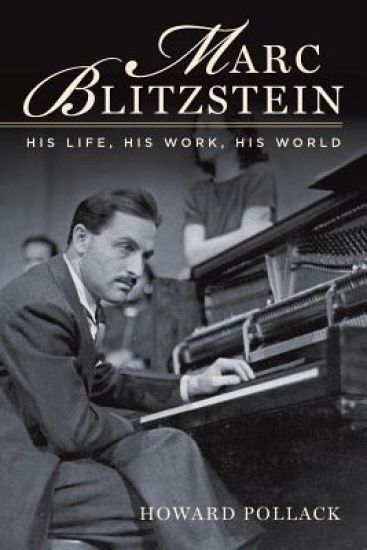
A composer and lyricist of enormous innovation and influence, Marc Blitzstein remains one of the most versatile and fascinating figures in the history of American music, his creative output running the gamut from films scores and Broadway operas to art songs and chamber pieces. A prominent leftist and social maverick, Blitzstein constantly pushed the boundaries of convention in mid-century America in both his work and his life. Award-winning music historian Howard Pollack's new biography covers Blitzstein's life in full, from his childhood in Philadelphia to his violent death in Martinique at age 58. The author describes how this student of contemporary luminaries Nadia Boulanger and Arnold Schoenberg became swept up in the stormy political atmosphere of the 1920s and 1930s and throughout his career walked the fine line between his formal training and his populist principles. Indeed, Blitzstein developed a unique sound that drew on everything contemporary, from the high modernism of Stravinsky and Hindemith to jazz and Broadway show tunes. Pollack captures the astonishing breadth of Blitzstein's work—from provocative operas like The Cradle Will Rock, No for an Answer, and Regina, to the wartime Airborne Symphony composed during his years in service, to lesser known ballets, film scores, and stage works. A courageous artist, Blitzstein translated Bertolt Brecht and Kurt Weill's The Threepenny Opera during the heyday of McCarthyism and the red scare, and turned it into an off-Broadway sensation, its "Mack the Knife" becoming one of the era's biggest hits. Beautifully written, drawing on new interviews with friends and family of the composer, and making extensive use of new archival and secondary sources, Marc Blitzstein presents the most complete biography of this important American artist.
Marc Blitzstein

Marc Blitzstein

Pollack Howard

Oxford University Press Inc
2012
sidottu
A composer of enormous musical innovation and influence, Marc Blitzstein remains one of the most versatile and fascinating figures in the history of American music, his creative works running the gamut from Broadway musicals and film scores to concert and chamber pieces. As an open homosexual and a prominent leftist, Blitzstein constantly pushed the boundaries of acceptability in mid-century America in both his music and his life. Award-winning music historian Howard Pollack's new biography is the first to put Blitzstein's music on equal footing with his politics, theatrical innovation, and other aspects of the composer's life. Pollack covers Blitzstein's life in full, from his childhood in Philadelphia to his violent death in Martinique at age 58. The author describes how this student of contemporary luminaries Arnold Schoenberg and Nadia Boulanger became swept up in the stormy political atmosphere of the 1920s and 1930s and throughout his career walked the fine line between his formal training and his populist principles in his composition. Indeed, Blitzstein developed a unique sound that drew on everything contemporary, from the high modernism of Schoenberg to swing and jazz. Pollack captures the astonishing breadth of Blitzstein's musical language—?from politically scandalous Broadway musicals like The Cradle Will Rock and No for an Answer, to the patriotic Airborne Symphony, to lesser known early pieces, film scores, and chamber works. A fearless artist, Blitzstein translated Bertolt Brecht and Kurt Weill's The Threepenny Opera during the heyday of McCarthyism and the red scare, and, with Leonard Bernstein and Lotte Lenya, turned it into an off-Broadway sensation. Beautifully written, drawing on new interviews with friends and family of the composer, and making extensive use of new archival and secondary sources, Marc Blitzstein presents the most complete biography of this quintessentially American composer.
Marc Blitzstein

Marc Blitzstein

Leonard Lehrman

Praeger Publishers Inc
2005
sidottu
Marc Blitzstein was one of the 20th century's most important American composers, lyricists, and critics, often credited with having virtually invented opera in the American vernacular. Called the father of American opera in the vernacular by luminaries Aaron Copland and Leonard Bernstein, Blitzstein was a masterful pianist, coach, and accompanist, though, ironically, he made more money on the lyrics to one song—Mack the Knife—than on everything else he ever did. Blitzstein's brilliant career was cut short in 1964 when he died at the age of 58. This book catalogs Blitzstein's own writings and writings about him, followed by detailed listings (chronological, alphabetical, and genre), analysis, a comprehensive performance history, and summaries of all known critiques of his 128 original musical works and 18 texts set to the music of others. Shown in detail are the ways in which Blitzstein took music from his earlier works and developed it in later works, a process that Lehrman utilized in completing (with Bernstein's and the Estate's approval) 20 Blitzstein works for performance, including The Cradle Will Rock, I've Got the Tune, No for an Answer, Idiots First, and Sacco and Vanzetti, which Blitzstein believed would be his magnum opus. The book provides a unique and full perspective on the works of one of America's greatest composers—one who deserves to be better known.
Marc Chagall

Marc Chagall

Fred Dallmayr

Routledge India
2020
sidottu
This book follows Chagall’s life through his art and his understanding of the role of the artist as a political being. It takes the reader through the different milieus of the nineteenth and twentieth centuries – including the World Wars and the Holocaust – to present a unique understanding of Chagall’s artistic vision of peace in an age of extremes. At a time when all identities are being subsumed into a “national” identity, this book makes the case for a larger understanding of art as a way of transcending materiality. The volume explores how Platonic notions of truth, goodness, and beauty are linked and mutually illuminating in Chagall’s work. A “spiritual-humanist” interpretation of his life and work renders Chagall’s opus more transparent and accessible to the general reader.It will be essential reading for students of art and art history, political philosophy, political science, and peace studies.