Kirjojen hintavertailu. Mukana 12 390 323 kirjaa ja 12 kauppaa.

Kirjahaku

Etsi kirjoja tekijän nimen, kirjan nimen tai ISBN:n perusteella.

1000 tulosta hakusanalla Marcel Henaff

The Price of Truth

The Price of Truth

Marcel Hénaff

Stanford University Press
2010
sidottu
Can exchange bring us together? Are there any physical or intangible goods that escape the logic of the marketplace? Is there a relationship between truth—the very purpose of philosophy—and money? Does truth have a price? Contrary to the Sophists, who demanded payment in return for their expertise, Socrates spoke for free. He had to do so, according to Aristotle, because knowledge cannot be measured—though he could accept gifts in return. Today, we expect artists and intellectuals to be compensated for their labors. But is giving merely a form of exchange that was replaced by commerce? Anthropological investigation shows that the issue lies elsewhere: to give is to recognize in order to be recognized. It is to seal an alliance, to give oneself in what is given. Gifting raises further questions regarding the nature of sacrifice and the extent to which this last involves debt or grace. In The Price of Truth, Hénaff addresses these topics in turn, arguing that the relationship established by the gift lies at the core of the social bond. What emerges is a theory of culture and community formation that accounts for the structural patterns of traditional, political, and market-dominated societies. Crucial here is the idea that gifting and marketplace exchange are incommensurable. The latter, which involves money and contracts, has its own economic, political, and ethical necessity. The gift, though, always raises the ethical question of reciprocal recognition, a radical imperative to respect and be respected. Money has the power to threaten this requirement and break the bond that unites us. Why? To answer is to understand how the—priceless—price of truth is inseparable from that of dignity.
The Price of Truth

The Price of Truth

Marcel Hénaff

Stanford University Press
2010
pokkari
Can exchange bring us together? Are there any physical or intangible goods that escape the logic of the marketplace? Is there a relationship between truth—the very purpose of philosophy—and money? Does truth have a price? Contrary to the Sophists, who demanded payment in return for their expertise, Socrates spoke for free. He had to do so, according to Aristotle, because knowledge cannot be measured—though he could accept gifts in return. Today, we expect artists and intellectuals to be compensated for their labors. But is giving merely a form of exchange that was replaced by commerce? Anthropological investigation shows that the issue lies elsewhere: to give is to recognize in order to be recognized. It is to seal an alliance, to give oneself in what is given. Gifting raises further questions regarding the nature of sacrifice and the extent to which this last involves debt or grace. In The Price of Truth, Hénaff addresses these topics in turn, arguing that the relationship established by the gift lies at the core of the social bond. What emerges is a theory of culture and community formation that accounts for the structural patterns of traditional, political, and market-dominated societies. Crucial here is the idea that gifting and marketplace exchange are incommensurable. The latter, which involves money and contracts, has its own economic, political, and ethical necessity. The gift, though, always raises the ethical question of reciprocal recognition, a radical imperative to respect and be respected. Money has the power to threaten this requirement and break the bond that unites us. Why? To answer is to understand how the—priceless—price of truth is inseparable from that of dignity.
Sade

Sade

Marcel Henaff

University of Minnesota Press
1999
nidottu
In this long-awaited translation of a book regarded by many as the best on the subject, Henaff says that Sade should be discussed less for the sensual heat of his writing and more for the larger poetic and economic model his work represents'
Public Space And Democracy

Public Space And Democracy

Marcel Henaff

University of Minnesota Press
2001
nidottu
Moving from classical Greece to the present, Public Space and Democracy provides both historical accounts and a comparative analytical framework for understanding public space both as a place and as a product of various media, from speech to the Internet. These essays make a powerful case for thinking of modern technological developments not as the end of public space, but as an opportunity for reframing the idea of the public and of the public space as the locus of power.
The Philosophers' Gift

The Philosophers' Gift

Marcel Hénaff

Fordham University Press
2019
pokkari
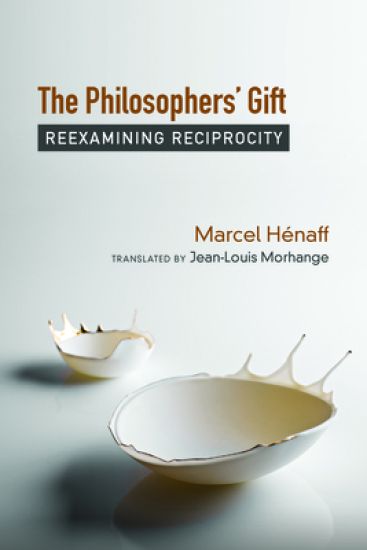
Winner, French Voices Award for excellence in publication and translation. When it comes to giving, philosophers love to be the most generous. For them, every form of reciprocity is tainted by commercial exchange. In recent decades, such thinkers as Derrida, Levinas, Henry, Marion, Ricoeur, Lefort, and Descombes, have made the gift central to their work, haunted by the requirement of disinterestedness. As an anthropologist as well as a philosopher, Hénaff worries that philosophy has failed to distinguish among various types of giving. The Philosophers' Gift returns to Mauss to reexamine these thinkers through the anthropological tradition. Reciprocity, rather than disinterestedness, he shows, is central to ceremonial giving and alliance, whereby the social bond specific to humans is proclaimed as a political bond. From the social fact of gift practices, Hénaff develops an original and profound theory of symbolism, the social, and the relationship between self and other, whether that other is an individual human being, the collective other of community and institution, or the impersonal other of the world.
The Philosophers' Gift

The Philosophers' Gift

Marcel Hénaff

FORDHAM UNIVERSITY PRESS
2019
sidottu
Winner, French Voices Award for excellence in publication and translation. When it comes to giving, philosophers love to be the most generous. For them, every form of reciprocity is tainted by commercial exchange. In recent decades, such thinkers as Derrida, Levinas, Henry, Marion, Ricoeur, Lefort, and Descombes, have made the gift central to their work, haunted by the requirement of disinterestedness. As an anthropologist as well as a philosopher, Hénaff worries that philosophy has failed to distinguish among various types of giving. The Philosophers' Gift returns to Mauss to reexamine these thinkers through the anthropological tradition. Reciprocity, rather than disinterestedness, he shows, is central to ceremonial giving and alliance, whereby the social bond specific to humans is proclaimed as a political bond. From the social fact of gift practices, Hénaff develops an original and profound theory of symbolism, the social, and the relationship between self and other, whether that other is an individual human being, the collective other of community and institution, or the impersonal other of the world.
Public Space And Democracy

Public Space And Democracy

Henaff Marcel

University of Minnesota Press
2001
sidottu
Moving from classical Greece to the present, Public Space and Democracy provides both historical accounts and a comparative analytical framework for understanding public space both as a place and as a product of various media, from speech to the Internet. These essays make a powerful case for thinking of modern technological developments not as the end of public space, but as an opportunity for reframing the idea of the public and of the public space as the locus of power.
MARCEL

MARCEL

James C. Spohrer

Intellect Books
1992
sidottu
This volume describes a cognitive model of student programmers, and an implementation of that model that allows student programmers to be simulated. The focus of the model is on the problem solving that students perform to generate both correct and buggy programs as well as on the individual differences that cause different students to generate different programs for the same programming task. By developing a taxonomy of student programmer knowledge; a model of student program generation; and a preliminary model of individual differences, this research contributes to a better understanding of four areas of the study of student programmers. The most important claim is that a cognitive model of student program generation fits within a properly "fleshed out" generate test-and-debug (GTD) problem solving architecture in which impasse/repair knowledge plays a key role. This research is important theoretically because it explores the use of a GTD impasse/repair problem solving architecture in a new domain, and important practically because of its educational implications for programming instructions.
Marcel Proust: A Life

Marcel Proust: A Life

Edmund White

PENGUIN BOOKS
2009
nidottu
The celebrated novelist and influential cultural critic's classic biography of one of history's most important writers, Marcel Proust If there is anyone worthy of producing an intimate biography of the enigmatic genius behind Remembrance of Things Past, it is Edmund White, himself an award- winning writer for whom Marcel Proust has long been an obsession. White introduces us not only to the recluse endlessly rewriting his one massive work through the night, but also the darling of Parisian salons, the grasper after honors, and the closeted homosexual-a subject this book is the first to explore openly. From the frothiest gossip to the deepest angst, here is a moving portrait to be treasured by anyone looking for an introduction to this literary icon.
Marcel Proust

Marcel Proust

Michael Wood

Oxford University Press
2023
sidottu
A witty, refreshing, and fun book on the experience of reading Marcel Proust. What would the world be like without this work, where would we be if it hadn't happened? This is how Michael Wood found himself writing about Proust's work as an event and about events in relation to that work itself. The event that created the figure we know as Proust did not take a whole lifetime, we can date it to within certain months, perhaps certain weeks, of a certain year, 1908. That was when Proust the interesting occasional writer and full-time socialite, turned into an ostensible hermit and a real novelist. This short book says something about the event as a lifetime affair, and shows what the sudden change of 1908 looks like. It explores the work of Marcel Proust as an event in the world, something that happened to literature and culture and our understanding of history. This event has more aspects than we can count, but this book offers detailed critical snapshots of seven of them: the birth of Proust as a novelist; what he teaches us about the mythology of beginnings; about metaphor as a kind of rebellion; about love as a permanent anxiety attack; about the Dreyfus Affair; about the concept of justice; about the mythology of endings.
Marcel Proust

Marcel Proust

Joshua Landy

OXFORD UNIVERSITY PRESS INC
2025
nidottu
100 years after Proust's death, In Search of Lost Time remains one of the greatest works in World Literature. At 3,000 pages, it can be intimidating to some. This short volume invites first-time readers and veterans alike to view the novel in a new way. Marcel Proust (1871-1922) was arguably France's best-known literary writer. He was the author of stories, essays, translations, and a 3,000-page novel, In Search of Lost Time (1913-27). This book is a brief guide to Proust's magnum opus in which Joshua Landy invites the reader to view the novel as a single quest--a quest for purpose, enchantment, identity, connection, and belonging--through the novel's fascinating treatments of memory, society, art, same-sex desire, knowledge, self-understanding, self-fashioning, and the unconscious mind. Landy also shows why the questions Proust raises are important and exciting for all of us: how we can feel at home in the world; how we can find genuine connection with other human beings; how we can find enchantment in a world without God; how art can transform our lives; whether an artist's life can shed light on their work; what we can know about the world, other people, and ourselves; when not knowing is better than knowing; how sexual orientation affects questions of connection and identity; who we are, deep down; what memory tells us about our inner world; why it might be good to think of our life as a story; how we can feel like a single, unified person when we are torn apart by change and competing desires. Finally, Landy suggests why it's worthwhile to read the novel itself-how the long, difficult, but joyous experience of making it through 3,000 pages of prose can be transformative for our minds and souls.
Marcel Duchamp and Max Ernst

Marcel Duchamp and Max Ernst

David Hopkins

Clarendon Press
1998
sidottu
David Hopkins analyses the extensive network of shared concerns and images in the work of Marcel Duchamp and Max Ernst, the greatest names associated with Dada and Surrealist art. This book covers a broad period from c.1912 to the mid-1940s, during which the emergence of Dada and Surrealism in Europe and the United States challenged earlier movements such as Cubism and Expressionism, creating scope for the expression of the unconscious fears and desires of artists acutely sensitive to the troubled nature of their times. Examining Duchamp's and Ernst's subversion and manipulation of religious and hermetic beliefs such as Catholicism, Rosicrucianism and Masonry, David Hopkins demonstrates the ways in which these esoteric concerns intersect with themes of peculiarly contemporary relevance, including the social construction of gender and notions of ordering and taxonomy. This detailed comparison of components of Duchamp's and Ernst's work reveals fascinating structural patterns, enabling the reader to discover an entirely new way of understanding the mechanisms underlying Dada and Surrealist iconography.
Marcel Proust

Marcel Proust

Leo Bersani

Oxford University Press Inc
2013
nidottu
Leo Bersani is an eminent literary critic whose influential work spans half a century. His vast, in many ways unclassifiable, oeuvre has traversed and blurred the boundaries of the disciplines of modern French literature, literary criticism, psychoanalysis, art history, film theory, philosophical aesthetics, and masculinity studies and sexuality studies. Oxford University Press published Bersani's first book, on Proust, in 1965, but the work has long been out of print. This new edition comes in response to a recent renewal of interest among philosophers of literature, among others, and features a new preface from the author.
Marcel Tabuteau

Marcel Tabuteau

Laila Storch

Indiana University Press
2008
pokkari
Laila Storch is a world-renowned oboist in her own right, but her book honors Marcel Tabuteau, one of the greatest figures in twentieth-century music. Tabuteau studied the oboe from an early age at the Paris Conservatoire and was brought to the United States in 1905, by Walter Damrosch, to play with the New York Symphony Orchestra. Although this posed a problem for the national musicians' union, he was ultimately allowed to stay, and the rest, as they say, is history. Eventually moving to Philadelphia, Tabuteau played in the Philadelphia Orchestra and taught at the Curtis Institute of Music, ultimately revamping the oboe world with his performance, pedagogical, and reed-making techniques. In 1941, Storch auditioned for Tabuteau at the Curtis Institute, but was rejected because of her gender. After much persistence and several cross-country bus trips, she was eventually accepted and began a life of study with Tabuteau. Blending archival research with personal anecdotes, and including access to rare recordings of Tabuteau and Waldemar Wolsing, Storch tells a remarkable story in an engaging style.
Marcel Duchamp and the Art of Life

Marcel Duchamp and the Art of Life

Jacquelynn Baas

MIT Press
2019
sidottu
A groundbreaking reading of Duchamp's work as informed by Asian "esoterism, " energetic spiritual practices identifying creative energy with the erotic impulse.Considered by many to be the most important artist of the twentieth century, the object of intensive critical scrutiny and extensive theorizing, Marcel Duchamp remains an enigma. He may be the most intellectual artist of all time; and yet, toward the end of his life, he said, "If you wish, my art would be that of living: each second, each breath is a work which is inscribed nowhere, which is neither visual or cerebral." In Marcel Duchamp and the Art of Life, Jacquelynn Baas offers a groundbreaking new reading of Duchamp, arguing in particular that his work may have been informed by Asian "esoterism, " energetic spiritual practices that identify creative energy with the erotic impulse. Duchamp drew on a wide range of sources for his art, from science and mathematics to alchemy. Largely overlooked, until now, have been Asian spiritual practices, including Indo-Tibetan tantra. Baas presents evidence that Duchamp's version of artistic realization was grounded in a western interpretation of Asian mind training and body energetics designed to transform erotic energy into mental and spiritual liberation. She offers close readings of many Duchamp works, beginning and ending with his final work, the mysterious, shockingly explicit Etant donnes: 1 Degrees la chute d'eau 2 Degrees le gaz d'eclairage, (Given: 1. The Waterfall, 2. The Illuminating Gas).Generously illustrated, with many images in color, Marcel Duchamp and the Art of Life speculates that Duchamp viewed art making as part of an esoteric continuum grounded in Eros. It asks us to unlearn what we think we know, about both art and life, in order to be open to experience.
Marcel Proust

Marcel Proust

William C. Carter

Yale University Press
2013
pokkari
The extraordinary life and times of Marcel Proust, one of the greatest literary voices of the twentieth century, by “Proust’s definitive biographer” (Harold Bloom) Selected by New York Times Book Review as a Best Book Since 2000 Based on a wealth of letters, memoirs, workbooks, and manuscripts unavailable before, the book examines Proust’s character and development as an artist, the glittering Parisian world of which he was a part, and the passions that enabled him to write his masterpiece, In Search of Lost Time. “Serious, thoughtful, well-balanced, well-informed. . . . Carter is the kind of reader Proust hoped for, one who understands that a great work compels us to become better readers of ourselves.”—Victor Brombert, Los Angeles Times “An impeccably researched and well-paced narrative that brings vividly and credibly to life not only the writer himself but also the changing world he knew.”—Roger Pearson, New York Times Book Review
Marcel Duchamp In Perspective

Marcel Duchamp In Perspective

Joseph Masheck

Da Capo Press Inc
2002
pokkari
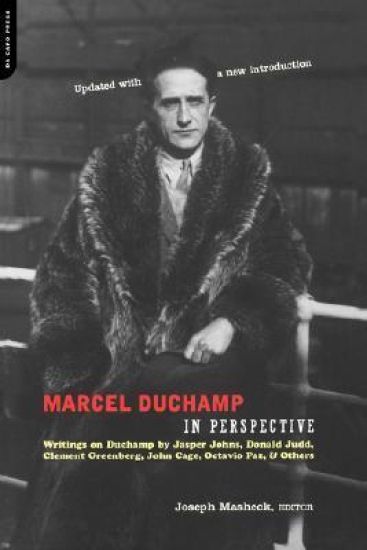
Best known for cheeky conceptual works,like his signed urinals ("R. Mutt") and his graffitioed Mona Lisa,Marcel Duchamp (1887-1968) was also an extraordinary painter and sculptor ( Nude Descending a Staircase ) who changed the language of twentieth-century art and reigns with Picasso and Matisse as one of its greatest influences. Joseph Masheck has compiled a sampler of the best writing on Duchamp, with pieces that include Duchamp's obituary from Artforum , written by Jasper Johns Octavio Paz on the ready-mades a Duchamp post-mortem by Hans Richter Donald Judd's investigation of Rrose Sélavy a "Counter-Avant-Garde" by Clement Greenberg a consideration by Guillaume Apollinaire and John Cage's "26 Statements on Marcel Duchamp." Illustrated with photographs of Duchamp's seminal pieces, and updated with a substantial preface that offers new scholarship as well as a fascinating consideration of why Duchamp's popularity has exponentially increased since this book first appeared, this is an essential volume for the Duchamp devotee.