

Kirjahaku
Etsi kirjoja tekijän nimen, kirjan nimen tai ISBN:n perusteella.
1000 tulosta hakusanalla Maria M
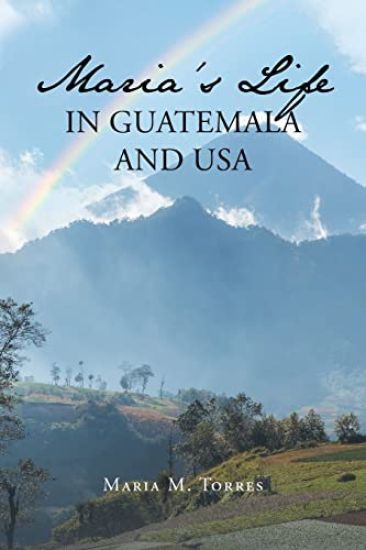
Maria's story begins in Guatemala, a country in Central America. It describes the hardships, mischievousness, and happiness of her childhood, along with her parents, five brothers, and four sisters. At an early age and being the oldest child, she assumes the responsibility to take care of her younger siblings. Despite their poverty and austere life, Maria and her family enjoy the best they can with their scarce resources.Destiny takes Maria to Los Angeles, California, a place where she settles and starts a new family. She meets her future husband, Cree, and has two children who are her world. It also depicts the sacrifices, challenging experiences, and the long hours of hard work she endures to begin building the foundation for a better future not only for herself but for her family as well.Maria's story is an ordinary but a unique story given her humble beginnings, her adaptation to a new society, and her successful achievements. This is a story of a simple and brave woman, an inspiration to emulate
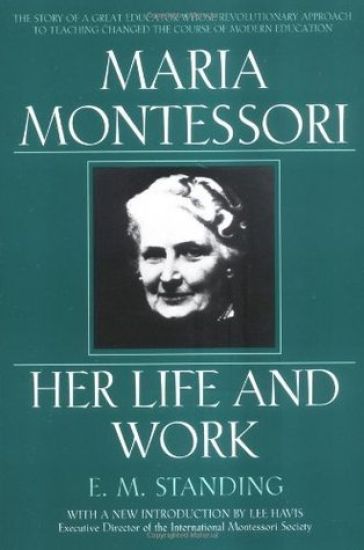
Maria Montessori is important background reading for parents considering Montessori education for their children, as well as for those training to become Montessori teachers. The first woman to win a degree as a Doctor of Medicine in Italy in 1896, Maria Montessori's mission to improve children's education began in the slums of Rome in 1907, and continued throughout her lifetime. Her insights into the minds of children led her to develop prepared environments and other tools and devices that have come to characterize Montessori education today. Her influence in other countries has been profound and many of her teaching methods have been adopted by educators generally. Part biography and part exposition of her ideas, this engaging book reveals through her letters and personal diaries Maria Montessori's humility and delight in the success of her educational experiments and is an ideal introduction to the principals and practices of the greatest educational pioneer of the 20th century.
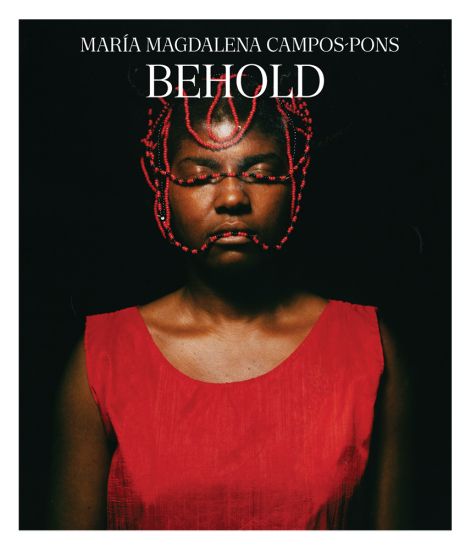
Maria Magdalena Campos-Pons - Behold
Carmen Hermo; Mazie M. Harris; Jenee-daria Strand; Selene Wendt; Phillip Townsend; Amalia Mesa-bains
GETTY TRUST PUBLICATIONS
2023
sidottu
Maria Magdalena Campos-Pons (b. 1959) makes powerful work that holds and beholds the stories of historically silenced peoples and urges societal change. Her journey as an artist, teacher, and activist has taken her from Cuba through the United States, and her autobiographical compositions honor her Nigerian and Chinese ancestors while also facing the future. With an artistic practice that crosses boundaries, intertwines media-from photography to sculpture, film to performance-and references traditions and beliefs ranging from feminism to Santeria Campos-Pons's work is deeply layered and complex. This volume, the first critical look at the artist's oeuvre in nearly two decades, surveys the concerns, materials, and places invoked throughout her forty-year career. Thoughtful essays explore her vibrant, arresting artwork, which confronts issues of agency and the construction of race and belonging and challenges us to reckon with these issues in our own lives.

Maria Montessori's Philosophy shows how Montessori's commitment to "follow the child" can be understood as a philosophical method for answering the great philosophical questions that confront human beings. Patrick Frierson discusses historical influences on Montessori's philosophical views, focusing on showing how her commitment to children led her to profound insights about a wide range of philosophical questions, from foundational metaphysics to applied ethics and politics. Her metaphysics, grounded in the concept of life as she observes it developing in the child, helps to address fundamental questions about the nature of the universe and the emergence of consciousness and value within it. Her pragmatic empiricist epistemology provides the framework for a sophisticated account of various intellectual virtues conducive to excellent cognitive engagement with reality. Her moral philosophy weaves together a broadly Nietzschean emphasis on self-perfection with respect for all human beings and a strong interest in social solidarity. In her philosophy of religion, she follows children as they guide her to recognize a sense for the divine and the importance of sensorily-informed religious practice. Her politics, informed by lifelong feminism and concern for peace, shows how the education of the child is the key to cosmopolitan solidarity and lasting peace. Her philosophy of technology, while recognizing the dangers of technological development, also sees in children the human potential, and even vocation, to develop technology for the betterment of the world.
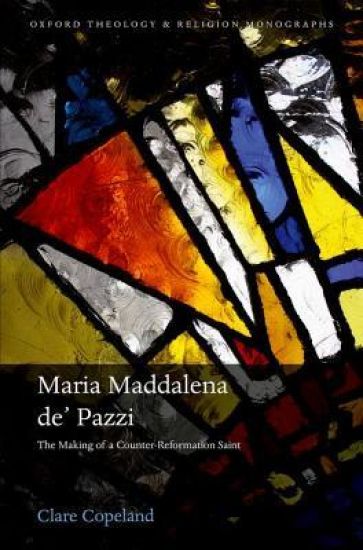
This work offers a detailed reconstruction of the campaigns for and trials resulting in the beatification (in 1626) and subsequent canonization in 1169 of the Florentine mystic nun, Maria Maddalena de' Pazzi (1566-1607). Clare Copeland places her findings in the wide context of the politics of saint-making at a time of particular significance for the history of Roman Catholic canonization. The Protestant Reformation had put the Roman Catholic Church on the defensive in this area of devotional practice and the period covered in this volume (ca. 1600-1669) saw far-reaching reforms in the ways in which sanctity was measured and adjudicated by Rome. Copeland shows how these developments need to be seen less in terms of a top-down attempt by the central organs of ecclesiastical control to impose a hegemony of holiness and more in terms of negotiation over the meanings of sanctity--and how it relates to canonization-between the various stakeholders.
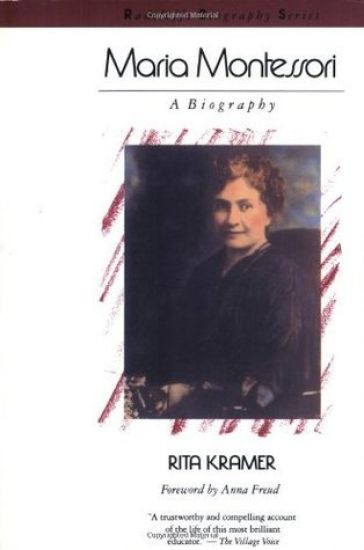
Maria Montessori (1870--1952) brought about a revolution in the classroom. She developed a method of teaching small children and inspired a movement that carried that method into every corner of the world. In her rich and forthright biography, Rita Kramer brings this powerful woman to life, illuminating not only her lasting contributions to child development and social reform, but also the controversies surrounding her training methods and private life.


This is a version of the famous nineteenth-century crime in which an innocent young country girl is murdered by a local squire who had earlier seduced her and is now anxious to marry an heiress. Partly through the agency of a gypsy, however, retribution overtakes the villain. Ingeniously telescoped in time and place into one simple setting.

A heartwarming story that showcases the inspiring, yet emotional journey of a humble 7-year-old, military-connected child named Mar a. Little Mar a finds herself questioning why her father is absent from home for long periods of time. When she accidentally discovers the answer, Mar a's longing for her father's presence is put to the test. Ironically, it is her courageous spirit that sets the tone for her father's safe return. Mar a Misses Her Hero was written with the intention of bringing awareness to one aspect of the lives of military-connected families, specifically dealing with the children of active duty deployed personnel. It aims to instill understanding, empathy and patriotism in the hearts of all who read it. Keywords: Military Child; Deployment; United States Armed Forces; Army; Navy; Air Force; Marines (USMC); Coast Guard; Reserves; National Guard; Childrens Book; Sacrifice; Honor; Separation; Abandonment; Emptiness; Absent Parent; Distress; Anxiety; Stress; Depression; Aggression; Tearfulness; Fear; Anger; Negative Behavior; Poor Academic Performance; Altered Family Role; Strength; Courage; Resiliency; Belonging; Connectedness; Acceptance; Patriotism; Hero; Fiction
Awful Disclosures by Maria Monk of the Hotel Dieu Nunnery of Montreal (1836)
Maria Monk
Kessinger Pub
2003
pokkari

In the mid-1800s, a turbulent time when women were often thought to be unworthy of higher education, Maria Mitchell rose above the prejudices of her day to become America's first professional woman astronomer. This exciting biography tells the story of Maria Mitchell's life, her amazing achievements, and her faith that saw God's handiwork in the heavens.
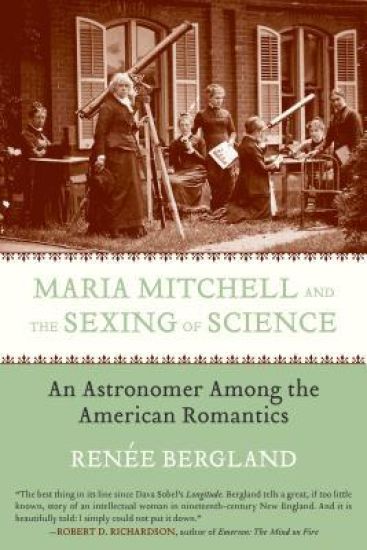
The story of one of America's first professional astronomers and the changes that led to science being a male-dominated field There are a number of intellectual women from the 19th century whose crucial roles in the philosophical, social, and scientific debates that roiled the era have not been fully examined.Among them is the astronomer Maria Mitchell. Given the relative dearth of women scientists today, most of us assume that science has always been a masculine domain. But as Ren e Bergland reminds us, science and humanities were not seen as separate spheres in the nineteenth century; indeed, before the Civil War, women flourished in science and mathematics, disciplines that were considered less politically threatening and less profitable than the humanities. Mitchell apprenticed with her father, an amateur astronomer; taught herself the higher math of the day; and for years regularly swept the clear Nantucket night sky with the telescope in her rooftop observatory. In 1847, thanks to these diligent sweeps, Mitchell discovered a comet and was catapulted to international fame. Within a few years she was one of America's first professional astronomers; as computer of Venus--a sort of human calculator--for the U.S. Navy's Nautical Almanac, she calculated the planet's changing position. After an intellectual tour of Europe that included a winter in Rome with Sophia and Nathaniel Hawthorne, Mitchell was invited to join the founding faculty at Vassar College, where she spent her later years mentoring the next generation of women astronomers. Tragically, opportunities for her students dried up over the next few decades as the increasingly male scientific establishment began to close ranks. Mitchell protested this cultural shift in vain. In this compulsively readable biography, Ren e Bergland chronicles the ideological, academic, and economic changes that led to the original sexing of science--now so familiar that most of us have never known it any other way.
John Russell Fearn (1908-1960) was an extremely prolific and popular British writer, who began in the American pulps, then almost single-handedly drove the post-World War II boom in British publishing with a flood of science fiction, detective stories, westerns, and adventure fiction. He employed numerous pseudonyms, such as Vargo Statten, Volstead Gridban, Hugo Blayn, Thorton Ayre, Polton Cross, Geoffrey Armstrong, Dennis Clive, John Cotton, Ephriam Winiki, Spike Gordon, and many others. He is noted for such grandly extravagant science fiction as _The Intelligence Gigantic_ and _The Liners of Time, _ "Mathematica," and the Golden Amazon series. He was so popular that one of his pseudonyms became the editor of VARGO STATEN'S SCIENCE FICTION MAGAZINE in the 1950's. His work is noted for its vigor amd wild imagination. He has always had a substantial cult following and has been popular in translation around the world.

The first book-length treatment of one of John James Audubon’s background painters.Maria Martin (1796–1863) was an evangelical Lutheran from Charleston, South Carolina, who became an accomplished painter within months of meeting John James Audubon. Martin met Audubon through her brother-in-law, Reverend John Bachman, who befriended Audubon while passing through Charleston on route to Florida where he expected to find new avian species. Martin was an amateur artist, but by the time Audubon left, she had familiarized herself with his style of drawing. Six months after their initial meeting, her background botanicals were deemed good enough to embellish Audubon’s exquisite bird paintings.Martin’s botanicals and insects appeared in volumes two and four of The Birds of America (1830–1838). She painted snakes for John Edwards Holbrook’s North American Herpetology (1842) and assisted in drafting the descriptive taxonomies prepared by John Bachman—who later became her husband in 1848 following the death of her older sister—for The Viviparous Quadrupeds of North America (1846–1854). Until now, her contributions have been unknown to all but the most astute students of natural history and art history and a close circle of family and friends.Maria Martin’s World is a heavily illustrated volume examining how Maria Martin learned to paint aesthetically beautiful botanicals with exacting accuracy. Drawing on deep research into archival documents and family-held artifacts, Debra Lindsay brings Maria Martin out from behind the curtain of obscurity and disinformation that has previously shrouded her and places her centrally in her own time and milieu. In the telling of Maria Martin’s story, Lindsay also uncovers many nuances of the behavior and actions of the two prominent men in her life that readers interested in Audubon and Bachman will find noteworthy.Martin was a gifted artist recognized for having contributed beautiful paintings to a natural history. But beyond the natural world this is a biography of an evangelical Lutheran steeped in the faith of her German ancestors and raised to respect the patriarchal norms of her time. Maria Martin pursued her scientific and artistic interests only when they did not conflict with her religious and familial responsibilities.

Maria Montessori is indisputably a major thinker in education. Marion O'Donnell's volume offers the most coherent account of Montessori's educational thought. This work is divided into: intellectual biography, critical exposition of Montessori's work, and, the reception and influence of Montessori's work and the relevance of the work today.This is a major international reference series providing comprehensive accounts of the work of seminal educational thinkers from a variety of periods, disciplines and traditions. It is the most ambitious and prestigious such project ever published - a definitive resource for at least a generation. The thinkers include: Aquinas, Aristotle, Bourdieu, Bruner, Dewey, Foucault, Freire, Holt, Kant, Locke, Montessori, Neill, Newman, Owen, Peters, Piaget, Plato, Rousseau, Steiner, Vygotsky, West and Wollstonecraft.
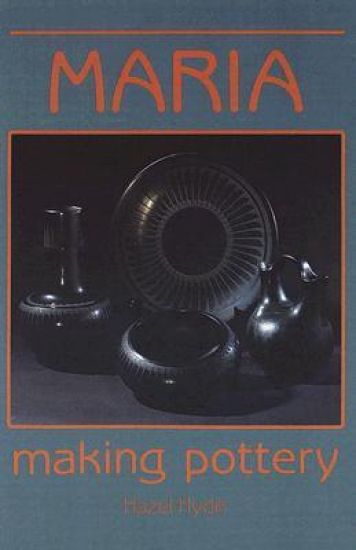
Retrace the steps it took for the most famous Indian potters in the American Southwest, Maria Martinez, to produce one of her prized pieces of black on black pottery.
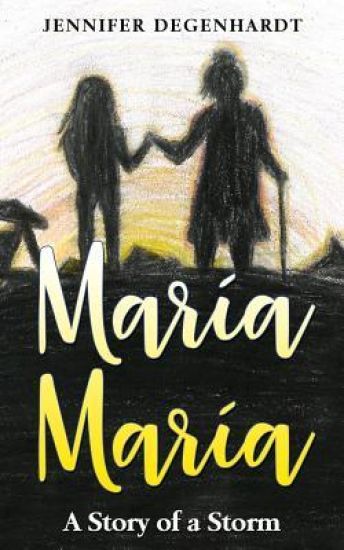
Kamila is a 9-year-old girl living with her parents in a little blue house in San Lorenzo, Puerto Rico. Their life is simple and easy. Both of her parents work and she attends school nearby. The family is very close, especially given that Kamila's abuela, whom she loves dearly, lives just blocks away. Life goes along at a beautiful pace, as it does on the island, until a family matter in Connecticut requires Kamila's mom, Stefany, to travel there to spend a few weeks helping her sister recover from surgery. Though Stefany's absence is an upset to regular life for the family, the situation is further intensified by the impending arrival of Hurricane Maria, the storm that decimated many islands in the Caribbean. Learn how this family prepares for the coming of the storm and deals with its aftermath. Through these experiences, some of which are tremendous losses, Kamila gains knowledge of what it means to be boricua (Puerto Rican), both as a daughter of the island and in spirit.

Kamila is a 9-year-old girl living with her parents in a little blue house in San Lorenzo, Puerto Rico. Their life is simple and easy. Both of her parents work and she attends school nearby. The family is very close, especially given that Kamila's abuela, whom she loves dearly, lives just blocks away. Life goes along at a beautiful pace, as it does on the island, until a family matter in Connecticut requires Kamila's mom, Stefany, to travel there to spend a few weeks helping her sister recover from surgery. Though Stefany's absence is an upset to regular life for the family, the situation is further intensified by the impending arrival of Hurricane Maria, the storm that decimated many islands in the Caribbean. Learn how this family prepares for the coming of the storm and deals with its aftermath. Through these experiences, some of which are tremendous losses, Kamila gains knowledge of what it means to be boricua (Puerto Rican), both as a daughter of the island and in spirit.Teachers: depending on your students this can be a level 2 or a level 3 book.