This work has been selected by scholars as being culturally important and is part of the knowledge base of civilization as we know it.This work is in the public domain in the United States of America, and possibly other nations. Within the United States, you may freely copy and distribute this work, as no entity (individual or corporate) has a copyright on the body of the work.Scholars believe, and we concur, that this work is important enough to be preserved, reproduced, and made generally available to the public. To ensure a quality reading experience, this work has been proofread and republished using a format that seamlessly blends the original graphical elements with text in an easy-to-read typeface.We appreciate your support of the preservation process, and thank you for being an important part of keeping this knowledge alive and relevant.
This work has been selected by scholars as being culturally important and is part of the knowledge base of civilization as we know it.This work is in the public domain in the United States of America, and possibly other nations. Within the United States, you may freely copy and distribute this work, as no entity (individual or corporate) has a copyright on the body of the work.Scholars believe, and we concur, that this work is important enough to be preserved, reproduced, and made generally available to the public. To ensure a quality reading experience, this work has been proofread and republished using a format that seamlessly blends the original graphical elements with text in an easy-to-read typeface.We appreciate your support of the preservation process, and thank you for being an important part of keeping this knowledge alive and relevant.
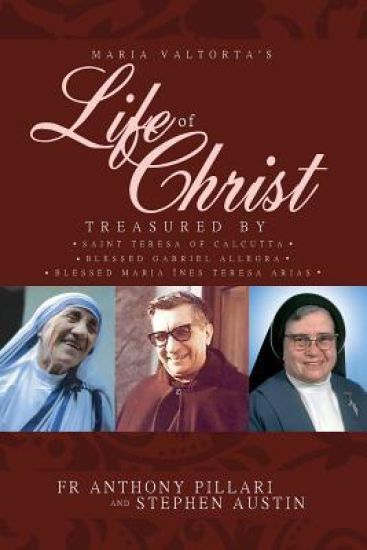
A book beloved by Mother Teresa, by Blessed Gabriel Allegra, one of the most famous 20thcentury biblical exegetes, and by Blessed Mar a In s Teresa Arias, Maria Valtorta's Poem of the Man-God has been increasingly treasured by hundreds of thousands. Some have called Valtorta the greatest Italian author of the 20thcentury. The testimonies of these three saints and groundbreaking analysis by Fr. Anthony Pillari, J.C.L., begins "lifting the veil" to reveal this hidden treasure. "When in the 1980's I commenced reading The Poem of the Man-God, I was cautioned by overscrupulous well-wishers concerned for my spiritual welfare against reading a book which had been placed on the Index of Forbidden books. Father Anthony Pillari in Maria Valtorta's Life of Christ has banished for good and all any lingering doubts as to the orthodoxy of her visions and writings."-Cardinal Thomas Williams, Archbishop Emeritus of Wellington, New Zealand"Fr. Anthony Pillari and Stephen Austin deserve to be commended for this precious work which will, God willing, open up for the Church the great treasure that isThe Poem of the Man-God. Valtorta's great work, like St. Louis de Montfort's priceless True Devotion to Mary, has been a hidden treasure at times despised and rejected even by those in the Church. With the witness of these saints who have profited from Valtorta's incredible insights into the life of Christ, may the whole Church awaken to the riches of an intimate knowledge of the life and times of Our Lord."-John-Henry Westen, Editor in Chief and Co-Founder of LifeSiteNews"Fr. Pillari and Stephen Austin's text on The Poem of the Man-God makes clear the canonical legitimacy for all faithful Catholics to read and appreciate this great mystical work. The positive spiritual discernment of St. Teresa of Calcutta and other recently declared 'Blesseds' of the Church testify to its inspiring and authentic contents. The sublime Mariological theme of Mary as the 'Co-redemptrix' with and under Jesus, the divine Redeemer, accurately embodies the best and richest Mariology of the last millennium. Rather than a threat to Scripture reading, The Poem makes the superior Word of God come alive and move souls to repentance, conversion, and peace."The time has come for the Poem of the Man-God to be universally appreciated as the contemporary mystical classic that it is. Thank you, Fr. Pillari and Stephen Austin for this outstanding articulation and defense of the pearls of The Poem for today."-- Dr. Mark Miravalle St. John Paul II Chair of Mariology Franciscan University of Steubenville President, International Marian Association
Paola De Pietri first learnt of World War I at school and from family members who recounted historical facts through personal experiences - experiences that are in danger of being forgotten. In To Face De Pietri preserves these memories in a series of photographs of the alps between Italy and Austria, a landscape that still bears the scars of trench warfare from nearly a century ago. De Pietri's subtle, unassuming images show a landscape once damaged by man is now being reclaimed by nature.
"Maria", e uno dei primi racconti di Stefano Centrone. Autore emergente che vuole dire anche lui la sua attraverso i suoi racconti. Scrittore e poeta tra i piu giovani, entrato da poco nel mondo della letteratura, ha tanto da condividere attraverso i suoi pensieri. Ma qui lo troviamo in veste di scrittore. Attraverso questa veste vuole raccontare le sue storie, i suoi racconti: alcuni inventati, altri con una nota di realta.Il racconto "Maria", e uno di quest'ultimi: un misto di realta e fantasia, dove i personaggi e i luoghi fanno e hanno fatto parte della vita dell'autore.Infatti, il protagonista maschile Stefano non a caso porta il suo nome; mentre il personaggio femminile Maria e tratto dalla sua fantasia.In questo racconto, il terzo protagonista e l'amore, l'amore sotto ogni forma di positivita. Un amore che pero' viene interrotto in modo drammatico e che finira con la morte di uno dei due personaggi della storia.
Her story of a woman incarcerated in a madhouse by her abusive husband dramatizes the effect of the English marriage laws, which made women virtually the property of their husbands.
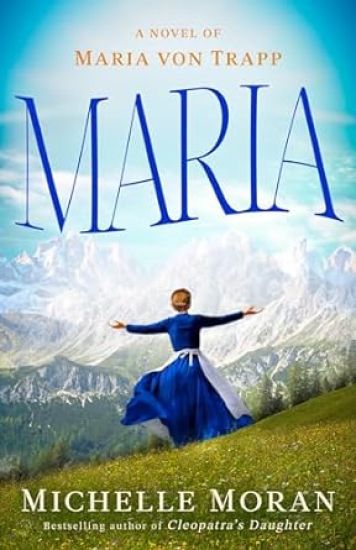
Maria von Trapp. You know the name and the iconic songs, but do you know her real story? This dramatic novel, based on the woman glamorized in The Sound of Music, brings Maria to life as never before. In the 1950s, Oscar Hammerstein is asked to write the lyrics to a musical based on the life of a woman named Maria von Trapp. He's intrigued to learn that she was once a novice who hoped to live quietly as an Austrian nun before her abbey sent her away to teach a widowed baron's sickly child. What should have been a ten-month assignment, however, unexpectedly turned into a marriage proposal. And when the family was forced to flee their home to escape the Nazis, it was Maria who instructed them on how to survive using nothing but the power of their voices. It's an inspirational story, to be sure, and as half of the famous Rodgers & Hammerstein duo, Hammerstein knows it has big Broadway potential. Yet much of Maria's life will have to be reinvented for the stage, and with the horrors of war still fresh in people's minds, Hammerstein can't let audiences see just how close the von Trapps came to losing their lives. But when Maria sees the script that is supposedly based on her life, she becomes so incensed that she sets off to confront Hammerstein in person. Told that he's busy, she is asked to express her concerns to his secretary, Fran, instead. The pair strike up an unlikely friendship as Maria tells Fran about her life, contradicting much of what will eventually appear in The Sound of Music. A tale of love, loss, and the difficult choices that we are often forced to make, Maria is a powerful reminder that the truth is usually more complicated--and certainly more compelling--than the stories immortalized by Hollywood.
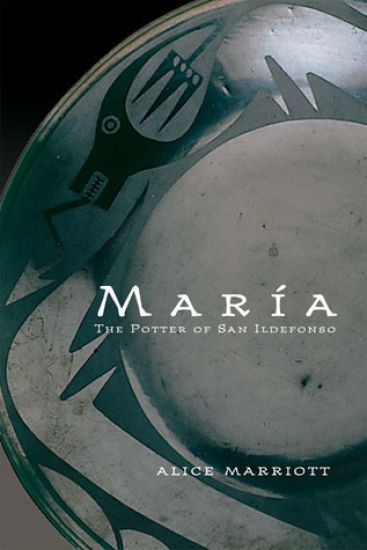
María: The Potter of San Ildefonso is the story of María Martínez and her husband, Julián, who revived the ancient Pueblo craft of pottery-making and stimulated interest in Southwestern Pueblo pottery among both white people and Indians.María Montoya Martínez, or Marie, as she sometimes signs her pottery, is a woman who has become in her own lifetime a legend. She lives in the pueblo of San Ildefonso, near Santa Fé, New Mexico, and although her life has been, as closely as she could make it, the normal life of a woman of her culture, her unusual qualities have set her apart and gained her fame throughout the world.Through her mastery of pottery-making, María brought economic gain to her family and her village. However, distressing problems accompanied success and fame. Liquor ultimately wrecked Julían. There was dissension within the pueblo. And there was the succession of admiring white people who invaded her home and interrupted her work. Not least, in María view, was the departure of her own children from many Pueblo customs.Inextricably woven into the story of María is the story of the pottery of the Southwestern Pueblos, a native craft that has become a national art interest, including the development of the unique black-on-black ware by Julián, the first of which is reproduced among the illustrations.Margaret Lefranc's many accurate drawings of actual pieces of pottery provide an almost complete documentary history of the craft and show some of the finest examples of María's art. Her skilled pen has also interpreted faithfully the spirit of María, the Pueblo Indians, and the pottery.