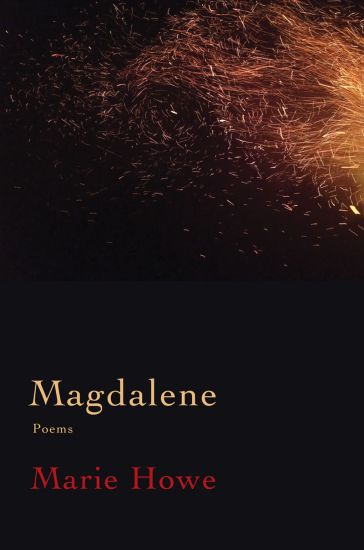
Magdalene imagines the biblical figure of Mary Magdalene as a woman who embodies the spiritual and sensual, alive in a contemporary landscape—hailing a cab, raising a child, listening to news on the radio. Between facing the traumas of her past and navigating daily life, the narrator of Magdalene yearns for the guidance of her spiritual teacher, a Christ figure, whose death she continues to grieve. Erotic, spirited, and searching for meaning, she is a woman striving to be the subject of her own life, fully human and alive to the sacred in the mortal world.
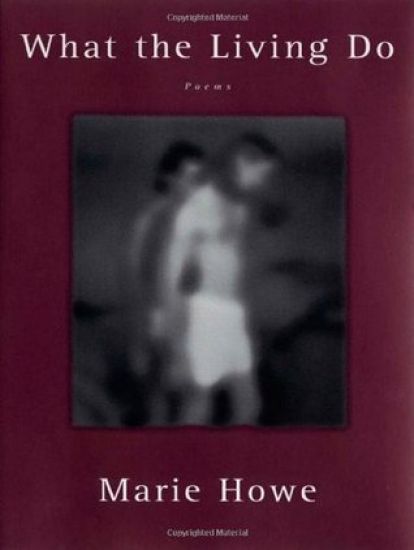
Informed by the death of a beloved brother, here are the stories of childhood, its thicket of sex and sorrow and joy, boys and girls growing into men and women, stories of a brother who in his dying could teach how to be most alive. What the Living Do reflects "a new form of confessional poetry, one shared to some degree by other women poets such as Sharon Olds and Jane Kenyon. Unlike the earlier confessional poetry of Plath, Lowell, Sexton et al., Howe's writing is not so much a moan or a shriek as a song. It is a genuinely feminine form . . . a poetry of intimacy, witness, honesty, and relation" (Boston Globe).
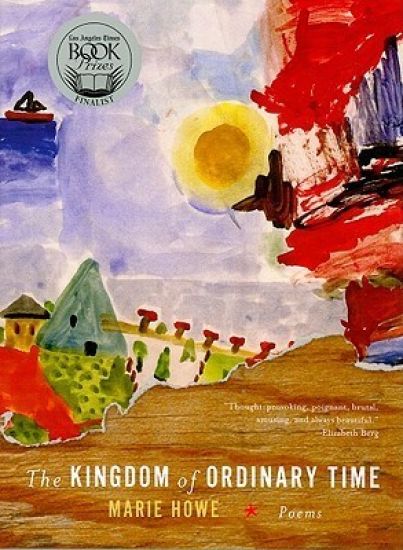
Hurrying through errands, attending a dying mother, helping her own child down the playground slide, the speaker in these poems wonders: what is the difference between the self and the soul? The secular and the sacred? Where is the kingdom of heaven? And how does one live in Ordinary Time—during those apparently unmiraculous periods of everyday trouble and joy?
Magdalene imagines the biblical figure of Mary Magdalene as a woman who embodies the spiritual and sensual, alive in a contemporary landscape—hailing a cab, raising a child, listening to news on the radio. Between facing the traumas of her past and navigating daily life, the narrator of Magdalene yearns for the guidance of her spiritual teacher, a Christ figure, whose death she continues to grieve. Erotic, spirited, and searching for meaning, she is a woman striving to be the subject of her own life, fully human and alive to the sacred in the mortal world.
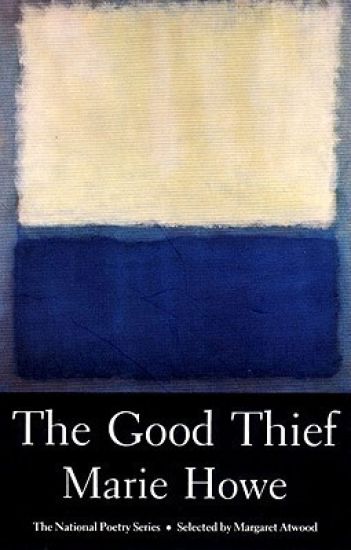
Selected by Margaret Atwood as a winner in the 1987 Open Competition of the National Poetry Series, this unique collection was the first sounding of a deeply authentic voice. Ms. Howe's early writings concern relationship, attachment, and loss, in a highly original search for personal transcendence. Many of the thirty-four poems in The Good Thief appeared in such prestigious journals and periodicals as The Atlantic, The American Poetry Review, Poetry, Ploughshares, The Agni Review, and The Partisan Review.
Characterized by "a radical simplicity and seriousness of purpose, along with a fearless interest in autobiography and its tragedies and redemptions" (Matthew Zapruder, New York Times Magazine), Marie Howe's poetry transforms penetrating observations of everyday life into sacred, humane miracles. This essential volume draws from each of Howe's four previous collections--including What the Living Do (1997), a haunting archive of personal loss, and the National Book Award-longlisted Magdalene (2017), a spiritual and sensual exploration of contemporary womanhood--and contains twenty new poems. Whether speaking in the voice of the goddess Persephone or thinking about aging while walking the dog, Howe is "a light-bearer, an extraordinary poet of our human sorrow and ordinary joy" (Dorianne Laux).
Characterized by "a radical simplicity and seriousness of purpose, along with a fearless interest in autobiography and its tragedies and redemptions" (Matthew Zapruder, New York Times Magazine), Marie Howe's poetry transforms penetrating observations of everyday life into sacred, humane miracles. This essential volume draws from each of Howe's four previous collections--including What the Living Do (1997), a haunting archive of personal loss, and the National Book Award-longlisted Magdalene (2017), a spiritual and sensual exploration of contemporary womanhood--and contains twenty new poems. Whether speaking in the voice of the goddess Persephone or thinking about aging while walking the dog, Howe is "a light-bearer, an extraordinary poet of our human sorrow and ordinary joy" (Dorianne Laux).
What the Earth Seemed to Say is a powerful collection of more than three decades of profound, luminous poetry from one of America’s most daring and courageous poets. With its ‘radical simplicity and seriousness of purpose, along with a fearless interest in autobiography and its tragedies and redemptions’ (Matthew Zapruder, New York Times Magazine), Marie Howe’s poetry transforms penetrating observations of everyday life into sacred, humane miracles. This essential volume draws from each of her four previous collections – including Magdalene (2017), a spiritual and sensual exploration of contemporary womanhood, and What the Living Do (1997), a haunting archive of personal loss – and contains more than fifteen new poems. Whether speaking in the voice of the goddess Persephone or thinking about ageing while walking the dog, Howe is ‘a light-bearer, an extraordinary poet of our human sorrow and ordinary joy’ (Dorianne Laux).
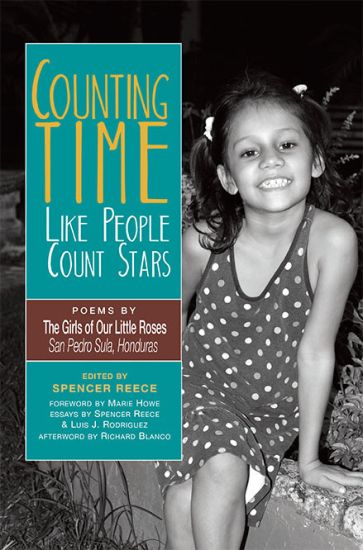
Over twenty-five years ago two Americans, Dr. Diana Frade and her husband, Episcopalian Bishop Leo Frade, founded Our Little Roses Home for Girls in San Pedro Sula, Honduras. Until then abandoned girls were often given to prisoners since no such homes existed. Now Our Little Roses has some 60 rescued or orphaned girls in a city once considered the “murder capital of the world.” Poverty and violence—especially in the past 25 years attributed to deported Los Angeles–based gangs—has affected the lives of all in the poorest Spanish-speaking country of the hemisphere. Unaccompanied youth from Honduras were among the 100,000 refugees, which also included children and youth from El Salvador and Guatemala, arriving to the United States between 2013 and 2015. American poet and Episcopalian priest Spencer Reece spent two years at Our Little Roses teaching poetry to girls who have lost family due to poverty, violence, and disasters like Hurricane Mitch that struck Honduras, Nicaragua, and Guatemala in 1998, resulting in 22,000 people dead or missing, 2.7 million homeless, and $6 billion in damages.This book has essays by Reece and Luis J. Rodríguez as a backdrop to the girls’ voices, and a foreword and afterword by poets Marie Howe and Richard Blanco. Luis and his wife Trini, a poet, teacher, and indigenous healer, also helped teach at Our Little Roses and the Holy Family Bilingual School inside a walled compound in one of the city’s poorest neighborhoods. Here poetry and stories transcend the pain of loss that often goes unexpressed. Here poetry serves as a beacon of hope and inspiration in the shadows. Here poetry can save lives.
"Once upon a time..." who doesn't love a story that starts with those familiar words? They take us back to an earlier time when life was simpler and there was always the promise of a happy ending. Metaphor Stories for Hypnosis: Stimulate Change While Telling a Tale, draws on the imagination in much the same way; communicating with our subconscious mind to make change more accessible and comfortable. The stories included here can be used by hypnosis professionals with any type of client to stimulate positive transformation and outcomes during hypnotic trance
Khelena znala, chto uezzhat iz Londona - ne luchshaja ideja. No ona i ne predstavljala, kakoe ispytanie zhdjot ejo semju. Otets devochki ustroilsja v dom mistera Ueskotta khranitelem chasov i podpisal uzhasnyj dogovor: esli khot odni chasy ostanovjatsja, to ikh semja poterjaet vsjo svojo imuschestvo! Kto zhe znal, chto chasov v dome bolshe sotni?! Khelena ne ponimaet, pochemu mister Ueskott tak boitsja, chto ego chasy poterjajut svoj khod? Krome togo, ona nakhodit po vsemu domu strannye risunki. A eschjo ej kazhetsja, chto za nej kto-to sledit... Dobro pozhalovat v pomeste, gde sprjatano more tajn! Vas zhdjot zakhvatyvajuschee i atmosfernoe chtenie, ot kotorogo nevozmozhno otorvatsja. Ischite vnutri kartu anglijskogo gorodka, v kotorom razvivaetsja dejstvie, i krasivye chjorno-belye illjustratsii. "Dom s sotnej chasov" - luchshaja podrostkovaja kniga po versii The Times i The Telegraph, otmechennaja takzhe prestizhnymi nagradami "Detskaja knizhnaja premija Mela Peta" i "Luchshaja kniga Vostochnoj Anglii".Perevodchik: Rybakova Elizaveta JurevnaKhudozhnik: Sjoderlund Sara Katarina
Zdes vsegda zakryty zanaveski. Na predmetakh - strannye initsialy. A eschjo v etot dom nikogda ne prikhodjat gosti... I imenno sjuda pereekhala semja Nensi! Teper devochke i ejo sestre Violette nelzja pokidat dom. A sama mama vtajne kuda-to ischezaet po nocham. Devochka v nedoumenii: pochemu mama prinjala takoe reshenie? I kakie sekrety ona skryvaet? Zakhvatyvajuschee rassledovanie v settinge staroj Anglii! Mrachnye semejnye tajny, kotorye derzhat v naprjazhenii do poslednej stranitsy. Oformlenie v trendovoj stilistike: na oblozhke glavnaja geroinja, vnutri - klassnyj maket s zastavkami i pismami. Eta istorija vybrana knigoj mesjatsa, a sama avtor nominirovana na prestizhnye literaturnye premii.