The race of life is often run through the difficult terrain of hardship, challenges, and conflict. In Secrets of the Second Mile, Mark Crow combines his own life's experiences with biblical principles to share how you are designed to finish the race of life-victoriously The victor's crown awaits you beyond the challenges of life, but first you must cross the finish line.This book will help you: * Prepare for winning the race of life.* Get your second wind and continue strong.* Overcome obstacles designed to stop you.* Understand the biblical principles that are found in the second mile.* Learn the lessons, secrets, and blessings only found by finishing the race.Life's a race - that you were designed to win. Begin to practice Secrets of the Second Mile, and prepare yourself for victory
Public Sector Strategy explores how strategic decisions are developed and implemented in the public sector, and examines the psychology underpinning strategic decision-making.Combining knowledge from traditional perspectives with contemporary insights on strategic management, this book considers how managers make their decisions and provides key concepts and practical tools to aid delivery of strategy within highly institutionalised settings. This book provides theoretical grounding, real-life global cases, and practical examples of strategic decisions in an international public-sector context by working through the underpinnings of strategy, the influencing factors of strategic decision-making, strategic implementation, and strategic tools in practice.It should be a core textbook for advanced undergraduate and postgraduate students studying public sector strategy and strategic management more broadly. It will also be of benefit for public sector managers, consultants, and private sector organisations who wish to interact with the public sector.
Public Sector Strategy explores how strategic decisions are developed and implemented in the public sector, and examines the psychology underpinning strategic decision-making.Combining knowledge from traditional perspectives with contemporary insights on strategic management, this book considers how managers make their decisions and provides key concepts and practical tools to aid delivery of strategy within highly institutionalised settings. This book provides theoretical grounding, real-life global cases, and practical examples of strategic decisions in an international public-sector context by working through the underpinnings of strategy, the influencing factors of strategic decision-making, strategic implementation, and strategic tools in practice.It should be a core textbook for advanced undergraduate and postgraduate students studying public sector strategy and strategic management more broadly. It will also be of benefit for public sector managers, consultants, and private sector organisations who wish to interact with the public sector.
This issue addresses hypercoagulable states, such as antiphospholipid antibody syndrome, cancer-associated thrombosis, and coagulopathy associated with sepsis. New anticoagulants discussed include oral Xa inhibitors, oral IIa inhibitors, agents for the treatment of HIT, and use of low molecular weight heparin to improve survival in cancer patients.
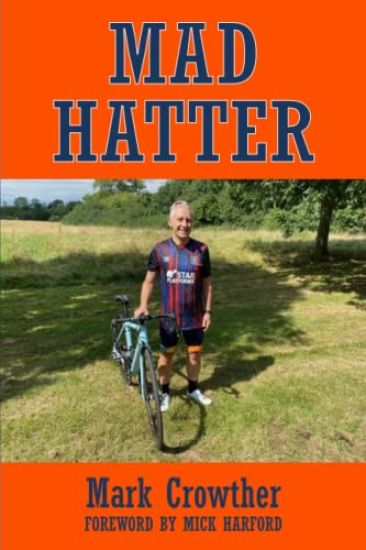
My love for Luton Town started more than 40 years ago with my first game that I attended was on 25th April 1981 and has been a passion of mine ever since. In recent years, my other keen interest, cycling has helped me to cope with my struggles with depression along with being able to focus my energy on supporting charities I believed in, so the motivation to combine my two passions led to the idea of my away cycle challenge in the 21/22 season. Through my book, I wanted to share some of my experiences, the roller coaster of emotions of being a hatters fan, a story of my personal journey and the struggles I have faced, and share my memories of an incredible season, reaching the play offs, I decided to write this book, to give an insight into my experiences of my away cycle challenge, to share the stories of my journey, the ups and downs and not just the hills and also, to share the truly memorable moments I have experienced along with the many incredible people I had the pleasure to meet on my challenge, memories to stay with me forever.
Whether it's playing against humans, playing against computers, learning from Grandmasters or simply finding out the latest chess results and gossip, chess on the internet has become a massive business over the past few years. In this revolutionary book, distinguished chess webmaster Mark Crowther explains to the reader how to get the maximum out of his or her 'chess on the net'. Crowther casts his expert opinions on the ever-increasing number of chess sites available to the surfer. *Reviews of the hottest chess sites *Advice on where to play on the web * Ideal for both competitive and casual players
Revision with unchanged content. Attitudes toward gays and lesbians are undergoing significant changes around the world. Previous research has determined that Canadians often exhibit more tolerant attitudes toward homosexuality than Americans, yet few studies have attempted to uncover why this pattern persists. This book seeks to determine what factors account for differences in attitudes toward homosexuality among Canadians and Americans. The author re-examines the established assertion that divergent levels of religious commitment, rather than other socio-demographic, cultural and socio-structural factors, largely account for attitudinal differences between the two neighbouring nations. This study includes a review of previous social scientific research on this topic, followed by a comprehensive data analysis of attitudes toward homosexuality between Canadians and Americans from 1981 to 2000 using World Values Surveys data. Scholars and students interested in cross-national comparisons of social values will find this book particularly useful as it offers insight into the challenges to be expected in future research endeavours.
Emotional Self-Management in Academia draws on new empirical research from academics' own personal accounts of emotional experiences from their everyday practice to illustrate how their emotional work is adapting in response to a constantly changing workplace. Marilena Antoniadou and Mark Crowder re-examine Hochschild's notion of emotional labour and combine it with emotion regulation strategies and emotional boundaries as utilised into the everyday practices of modern academics. Using illuminating accounts from academics working in the UK, US, Australia, Denmark, Greece and Cyprus, Emotional Self-Management in Academia emphasises that it is emotion – complex, messy and opaque – that drives academics' self-management, as shaped by contextual factors, such as organisational climate.Aimed at academic researchers and professionals, the chapters establish the context of contemporary emotion work and examine it specifically in higher education settings. This is a timely and engaging exploration of the emotional labour of academics today, set against a backdrop of managerial challenges and economic pressures of working in this sector.
Are you looking for teaching ideas to make your science lessons come alive? Full of suggestions for exciting practical work to engage children, this book addresses and explains the science behind the experiments, and emphasises the need to engage the learner through minds-on activities. It shows you where to make links to the national curricula in England, Scotland, Wales and Northern Ireland, and it covers the three sciences: chemistry, biology and physics. The detailed subject knowledge helps you grasp key concepts, and there are lots of useful diagrams to illustrate important points. Experiments include: - extracting DNA from a kiwi fruit - capturing rainbows - the chromatography of sweets - removing iron from cornflakes - a plate tectonic jigsaw These practical activities will provide you with ways to ensure your students respond enthusiastically to science, and the book will also help you develop your subject knowledge and ensure you meet your Qualified Teacher Status (QTS) standards. Perfect reading for Secondary Science PGCE students, as well as those on the Graduate Teacher Programme (GTP), this book is also ideal for non-specialists who are looking for support as they get to grips with the sciences. Gren Ireson is Professor of Science Education at Nottingham Trent University. Mark Crowley is a Teaching Research Fellow in the Centre for Effective Learning in Science, Nottingham Trent University. Ruth Richards is Subject Strand Leader for the PGCE and Subject Knowledge Enhancement (SKE) courses in Science at Nottingham Trent University, and an examiner for A-level Geology. John Twidle is Subject Leader for the PGCE and MSc Science programmes at Loughborough University.
Are you looking for teaching ideas to make your science lessons come alive? Full of suggestions for exciting practical work to engage children, this book addresses and explains the science behind the experiments, and emphasises the need to engage the learner through minds-on activities. It shows you where to make links to the national curricula in England, Scotland, Wales and Northern Ireland, and it covers the three sciences: chemistry, biology and physics. The detailed subject knowledge helps you grasp key concepts, and there are lots of useful diagrams to illustrate important points. Experiments include: - extracting DNA from a kiwi fruit - capturing rainbows - the chromatography of sweets - removing iron from cornflakes - a plate tectonic jigsaw These practical activities will provide you with ways to ensure your students respond enthusiastically to science, and the book will also help you develop your subject knowledge and ensure you meet your Qualified Teacher Status (QTS) standards. Perfect reading for Secondary Science PGCE students, as well as those on the Graduate Teacher Programme (GTP), this book is also ideal for non-specialists who are looking for support as they get to grips with the sciences. Gren Ireson is Professor of Science Education at Nottingham Trent University. Mark Crowley is a Teaching Research Fellow in the Centre for Effective Learning in Science, Nottingham Trent University. Ruth Richards is Subject Strand Leader for the PGCE and Subject Knowledge Enhancement (SKE) courses in Science at Nottingham Trent University, and an examiner for A-level Geology. John Twidle is Subject Leader for the PGCE and MSc Science programmes at Loughborough University.
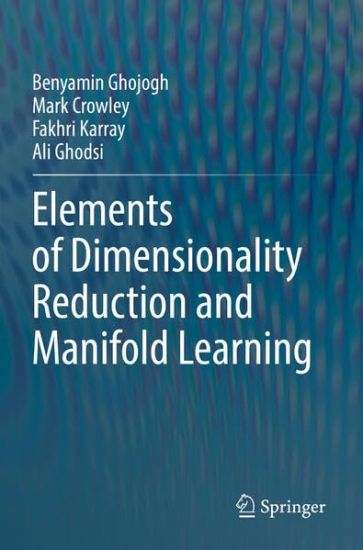
Dimensionality reduction, also known as manifold learning, is an area of machine learning used for extracting informative features from data for better representation of data or separation between classes. This book presents a cohesive review of linear and nonlinear dimensionality reduction and manifold learning. Three main aspects of dimensionality reduction are covered: spectral dimensionality reduction, probabilistic dimensionality reduction, and neural network-based dimensionality reduction, which have geometric, probabilistic, and information-theoretic points of view to dimensionality reduction, respectively. The necessary background and preliminaries on linear algebra, optimization, and kernels are also explained to ensure a comprehensive understanding of the algorithms.The tools introduced in this book can be applied to various applications involving feature extraction, image processing, computer vision, and signal processing. This book is applicable to a wide audience who would like to acquire a deep understanding of the various ways to extract, transform, and understand the structure of data. The intended audiences are academics, students, and industry professionals. Academic researchers and students can use this book as a textbook for machine learning and dimensionality reduction. Data scientists, machine learning scientists, computer vision scientists, and computer scientists can use this book as a reference. It can also be helpful to statisticians in the field of statistical learning and applied mathematicians in the fields of manifolds and subspace analysis. Industry professionals, including applied engineers, data engineers, and engineers in various fields of science dealing with machine learning, can use this as a guidebook for feature extraction from their data, as the raw data in industry often require preprocessing.The book is grounded in theory but provides thorough explanations and diverseexamples to improve the reader’s comprehension of the advanced topics. Advanced methods are explained in a step-by-step manner so that readers of all levels can follow the reasoning and come to a deep understanding of the concepts. This book does not assume advanced theoretical background in machine learning and provides necessary background, although an undergraduate-level background in linear algebra and calculus is recommended.
Dimensionality reduction, also known as manifold learning, is an area of machine learning used for extracting informative features from data for better representation of data or separation between classes. This book presents a cohesive review of linear and nonlinear dimensionality reduction and manifold learning. Three main aspects of dimensionality reduction are covered: spectral dimensionality reduction, probabilistic dimensionality reduction, and neural network-based dimensionality reduction, which have geometric, probabilistic, and information-theoretic points of view to dimensionality reduction, respectively. The necessary background and preliminaries on linear algebra, optimization, and kernels are also explained to ensure a comprehensive understanding of the algorithms.The tools introduced in this book can be applied to various applications involving feature extraction, image processing, computer vision, and signal processing. This book is applicable to a wide audience who would like to acquire a deep understanding of the various ways to extract, transform, and understand the structure of data. The intended audiences are academics, students, and industry professionals. Academic researchers and students can use this book as a textbook for machine learning and dimensionality reduction. Data scientists, machine learning scientists, computer vision scientists, and computer scientists can use this book as a reference. It can also be helpful to statisticians in the field of statistical learning and applied mathematicians in the fields of manifolds and subspace analysis. Industry professionals, including applied engineers, data engineers, and engineers in various fields of science dealing with machine learning, can use this as a guidebook for feature extraction from their data, as the raw data in industry often require preprocessing.The book is grounded in theory but provides thorough explanations and diverseexamples to improve the reader’s comprehension of the advanced topics. Advanced methods are explained in a step-by-step manner so that readers of all levels can follow the reasoning and come to a deep understanding of the concepts. This book does not assume advanced theoretical background in machine learning and provides necessary background, although an undergraduate-level background in linear algebra and calculus is recommended.
A young woman's body is found horribly mutilated in Jackson Square in New Orleans, with no clue as to who killed her or why she was killed. A year later and a thousand miles away, a man's body is found in Rhode Island, mutilated in a similar way and with no clue as to the killer. The details of the two cases have fallen under the scrutiny of Retired Navy Commander Mike Gerard as part of a study involving Post Traumatic Stress Syndrome for the Veterans Administration. Before he can trace the connection between the two cases, a third person dies in Arizona with the same mutilation. With little help from law enforcement, Commander Gerard takes it on himself to determine why these people were killed with the same gruesome features. Puzzled over the link between the murders, he begins to receive taunting letters. The anonymous writer claims that Gerard already has enough information to know who the killer is, and when and where the next death is going to occur. With little time to spare, Gerard has to sort through the mysterious doublespeak in the letters to identify the killer and save the next victim.