Kirjojen hintavertailu. Mukana 12 390 323 kirjaa ja 12 kauppaa.

Kirjahaku

Etsi kirjoja tekijän nimen, kirjan nimen tai ISBN:n perusteella.

1000 tulosta hakusanalla Marshall Alfred

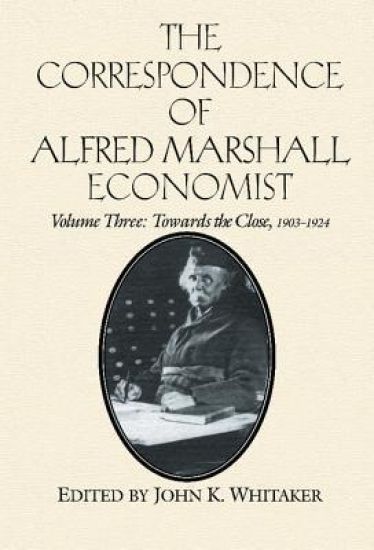
The Correspondence of Alfred Marshall, Economist

The Correspondence of Alfred Marshall, Economist

Marshall Alfred

Cambridge University Press
2005
pokkari
This is the third of a three-volume work constituting a comprehensive, scholarly edition of the correspondence of the English economist, Alfred Marshall (1842–1924), one of the leading figures in the development of economics and the founder of the Cambridge School of Economics. The edition fills a long-standing gap in the history of economic thought with hitherto unpublished material. Students will find it a basic resource for understanding the development of economics and other social sciences in the period since 1870. In particular, it provides much new information about Marshall's views on economic, social and political issues, his struggles to promote the teaching of economics at the University of Cambridge, and his relations with colleagues in Cambridge and elsewhere. Marshall's letters are notable for their frankness and spontaneity.
The Correspondence of Alfred Marshall, Economist

The Correspondence of Alfred Marshall, Economist

Marshall Alfred

Cambridge University Press
2005
pokkari
This is the second of a three-volume work constituting a comprehensive, scholarly edition of the correspondence of the English economist, Alfred Marshall (1842–1924), one of the leading figures in the development of economics and the founder of the Cambridge School of Economics. The edition fills a long-standing gap in the history of economic thought with hitherto unpublished material. Students will find it a basic resource for understanding the development of economics and other social sciences in the period since 1870. In particular, it provides much new information about Marshall's views on economic, social and political issues, his struggles to promote the teaching of economics at the University of Cambridge, and his relations with colleagues in Cambridge and elsewhere. Marshall's letters are notable for their frankness and spontaneity.
The Correspondence of Alfred Marshall, Economist

The Correspondence of Alfred Marshall, Economist

Marshall Alfred

Cambridge University Press
2005
pokkari
This is the first of a three-volume work constituting a comprehensive, scholarly edition of the correspondence of the English economist, Alfred Marshall (1842–1924), one of the leading figures in the development of economics and the founder of the Cambridge School of Economics. The edition fills a long-standing gap in the history of economic thought with hitherto unpublished material. Students will find it a basic resource for understanding the development of economics and other social sciences in the period since 1870. In particular, it provides much new information about Marshall's views on economic, social and political issues, his struggles to promote the teaching of economics at the University of Cambridge, and his relations with colleagues in Cambridge and elsewhere. Marshall's letters are notable for their frankness and spontaneity.
Alfred Marshall and Modern Economics

Alfred Marshall and Modern Economics

N. Hart

Palgrave Macmillan
2013
sidottu
Alfred Marshall and Modern Economics re-examines Marshall's legacy and relevance to modern economic analysis with the more settled conventional wisdom concerning evolutionary processes allowing advances in economic theorising which were not possible in Marshall's life time.
Alfred Marshall
This 4 volume set contains the most significant contributions and new developments in Marshallian scholarship since the publication of the earlier critical assessments set. Articles reproduced here address issues such as gender and ethics.
Alfred Marshall
Alfred Marshall remains one of the most significant figures in the development of economic analysis. These volumes give students immediate access to that development by reproducing the most important articles debating his expositions.
Alfred Marshall: Critical Responses
This is the first collection that documents a comprehensive range of material from Marshall's own lifetime. Alfred Marshall is one of the most important figures in the history of economics. Although there are several collections which draw together parts of the vast critical literature that has developed on Marshall in the twentieth century, this extensive set is the first to cover the whole of Marshall's career, and draws on a very wide range of sources, many of which are extremely rare. It includes:* a selection of Marshall's own writings not previously reprinted* press reviews of Marshall's writings, including reviews of both his major and minor books, and review notices of articles and addresses* biographical material from contemporary Who's Who publications and obituaries
Alfred Marshall

Alfred Marshall

David Reisman

Routledge
2011
muu
First published in 1986, 1987 and 1990, this three volume reissue covers the life and times of leading economic theorist, Alfred Marshall - one of the founders of neoclassical economics. David Reisman's incisive and comprehensive study divides Marshall's work into three key areas: economics, progress and politics, and moral principles. The author deals with everything from Marshall's magnum opus Principles of Economics through to his contribution to the progressive evolution in Victorian politics; and finally the way in which his background and upbringing influenced his highly moral approach to economic theory.
Alfred Marshall: Progress and Politics (Routledge Revivals)
First published in 1987, Alfred Marshall: Progress and Politics provides an enlightening insight into Marshall's thoughts on social improvement, adaptive upgrading, policy and polity. He planned books on these subjects which he never subsequently wrote, but the thesis of this work is that a close study of such writings as Marshall did complete makes possible a very detailed reconstruction of the important contribution which Marshall was capable of making to Victorian evolutionary thought (much in the shadow of Darwin and Spencer). In the ongoing debate on the political element in political economy, he reveals himself to have been as much an eclectic as was Adam Smith and as much a man of commitment as was T. H. Green.
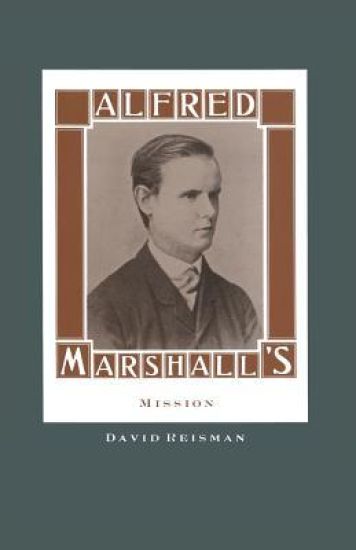
Alfred Marshall's Mission (Routledge Revivals)
Alfred Marshall was anxious to do good. Intended by an Evangelical father for the vocation of clergyman, the author of the mould-shaping Principles of Economics remained to the end of his days a great preacher deeply committed to raising the tone of life. First published in 1990, Alfred Marshall’s Mission explains how this most moral of political economists sought to blend the downward sloping utility function of Jevons and Menger with the organic evolutionism of Darwin and Spencer, how this celebrated theorist of social alongside economic growth sought to combine the mathematical marginalism of Cournot. Thunen and Edgeworth with the ethical uplift of Green, Jowett and Toynbee. The conclusion reached is that perhaps Marshall was, after all, too anxious to do good. Far more economists, however, have been not anxious enough; and that in itself gives this study of Marshall’s life and times a present day relevance which would, no doubt, have appealed strongly to the shy Cambridge professor who is its subject.
Alfred Marshall: Progress and Politics (Routledge Revivals)
First published in 1987, Alfred Marshall: Progress and Politics provides an enlightening insight into Marshall's thoughts on social improvement, adaptive upgrading, policy and polity. He planned books on these subjects which he never subsequently wrote, but the thesis of this work is that a close study of such writings as Marshall did complete makes possible a very detailed reconstruction of the important contribution which Marshall was capable of making to Victorian evolutionary thought (much in the shadow of Darwin and Spencer). In the ongoing debate on the political element in political economy, he reveals himself to have been as much an eclectic as was Adam Smith and as much a man of commitment as was T. H. Green.
Alfred Marshall's Mission (Routledge Revivals)
Alfred Marshall was anxious to do good. Intended by an Evangelical father for the vocation of clergyman, the author of the mould-shaping Principles of Economics remained to the end of his days a great preacher deeply committed to raising the tone of life. First published in 1990, Alfred Marshall’s Mission explains how this most moral of political economists sought to blend the downward sloping utility function of Jevons and Menger with the organic evolutionism of Darwin and Spencer, how this celebrated theorist of social alongside economic growth sought to combine the mathematical marginalism of Cournot. Thunen and Edgeworth with the ethical uplift of Green, Jowett and Toynbee. The conclusion reached is that perhaps Marshall was, after all, too anxious to do good. Far more economists, however, have been not anxious enough; and that in itself gives this study of Marshall’s life and times a present day relevance which would, no doubt, have appealed strongly to the shy Cambridge professor who is its subject.
Official Papers of Alfred Marshall

Official Papers of Alfred Marshall

Alfred Marshall

Cambridge University Press
2009
pokkari
This book constitutes a supplement to the 1926 account of Alfred Marshall's Official Papers edited by John Maynard Keynes. The book presents material which Keynes did not include, editorial notes and introductions to the various pieces. It focuses on the advice that Marshall, a founding father of modern economics, offered to the British government in the late nineteenth century. The topics covered include education, the role of women, trade unions, unemployment, public enterprise, the quantity theory of money, inflation and trade, benefits of free trade and dangers of protection. The material offers valuable insights into policy thinking at the time, much of which has a surprising degree of relevance to pressing policy issues during our own time. The contents facilitates understanding this doyen of British economics and founder of the Cambridge School of Economics.
Official Papers of Alfred Marshall

Official Papers of Alfred Marshall

Alfred Marshall

Cambridge University Press
1996
sidottu
This book constitutes a supplement to the 1926 account of Alfred Marshall’s Official Papers edited by John Maynard Keynes. This book presents material which Keynes did not include, editorial notes and introductions to the various pieces. It focuses on the advice that Marshall, a founding father of modern economics, offered to the British government in the late nineteenth century. The topics covered include education, the role of women, trade unions, unemployment, public enterprise, the quantity theory of money, inflation and trade, benefits of free trade and dangers of protection. The material offers valuable insights into policy thinking a century ago, much of which has a surprising degree of relevance to the pressing policy issues at the end of the present century. The contents facilitates understanding this doyen of British economics and founder of the Cambridge School of Economics.
The Correspondence of Alfred Marshall, Economist

The Correspondence of Alfred Marshall, Economist

Alfred Marshall

Cambridge University Press
1996
sidottu
This is the third of a three-volume work constituting a comprehensive scholarly edition of the correspondence of the English economist, Alfred Marshall (1842–1924), one of the leading figures in the development of economics and the founder of the Cambridge School of Economics. The edition fills a long-standing gap in the history of economic thought with hitherto unpublished material. Students will find it a basic resource for understanding the development of economics and other social sciences in the period since 1870. In particular, it provides much new information about Marshall’s views on economic, social and political issues, his struggles to promote the teaching of economics at the University of Cambridge, and his relations with colleagues in Cambridge and elsewhere. Marshall’s letters are notable for their frankness and spontaneity.
The Correspondence of Alfred Marshall, Economist

The Correspondence of Alfred Marshall, Economist

Alfred Marshall

Cambridge University Press
1996
sidottu
This is the second of a three-volume work constituting a comprehensive scholarly edition of the correspondence of the English economist, Alfred Marshall (1842–1924), one of the leading figures in the development of economics and the founder of the Cambridge School of Economics. The edition fills a long-standing gap in the history of economic thought with hitherto unpublished material. Students will find it a basic resource for understanding the development of economics and other social sciences in the period since 1870. In particular, it provides much new information about Marshall’s views on economic, social and political issues, his struggles to promote the teaching of economics at the University of Cambridge, and his relations with colleagues in Cambridge and elsewhere. Marshall’s letters are notable for their frankness and spontaneity.
The Correspondence of Alfred Marshall, Economist

The Correspondence of Alfred Marshall, Economist

Alfred Marshall

Cambridge University Press
1996
sidottu
This is the first of a three-volume work constituting a comprehensive scholarly edition of the correspondence of the English economist, Alfred Marshall (1842–1924), one of the leading figures in the development of economics and the founder of the Cambridge School of Economics. The edition fills a long-standing gap in the history of economic thought with hitherto unpublished material. Students will find it a basic resource for understanding the development of economics and other social sciences in the period since 1870. In particular, it provides much new information about Marshall’s views on economic, social and political issues, his struggles to promote the teaching of economics at the University of Cambridge, and his relations with colleagues in Cambridge and elsewhere. Marshall’s letters are notable for their frankness and spontaneity.
Alfred Marshall’s Mission

Alfred Marshall’s Mission

David Reisman

Palgrave Macmillan
1990
nidottu
Marshall's theories of economic and social advancement are explained with reference to the scientific and philosophical movements which influenced them: utilitarianism, evolutionism, mathematical marginalism and ethical idealism.
Alfred Marshall and Modern Economics

Alfred Marshall and Modern Economics

N. Hart

Palgrave Macmillan
2013
nidottu
Alfred Marshall and Modern Economics re-examines Marshall's legacy and relevance to modern economic analysis with the more settled conventional wisdom concerning evolutionary processes allowing advances in economic theorising which were not possible in Marshall's life time.