

Kirjahaku
Etsi kirjoja tekijän nimen, kirjan nimen tai ISBN:n perusteella.
1000 tulosta hakusanalla Max Pearson Cushing

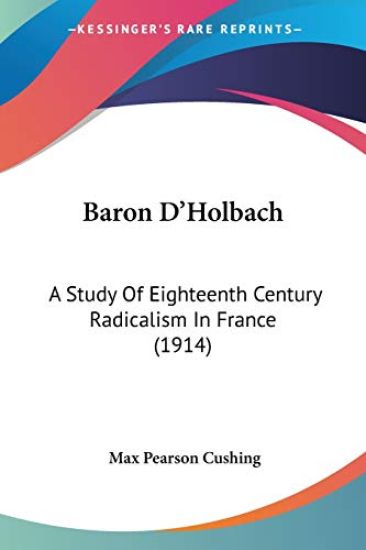


Baron D'holbach A Study Of Eighteenth Century Radicalism In France
Max Pearson Cushing
Kessinger Pub
2004
pokkari

Baron D'Holbach A study of Eighteenth Century Radicalism in France
Max Pearson Cushing
Createspace Independent Publishing Platform
2015
nidottu




Reproduction of the original. The publishing house Megali specialises in reproducing historical works in large print to make reading easier for people with impaired vision.

Reproduction of the original. The publishing house Megali specialises in reproducing historical works in large print to make reading easier for people with impaired vision.

Baron D'Holbach: A Study Of Eighteenth Century Radicalism In France, has been considered by academicians and scholars of great significance and value to literature. This forms a part of the knowledge base for future generations. So that the book is never forgotten we have represented this book in a print format as the same form as it was originally first published. Hence any marks or annotations seen are left intentionally to preserve its true nature.

Baron d'Holbach : a Study of Eighteenth Century Radicalism in France
Max Pearson Cushing
Antigonos Verlag
2025
nidottu


Functions of a Complex Variable: Theory And Technique
George F. Carrier; Max Krrok; Carl E. Pearson
Society for Industrial Applied Mathematics,U.S.
2005
pokkari
Functions of a complex variable are used to solve applications in various branches of mathematics, science, and engineering. This is a book in a special category of influential classics because it is based on the authors' extensive experience in modeling complicated situations and providing analytic solutions. It makes available to readers a comprehensive range of these analytical techniques based upon complex variable theory. Proficiency in these techniques requires practice. The authors provide many exercises, incorporating them into the body of the text. By completing a substantial number of these exercises, the reader will more fully benefit from this book.
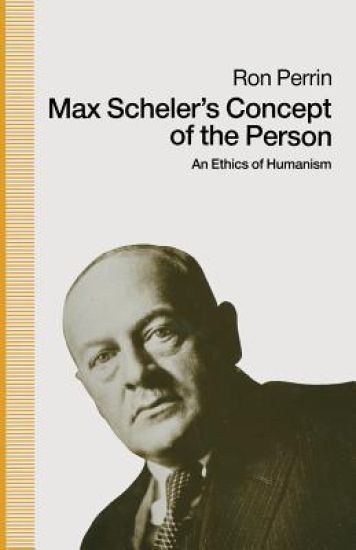


From the mysterious powers and forces peculiar to both individual and community that can turn our lives into either good or bad lives, I wish to point to two such powers being at the same time different in their own nature and yet closely related to each other: The powers that emerge from exemplary persons and leaders. Understood as basic to both sociology and the philosophy of history, it comes to us as no surprise that the problem of exemplary persons and leaders - along with the questions of the qualities types, selections and education of leaders; forms of unison existing be tween leaders and their followers, all of which belonging to the subdivisions of this problem - must be a burning problem for a people whose historical leaders from all walks of life have, in part, been swept away by wars and revolutions. This fact we also find in all salient epochs of history characterized more or less by changes in leadership. It is precisely for this reason that in our own time every group appears to struggle ever so hard with this problem, namely, who their leaders should be. This pertains equally to a group within a party, to a class, to occupations, to unions, to various schools or present-day youth movements, and even to religious and ecclesias tical groupings. Beyond any comparison, there is yearning everywhere for lead ership.

From the mysterious powers and forces peculiar to both individual and community that can turn our lives into either good or bad lives, I wish to point to two such powers being at the same time different in their own nature and yet closely related to each other: The powers that emerge from exemplary persons and leaders. Understood as basic to both sociology and the philosophy of history, it comes to us as no surprise that the problem of exemplary persons and leaders - along with the questions of the qualities types, selections and education of leaders; forms of unison existing be tween leaders and their followers, all of which belonging to the subdivisions of this problem - must be a burning problem for a people whose historical leaders from all walks of life have, in part, been swept away by wars and revolutions. This fact we also find in all salient epochs of history characterized more or less by changes in leadership. It is precisely for this reason that in our own time every group appears to struggle ever so hard with this problem, namely, who their leaders should be. This pertains equally to a group within a party, to a class, to occupations, to unions, to various schools or present-day youth movements, and even to religious and ecclesias tical groupings. Beyond any comparison, there is yearning everywhere for lead ership.

Eine Untersuchung des Third-Person-Effekts im Bereich der Glücks- und Videospiele
Max Gerstenhuber
Grin Publishing
2016
pokkari