Kirjahaku
Etsi kirjoja tekijän nimen, kirjan nimen tai ISBN:n perusteella.
1000 tulosta hakusanalla Merrill J Mattes

The Great Platte River Road through Nebraska and Wyoming was the grand corridor of America's westward expansion. A number of famous trails converged in the broad valley of the Platte, forming a kind of primitive superhighway for the great covered wagon migration from 1841 to 1866. From jumping-off places along the Missouri River—notably the Omaha-Council Bluffs, St. Joseph, and Kansas City areas—the emigrant throngs came together at Fort Kearny, Nebraska. Although they continued on to South Pass, Wyoming, and beyond, this book focuses on the feeder mutes and the more than three hundred miles between Fort Kearny and Fort Laramie.The Great Platte River Road looks at border towns, trail routes, river crossings, stage stations, military posts, and such landmarks as Chimney Rock and Scott's Bluff. It goes far beyond geography and Indian encounters in revealing cultural aspects of the great migration: food, dress, equipment, organization, camping, traffic patterns, sex ratios, morals, manners, religion, crime, accidents, disease, death, and burial customs.
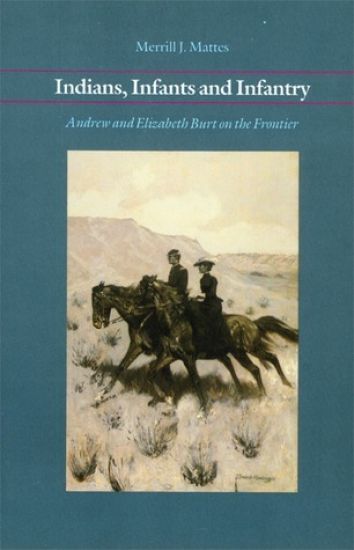
During the years of the Indian uprisings in the West, Elizabeth Burt followed her husband, Major Andrew Burt, from one lonely outpost to another, with their three small children, a crate of chickens, and a cow in tow. Indians, Infants, and Infantry, based largely on a 1912 manuscript Mrs. Burt derived from now-lost letters and diaries, provides an intimate glimpse of life at Forts Kearney, Bridger, Laramie, and C. F. Smith from the 1860s through the 1890s. Historical events do not dwarf but only heighten the half-century love affair of a remarkable woman and a soldier whose distinguished career stretched from the Civil to the Spanish-American war. In addition to Mrs. Burt's manuscripts, Merrill J. Mattes drew on army records and other primary sources.
Behind the Legend of Colter's Hell: The Early Exploration of Yellowstone National Park
Merrill J. Mattes
Literary Licensing, LLC
2011
sidottu
""Behind The Legend Of Colter's Hell: The Early Exploration Of Yellowstone National Park"" by Merrill J. Mattes is a comprehensive historical account of the early exploration of Yellowstone National Park. The book focuses on the legend of John Colter, the first white man to explore the region, and his supposed descent into a fiery inferno known as Colter's Hell. The author delves into the origins of the legend and examines the historical evidence behind it. The book covers the period from the early 1800s to the mid-1800s when Yellowstone was still largely unexplored and unknown to most Americans. The author provides detailed descriptions of the expeditions led by various explorers, including Colter, Jim Bridger, and Nathaniel Wyeth. Mattes also explores the interactions between the explorers and the Native American tribes who inhabited the region, shedding light on the complex relationships that developed between them. The book is well-researched and includes numerous primary source documents, such as journals and letters, to support the author's arguments. The writing is clear and engaging, making it accessible to both scholars and general readers interested in the history of Yellowstone National Park. Overall, ""Behind The Legend Of Colter's Hell"" is a fascinating exploration of the early history of one of America's most iconic national parks.This scarce antiquarian book is a facsimile reprint of the old original and may contain some imperfections such as library marks and notations. Because we believe this work is culturally important, we have made it available as part of our commitment for protecting, preserving, and promoting the world's literature in affordable, high quality, modern editions, that are true to their original work.

Colter's Hell and Jackson's Hole: The Fur Trappers' Exploration of the Yellowstone and Grand Teton Park Region
Merrill J. Mattes
Literary Licensing, LLC
2011
sidottu
""Colter's Hell And Jackson's Hole: The Fur Trappers' Exploration Of The Yellowstone And Grand Teton Park Region"" is a book written by Merrill J. Mattes. It is a historical account of the early exploration of the Yellowstone and Grand Teton Park region by fur trappers in the early 19th century. The book is divided into two parts, with the first part focusing on John Colter's explorations in the region, while the second part focuses on the trappers who followed in his footsteps, including David Jackson, Jedediah Smith, and William Sublette. The book provides a detailed and vivid description of the harsh conditions and dangers faced by these early explorers, including encounters with Native American tribes, grizzly bears, and other wildlife. It also explores the impact of the fur trade on the region and its native inhabitants. The book is an informative and engaging read for anyone interested in the history of the American West, the fur trade, or the exploration of the Yellowstone and Grand Teton Park region.""This scarce antiquarian book is a facsimile reprint of the old original and may contain some imperfections such as library marks and notations. Because we believe this work is culturally important, we have made it available as part of our commitment for protecting, preserving, and promoting the world's literature in affordable, high quality, modern editions, that are true to their original work.

Behind the Legend of Colter's Hell: The Early Exploration of Yellowstone National Park
Merrill J. Mattes
Literary Licensing, LLC
2011
nidottu

Colter's Hell and Jackson's Hole: The Fur Trappers' Exploration of the Yellowstone and Grand Teton Park Region
Merrill J. Mattes
Literary Licensing, LLC
2011
nidottu
Conduits of God's Grace: 92 Life Tips from the Founder of Pinnacle Forum and 20 Startups
Merrill J. Oster
Pinnacle Forum
2019
nidottu

Retrolental Fibroplasia: A Clinical Study of Two Hundred and Thirty-Eight Cases
Merrill J King
Hassell Street Press
2021
nidottu
This work has been selected by scholars as being culturally important and is part of the knowledge base of civilization as we know it.This work is in the public domain in the United States of America, and possibly other nations. Within the United States, you may freely copy and distribute this work, as no entity (individual or corporate) has a copyright on the body of the work.Scholars believe, and we concur, that this work is important enough to be preserved, reproduced, and made generally available to the public. To ensure a quality reading experience, this work has been proofread and republished using a format that seamlessly blends the original graphical elements with text in an easy-to-read typeface.We appreciate your support of the preservation process, and thank you for being an important part of keeping this knowledge alive and relevant.


When Katie (A.K.A. Agatha) follows her counselor's advice and calls home after being missing for two years, she has no idea of the struggles that will follow as she reconnects with her family. Her first challenge is to convince her friend Kirk in Nashville that she has no romantic interest in him, a task that proves more difficult and dangerous than she could ever have imagined.Once back in Eastern Kentucky with her family, regaining their trust depends on being able to dig into her past and find out why she would have ever left her husband and two precious children. The one person who holds the key to her past, her Aunt Esther, seems reluctant to talk. However, when Esther finally gains the courage to tell Katie the shocking facts about her early childhood trauma, her story allows the family to begin the long healing process.
Sixteen-year-old Jessie Thompson reluctantly moves with her mother and older sister to Savannah, Georgia, in the summer of 1943 to work as a welder on the Liberty Ships. Her main goal is to survive long enough to return to Alabama and finish high school. But will she be able to survive when tragedy strikes and she has to learn how to "weld" her life back together amid the uncertainties of the war?
The Power Vision Program to Improve Eyesight
Steven M. Beresford; Merrill J. Allen; Francis A. Young; David W. Muris
Humanix Books
2025
pokkari
GOOD VISION IS YOUR BIRTHRIGHT!During the last few decades, an elite group of eye doctors known as behavioral optometrists have developed simple techniques known as vision therapy eye exercises, which make the eyes healthier and reduce or eliminate the need for corrective lenses. The Power Vision Program gives you the best of these techniques.The Power Vision Program gives your eyes a good basic workout. In contrast to physical exercises, however, eye exercises are not strenuous. They work by increasing the range and accuracy of the focusing system. Some of the exercises stimulate the flow of nutrients inside the eyes, making them healthier. Other exercises increase natural focusing power and reduce eyestrain from reading or working at a computer. It’s important to understand that the vast majority of people are born with normal eyes. Almost all young children have good vision. Almost all cases of poor vision begin with nothing more serious than a minor focusing problem. Perhaps distant objects become slightly blurred, or you have difficulty reading a menu. Nobody goes to bed with normal vision and wakes up with deformed eyeballs! Nearsightedness (myopia) is caused by watching TV too close, too much reading, or working at a computer. This increases the pressure inside the eyeball and makes it go out of shape. The aging process also causes poor vision (presbyopia) because the eye’s inner lens loses its flexibility and can’t focus properly.Fortunately, all common visual problems can be improved with the techniques you are about to learn. If your vision is not too bad, you can probably avoid or stop wearing glasses. If your vision is bad, you will probably still need them but you will be able to reduce your dependency on them.Follow these instructions and you should see the first signs of improvement within a week or so: STEP ONE: Skim through the entire Power Vision Program on your tablet or computer. Don’t spend more than a few minutes. All you need is a general overview of the material.STEP TWO: Print the entire Power Vision Program and put it in a binder. Read it a couple of times. Don’t be fazed by new words or worried that it’s too complicated. Just follow the instructions step-by-step and it will soon fall into place. STEP THREE: Read the instructions for Rolling, Blinking, and Detailing, and start doing them. These are your New Visual Habits. The goal is to do them during your daily activities. Develop the habit of periodically rolling your eyes, frequently blinking, and looking at small details. STEP FOUR: Print extra copies of the Biofeedback Charts and Reminder Cards. Put them in prominent locations in your home, office, and car.STEP FIVE: Set up a special place to do the exercises. You will need an area of blank wall with good lighting, and a table to put things on. STEP SIX: Do the Power Exercise Module. This will take about 15 minutes. Your goal is to do the Power Exercise Module at least once a day, preferably twice a day.STEP SEVEN: If you wear glasses and have a weaker pair, start wearing them immediately. Develop the habit of taking your glasses off whenever you don’t really need them, provided it’s safe to do so.The Power Vision Program will give you really fast results. Don’t wait or make excuses!
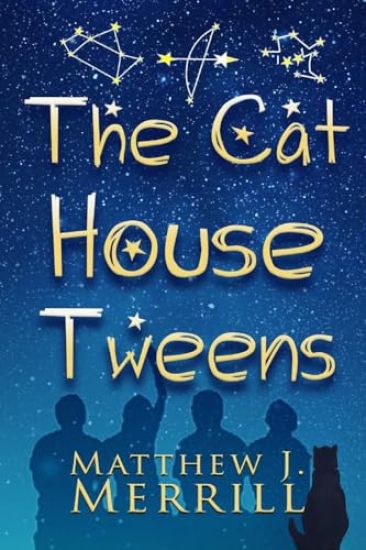
A person can feel pretty small in a big space. What is worse is when that small, insignificant person, or group of people, knows there is a whole universe out there beyond reach. Like being stuck in a sucky, tiny Midwestern town with a welcome sign that proudly boasts, "More Bullheads Than People."
A person can feel pretty small in a big space. What is worse is when that small, insignificant person, or group of people, knows there is a whole universe out there beyond reach. Like being stuck in a sucky, tiny Midwestern town with a welcome sign that proudly boasts, "More Bullheads Than People."
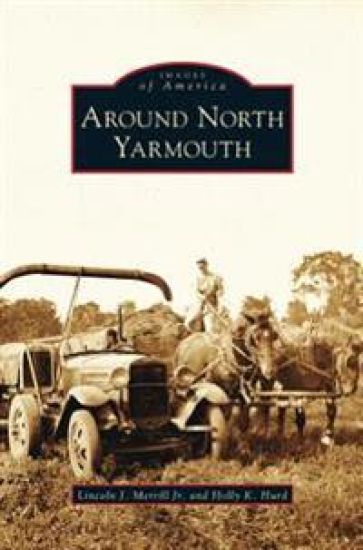
Around North Yarmouth
Lincoln J Merrill; Holly K Hurd
Arcadia Publishing Library Editions
2006
sidottu

In all aspects of life, from politics and education to religion and business, the Black Baltimore community has been a leader for civil rights. From the 19th century until the 1970s, Baltimore has been at the forefront of various civil rights movements. Black Baltimoreans helped establish the Niagara Movement, the precursor to the National Association for the Advancement of Colored People (NAACP), and had one of the most active NAACP branches, counting among its members pastors, politicians, entrepreneurs, educators, athletes, musicians, and others. Meritorious services were rendered by Rev. Harvey Johnson; William Ashbie Hawkins; Lillie Carroll Jackson; Lillie's daughter Juanita Jackson Mitchell; Juanita's husband, Clarence Maurice Mitchell Jr.; Walter Thomas Dixon; Enolia McMillan; Lena King Lee; and countless others who created a proud legacy of activism in the Monumental City.