Kirjojen hintavertailu. Mukana 11 699 587 kirjaa ja 12 kauppaa.

Kirjahaku

Etsi kirjoja tekijän nimen, kirjan nimen tai ISBN:n perusteella.

1000 tulosta hakusanalla Michael Clune

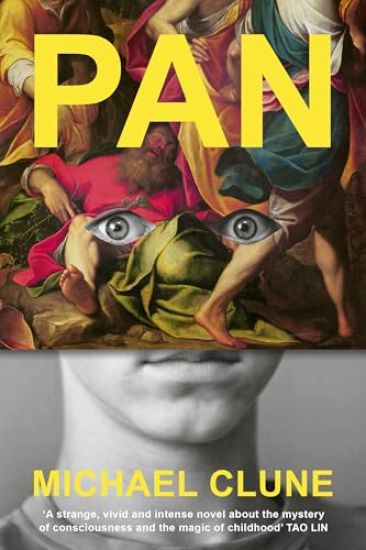
Pan

Pan

Michael Clune

PENGUIN PRESS
2025
sidottu
" Pan] has literary circles buzzing . . . Rendered in dazzling prose, Clune's debut novel paints a luminous portrait of the unique psychosis that growing up in suburbia can foster." ―Bustle "I steal language and ideas from Michael Clune." ―Ben Lerner, Pulitzer Prize-nominated author of The Topeka School A strange and brilliant teenager's first panic attacks lead him down the rabbit hole in this wild, highly anticipated debut novel from one of our most distinctive literary mindsNicholas is fifteen when he forgets how to breathe. He had plenty of reason to feel unstable already: He's been living with his dad in the bleak Chicago suburbs since his Russian-born mom kicked him out. Then one day in geometry class, Nicholas suddenly realizes that his hands are objects. The doctor says it's just panic, but Nicholas suspects that his real problem might not be a psychiatric one: maybe the Greek god Pan is trapped inside his body. As his paradigm for his own consciousness crumbles, Nicholas; his best friend, Ty; and his maybe-girlfriend, Sarah, hunt for answers why--in Oscar Wilde and in Charles Baudelaire, in rock and roll and in Bach, and in the mysterious, drugged-out Barn, where their classmate Tod's charismatic older brother Ian leads the high schoolers in rituals that might end up breaking more than just the law. Thrilling, cerebral, and startlingly funny, Pan is a new masterpiece of the coming-of-age genre by Guggenheim fellow and literary scholar Michael Clune, whose memoir of heroin addiction, White Out--named one of The New Yorker's best books of the year--earned him a cult readership. Now, in Pan, the great novel of our age of anxiety, Clune drops us inside the human psyche, where we risk discovering that the forces controlling our inner lives could be more alien than we want to let ourselves believe.
Pan

Pan

Michael Clune

Vintage Publishing
2025
sidottu
‘There is no other writer like him’ MAGGIE NELSON'I didn't want the book to end' BLAKE BUTLERA strange and brilliant teenager’s first panic attacks lead him down the rabbit hole in this wild, highly anticipated debut novel about the joy and anxiety of youth by the acclaimed memoirist and cult writerNicholas has plenty of reasons to feel unstable. He’s fifteen, the child of divorced parents, living with his mostly absent dad in the bleak Chicago suburbs and an outsider at school. Then, one day, he forgets how to breathe. The doctor says it’s just panic, but Nicholas suspects that his real problem might not be psychiatric: maybe the Greek god Pan is trapped inside his body.As the paradigm for his own consciousness crumbles, Nicholas and his friends hunt for answers why – in art, music and literature – as they reach for a life beyond the confines of where they’ve grown up and what’s expected of them.Thrilling, surprising and startlingly funny, Pan takes us inside the human psyche, where we might just discover that the forces controlling our inner lives are more alien than we want to believe.'Tender and searching, an addictive philosophical quest' CHETNA MAROO‘I steal language and ideas from Michael Clune’ BEN LERNER
Pan

Pan

Michael Clune

Random House UK
2025
nidottu
'There is no other writer like him' MAGGIE NELSON'I steal language and ideas from Michael Clune' BEN LERNERA thrilling and darkly funny debut novel about the joy and anxiety of adolescence by the acclaimed memoirist and cult writerNicholas has plenty of reasons to feel unstable: he's fifteen, the child of divorced parents, living with his absent dad in the bleak Chicago suburbs, and an outsider at school. Then, one day in geometry class, he forgets how to breathe. The doctor says it's just panic, but Nicholas suspects that his real problem might not be a psychiatric one: maybe the Greek god Pan is trapped inside his body.As his paradigm for his own consciousness crumbles, Nicholas and his friends hunt for answers why - in art, music and literature - as they reach for a life beyond the confines of where they've grown up and what's expected of them. Pan takes us inside the human psyche, where we risk discovering that the forces controlling our inner lives could be more alien than we want to let ourselves believe.'I didn't want the book to end' BLAKE BUTLER
Pan

Pan

Michael Clune

Vintage Publishing
2026
pokkari
A WASHINGTON POST, TIME and SLATE Book of the Year 'A stunning debut' GUARDIAN 'Stylish and unsettling' OBSERVER 'A true original' PAUL MURRAY 'Brilliant . . . Mind-bending, psychologically intricate, really thrilling' LAUREN GROFF ‘There is no other writer like him’ MAGGIE NELSON A strange and brilliant teenager’s first panic attacks lead him down the rabbit hole in this wild, critically acclaimed debut novel about the joy and anxiety of youth by the acclaimed memoirist and cult writer Nicholas has plenty of reasons to feel unstable. He’s fifteen, the child of divorced parents, living with his mostly absent dad in the bleak Chicago suburbs and an outsider at school. Then, one day, he forgets how to breathe. The doctor says it’s just panic, but Nicholas suspects that his real problem might not be psychiatric: maybe the Greek god Pan is trapped inside his body. As the paradigm for his own consciousness crumbles, Nicholas and his friends hunt for answers why – in art, music and literature – as they reach for a life beyond the confines of where they’ve grown up and what’s expected of them. Thrilling, surprising and startlingly funny, Pan takes us inside the human psyche, where we might just discover that the forces controlling our inner lives are more alien than we want to believe. 'I didn't want the book to end' BLAKE BUTLER 'Tender and searching, an addictive philosophical quest' CHETNA MAROO ‘I steal language and ideas from Michael Clune’ BEN LERNER
A Defense of Judgment

A Defense of Judgment

Michael W. Clune

University of Chicago Press
2021
sidottu
Teachers of literature make judgments about value. They tell their students which works are powerful, beautiful, surprising, strange, or insightful—and thus, which are more worthy of time and attention than others. Yet the field of literary studies has largely disavowed judgments of artistic value on the grounds that they are inevitably rooted in prejudice or entangled in problems of social status. For several decades now, professors have called their work value-neutral, simply a means for students to gain cultural, political, or historical knowledge. ?Michael W. Clune’s provocative book challenges these objections to judgment and offers a positive account of literary studies as an institution of aesthetic education. It is impossible, Clune argues, to separate judgments about literary value from the practices of interpretation and analysis that constitute any viable model of literary expertise. Clune envisions a progressive politics freed from the strictures of dogmatic equality and enlivened by education in aesthetic judgment, transcending consumer culture and market preferences. Drawing on psychological and philosophical theories of knowledge and perception, Clune advocates for the cultivation of what John Keats called “negative capability,” the capacity to place existing criteria in doubt and to discover new concepts and new values in artworks. Moving from theory to practice, Clune takes up works by Keats, Emily Dickinson, Gwendolyn Brooks, Samuel Beckett, and Thomas Bernhard, showing how close reading—the profession’s traditional key skill—harnesses judgment to open new modes of perception.
A Defense of Judgment

A Defense of Judgment

Michael W. Clune

University of Chicago Press
2021
nidottu
Teachers of literature make judgments about value. They tell their students which works are powerful, beautiful, surprising, strange, or insightful—and thus, which are more worthy of time and attention than others. Yet the field of literary studies has largely disavowed judgments of artistic value on the grounds that they are inevitably rooted in prejudice or entangled in problems of social status. For several decades now, professors have called their work value-neutral, simply a means for students to gain cultural, political, or historical knowledge. ?Michael W. Clune’s provocative book challenges these objections to judgment and offers a positive account of literary studies as an institution of aesthetic education. It is impossible, Clune argues, to separate judgments about literary value from the practices of interpretation and analysis that constitute any viable model of literary expertise. Clune envisions a progressive politics freed from the strictures of dogmatic equality and enlivened by education in aesthetic judgment, transcending consumer culture and market preferences. Drawing on psychological and philosophical theories of knowledge and perception, Clune advocates for the cultivation of what John Keats called “negative capability,” the capacity to place existing criteria in doubt and to discover new concepts and new values in artworks. Moving from theory to practice, Clune takes up works by Keats, Emily Dickinson, Gwendolyn Brooks, Samuel Beckett, and Thomas Bernhard, showing how close reading—the profession’s traditional key skill—harnesses judgment to open new modes of perception.
Gamelife

Gamelife

Michael W. Clune

St. Martins Press-3pl
2016
nidottu
In telling the story of his youth through seven computer games, critically acclaimed author Michael W. Clune (White Out) captures the part of childhood we live alone. You have been awakened. Floppy disk inserted, computer turned on, a whirring, and then this sentence, followed by a blinking cursor. So begins Suspended, the first computer game to obsess seven-year-old Michael, to worm into his head and change his sense of reality. Thirty years later he will write: "Computer games have taught me the things you can't learn from people." Gamelife is the memoir of a childhood transformed by technology. Afternoons spent gazing at pixelated maps and mazes train Michael's eyes for the uncanny side of 1980s suburban Illinois. A game about pirates yields clues to the drama of cafeteria politics and locker-room hazing. And in the year of his parents' divorce, a spaceflight simulator opens a hole in reality.
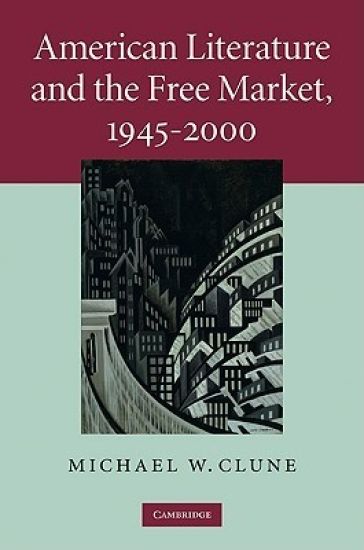
American Literature and the Free Market, 1945–2000

American Literature and the Free Market, 1945–2000

Michael W. Clune

Cambridge University Press
2009
sidottu
The years after World War Two have seen a widespread fascination with the free market. In this book, Michael W. Clune considers this fascination in postwar literature. In the fictional worlds created by works ranging from Frank O'Hara's poetry to nineties gangster rap, the market is transformed, offering an alternative form of life, distinct from both the social visions of the left and the individualist ethos of the right. These ideas also provide an unsettling example of how art takes on social power by offering an escape from society. American Literature and the Free Market presents a new perspective on a number of wide ranging works for readers of American post-war literature.
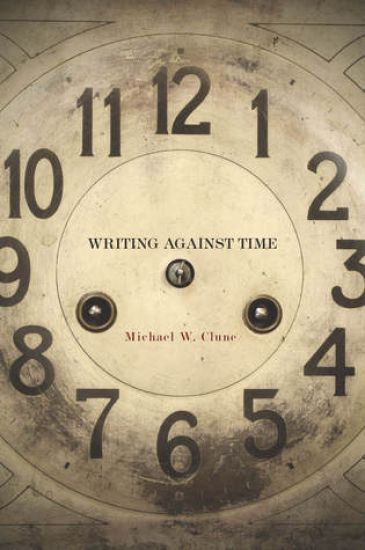
Writing Against Time

Writing Against Time

Michael W. Clune

Stanford University Press
2013
sidottu
For centuries, a central goal of art has been to make us see the world with new eyes. Thinkers from Edmund Burke to Elaine Scarry have understood this effort as the attempt to create new forms. But as anyone who has ever worn out a song by repeated listening knows, artistic form is hardly immune to sensation-killing habit. Some of our most ambitious writers—Keats, Proust, Nabokov, Ashbery—have been obsessed by this problem. Attempting to create an image that never gets old, they experiment with virtual, ideal forms. Poems and novels become workshops, as fragments of the real world are scrutinized for insights and the shape of an ideal artwork is pieced together. These writers, voracious in their appetite for any knowledge that will further their goal, find help in unlikely places. The logic of totalitarian regimes, the phenomenology of music, the pathology of addiction, and global commodity exchange furnish them with tools and models for arresting neurobiological time. Reading central works of the past two centuries in light of their shared ambition, Clune produces a revisionary understanding of some of our most important literature.
Writing Against Time

Writing Against Time

Michael W. Clune

Stanford University Press
2013
pokkari
For centuries, a central goal of art has been to make us see the world with new eyes. Thinkers from Edmund Burke to Elaine Scarry have understood this effort as the attempt to create new forms. But as anyone who has ever worn out a song by repeated listening knows, artistic form is hardly immune to sensation-killing habit. Some of our most ambitious writers—Keats, Proust, Nabokov, Ashbery—have been obsessed by this problem. Attempting to create an image that never gets old, they experiment with virtual, ideal forms. Poems and novels become workshops, as fragments of the real world are scrutinized for insights and the shape of an ideal artwork is pieced together. These writers, voracious in their appetite for any knowledge that will further their goal, find help in unlikely places. The logic of totalitarian regimes, the phenomenology of music, the pathology of addiction, and global commodity exchange furnish them with tools and models for arresting neurobiological time. Reading central works of the past two centuries in light of their shared ambition, Clune produces a revisionary understanding of some of our most important literature.
American Literature and the Free Market, 1945–2000

American Literature and the Free Market, 1945–2000

Michael W. Clune

Cambridge University Press
2015
pokkari
The years after World War Two have seen a widespread fascination with the free market. In this book, Michael W. Clune considers this fascination in postwar literature. In the fictional worlds created by works ranging from Frank O'Hara's poetry to nineties gangster rap, the market is transformed, offering an alternative form of life, distinct from both the social visions of the left and the individualist ethos of the right. These ideas also provide an unsettling example of how art takes on social power by offering an escape from society. American Literature and the Free Market presents a new perspective on a number of wide ranging works for readers of American post-war literature.
Community Languages

Community Languages

Michael Clyne

Cambridge University Press
1991
pokkari
Without even considering the 150 Aboriginal languages still spoken, Australia has an unparalleled mix of languages other than English in common usage, languages often described by the term ‘community’. Drawing on census data and other statistics, this book addresses the current suitation of community languages in Australia, analysing which are spoken, by whom, and whereabouts. It focuses on three main issues: how languages other than English are maintained in an English speaking environment, how the structure of the languages themselves changes over time, and how the government has responded to such ethnolinguistic diversity. At a time of unprecedented awareness of these languages within society and a realisation of the importance of mutlilingualism in business, this book makes a significant contribution to understanding the role of community languages in shaping the future of Australian society.
The German Language in a Changing Europe

The German Language in a Changing Europe

Michael Clyne

Cambridge University Press
1995
sidottu
Recent sociopolitical events have profoundly changed the status and functions of German and influenced its usage. In this study (published by Cambridge in 1984) Michael Clyne revises and expands his original analysis of the German language in Language and Society in the German-speaking Countries in the light of such changes as the end of the Cold War, German unification, the redrawing of the map of Europe, increasing European integration, and the changing self-images of Austria, Switzerland and Luxembourg. His discussion includes the differences in the form, function and status of the various national varieties of German; the relation between standard and non-standard varieties; gender, generational and political variation; Anglo-American influence on German; and the convergence of east and west. The result is a wide-ranging exploration of language and society in the German-speaking countries, all of which have problems or dilemmas concerning nationhood or ethnicity which are language-related and/or language-marked.
The German Language in a Changing Europe

The German Language in a Changing Europe

Michael Clyne

Cambridge University Press
1995
pokkari
Recent sociopolitical events have profoundly changed the status and functions of German and influenced its usage. In this study (published by Cambridge in 1984) Michael Clyne revises and expands his original analysis of the German language in Language and Society in the German-speaking Countries in the light of such changes as the end of the Cold War, German unification, the redrawing of the map of Europe, increasing European integration, and the changing self-images of Austria, Switzerland and Luxembourg. His discussion includes the differences in the form, function and status of the various national varieties of German; the relation between standard and non-standard varieties; gender, generational and political variation; Anglo-American influence on German; and the convergence of east and west. The result is a wide-ranging exploration of language and society in the German-speaking countries, all of which have problems or dilemmas concerning nationhood or ethnicity which are language-related and/or language-marked.
Inter-cultural Communication at Work

Inter-cultural Communication at Work

Michael Clyne

Cambridge University Press
1996
pokkari
In this interdisciplinary study, Professor Clyne examines the impact of cultural values on discourse. Through an exploration of the role of verbal communication patterns in successful and unsuccessful communication, he sets out to integrate and develop a framework for a linguistics of inter-cultural communication. Professor Clyne draws on data derived from recordings of spontaneous communication in the Australian workplace between people of vastly differing backgrounds, notably European and Asian, who use English as a lingua franca. This study offers both a pragmatic and a discourse perspective, not simply analysing data but seeking to extend the theoretical model. The rapidly increasing use of English as a language of inter-cultural communication between non-native speakers means that the issues raised here will be of interest not only to linguists but also to those involved in education, business and industry.
Dynamics of Language Contact

Dynamics of Language Contact

Michael Clyne

Cambridge University Press
2003
pokkari
The past decade has seen an unprecedented growth in the study of language contact, associated partly with the linguistic effects of globalization and increased migration all over the world. Written by a leading expert in the field, this much-needed account brings together disparate findings to examine the dynamics of contact between languages in an immigrant context. Using data from a wide range of languages, including German, Dutch, Hungarian, Italian, Spanish, Croatian and Vietnamese, Michael Clyne discusses the dynamics of their contact with English. Clyne analyzes how and why these languages change in an immigration country like Australia, and asks why some languages survive longer than others. The book contains useful comparisons between immigrant vintages, generations, and between bilinguals and trilinguals. An outstanding contribution to the study of language contact, this book will be welcomed by students and researchers in linguistics, bilingualism, the sociology of language and education.
Language and Human Relations

Language and Human Relations

Michael Clyne; Catrin Norrby; Jane Warren

Cambridge University Press
2009
sidottu
The way in which people address one another is crucial to expressing social relationships and is closely linked with cultural values. In English we call some people by their first names, and others 'Mr' or 'Ms', followed by their surname. In some other languages there are different ways of saying 'you' depending on the degree of social distance. Exploring practices in the family, school, university, the workplace and in letters, this book reveals patterns in the varied ways people choose to address one another, from pronouns to first names, from honorifics to titles and last names. Examples are taken from contemporary English, French, German and Swedish, using rich data from focus group research, interviews, chat groups, and participant observation.
Australia's Language Potential

Australia's Language Potential

Michael Clyne

NewSouth Publishing
2005
nidottu
This book explores the paradox of a nation rich in language resources, yet characterised by monolingual thinking. With insight and passion, Clyne illustrates the ways in which our language resources can be consolidated and further developed for universal benefit.
The Perfect Game

The Perfect Game

Michael Cline

Independently Published
2019
nidottu
STRIIIKE THREE YER OUT The Perfect Game is a rhyming adventure that takes the reader on a journey to attempt to pitch the ever allusive Perfect Game where all 27 batters are retired in a row Appropriate for all ages and any baseball or softball fan, The Perfect Game will dazzle you with suspense and have you hanging on the edge of your seat with every word. Critics agree that this is the most exciting baseball book of the decade Parents, this book will make a great gift for your child and teach them all about how to overcome adversity. This book is a must read for anyone who loves America's pastime-baseball Holy Cow