Kirjojen hintavertailu. Mukana 11 342 296 kirjaa ja 12 kauppaa.

Kirjahaku

Etsi kirjoja tekijän nimen, kirjan nimen tai ISBN:n perusteella.

1000 tulosta hakusanalla Michael J. Perry

Morality, Politics, and Law

Morality, Politics, and Law

Michael J. Perry

Oxford University Press Inc
1990
nidottu
`What is the proper relation of moral and religious beliefs to politics and law, especially in a society that, like the United States, is morally and religiously pluralistic?' In Morality, Politics, and Law, noted constitutional theorist Michael Perry answers this fundamental question, criticizing the vision of constitutional adjudication and defending a more liberal philosophy of constitutional interpretation.
The Idea of Human Rights

The Idea of Human Rights

Michael J. Perry

Oxford University Press Inc
1998
sidottu
Of all the influential--indeed, formative--moral ideas to occupy centre stage in the twentieth century, the notion of human rights is for many the most difficult. Inspired by a 1988 trip to El Salvador, Michael Perry's new book explores this idea in full. His typically lucid exposition of this complex issue (one so rich in social, political, and philosophical implications, especially at the international level) is rooted in the recognition that every human being is sacred, "inviolable," has "inherent dignity" and worth, and is an end to himself. Therefore, in Perry's view, the concept of human rights is inescapably religious. But are human rights universal? And are they absolute? The latest thinking from one of our nation's leading authorities on morality, politics, and religion, The Idea of Human Rights: Four Inquiries addresses these questions adroitly. The legal and moral dimensions of "rights" rhetoric itself--such as its meanings and functions--are also carefully considered.
The Idea of Human Rights

The Idea of Human Rights

Michael J. Perry

Oxford University Press Inc
2000
nidottu
Inspired by a 1988 trip to El Salvador, Michael J. Perry's new book is a personal and scholarly exploration of the idea of human rights. Perry is one of our nation's leading authorities on the relation of morality, including religious morality, to politics and law. He seeks, in this book, to disentangle the complex idea of human rights by way of four probing and interrelated essays. * The initial essay, which is animated by Perry's skepticism about the capacity of any secular morality to offer a coherent account of the idea of human rights, suggests that the first part of the idea of human rights--the premise that every human being is "sacred" or "inviolable"--is inescapably religious. * Responding to recent criticism of "rights talk", Perry explicates, in his second essay, the meaning and value of talk about human rights. * In his third essay, Perry asks a fundamental question about human rights: Are they universal? In addressing this question, he disaggregates and criticizes several different varieties of "moral relativism" and then considers the implications of these different relativist positions for claims about human rights. * Perry turns to another fundamental question about human rights in his final essay: Are they absolute? He concludes that even if no human rights, understood as moral rights, are absolute or unconditional, some human rights, understood as international legal rights, are--and indeed, should be--absolute. In the introduction, Perry writes: "Of all the influential--indeed, formative--moral ideas to take center stage in the twentieth century, like democracy and socialism, the idea of human rights (which, again, in one form or another, is an old idea) is, for many, the most difficult. It is the most difficult in the sense that it is, for many, the hardest of the great moral ideas to integrate, the hardest to square, with the reigning intellectual assumptions of the age, especially what Bernard Williams has called 'Nietzsche's thought': 'There is not only no God, but no metaphysical order of any kind....' For those who accept 'Nietzsche's thought', can the idea of human rights possibly be more than a kind of aesthetic preference? In a culture in which it was widely believed that there is no God or metaphysical order of any kind, on what basis, if any, could the idea of human rights long survive?" The Idea of Human Rights: Four Inquiries will appeal to students of many disciplines, including (but not limited to) law, philosophy, religion, and politics. Of all the influential--indeed, formative--moral ideas to occupy centre stage in the twentieth century, the notion of human rights is for many the most difficult.
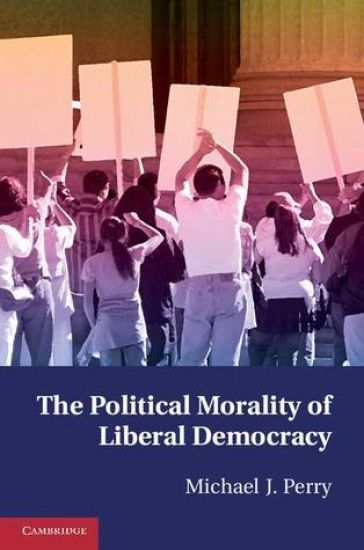
The Political Morality of Liberal Democracy

The Political Morality of Liberal Democracy

Michael J. Perry

Cambridge University Press
2009
sidottu
In this important new work in political and constitutional theory, Michael J. Perry elaborates and defends an account of the political morality of liberal democracy: the moral convictions and commitments that in a liberal democracy should govern decisions about what laws to enact and what policies to pursue. The fundamental questions addressed in this book concern (1) the grounding, (2) the content, (3) the implications for one or another moral controversy and (4) the judicial enforcement of the political morality of liberal democracy. The particular issues discussed include whether government may ban pre-viability abortion, whether government may refuse to extend the benefit of law to same-sex couples and what role religion should play in the politics and law of a liberal democracy.
Constitutional Rights, Moral Controversy, and the Supreme Court

Constitutional Rights, Moral Controversy, and the Supreme Court

Michael J. Perry

Cambridge University Press
2010
pokkari
In this important book, Michael J. Perry examines three of the most disputed constitutional issues of our time: capital punishment, state laws banning abortion, and state policies denying the benefit of law to same-sex unions. The author, a leading constitutional scholar, explains that if a majority of the justices of the Supreme Court believes that a law violates the Constitution, it does not necessarily follow that the Court should rule that the law is unconstitutional. In cases in which it is argued that a law violates the Constitution, the Supreme Court must decide which of two importantly different questions it should address: is the challenged law unconstitutional? Is the lawmakers' judgment that the challenged law is constitutional a reasonable judgment? Perry not only illuminates moral controversies that implicate one or more constitutionally entrenched human rights, but also the fundamental question of the Supreme Court's proper role in adjudicating such controversies.
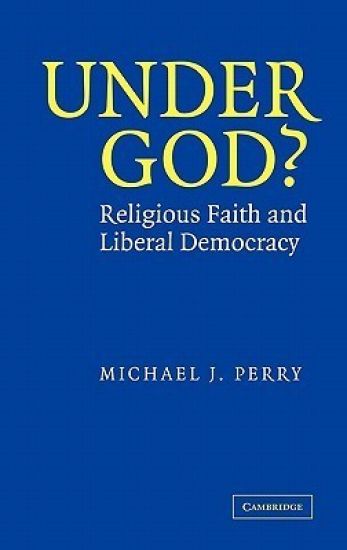
Under God?

Under God?

Michael J. Perry

Cambridge University Press
2003
pokkari
The proper role of religious faith in the public life of a liberal democracy is one of the most important and controversial issues in the United States today. Since the publication in 1991 of his book Love and Power, Michael J. Perry’s important writings on this issue have been among the most insightful. In this new book, Perry argues that political reliance on religious faith violates neither the Establishment Clause of the United States Constitution nor, more broadly, the morality of liberal democracy. Nonetheless, Perry argues, religious believers sometimes have good reasons to be wary about relying on religious beliefs in making political decisions. Along the way, Perry thoughtfully addresses three subjects at the center of fierce contemporary political debate: school vouchers, same-sex marriage, and abortion.
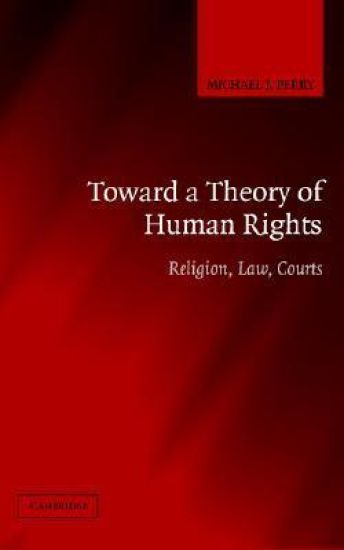
Toward a Theory of Human Rights

Toward a Theory of Human Rights

Michael J. Perry

Cambridge University Press
2008
pokkari
Neither the morality of human rights nor its relation to the law of human rights is well understood. In this book, Michael Perry addresses three large issues. There is undeniably a religious ground - indeed, more than one religious ground - for the morality of human rights. But is there a secular ground for the morality of human rights? What is the relation between the morality of human rights and the law of human rights? Perry here addresses the controversial issues of capital punishment, abortion, and same-sex unions. What is the proper role of courts, in a liberal democracy, in protecting - and therefore in interpreting - constitutionally entrenched human rights? In considering this question, special attention is paid to the Supreme Court and how it should rule on issues such as capital punishment and abortion. Toward a Theory of Human Rights makes a significant contribution both to human rights studies and to constitutional theory.
Constitutional Rights, Moral Controversy, and the Supreme Court

Constitutional Rights, Moral Controversy, and the Supreme Court

Michael J. Perry

Cambridge University Press
2008
sidottu
In this important book, Michael J. Perry examines three of the most disputed constitutional issues of our time: capital punishment, state laws banning abortion, and state policies denying the benefit of law to same-sex unions. The author, a leading constitutional scholar, explains that if a majority of the justices of the Supreme Court believes that a law violates the Constitution, it does not necessarily follow that the Court should rule that the law is unconstitutional. In cases in which it is argued that a law violates the Constitution, the Supreme Court must decide which of two importantly different questions it should address: is the challenged law unconstitutional? Is the lawmakers' judgment that the challenged law is constitutional a reasonable judgment? Perry not only illuminates moral controversies that implicate one or more constitutionally entrenched human rights, but also the fundamental question of the Supreme Court's proper role in adjudicating such controversies.
Under God?

Under God?

Michael J. Perry

Cambridge University Press
2003
sidottu
The proper role of religious faith in the public life of a liberal democracy is one of the most important and controversial issues in the United States today. Since the publication in 1991 of his book Love and Power, Michael J. Perry's important writings on this issue have been among the most insightful. In this new book, Perry argues that political reliance on religious faith violates neither the Establishment Clause of the United States Constitution nor, more broadly, the morality of liberal democracy. Nonetheless, Perry argues, religious believers sometimes have good reasons to be wary about relying on religious beliefs in making political decisions. Along the way, Perry thoughtfully addresses three subjects at the center of fierce contemporary political debate: school vouchers, same-sex marriage, and abortion.
Toward a Theory of Human Rights

Toward a Theory of Human Rights

Michael J. Perry

Cambridge University Press
2006
sidottu
Neither the morality of human rights nor its relation to the law of human rights is well understood. In this book, Michael Perry addresses three large issues. There is undeniably a religious ground - indeed, more than one religious ground - for the morality of human rights. But is there a secular ground for the morality of human rights? What is the relation between the morality of human rights and the law of human rights? Perry here addresses the controversial issues of capital punishment, abortion, and same-sex unions. What is the proper role of courts, in a liberal democracy, in protecting - and therefore in interpreting - constitutionally entrenched human rights? In considering this question, special attention is paid to the Supreme Court and how it should rule on issues such as capital punishment and abortion. Toward a Theory of Human Rights makes a significant contribution both to human rights studies and to constitutional theory.
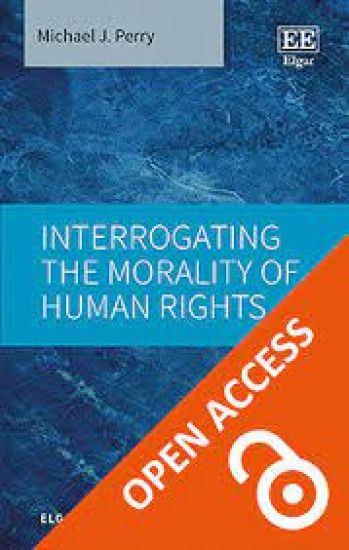
Interrogating the Morality of Human Rights

Interrogating the Morality of Human Rights

Michael J. Perry

EDWARD ELGAR PUBLISHING LTD
2023
sidottu
This forward-thinking book illustrates the complexities of the morality of human rights. Emphasising the role of human rights as the only true global political morality to arise since the Second World War, chapters explore its role as applied to often controversial issues, such as capital punishment, the exclusion of same-sex couples from civil marriage and criminal abortion bans.Clarifying and cross-examining the morality of human rights, Michael J. Perry discusses their connection to moral equality and moral freedom, as well as exploring the significance of anti-poverty human rights. This illuminating book concludes with an explanation as to why the morality of human rights is acutely relevant to challenges faced by humanity in the modern era. In particular, the challenges of growing economic inequality and climate change are emphasised as having profound relevance to the morality of human rights.Interrogating the Morality of Human Rights will be of great benefit to both undergraduate and graduate students who are contemplating the idea of human rights and their morality within their studies. Professors and academics with cause to study and research human rights would also find it to be of interest, particularly those in the field of legal scholarship.
Human Rights in the Constitutional Law of the United States

Human Rights in the Constitutional Law of the United States

Michael J. Perry

Cambridge University Press
2013
sidottu
In the period since the end of the Second World War, there has emerged what never before existed: a truly global morality. Some of that morality - the morality of human rights - has become entrenched in the constitutional law of the United States. This book explicates the morality of human rights and elaborates three internationally recognized human rights that are embedded in US constitutional law: the right not to be subjected to cruel, inhuman or degrading punishment; the right to moral equality; and the right to religious and moral freedom. The implications of one or more of these rights for three great constitutional controversies - capital punishment, same-sex marriage and abortion - are discussed in-depth. Along the way, Michael J. Perry addresses the question of the proper role of the Supreme Court of the United States in adjudicating these controversies.
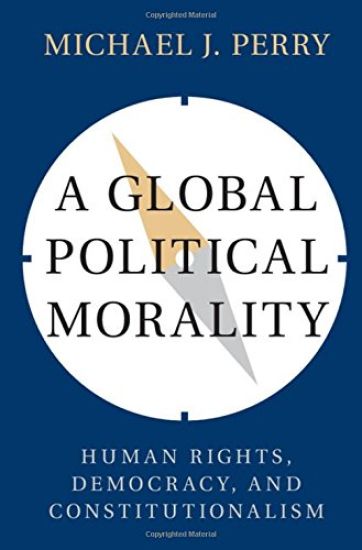
A Global Political Morality

A Global Political Morality

Michael J. Perry

Cambridge University Press
2017
sidottu
In A Global Political Morality, Michael J. Perry addresses several related questions in human rights theory, political theory and constitutional theory. He begins by explaining what the term 'human right' means and then elaborates and defends the morality of human rights, which is the first truly global morality in human history. Perry also pursues the implications of the morality of human rights for democratic governance and for the proper role of courts - especially the US Supreme Court - in protecting constitutionally entrenched human rights. The principal constitutional controversies discussed in the book are capital punishment, race-based affirmative action, same-sex marriage, physician-assisted suicide and abortion.
Human Rights in the Constitutional Law of the United States

Human Rights in the Constitutional Law of the United States

Michael J. Perry

Cambridge University Press
2013
pokkari
In the period since the end of the Second World War, there has emerged what never before existed: a truly global morality. Some of that morality - the morality of human rights - has become entrenched in the constitutional law of the United States. This book explicates the morality of human rights and elaborates three internationally recognized human rights that are embedded in US constitutional law: the right not to be subjected to cruel, inhuman or degrading punishment; the right to moral equality; and the right to religious and moral freedom. The implications of one or more of these rights for three great constitutional controversies - capital punishment, same-sex marriage and abortion - are discussed in-depth. Along the way, Michael J. Perry addresses the question of the proper role of the Supreme Court of the United States in adjudicating these controversies.
The Political Morality of Liberal Democracy

The Political Morality of Liberal Democracy

Michael J. Perry

Cambridge University Press
2012
pokkari
In this important new work in political and constitutional theory, Michael J. Perry elaborates and defends an account of the political morality of liberal democracy: the moral convictions and commitments that in a liberal democracy should govern decisions about what laws to enact and what policies to pursue. The fundamental questions addressed in this book concern (1) the grounding, (2) the content, (3) the implications for one or another moral controversy and (4) the judicial enforcement of the political morality of liberal democracy. The particular issues discussed include whether government may ban pre-viability abortion, whether government may refuse to extend the benefit of law to same-sex couples and what role religion should play in the politics and law of a liberal democracy.
A Global Political Morality

A Global Political Morality

Michael J. Perry

Cambridge University Press
2017
pokkari
In A Global Political Morality, Michael J. Perry addresses several related questions in human rights theory, political theory and constitutional theory. He begins by explaining what the term 'human right' means and then elaborates and defends the morality of human rights, which is the first truly global morality in human history. Perry also pursues the implications of the morality of human rights for democratic governance and for the proper role of courts - especially the US Supreme Court - in protecting constitutionally entrenched human rights. The principal constitutional controversies discussed in the book are capital punishment, race-based affirmative action, same-sex marriage, physician-assisted suicide and abortion.
Structural Identification and Damage Detection using Genetic Algorithms
Rapid advances in computational methods and computer capabilities have led to a new generation of structural identification strategies. Robust and efficient methods have successfully been developed on the basis of genetic algorithms (GA). This volume presents the development of a novel GA-based identification strategy that contains several advantageous features compared to previous methods. Focusing on structural identification problems with limited and noise contaminated measurements; it provides insight into the effects of various identification parameters on the identification accuracy for systems with known mass. It then proposes a generalization for systems with unknown mass, stiffness and damping properties. The GA identification strategy is subsequently extended for structural damage detection. The findings of the output-only strategy and substructural identification represent a great leap forward from the practical point of view. This book is intended for researchers, engineers and graduate students in structural and mechanical engineering, particularly for those interested in model calibration, parameter estimation and damage detection of structural and mechanical systems using the state-of-the-art GA methodology.
Structural Identification and Damage Detection using Genetic Algorithms
Rapid advances in computational methods and computer capabilities have led to a new generation of structural identification strategies. Robust and efficient methods have successfully been developed on the basis of genetic algorithms (GA). This volume presents the development of a novel GA-based identification strategy that contains several advantageous features compared to previous methods. Focusing on structural identification problems with limited and noise contaminated measurements; it provides insight into the effects of various identification parameters on the identification accuracy for systems with known mass. It then proposes a generalization for systems with unknown mass, stiffness and damping properties. The GA identification strategy is subsequently extended for structural damage detection. The findings of the output-only strategy and substructural identification represent a great leap forward from the practical point of view. This book is intended for researchers, engineers and graduate students in structural and mechanical engineering, particularly for those interested in model calibration, parameter estimation and damage detection of structural and mechanical systems using the state-of-the-art GA methodology.
Civil Liberties and the Constitution

Civil Liberties and the Constitution

Lucius J Barker; Combs Michael; Lyles Kevin; Jr. Perry; Barker Twiley

Routledge Member of the Taylor and Francis Group
2010
nidottu
Updated in a new 9th edition, this casebook explores civil liberty problems through a study of leading judicial decisions. It offers a reasonable sample of cases across a broad spectrum of rights and liberties. This book introduces groups of featured cases with in-depth commentaries that set the specific historical-legal context of which they are a part, allowing readers to examine significant portions of court opinions, including major arguments from majority, concurring, and dissenting opinions.