Kirjahaku
Etsi kirjoja tekijän nimen, kirjan nimen tai ISBN:n perusteella.
1000 tulosta hakusanalla Michael Stephans
In Experiencing Jazz: A Listener’s Companion, writer, teacher, and renowned jazz drummer Michael Stephans offers a much-needed survey in the art of listening to and enjoying this dynamic, ever-changing art form. More than mere entertainment, jazz provides a pleasurable and sometimes dizzying listening experience with an extensive range in structure and form, from the syncopated swing of big bands to the musical experimentalism of small combos. As Stephans illustrates, listeners and jazz artists often experience the essence of the music together—an experience unique in the world of music. Experiencing Jazz demonstrates how the act of listening to jazz takes place on a deeply personal level and takes readers on a whirlwind tour of the genre, instrument by instrument—offering not only brief portraits of key musicians like Joe Lovano and John Scofield, but also their own commentaries on how best to experience the music they create. Throughout, jazz takes center stage as a personal transaction that enriches the lives of both musician and listener. Written for anyone curious about the genre, this book encourages further reading, listening, and viewing, helping potential listeners cultivate an understanding and appreciation of the jazz art and how it can help—in drummer Art Blakey’s words—“wash away the dust of everyday life.”
Saxophonist, violinist, trumpeter, composer, and bandleader Ornette Coleman, along with pianist Cecil Taylor, was one of the founding forces of the Free Jazz movement which took the music world by storm in the 1950s and 60s. His brilliance as an instrumentalist at first positioned him as a polarizing figure, but eventually brought him recognition as an American original and international jazz treasure. Jazz drummer Michael Stephans explores the personal challenges Coleman faced, the music he created from one decade to the next, and the incredibly positive attitude he maintained in the face of so much negativity throughout his life. Revealing how Coleman became an iconic, enigmatic figure not only in jazz, but in much of contemporary improvisational music, Stephans weaves together analysis of Coleman’s recordings with interviews of those who knew Coleman best. Experiencing Ornette Coleman: A Listener's Companion encourages both jazz devotees and readers with little knowledge of the music to trace the inspirational journey of this now-seminal figure from his early years through the beginnings of the new millennium. Along the way, readers will learn about the music and motivations of the free jazz movement while experiencing an utterly human story of artistic genius and expression.
In Experiencing Jazz: A Listener’s Companion, writer, teacher, and renowned jazz drummer Michael Stephans offers a much-needed survey in the art of listening to and enjoying this dynamic, ever-changing art form. More than mere entertainment, jazz provides a pleasurable and sometimes dizzying listening experience with an extensive range in structure and form, from the syncopated swing of big bands to the musical experimentalism of small combos. As Stephans illustrates, listeners and jazz artists often experience the essence of the music together—an experience unique in the world of music. Experiencing Jazz demonstrates how the act of listening to jazz takes place on a deeply personal level and takes readers on a whirlwind tour of the genre, instrument by instrument—offering not only brief portraits of key musicians like Joe Lovano and John Scofield, but also their own commentaries on how best to experience the music they create. Throughout, jazz takes center stage as a personal transaction that enriches the lives of both musician and listener. Written for anyone curious about the genre, this book encourages further reading, listening, and viewing, helping potential listeners cultivate an understanding and appreciation of the jazz art and how it can help—in drummer Art Blakey’s words—“wash away the dust of everyday life.”
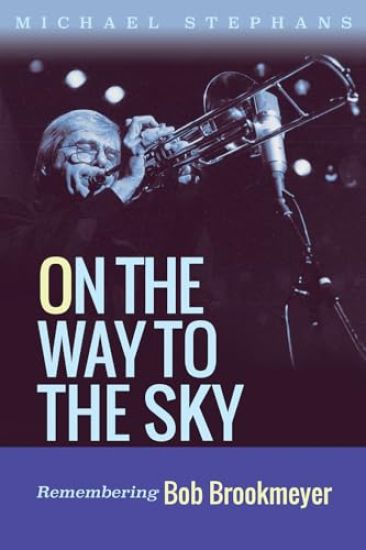
In On the Way to the Sky: Remembering Bob Brookmeyer, author Michael Stephans has created a rich, multifaceted paean to jazz icon Bob Brookmeyer, the much-beloved musical genius who passed away in 2011, four days short of his 82nd birthday. On the Way to the Sky is a hybrid book in that it’s part memoir, part biography, with over a dozen essays by such luminaries as Maria Schneider, Jim McNeely, John Mosca, Darcy James Argue, Dave Rivello, John Hollenbeck, and the late Terry Teachout, as well as shorter tributes by prominent musicians, writers, and family members. Stephans also presents three chronologically arranged chapters that trace Brookmeyer’s musical trajectory via his recordings, from 1952 through 2011. In spite of Brookmeyer’s six-decade career as a master of the valve trombone and piano—and as an iconoclastic composer, arranger, and educator—he has rarely received the exposure to the listening public that he so richly deserves. In Stephans’s words, “When writing about music and musicians, a writer’s responsibility is to expand public awareness of other voices in all musical genres.” His dedication to illuminating the Brookmeyer legacy is his palpable raison d’Être.
Decadence and decay : from ancient Rome to the present
Faramerz Dabhiowala; Melanie Grundmann; Richard Whatmore; Mattias Hessérus; Adoreé Villany; Andrew Huddleston; Saul David; Andrew Preston; Daniela Cammack; Pernille Røge; Adam Tooze; J.R. McNeill; Jonathan Rees; Robert Beuregard; William O’Reilly; Michael Nelson; Peter Heather; Robert Coates-Stephans; Neil McLynn; Richard Miles
Bokförlaget Stolpe
2019
sidottu
The fear of living in the end times has a long history. In Decadence and Decay, a group of distinguished international scholars describe how societies over time have handled and interpreted the concept of decline. In times of unrest and transition, declinism the notion that a culture or civilisation is headed towards irreversible decline tends to capture the public imagination. The essays in this volume address how notions of decadence and decay have been used both as opprobrium and as a form of self-definition and empowerment an instrument to protect individualism against collectivistic oppression. From ancient Rome to the present, ideas and expressions of decadence and decay have played a critical role in how we perceive the world.
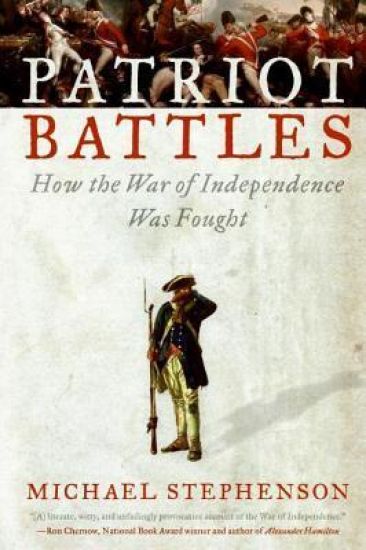
Patriot Battles: How the War of Independence Was Fought
Michael Stephenson
HARPER PERENNIAL
2008
nidottu
Michael Stephenson's Patriot Battles is a comprehensive and richly detailed study of the military aspects of the War of Independence, and a fascinating look at the nuts and bolts of eighteenth-century combat. Covering everything from what motivated those who chose to fight to how they were enlisted, trained, clothed, and fed, it offers a close-up view of the war's greatest battles, with maps provided for each. Along the way many cherished myths are challenged, reputations are reassessed, and long-held assumptions are tested. One of the most satisfying and illuminating contributions to the literature on the War of Independence in many years, Patriot Battles is a vastly entertaining work of superior scholarship and a refreshing wind blowing through some of American history's dustier corridors.
Shale Gas and Fracking: The Science Behind the Controversy explains the relevant geological principles before examining the peer-reviewed evidence and presenting it through a simple and compelling illustrated narrative. Each chapter focuses on a particular controversy, such contamination of well water with gas from fracking, and follows a similar format: starting with the principles; then detailing peer-reviewed case studies for earthquakes, radioactivity, and climate change; and concluding with a judgment of the general risks involved. Shale Gas and Fracking: The Science Behind the Controversy provides readers with the unbiased information they need to make informed decisions on the controversial issue of fracking.
Energy and Climate Change: An Introduction to Geological Controls, Interventions and Mitigations examines the Earth system science context of the formation and use of fossil fuel resources, and the implications for climate change. It also examines the historical and economic trends of fossil fuel usage and the ways in which these have begun to affect the natural system (i.e., the start of the Anthropocene). Finally, the book examines the effects we might expect in the future looking at evidence from the "deep time" past, and looks at ways to mitigate climate change by using negative emissions technology (e.g. bioenergy and carbon capture and storage, BECCS), but also by adapting to perhaps a higher than "two degree world," particularly in the most vulnerable, developing countries. Energy and Climate Change is an essential resource for geoscientists, climate scientists, environmental scientists, and students; as well as policy makers, energy professionals, energy statisticians, energy historians and economists.
A stunningly researched work of military history that answers a seemingly simple question-how have soldiers through the ages met their deaths?-and in doing so reveals an astonishing wealth of insight about the nature of combat, the differences between cultures, and the unchanging qualities of humanity itself. Behind each soldier's death, in the story of every anonymous infantryman's grave, lies a heady mixture of specifics. There is the weapon that kills him; the tactics that brought him to his death; the strategy that marks the boundaries of the killing field; the decisions he makes or the decisions others make on his behalf; the ability of medical services to save a life or hasten the extinction. And there is the cultural context that shapes each warrior and battlefield: a complex amalgam of attitudes about heroism, sacrifice, justice, compassion, and aggression. Drawing on three years of research and incorporating hundreds of primary sources, The Last Full Measure reveals these and other fascinating complexities hidden behind the simple fact of death in combat.Organized chronologically, but pausing frequently to make cross-temporal comparisons, the book covers the Greek phalanx and the Roman legion, medieval warfare in both the West and samurai-era Japan, the age of black-powder combat, the Civil War, World War I, World War II, and insurgent warfare from Vietnam through the present.
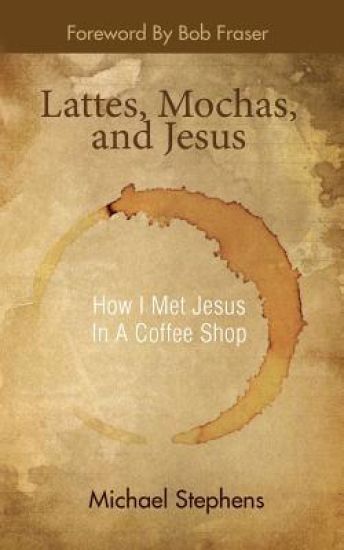
Have you ever wondered if God was real? And if He was real, what might be His thoughts about you specifically? What might he share with you if you had the chance to talk to Him face to face? With these questions in mind and with a unique gift, Michael Stephens seized the opportunity to try and help answer these questions for numerous people while working in the marketplace as a barista for Starbucks. Throughout the course of his time serving coffee and espresso, he routinely prayed for and prophesied over hundreds of customers. Soon, stories of "the Starbucks prophet" circulated around the Kansas City community. As more and more customers were ministered to and touched by the presence of God, the testimonies grew. Consequently, people began to venture over to the specific Starbuck's location he worked at in hopes of possibly hearing just "what Jesus had to say" about them. With a desire to help people see that God is real both inside and outside of the church, Michael Stephens has taken the gospel into everyday life and seen numerous people encouraged and transformed. In addition to being inspired by the stories in this book you will learn how to encounter God in any arena of life, gain Divine confidence in where He has called you, get a taste of what Jesus actually thinks about you, and be provoked to love in new ways as you rediscover the Jesus who invades everyday life.
Behind every soldiers death lies a story, a tale not just of the cold mathematics of the battlefield but of an individual human being who gave his life. What psychological and cultural pressures brought him to his fate? What lies and truths convinced him to march towards his death? Covering warfare from prehistory through the present day, The Last Full Measure tells these soldiers stories, ultimately capturing the experience of war as few books ever have.
Adaptation to change that’s based on thoughtful planning and grounded in the mission of libraries: it’s a model that respected LIS thinker and educator Michael Stephens terms “hyperlinked librarianship.” And the result, for librarians in leadership positions as well as those working on the front lines, is flexible librarianship that’s able to stay closely aligned with the needs and wants of library users. In this collection of essays from his “Office Hours” columns in Library Journal, Stephens explores the issues and emerging trends that are transforming the profession. Among the topics he discusses are:the importance of accessible, welcoming, and responsive library environments that invite open and equitable participation, and which factors are preventing many libraries from ramping up community engagement and user-focused services;challenges, developments, and emerging opportunities in the field, including new ways to reach users and harness curiosityconsiderations for prospective librarians, from knowing what you want out of the profession to learning how to aim for it;why LIS curriculum and teaching styles need to evolve;mentoring and collaboration; andthe concept of the library as classroom, a participatory space to experiment with new professional roles, new technologies, and new ways of interacting with patrons. Bringing together ideas for practice, supporting evidence from recent research, and insights into what lies ahead, this book will inform and inspire librarians of all types.
Of his earlier book, Against the Grain raved, “Reading this book brings a sense of hope, inspiration, and excitement for what the future holds for the new generation of hyperlinked librarians entering our profession.” Now Stephens is back with a newly curated collection of succinct writings that will refresh your view of the profession and invigorate your work. Associate Professor at San Jose State University, Stephens encourages curiosity and creativity in his students and all library workers by connecting trends from outside the profession to its bedrock values. With a humanist lens, he reflects on such topics ashow libraries can empower kindness;developing a coterie of kindred spirits at conferences outside libraryland;inspiring creativity in library patrons;the most effective professional development experiences;comfort, joy, and hygge in the library;the characteristics of compassionate leadership;how to contend with a devil’s advocate; andmentoring new librarians.Whether you’ve just landed your first job or a longtime professional, Stephens’ perspective will reenergize your commitment to librarianship and the important work that libraries are doing every day.
Heather Douglas was ecstatic when her ringing phone brought her out of a horrific daydream from her childhood. But, the phone call from her long-time friend turned billionaire matriarch was not about the two of them catching up on old times. Hired by Angelica Stewart, Heather and her sister, Alex, owners of a small but successful private investigative firm, find themselves on the redeye to New Orleans to investigate Angelica's daughter, Katie, who went missing from her bachelorette.Concerned with how Alex's vivacious and carefree behavior will mix with New Orleans, Heather learns that Angelica's husband, Terry, has hired his own private investigator for the same job. The sisters and their mysterious private investigator, Nathan Steele, must join forces, locate Katie, discretely during Mardi Gras. Heather's unnerved by the newly formed collaboration forced on her agency as she's both attracted and repelled by her new partner-and Alex's unexplainable infatuation with him. Together, they embark on a journey as they piece together lies, alibis, evidence, and betrayal in hopes to locate Katie... alive.
This book develops a theory of picture perception and aesthetic response, arguing that images can generate in us a complex pattern of mental changes, or transformations. It is essential reading to those seriously involved in linking the arts and cognitive sciences.
Plasmodiophora Brassicae: The Cause of the Cabbage Hernia, 1878
Michael Stephanovitch Woronin; Michail Stepanovich Voronin
Literary Licensing, LLC
2013
sidottu
""Plasmodiophora Brassicae: The Cause Of The Cabbage Hernia, 1878"" is a scientific book written by Michael Stephanovitch Woronin. The book focuses on the study of Plasmodiophora Brassicae, a soil-borne pathogen that causes cabbage hernia, a disease that affects the root system of cabbage plants. The book provides a detailed description of the disease, its symptoms, and the life cycle of the pathogen. It also covers the history of the discovery of the disease, the methods used to study it, and the different approaches to control it. The book is a valuable resource for scientists, researchers, and anyone interested in plant pathology and agriculture. It is written in a clear and concise language, and it is supported by illustrations, diagrams, and tables that make it easy to understand. Overall, ""Plasmodiophora Brassicae: The Cause Of The Cabbage Hernia, 1878"" is an important contribution to the field of plant pathology, and it remains a relevant reference for researchers today.With A Biographical Sketch By The Translator. Phytopathological Classics, No. 4.This scarce antiquarian book is a facsimile reprint of the old original and may contain some imperfections such as library marks and notations. Because we believe this work is culturally important, we have made it available as part of our commitment for protecting, preserving, and promoting the world's literature in affordable, high quality, modern editions, that are true to their original work.
Plasmodiophora Brassicae: The Cause of the Cabbage Hernia, 1878
Michael Stephanovitch Woronin; Michail Stepanovich Voronin
Literary Licensing, LLC
2013
nidottu
In The Brooklyn Book of the Dead, Michael Stephens presents the most devastating vision of the Irish-American family since the nightmarish portrayals of Eugene O'Neill and James T. Farrell. Returning to their Brooklyn neighborhood for the wake and funeral of their father (Customs Inspector Leland Coole, aka Jackie Ducks, Little Lee, Crazy Jack, but remembered by his children as the "old bastard"), the sixteen Coole children talk and reminisce about their father and family; all adults now, their lives have been painful failures involving drugs, alcoholism, violence, petty crime, incest, and despair. Like any truly emotionally crippled children of a dysfunctional family, the Cooles rant with bitterness about their pasts but likewise romanticize their family, coupling an ability to analyze their plight with an utter inability to do anything about it. The novel is also the story of the decline of urban America and the story of third-generation immigrants who are both cut off from their roots and yet unassimilated into the illusory American melting pot. Stephens writes of all this with a passion and love of his materials. And he writes bravely because this is a book that will be attacked by those who believe in the mythical American family invoked by "family-values" politicians and wealthy evangelists. If Stephens has a message at all, it is that families are diseases made fatal by a cynical American society.