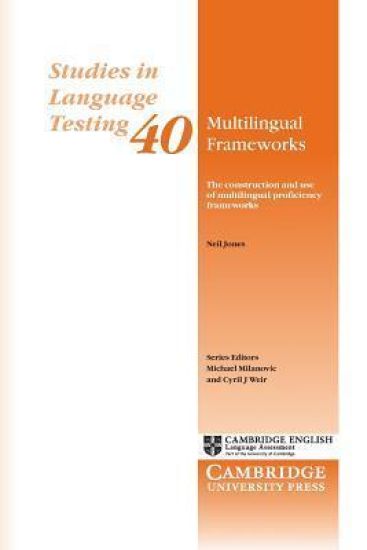
Describes 20 years of work at Cambridge English to develop multilingual assessment frameworks. Multilingual Frameworks covers the development of the ALTE Framework and 'Can Do' project; work on the Common European Framework of Reference and the linking of the Cambridge English exam levels to it; Asset Languages – a major educational initiative for UK schools; and the European Survey on Language Competences. It proposes a model for the validity of assessment within a multilingual framework, and while illustrating the constraints which determined the approach taken to each project, makes clear recommendations on methodological good practice. It looks forward to the further extension of assessment frameworks to encompass a model for multilingual education.
Jameson Satellite first appeared in July 1931 issue of Amazing Stories. The hero, Professor Jameson, was obsessed with the idea of perfectly preserving his body after death and succeeded by having it launched into space in a satellite. Jameson's cryopreserved body survived in suspended animation for 40,000,000 years, when it was found orbiting planet Earth by a passing cyborg exploration ship. The cyborgs, who descended from a race of biological beings achieved immortality by transferring their brains to neural-net circuitry inside machine bodies, like the Borg of the Star Trek series. The cyborgs discovered that Jameson's body had been so well preserved that they were able to repair his brain, incorporate it into a machine body and restart it. Jameson Satellite proved so popular with readers that later installments became some of the most popular and well-known of the 1930s pulps. Being cryopreserved and revived is an idea that would recur in hundreds of science fiction novels, movies, and television shows. One young science fiction fan who read Jameson Satellite and drew inspiration from the idea of cryonics was Robert Ettinger, who founded the Cryonics Institute and the related Immortalist Society. Ettinger, who once said "By working hard and saving my money, I intend to become an immortal superman." became cryopreserved after his death in July 2011. Jameson Satellite also inspired Woody Allen's "Sleeper" futuristic science fiction comedy. The plot involves the adventures of Miles Monroe who goes into the hospital for an ulcer in 1973 but when the surgery goes awry he is cryogenically frozen and defrosted 200 years later in an ineptly led police state. Isaac Asimov also read the story and cites Jameson Cyborgs as the "spiritual ancestors" of his positronic robot series and credits them as the origin of his attraction to the idea of benevolent robots. Masamune Shirow's cyborg-populated Ghost in the Shell saga where named Jameson-type cyborgs. Today we either bury dead brains or burn them which result in irreversible loss of personhood information due to the destruction of the brain tissue that houses a person's unique neural-net circuitry. So far the only practical alternative is to vitrify or cryopreserve the brain and store it indefinitely at -196 C using liquid nitrogen. Even the best vitrification techniques still produce massive cell damage that no current or even medium-term technology can likely reverse. But the shortcomings of early twenty-first century science and engineering hardly foreclose the technology options that will be available in a century and far less so in a millennium. Some future biocomputing technology may extract and thus back-up this defining neural information or wetware. Currently, there are more than 250 brains suspended in liquid nitrogen in the US and more than 3,000 people have already signed up to have their brains, or whole bodies, cryopreserved in suspended animation. Stanley Kubrick, director of "2001: A Space Odyssey" film hailed the promise of cryonic suspension in his 1968 Playboy interview. Kubrick cast death as a problem of bioengineering: "Death is no more natural or inevitable than smallpox or diphtheria. Death is a disease and as susceptible to cure as any other disease."
This volume outlines the general principles of Learning Oriented Assessment (LOA), placing it in the context of European language learning policy. The authors pose three key questions central to LOA: 'What is learning?' , 'What is to be learned?' and 'What is to be assessed?'. It focuses on the use of evidence, and how it can be collected and used to feed back into learning, overviews large-scale assessment as practised by Cambridge English and learning-oriented classroom assessment practices, and concludes with a look at implementing LOA in practice. With fresh insights into the role of assessment in supporting learning, this volume will be of considerable interest to assessment practitioners, teachers and academics, educational policy-makers and examination board personnel.
This innovative, new critical guide follows the same format as our Art of Poetry series. High quality, fine-grained analysis of key aspects of the play, including essays on key characters and exploration of key scenes, is supported with contextual information, teaching ideas and much more. Designed specifically for teachers and high-achieving GCSE pupils, The Art of Drama is a springboard to better teaching, greater literary appreciation and to the highest grades.
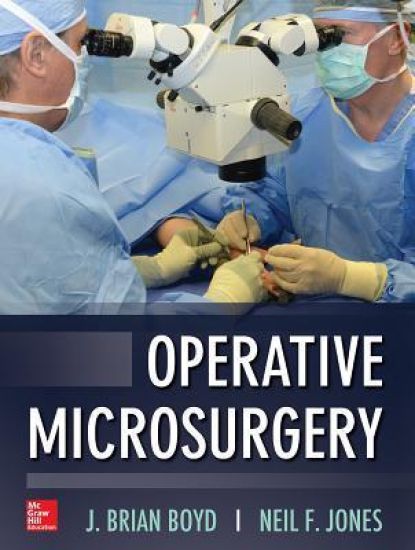
Publisher's Note: Products purchased from Third Party sellers are not guaranteed by the publisher for quality, authenticity, or access to any online entitlements included with the product.MASTER COMMON AND DIFFICULT MICROSURGERY PROCEDURES WITH STEP-BY-STEP, ILLUSTRATED GUIDANCEA Doody's Core Title for 2017!More than 2,000 full-color photographs and illustrations!Operative Microsurgery is a practical, full-color procedural guide that focuses on microsurgery of the upper and lower limbs, nerves and brachial plexus, head and neck, and breast and trunk. This groundbreaking textfeatures chapters written by plastic surgeons, hand surgeons, and orthopedic surgeons from 17 countries, in addition to the United States and Canada. Enriched by an extensive collection of full-color atlas-style photographs and illustrations demonstrating dozens of procedures, Operative Microsurgery is divided into 86 chapters, most of which describe a specific operative technique and include all the expert guidance necessary to successfully perform the procedure.CLEAR, COMPREHENSIVE, AND AUTHORITATIVE, OPERATIVE MICROSURGERY ENABLES YOU TO:Tap into the collective wisdom of some of the brightest, most respected minds in microsurgeryAcquire a hands-on working knowledge of key microsurgery procedures that span the entire human bodyLearn with the help of an outstanding collection of full-color photographs and illustrationsConfidently perform difficult or unusual proceduresRefer to convenient procedure-specific chapters written by pioneers in the field
The mammoths of the ancient world have been wonderfully preserved in the ice of Siberia. The cold, only a few miles out in space, will be far more intense than in the polar regions and its power of preserving the dead body would most probably be correspondingly increased. When the hero-scientist of this story knows he must die, he conceives a brilliant idea for the preservation of his body, the result of which even exceeded his expectations. What, how, and why are cleverly told here.
The mammoths of the ancient world have been wonderfully preserved in the ice of Siberia. The cold, only a few miles out in space, will be far more intense than in the polar regions and its power of preserving the dead body would most probably be correspondingly increased. When the hero-scientist of this story knows he must die, he conceives a brilliant idea for the preservation of his body, the result of which even exceeded his expectations. What, how, and why are cleverly told here.
This light and enjoyable book is a series of stories and reflections on the Celtic saints. Each of the 15 chapters begins with a semi-fictional story or event from the life of a saint, showing some characteristic quality for which he or she is known. This is followed by a reflection that combines history and inspiration. Then comes a short original poem, scripture, meditation, and a blessing. A website connected with the book will offer fully arranged original hymns to accompany the poems.
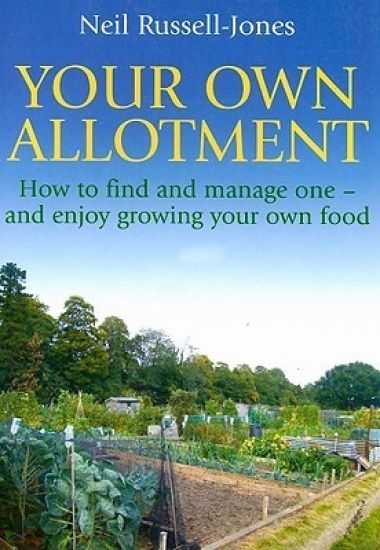
Having your own allotment is an excellent way to ensure that the fruit and vegetables you and your family eat are fresh, organic and actually have flavour. This book takes you step by step through the process of finding and obtaining your allotment and then offers practical information and tips on starting, and then maintaining your plot. In three parts it covers all you need to know about: applying for an allotment, preparing the soil, organic principles and planning and laying out your plot; the vegetables, fruits, herbs and flowers you can grow, plus useful shrubs and trees; and. maintaining the allotment, including gardening techniques, pest and weed control, crop rotation, composting, harvesting and storage and tips on maintaining productivity throughout the year.Contents: About the author; Preface; Part 1: Good Grounding - The Basics; 1. All About Allotments; 2. Our Allotment; 3. Getting Started; 4. Getting to Know Your Soil; 5. Digging; 6. Climate; 7. Understanding the Basics; 8. Tools for you Allotment; 9. Shed and Tool Stores; 10. Organic Principles; Part 2: Know Your Onions - The Plants; 11. About our Crops; 12. The Life Cycle of a Plant; 13. Plant Families; 14. Brassica - The Cabbage Family; 15. Legumes - The Pea and Bean Family; 16. Solanaceae - Tomato and Potato family; 17. Alliaceae - The Onion Family; 18. Apiaceae - The Celery Family; 19. Asteraceae - The Lettuce or Daisy Family; 20. Cucurbitaceae - The Gourd Family; 21. Chenopodiaceae; 22. Fruit; 23. Perennial Crops; 24. Herbs; 25. Cereals and Grasses; 26. Flowers and Trees; Part 3: Maintaining Your Allotment; 27 Planting; 28. Organic Matter; 29. Dealing with Pests, Diseases and Weeds; 30. Crop Rotation; 31. Protecting Your Crops; 32. Enjoying the Fruits of Your Labour; 33. Food for Free; 34. The Allotment Society - Getting Involved; 35. Allotment Tips; 36. The Allotment Year; Index.
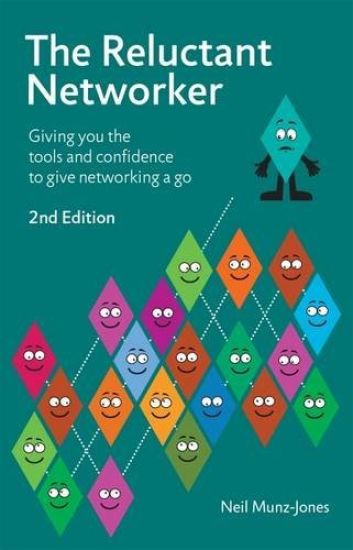
Many working professionals are 'Reluctant Networkers'. They do not like the thought of 'cold calling' friends of friends, joining networking clubs or going to networking events. Written by a 'Reluctant Networker', this guide supports you in developing your networking stills in 'bite-size chucks' rather than having to do a complete makeover.
This book breaks the mould of cookery books and of fiction. It is a beautifully crafted set of short stories, written by Neil Russell-Jones, a well-published writer and author, each with a culinary theme that is reflected in menus of specially created recipes from a world-class chef - Lionel Strub. The stories and culinary themes span the globe: ranging from Wales, via Scotland through Greece to the Far East and from the Caribbean, through Hungary, Russia, via Kazakhstan to Canada. The recipes have been developed so anyone can re-create them in their own kitchen without expensive machinery or utensils. The book is set in a Dining Club where members regale each other with interesting tales over a meal, with appropriate refreshment. It encompasses buffets, full meals, picnics, and high tea. Some are humorous, others cover crime and mystery, each tale contains a 'twist' at the end; one tale contains a code which must be cracked and the first lucky solver will receive a prize... find out more in The Dining Club of Interesting Occurrences.
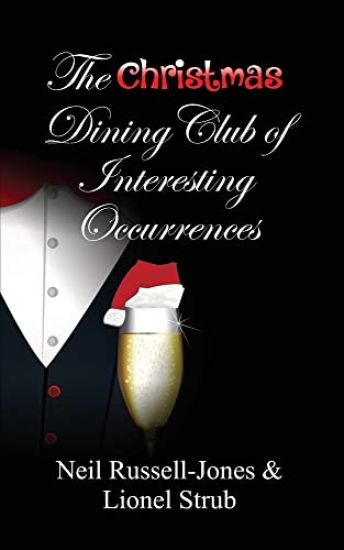
A must for all cookery libraries and a real treat for those who love stories in a Christmas setting.This is the second book in the series 'The Dining Club of Interesting Occurrences'. The first book was described by fans as 'A fantastic blend of beautifully crafted stories and mouth-watering recipes'. Others described it as 'Taking me into culinary realms and tastes which I would never have entered had it not been for this book.' One reader stated that it had opened his (yes his ) eyes to menus from across the globe The first book 'broke the mould' of cookery and fiction by combining fascinating stories and wonderful recipes together in one book. This second book brings a new perspective to the herbs and spices of the Christmas festive period. Each story is based within the Christmas period, from the first Sunday of and up until Epiphany - the 12th night. Each chapter also has a poem reflecting the particular day of Christmas in which the story is set: written by the members of the Dining Club. As before Lionel has crafted a selection of fascinating and succulent international recipes, building on the setting of the stories each one using a herb or spice so redolent of the Christmas period.
This book "" The Jameson Satellite "", has been considered important throughout the human history, and so that this work is never forgotten we have made efforts in its preservation by republishing this book in a modern format for present and future generations. This whole book has been reformatted, retyped and designed. These books are not made of scanned copies and hence the text is clear and readable.
Spacewrecked on Venus, a classical book, has been considered important throughout the human history, and so that this work is never forgotten we at Alpha Editions have made efforts in its preservation by republishing this book in a modern format for present and future generations. This whole book has been reformatted, retyped and designed. These books are not made of scanned copies of their original work and hence the text is clear and readable.