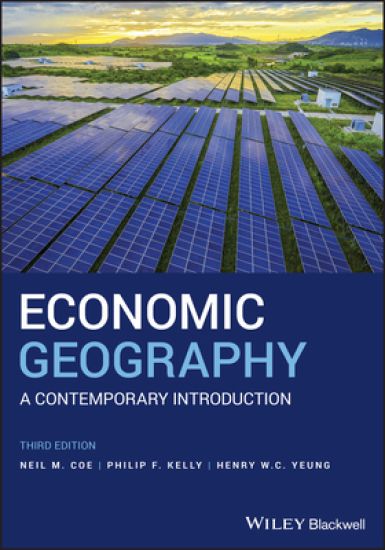
A revised and updated edition of the leading introductory text on the geography of economic life, from the local to the global Economic Geography is an engaging and accessible introduction to the different ways modern economic geographers understand, analyze, and interpret economic processes. This comprehensive text addresses significant questions relevant to contemporary economic life, from the activities of transnational corporations to issues surrounding workplaces and consumption. It encourages readers to explore how spatial patterns, places, networks, and territories shape large-scale economic processes. Accessible, highly-illustrated material presents fresh insights from the field—complemented by relatable, real-world examples that help students understand the social, cultural, and political contexts underpinning global economic processes. Now in its third edition, this extensively revised and updated textbook retains the features and thematic structure that have proved popular with students and instructors alike, while adding exciting new content. New chapters explore how the global economy and global development are institutionalized and governed, the economic geographies of global climate change, economic practices outside the capitalist mainstream, the role of migrants in labour markets, global production networks, and more. Introduces economic geography with a thematic approach including major concepts, current debates, and case studiesRevised and updated to enhance international coverage, including three entirely new chapters on international development, alternative economies, and global climate changeSubstantial new content on labour migration, global production networks, and recent intellectual trends such as evolutionary economic geographyHighly illustrated with diagrams and photographs closely integrated into the textPedagogical aids including key case studies, learning objectives, text boxes, chapter essay questions, summaries, and further readingCore geographical concepts – such as place, networks and territory – are closely integrated into all chapters. Economic Geography: A Contemporary Introduction is an invaluable source of up-to-date knowledge for students new to the field, for those requiring a solid foundation, as well as for a broader academic and public readership with interest in this area of study.
This work has been selected by scholars as being culturally important and is part of the knowledge base of civilization as we know it.This work is in the public domain in the United States of America, and possibly other nations. Within the United States, you may freely copy and distribute this work, as no entity (individual or corporate) has a copyright on the body of the work.Scholars believe, and we concur, that this work is important enough to be preserved, reproduced, and made generally available to the public. To ensure a quality reading experience, this work has been proofread and republished using a format that seamlessly blends the original graphical elements with text in an easy-to-read typeface.We appreciate your support of the preservation process, and thank you for being an important part of keeping this knowledge alive and relevant.
This work has been selected by scholars as being culturally important and is part of the knowledge base of civilization as we know it.This work is in the public domain in the United States of America, and possibly other nations. Within the United States, you may freely copy and distribute this work, as no entity (individual or corporate) has a copyright on the body of the work.Scholars believe, and we concur, that this work is important enough to be preserved, reproduced, and made generally available to the public. To ensure a quality reading experience, this work has been proofread and republished using a format that seamlessly blends the original graphical elements with text in an easy-to-read typeface.We appreciate your support of the preservation process, and thank you for being an important part of keeping this knowledge alive and relevant.
Nairobi's Eastleigh estate has undergone pro- found change over the past two decades. Previously a quiet residential zone, the arrival of vast numbers of Somali refugees catalysed its trans- formation into 'Little Mogadishu', a global hub for Somali business. Dozens of malls and hotels have sprouted from its muddy streets, attracting thousands of shoppers. Nonetheless, despite boosting Kenya's economy, the estate and its residents are held in suspicion over alleged links to Islamic terrorism, especially after the 2013 Westgate Mall attack, while local and international media have suggested with little evidence that its economic boom owes much to capital derived from Indian Ocean piracy. In contrast to such sensationalised reporting, Little Mogadishu is based on detailed historical and ethnographic research and explores the social and historical underpinnings of this economic boom. It examines how transnational networks converged on Eastleigh in the wake of the collapse of the Somali state, attracting capital from the Somali diaspora, and bringing goods - especially clothes and electronics - from Dubai, China and elsewhere that are much in demand in East Africa. In so doing, Little Mogadishu provides a compelling case-study of the developmental impact diasporas and transnational trade can have, albeit in a country where many see this development as suspect.
This book fills a gap in the literature of 21st century international visual arts education by providing a structured approach to understanding the benefits of Philosophical Realism in art education, an approach that has received little international attention until now. The framework as presented provides a powerful interface between research and practical reconceptualisations of critical issues and practice in the domains of art, design, and education that involve implications for curriculum in visual arts, teaching and learning, cognitive development, and creativity. The book extends understanding of Philosophical Realism in its practical application to teaching practice in visual arts in the way it relates to the fields of art, design, and education. Researchers, teacher educators and specialist art teachers are informed about how Philosophical Realism provides insights into art, design, and education. These insights vary from clearer knowledge about art to the examination of beliefs and assumptions about the art object. Readers learn how cognitive reflection, and social and practical reasoning in the classroom help cultivate students’ artistic performances, and understand how constraints function in students’ reasoning at different ages/stages of education.
This book fills a gap in the literature of 21st century international visual arts education by providing a structured approach to understanding the benefits of Philosophical Realism in art education, an approach that has received little international attention until now. The framework as presented provides a powerful interface between research and practical reconceptualisations of critical issues and practice in the domains of art, design, and education that involve implications for curriculum in visual arts, teaching and learning, cognitive development, and creativity. The book extends understanding of Philosophical Realism in its practical application to teaching practice in visual arts in the way it relates to the fields of art, design, and education. Researchers, teacher educators and specialist art teachers are informed about how Philosophical Realism provides insights into art, design, and education. These insights vary from clearer knowledge about art to the examination of beliefs and assumptions about the art object. Readers learn how cognitive reflection, and social and practical reasoning in the classroom help cultivate students’ artistic performances, and understand how constraints function in students’ reasoning at different ages/stages of education.
A masterful and thorough revision of the only single-source, authoritative reference on cutaneous lymphoproliferative disease. Classic reference for unsurpassed coverage of lymphocytic infiltrates of the human skinCovers a broad spectrum of topics ranging from the role of the immune system in the pathogenesis of cutaneous lymphocytic infiltrates to one describing the immunohistochemica nd molecular aspects of lymphoid neoplasia. Each chapter contains an extensive array of ‘clinical vignettes’ clearly showing the application of principles and treatment techniques discussed in the chapterPresents a succinct and logical approach to the diagnosis of most cutaneous lymphocytic infiltrates and discusses the interplay between the immune system in the propagation of lymphocytic infiltrates focusing on the role of iatrogenic and endogenous immune dysregulation. The molecular and cytogenetic basis of lymphoid neoplasia is considered in great detail.Contains hundreds of full-color, high-quality clinical and histologic photographs, with over 200 new images in the new edition
A thorough updating of the best-selling, vital reference and textbook on melanocytic proliferations PRAISE FOR THE FIRST EDITION: “Well-written and entertaining” —Modern Pathology “An extremely helpful guide for the practicing dermatopathologist or general pathologist” —Archives of Pathology and Laboratory Medicine “An incredibly relevant clinical-histopathologic text” —Doody’s Melanocytic proliferations comprise a large number of pigmented lesions of the skin and muscosa. Of these, melanoma is of particular interest to clinicians and their patients. The rising number of incidences of melanoma has led to increased interest in the disease from diagnostic, management, and basic science perspectives. The Melanocytic Proliferations: A Comprehensive Textbook of Pigmented Lesions is the most complete single-source treatment of the subject available—thoroughly updated to reflect the very latest studies and clinical experience in diagnosing and treating melanocytic proliferation. This new edition of the bestseller presents an experience- and evidence-based review of pigmented lesions that encompasses the biology, diagnosis, and treatment of melanocytic proliferations and disorders, including melanoma. It comes with over 300 new color images—bringing the total to over 600—and contains two completely new chapters: Dermatoscopic Diagnosis of Melanoma; and Reflectance Confocal Microscopy. Chapter coverage includes: • An approach to the clinical diagnosis of melanoma, its precursors, and its clinical mimics • Freckles and lentigines • Benign acquired nevi • Dermal dendritic melanocytic proliferations/dermal melanocytoses • Spitz nevus • Combined nevus, deep penetrating nevus, plexiform spindle cell nevus, and borderline tumors of the deep penetrating nevus variant • Recurrent melanocytic nevus • Congenital nevi • Dysplastic melanocytic nevi, de novo intradermal epithelioid and lentiginous melanocytic dysplasias, and nevi at specific anatomic sites • Melanoma • Conjunctival melanocytic proliferations • Use of adjunctive immunoperoxidase, molecular, and ultrastructural studies in the diagnosis of melanocytic proliferations • Biology of melanoma • Borderline melanocytic proliferation • Dermatoscopic diagnosis of melanoma • Reflectance confocal microscopy • Therapy of melanoma The Melanocytic Proliferations: A Comprehensive Textbook of Pigmented Lesions is an incredibly important text for all clinical pathologists, dermatopathologists, surgical pathologists, dermatologists, cosmetic physicians, and surgeons.
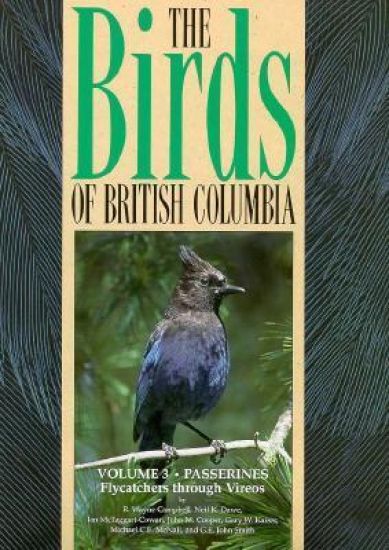
British Columbia has one of the richest assemblages of bird species in the world. The four volumes of The Birds of British Columbia provide unprecedented coverage of this region's birds, presenting a wealth of information on the ornithological history, habitat, breeding habits, migratory movements, seasonality, and distribution patterns of each of the 472 species of birds.This third volume, covering the first half of the passerines, builds on the authoritative format of the previous bestselling volumes. It contains 89 species, including common ones such as swallows, jays, crows, wrens, thrushes, and starlings. The text is supported by hundreds of full-colour pictures, including unique habitat photographs, detailed distribution maps, and beautiful illustrations of the birds, their nests, eggs, and young.The Birds of British Columbia is a complete reference work for bird-watchers, ornithologists, and naturalists who want in-depth information on the province's regularly occurring and rare birds.
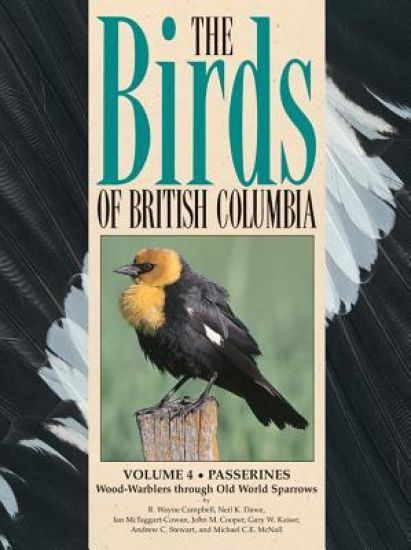
This much-awaited final volume of The Birds of British Columbia completes what some have called one of the most important regional ornithological works in North America. It is the culmination of more than 25 years of effort by the authors who, with the assistance of thousands of dedicated volunteers throughout the province, have created the basic reference work on the avifauna of British Columbia.Volume 4 covers the last half of the passerines and describes 102 species, including the warblers, sparrows, grosbeaks, blackbirds, and finches. The text builds upon the authoritative format of the previous volumes and is supported by hundreds of full-colour illustrations, including detailed distribution maps, unique habitat shots, and beautiful photographs of the birds, their nests, eggs, and young. In addition, a species update lists and describes 27 species of birds new to the province since the first three volumes were published. The book concludes with Synopsis: The Birds of British Columbia into the 21st Century, which synthesizes data and information from all four volumes and looks at the conservation challenges facing birds in the new millennium.The four volumes in The Birds of British Columbia provide unprecedented coverage of the region's birds, presenting a wealth of information on the ornithological history, regional environment, habitat, breeding habits, migratory movements, seasonality and distribution patterns of 472 species of birds. It is the complete reference work for birdwatchers, ornithologists and naturalists.
Kolbeinn Karlsson; Bo Ashi; Clara Bessijelle Johansson; Mari Ahokoivu; Ole Comoll; Sofia Falkenhem; Sarah Kläpp; Niklas Asker; Allan Haverholm; Chadwick Whitehead; Reuben Negron; Adam Kidder; Ben X Trinh; Fay Ryu; Matt Rota; Neil Numberman; Victor Kerlow; Sung Yoon Choi; Tao Nyeu; Sakura Maku; J.T. Yost; Ben Sea; Andres Vera; Paul Hoppe; Anuj Shresta; Kripa Yoshi; C.M. Butzer; Nathan Fox; Aya Kakeda
John Burns's SCOTNOTE study guide examines Neil Gunn's most famous novel, The Silver Darlings. The social, cultural and political background of the novel is examined, and its themes and characters explored. This guide is suitable for senior school pupils and students at all levels.
In telling of his life and career, Chaplain Stevenson made it clear that he wanted to contribute more than just a collection of sea stories. As a result, he emphasized more than a dozen issues while doing the telling. One point that he made repeatedly was that members of the Chaplain Corps should emphasize institutional ministry rather than limiting themselves to parish ministry. Stevenson was born and reared in Brooklyn and got his undergraduate education at the small Tarkio College in Missouri. He later got his religious training at Pittsburgh-Xenia Theological Seminary. He began his active Navy service as a student in 1957 at Chaplain School in Newport, Rhode Island. Subsequent duties were at the Great Lakes Naval Training Center, with Destroyer Squadron Ten; at Naval Station Newport, on board the attack aircraft carrier USS Saratoga (CVA-60); and at Naval Air Station Glenview, Illinois. In the late 1960s he was a postgraduate student in at Princeton Theological Seminary, then was involved with the Personal Response Program in South Vietnam. In the early and mid-1970s he was in the training division on the staff of the Chief of Chaplains, a student in the Chaplain School advanced course, and senior chaplain at the Naval Training Center, Orlando, Florida. He served in 1976-77 on the staff of John O'Connor, Chief of Chaplains, and provides some superb observations on O’Connor’s style and achievements. Stevenson subsequently was Fleet Chaplain, Pacific Fleet/Chaplain, Naval Logistics Command Pacific Fleet, Deputy Chief of Chaplains, and served from 1983 to 1985 as the Navy’s Chief of Chaplains. In his post-retirement years he worked as a civilian pastor.
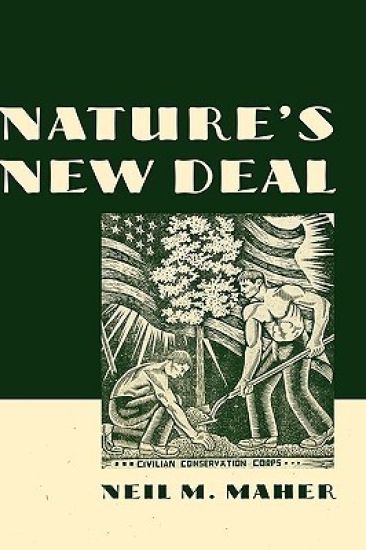
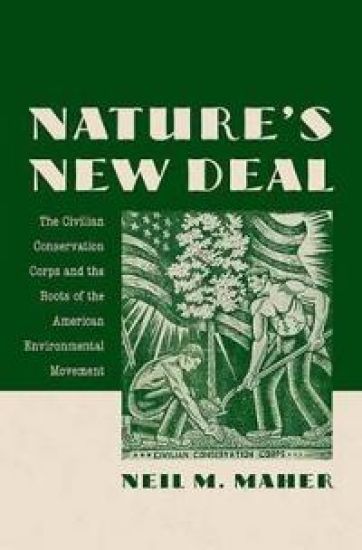
The Great Depression coincided with a wave of natural disasters, including the Dust Bowl and devastating floods of the Ohio and Mississippi rivers. Recovering from these calamities--and preventing their reoccurrence--was a major goal of the New Deal. In Nature's New Deal, Neil M. Maher examines the history of one of Franklin D. Roosevelt's boldest and most successful experiments, the Civilian Conservation Corps, describing it as a turning point both in national politics and in the emergence of modern environmentalism. Indeed, Roosevelt addressed both the economic and environmental crises by putting Americans to work at conserving natural resources, through the Soil Conservation Service, the Tennessee Valley Authority, and the Civilian Conservation Corps (or CCC). The CCC created public landscapes--natural terrain altered by federal work projects--that helped environmentalism blossom after World War II, Maher notes. Millions of Americans devoted themselves to a new vision of conservation, one that went beyond the old model of simply maximizing the efficient use of natural resources, to include the promotion of human health through outdoor recreation, wilderness preservation, and ecological balance. And yet, as Maher explores the rise and development of the CCC, he also shows how the critique of its campgrounds, picnic areas, hiking trails, and motor roads frames the debate over environmentalism to this day. From the colorful life at CCC camps, to political discussions in the White House and the philosophical debates dating back to John Muir and Frederick Law Olmsted, Nature's New Deal captures a key moment in the emergence of modern environmentalism.
The Great Depression coincided with a wave of natural disasters, including the Dust Bowl and devastating floods of the Ohio and Mississippi rivers. Recovering from these calamities--and preventing their reoccurrence--was a major goal of the New Deal. In Nature's New Deal, Neil M. Maher examines the history of one of Franklin D. Roosevelt's boldest and most successful experiments, the Civilian Conservation Corps, describing it as a turning point both in national politics and in the emergence of modern environmentalism. Indeed, Roosevelt addressed both the economic and environmental crises by putting Americans to work at conserving natural resources, through the Soil Conservation Service, the Tennessee Valley Authority, and the Civilian Conservation Corps (or CCC). The CCC created public landscapes--natural terrain altered by federal work projects--that helped environmentalism blossom after World War II, Maher notes. Millions of Americans devoted themselves to a new vision of conservation, one that went beyond the old model of simply maximizing the efficient use of natural resources, to include the promotion of human health through outdoor recreation, wilderness preservation, and ecological balance. And yet, as Maher explores the rise and development of the CCC, he also shows how the critique of its campgrounds, picnic areas, hiking trails, and motor roads frames the debate over environmentalism to this day. From the colorful life at CCC camps, to political discussions in the White House and the philosophical debates dating back to John Muir and Frederick Law Olmsted, Nature's New Deal captures a key moment in the emergence of modern environmentalism.


![The Parliament of Sweden. [Translated by Neil C.M. Elder]. --](/covers/9781013525223.jpg)
![The Parliament of Sweden. [Translated by Neil C.M. Elder]. --](/covers/9781013889820.jpg)