Kirjojen hintavertailu. Mukana 12 376 142 kirjaa ja 12 kauppaa.

Kirjahaku

Etsi kirjoja tekijän nimen, kirjan nimen tai ISBN:n perusteella.

1000 tulosta hakusanalla Nicholas B. Wainwright

George Croghan

George Croghan

Wainwright Nicholas B.

The University of North Carolina Press
2012
nidottu
George Croghan--land speculator, Indian trader, and prominent Indian agent--was a man of fascinating, if dubious, character whose career epitomized the history of the West before the Revolution. This study is based on Croghan's long-lost personal papers that were found by the author in an old Philadelphia attic.Originally published in 1959.A UNC Press Enduring Edition -- UNC Press Enduring Editions use the latest in digital technology to make available again books from our distinguished backlist that were previously out of print. These editions are published unaltered from the original, and are presented in affordable paperback formats, bringing readers both historical and cultural value.
History of the Philadelphia National Bank: A Century and a Half of Philadelphia Banking, 1803-1953

History of the Philadelphia National Bank: A Century and a Half of Philadelphia Banking, 1803-1953

Nicholas Biddle Wainwright; Frederic A. Potts

Literary Licensing, LLC
2012
sidottu
""History Of The Philadelphia National Bank: A Century And A Half Of Philadelphia Banking, 1803-1953"" is a comprehensive account of the Philadelphia National Bank, one of the oldest and most influential banks in the United States. Written by Nicholas Biddle Wainwright, a renowned financial historian, the book traces the bank's history from its founding in 1803 to its 150th anniversary in 1953.The book covers the bank's role in financing the growth of Philadelphia and the United States, its involvement in major financial crises such as the Panic of 1837 and the Great Depression, and its contributions to the development of modern banking practices. It also explores the bank's relationship with prominent historical figures such as Alexander Hamilton, Andrew Jackson, and J.P. Morgan.Wainwright draws on a wealth of primary sources, including bank records, correspondence, and contemporary newspaper accounts, to provide a detailed and engaging narrative. The book is an essential resource for anyone interested in the history of banking in the United States, as well as for scholars and students of American history and finance.This scarce antiquarian book is a facsimile reprint of the old original and may contain some imperfections such as library marks and notations. Because we believe this work is culturally important, we have made it available as part of our commitment for protecting, preserving, and promoting the world's literature in affordable, high quality, modern editions, that are true to their original work.
Nicholas B. Suntzeff

Nicholas B. Suntzeff

VDM Publishing House
2010
nidottu
Observera att förlaget som ger ut denna produkt baserar innehållet i sina produkter på fria källor som Wikipedia. Boken är med stor sannolikhet endast ett utdrag ur dessa informationskällor, alltså inte en vanlig bok i den bemärkelsen.
Autobiography of an Archive

Autobiography of an Archive

Nicholas B. Dirks

Columbia University Press
2015
sidottu
The decades between 1970 and the end of the twentieth century saw the disciplines of history and anthropology draw closer together, with historians paying more attention to social and cultural factors and the significance of everyday experience in the study of the past. The people, rather than elite actors, became the focus of their inquiry, and anthropological insights into agriculture, kinship, ritual, and folk customs enabled historians to develop richer and more representative narratives. The intersection of these two disciplines also helped scholars reframe the legacies of empire and the roots of colonial knowledge. In this collection of essays and lectures, history's turn from high politics and formal intellectual history toward ordinary lives and cultural rhythms is vividly reflected in a scholar's intellectual journey to India. Nicholas B. Dirks recounts his early study of kingship in India, the rise of the caste system, the emergence of English imperial interest in controlling markets and India's political regimes, and the development of a crisis in sovereignty that led to an extraordinary nationalist struggle. He shares his personal encounters with archives that provided the sources and boundaries for research on these subjects, ultimately revealing the limits of colonial knowledge and single disciplinary perspectives. Drawing parallels to the way American universities balance the liberal arts and specialized research today, Dirks, who has occupied senior administrative positions and now leads the University of California at Berkeley, encourages scholars to continue to apply multiple approaches to their research and build a more global and ethical archive.
Autobiography of an Archive

Autobiography of an Archive

Nicholas B. Dirks

Columbia University Press
2015
pokkari
The decades between 1970 and the end of the twentieth century saw the disciplines of history and anthropology draw closer together, with historians paying more attention to social and cultural factors and the significance of everyday experience in the study of the past. The people, rather than elite actors, became the focus of their inquiry, and anthropological insights into agriculture, kinship, ritual, and folk customs enabled historians to develop richer and more representative narratives. The intersection of these two disciplines also helped scholars reframe the legacies of empire and the roots of colonial knowledge. In this collection of essays and lectures, history's turn from high politics and formal intellectual history toward ordinary lives and cultural rhythms is vividly reflected in a scholar's intellectual journey to India. Nicholas B. Dirks recounts his early study of kingship in India, the rise of the caste system, the emergence of English imperial interest in controlling markets and India's political regimes, and the development of a crisis in sovereignty that led to an extraordinary nationalist struggle. He shares his personal encounters with archives that provided the sources and boundaries for research on these subjects, ultimately revealing the limits of colonial knowledge and single disciplinary perspectives. Drawing parallels to the way American universities balance the liberal arts and specialized research today, Dirks, who has occupied senior administrative positions and now leads the University of California at Berkeley, encourages scholars to continue to apply multiple approaches to their research and build a more global and ethical archive.
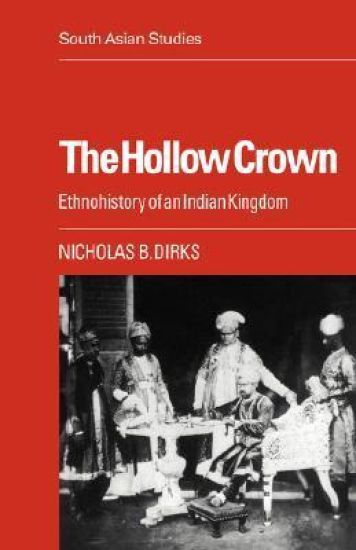
The Hollow Crown

The Hollow Crown

Nicholas B. Dirks

Cambridge University Press
2007
pokkari
A pioneering piece of ethnohistory, The Hollow Crown uses a variety of interdisciplinary means to reconstruct the sociocultural history of a warrior polity in south India between the fourteenth and the twentieth centuries. Central to the book is the belief that comparative sociology has systematically denied the importance of the Indian state and obscured the political basis of Indian society by representing caste as fundamentally a religious system. In reconstructing the history of the polity that eventually became the colonial princely state of Pudukkottai, Dr Dirks therefore raises a whole series of issues concerning the methodologies of history and anthropology, the character of Tamil kingship and social organization, the relationship between politics and ritual, the impact of colonialism and 'modernization', and the dynamics of the whole last millennium of south Indian history.
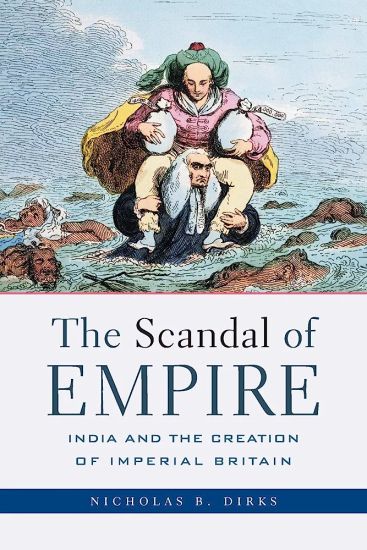
The Scandal of Empire

The Scandal of Empire

Nicholas B. Dirks

The Belknap Press
2008
nidottu
Many have told of the East India Company’s extraordinary excesses in eighteenth-century India, of the plunder that made its directors fabulously wealthy and able to buy British land and titles, but this is only a fraction of the story. When one of these men—Warren Hastings—was put on trial by Edmund Burke, it brought the Company’s exploits to the attention of the public. Through the trial and after, the British government transformed public understanding of the Company’s corrupt actions by creating an image of a vulnerable India that needed British assistance. Intrusive behavior was recast as a civilizing mission. In this fascinating, and devastating, account of the scandal that laid the foundation of the British Empire, Nicholas Dirks explains how this substitution of imperial authority for Company rule helped erase the dirty origins of empire and justify the British presence in India. The Scandal of Empire reveals that the conquests and exploitations of the East India Company were critical to England’s development in the eighteenth century and beyond. We see how mercantile trade was inextricably linked with imperial venture and scandalous excess and how these three things provided the ideological basis for far-flung British expansion. In this powerfully written and trenchant critique, Dirks shows how the empire projected its own scandalous behavior onto India itself. By returning to the moment when the scandal of empire became acceptable we gain a new understanding of the modern culture of the colonizer and the colonized and the manifold implications for Britain, India, and the world.
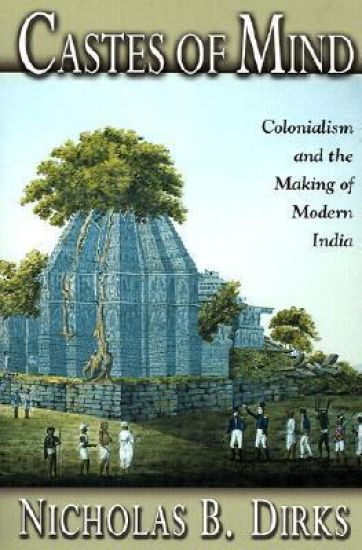
Castes of Mind

Castes of Mind

Nicholas B. Dirks

Princeton University Press
2001
pokkari
When thinking of India, it is hard not to think of caste. In academic and common parlance alike, caste has become a central symbol for India, marking it as fundamentally different from other places while expressing its essence. Nicholas Dirks argues that caste is, in fact, neither an unchanged survival of ancient India nor a single system that reflects a core cultural value. Rather than a basic expression of Indian tradition, caste is a modern phenomenon--the product of a concrete historical encounter between India and British colonial rule. Dirks does not contend that caste was invented by the British. But under British domination caste did become a single term capable of naming and above all subsuming India's diverse forms of social identity and organization. Dirks traces the career of caste from the medieval kingdoms of southern India to the textual traces of early colonial archives; from the commentaries of an eighteenth-century Jesuit to the enumerative obsessions of the late-nineteenth-century census; from the ethnographic writings of colonial administrators to those of twentieth-century Indian scholars seeking to rescue ethnography from its colonial legacy. The book also surveys the rise of caste politics in the twentieth century, focusing in particular on the emergence of caste-based movements that have threatened nationalist consensus. Castes of Mind is an ambitious book, written by an accomplished scholar with a rare mastery of centuries of Indian history and anthropology. It uses the idea of caste as the basis for a magisterial history of modern India. And in making a powerful case that the colonial past continues to haunt the Indian present, it makes an important contribution to current postcolonial theory and scholarship on contemporary Indian politics.
John Millar and the Scottish Enlightenment

John Millar and the Scottish Enlightenment

Nicholas B. Miller

Voltaire Foundation
2017
nidottu
During the long eighteenth century the moral and socio-political dimensions of family life and gender were hotly debated by intellectuals across Europe. John Millar, a Scottish law professor and philosopher, was a pioneer in making gendered and familial practice a critical parameter of cultural difference. His work was widely disseminated at home and abroad, translated into French and German and closely read by philosophers such as Denis Diderot and Johann Gottfried Herder. Taking Millar’s writings as his basis, Nicholas B. Miller explores the role of the family in Scottish Enlightenment political thought and traces its wider resonances across the Enlightenment world.John Millar’s organisation of cultural, gendered and social difference into a progressive narrative of authority relations provided the first extended world history of the family. Over five chapters that address the historical and comparative models developed by the thinker, Nicholas B. Miller examines contemporary responses and Enlightenment-era debates on polygamy, matriarchy, the Amazon legend, changes in national character and the possible futures of the family in commercial society. He traces how Enlightenment thinkers developed new standards of evidence and crafted new understandings of historical time in order to tackle the global diversity of family life and gender practice. By reconstituting these theories and discussions, Nicholas B. Miller uncovers hitherto unexplored aspects of the Scottish contribution to European debates on the role of the family in history, society and politics.
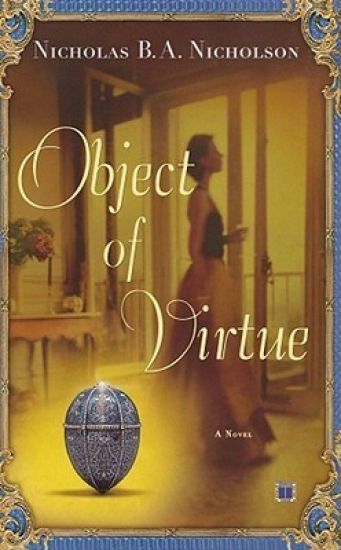
Object of Virtue

Object of Virtue

Nicholas B.A. Nicholson

Touchstone
2004
pokkari
A dazzling debut about the power of family and the pain of betrayal set within Manhattan's Fifth Avenue apartments, the opulent mansions of the new Moscow, and the pre-revolutionary palaces of Saint Petersburg. Sasha Ozerovsky is a young expert in Russian art at Leighton's, an exclusive Manhattan auction house. When a dealer arrives from Moscow with an exquisite 1913 Faberge figurine, Sasha immediately recognizes a rare masterpiece. But in the high stakes art world, the price of an object is tied to its history. If Sasha can determine for whom the bejeweled piece was made and where it has been hiding for the past century, its value -- and Sasha's career -- will soar. But as Sasha moves between New York's high society and Russia's new rich, he discovers that the piece once belonged to his family, and he must face questions about their past that he never dared to ask. Superbly plotted and evoking the elegance of Russia's gilded age, "Object of Virtue" is an enthralling tale that explores what happens to a family torn between vanity and virtue.
Heretics and Colonizers

Heretics and Colonizers

Nicholas B. Breyfogle

Cornell University Press
2005
sidottu
In Heretics and Colonizers, Nicholas B. Breyfogle explores the dynamic intersection of Russian borderland colonization and popular religious culture. He reconstructs the story of the religious sectarians (Dukhobors, Molokans, and Subbotniks) who settled, either voluntarily or by force, in the newly conquered lands of Transcaucasia in the nineteenth century. By ordering this migration in 1830, Nicholas I attempted at once to cleanse Russian Orthodoxy of heresies and to populate the newly annexed lands with ethnic Slavs who would shoulder the burden of imperial construction. Breyfogle focuses throughout on the lives of the peasant settlers, their interactions with the peoples and environment of the South Caucasus, and their evolving relations with Russian state power. He draws on a wide variety of archival sources, including a large collection of previously unexamined letters, memoirs, and other documents produced by the sectarians that allow him unprecedented insight into the experiences of colonization and religious life. Although the settlers suffered greatly in their early years in hostile surroundings, they in time proved to be not only model Russian colonists but also among the most prosperous of the Empire's peasants. Banished to the empire's periphery, the sectarians ironically came to play indispensable roles in the tsarist imperial agenda. The book culminates with the dramatic events of the Dukhobor pacifist rebellion, a movement that shocked the tsarist government and received international attention. In the early twentieth century, as the Russian state sought to replace the sectarians with Orthodox settlers, thousands of Molokans and Dukhobors immigrated to North America, where their descendants remain to this day.
Heretics and Colonizers

Heretics and Colonizers

Nicholas B. Breyfogle

Cornell University Press
2011
pokkari
In Heretics and Colonizers, Nicholas B. Breyfogle explores the dynamic intersection of Russian borderland colonization and popular religious culture. He reconstructs the story of the religious sectarians (Dukhobors, Molokans, and Subbotniks) who settled, either voluntarily or by force, in the newly conquered lands of Transcaucasia in the nineteenth century. By ordering this migration in 1830, Nicholas I attempted at once to cleanse Russian Orthodoxy of heresies and to populate the newly annexed lands with ethnic Slavs who would shoulder the burden of imperial construction. Breyfogle focuses throughout on the lives of the peasant settlers, their interactions with the peoples and environment of the South Caucasus, and their evolving relations with Russian state power. He draws on a wide variety of archival sources, including a large collection of previously unexamined letters, memoirs, and other documents produced by the sectarians that allow him unprecedented insight into the experiences of colonization and religious life. Although the settlers suffered greatly in their early years in hostile surroundings, they in time proved to be not only model Russian colonists but also among the most prosperous of the Empire's peasants. Banished to the empire's periphery, the sectarians ironically came to play indispensable roles in the tsarist imperial agenda. The book culminates with the dramatic events of the Dukhobor pacifist rebellion, a movement that shocked the tsarist government and received international attention. In the early twentieth century, as the Russian state sought to replace the sectarians with Orthodox settlers, thousands of Molokans and Dukhobors immigrated to North America, where their descendants remain to this day.
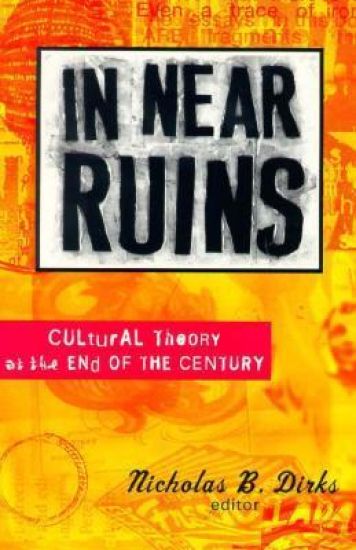
In Near Ruins

In Near Ruins

Nicholas B. Dirks

University of Minnesota Press
1998
nidottu
A group of leading scholars considers the current state of cultural analysis.If culture is suspect, what of cultural theory? At a moment when culture’s traditional caretakers-humanism, philosophy, anthropology, and the nation-state-are undergoing crisis and mutation, this volume charts the tensions and contradictions in the development and deployment of the concept of culture. Skeptical of the concept of culture but fascinated with cultural forms, the authors take up diverse topics, from debates over sexuality in the contemporary United States to relations between empire, capitalism, and gender in nineteenth-century Britain; from poverty in U.S. inner cities to violence in war-torn Sri Lanka; from the operation of nostalgia on cultural practices in Japan to anthropological forms of state power in Indonesia and the writing of history in India.Linked by a common urge to think through the aesthetics and politics of particular social relations amid a variety of globalizing forces-revolution, colonialism, nationalism, and the disciplinary institutions of the academy itself-these writers contribute to the ongoing work of remapping the terrain of cultural analysis and reevaluating the stakes in such a daunting effort. Contributors: Lauren Berlant, U of Chicago; E. Valentine Daniel, Columbia U; Marilyn Ivy, Columbia U; Robin D. G. Kelley, New York U; Laura Kipnis, Northwestern U; Marjorie Levinson, U of Michigan; Gyanendra Pandey, U of Delhi; John Pemberton, Columbia U; Adela Pinch, U of Michigan; Michael Taussig, Columbia U.ISBN 0-8166-3122-0 Cloth $49.95xxISBN 0-8166-3123-9 Paper $19.95x320 pages 4 black-and-white photos, 3 figures 5 7/8 x 9 DecemberTranslation inquiries: University of Minnesota Press