Kirjojen hintavertailu. Mukana 12 391 341 kirjaa ja 12 kauppaa.

Kirjahaku

Etsi kirjoja tekijän nimen, kirjan nimen tai ISBN:n perusteella.

1000 tulosta hakusanalla Nicholas Hudson

Samuel Johnson and Eighteenth-Century Thought

Samuel Johnson and Eighteenth-Century Thought

Nicholas Hudson

Clarendon Press
1990
nidottu
Although there are many books on Johnson's moral and religious thought, none has provided a detailed analysis of his relationship with the ethics and theology of the eighteenth century. This study fills the gap, examining the background to Johnson's views on a wide range of issues debated by the philosophers and divines of his age. Avoiding deceptive generalizations concerning the overall character of the century, Nicholas Hudson emphasizes the ambivalence and contradiction inherent in the orthodoxy which Johnson espoused. Yet this book also challenges the assumption that Johnson's religious beliefs were unstable and filled with anxiety. Whatever the weakness of his positions, he gleaned strength and confidence from the belief that he upheld an eminent tradition in Christian philosophy.
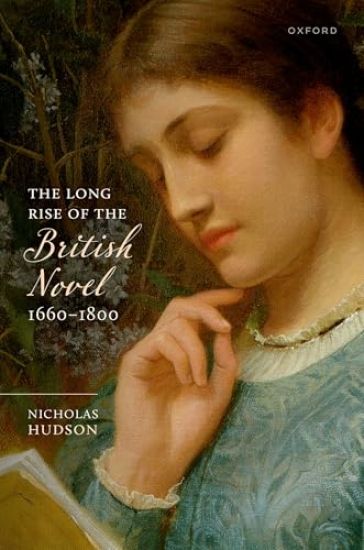
The Long Rise of the British Novel, 1660–1800

The Long Rise of the British Novel, 1660–1800

Nicholas Hudson

Oxford University Press
2026
sidottu
The Long Rise of the British Novel, 1660–1800 offers a fresh interpretation of how the novel in Britain evolved from the Civil War to the end of the eighteenth century. It argues that we must examine the entirety of this period in order to understand the development of the realist novel in its modern form. According to Ian Watt in The Rise of the Novel (1957) and many subsequent critics, the first realist novel was Daniel Defoe's Robinson Crusoe (1719). This book argues instead that the realist novel began to emerge long before in the 1670s and 1680s among novelists such as Alexander Oldys and Richard Gibbs who were influenced by the French counter-romance works of Paul Scarron and Antoine Furtière. Nonetheless, the true founder of modern realist fiction was Frances Burney, particularly in Cecilia (1782) and Camilla (1796). Burney's achievement was to combine the subjectivity of Samuel Richardson with the social purview of Henry Fielding, creating a fictional style that set individuals in a fully imagined social context. Heralded by her contemporaries as founding a "new era" in novel writing, Burney's only acknowledged peer was Charlotte Smith, who was widely admired during her career as Burney's co-creator of "the new species of writing." This volume argues that Smith's contribution to the development of the realist novel has been underrated, for her fiction established the basic form of the Condition of England novel of the Victorian period. Unfortunately, Burney's and Smith's importance as co-creators of the realist novel was eclipsed by the “great forgetting” of woman novelists during the nineteenth century. Only Jane Austen was spared from this great forgetting, yet she was indebted to the work of Burney and Smith. The Long Rise of the British Novel, 1660–1800 traces the emergence of realist fiction decade by decade across the long eighteenth century through the lens of contemporary commentary in literary journals and other sources. The book concludes with discussion of how the techniques of the realist novel, as pioneered in the late eighteenth century, were carried on by major novelists from the Victorian period to the present.
Dining at the End of Antiquity

Dining at the End of Antiquity

Nicholas Hudson

University of California Press
2024
sidottu
The history of dining is a story that cannot be told without archaeology. Surviving texts describe the opulent banquets of Rome’s wealthy elite but give little attention to the simpler, more intimate social gatherings of domestic invitation dinners. The lower classes, in particular, are largely ignored by literary sources. We can, however, find the voices of the underprivileged by turning to the material detritus of ancient cultures that reflects their social history. Dining at the End of Antiquity brings together the material culture and literary traditions of Romans at the table to reimagine dining culture as an integral part of Roman social order. Through a careful analysis of the tools and equipment of dining, Nicholas Hudson uncovers significant changes to the way different classes came together to share food and wine between the fourth and sixth centuries. Reconstructing the practices of Roman dining culture, Hudson explores the depths of new social distances between the powerful and the dependent at the end of antiquity.
Writing and European Thought 1600–1830

Writing and European Thought 1600–1830

Nicholas Hudson

Cambridge University Press
2006
pokkari
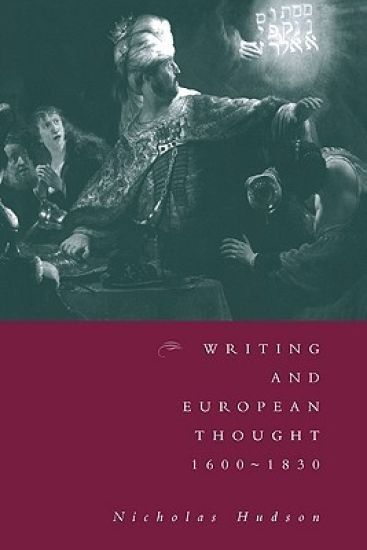
Writing and European Thought 1600–1830 argues for the central importance of writing to conceptions of language, technological progress, and Western civilization during the early modern era. Attitudes to the written language changed radically between the late Renaissance and Romanticism, and Nicholas Hudson traces the development of thought about language during this period, challenging some central assumptions of modern historical scholarship. He asserts that European thinkers have not been uniformly 'logocentric', and he questions the assumption that the rise of print and literacy produced a more visually oriented culture. Through detailed readings of major writers, Hudson shows how writing became the emblem of the superiority of European culture, and how, with the expansion of print culture, European intellectuals became more aware of the virtues of 'orality' and the deficiencies of literate society.
Samuel Johnson and the Making of Modern England

Samuel Johnson and the Making of Modern England

Nicholas Hudson

Cambridge University Press
2007
pokkari
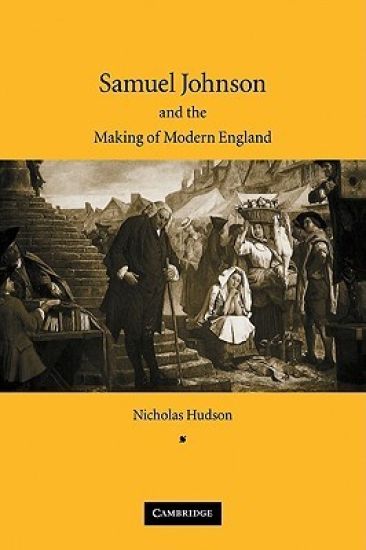
Samuel Johnson, one of the most renowned authors of the eighteenth century, became virtually a symbol of English national identity in the century following his death in 1784. In Samuel Johnson and the Making of Modern England Nicholas Hudson argues that Johnson not only came to personify English cultural identity but did much to shape it. Hudson examines his contribution to the creation of the modern English identity, approaching Johnson's writing and conversation from scarcely explored directions of cultural criticism - class politics, feminism, party politics, the public sphere, nationalism and imperialism. Hudson charts the career of an author who rose from obscurity to fame during precisely the period that England became the dominant ideological force in the Western world. In exploring the relations between Johnson's career and the development of England's modern national identity, Hudson develops provocative arguments concerning both Johnson's literary achievement and the nature of English Nationhood.
Writing and European Thought 1600–1830

Writing and European Thought 1600–1830

Nicholas Hudson

Cambridge University Press
1994
sidottu
Writing and European Thought 1600–1830 argues for the central importance of writing to conceptions of language, technological progress, and Western civilisation during the early modern era. Attitudes to the written language changed radically between the late Renaissance and Romanticism, and Nicholas Hudson traces the development of thought about language during this period, challenging some central assumptions of modern historical scholarship. He asserts that European thinkers have not been uniformly ‘logocentric’, and he questions the assumption that the rise of print and literacy produced a more visually oriented culture. Through detailed readings of major writers, Hudson shows how writing became the emblem of the superiority of European culture, and how, with the expansion of print culture, European intellectuals became more aware of the virtues of ‘orality’ and the deficiencies of literate society.
Samuel Johnson and the Making of Modern England

Samuel Johnson and the Making of Modern England

Nicholas Hudson

Cambridge University Press
2003
sidottu
Samuel Johnson, one of the most renowned authors of the eighteenth century, became virtually a symbol of English national identity in the century following his death in 1784. In Samuel Johnson and the Making of Modern England Nicholas Hudson argues that Johnson not only came to personify English cultural identity but did much to shape it. Hudson examines his contribution to the creation of the modern English identity, approaching Johnson's writing and conversation from scarcely explored directions of cultural criticism - class politics, feminism, party politics, the public sphere, nationalism and imperialism. Hudson charts the career of an author who rose from obscurity to fame during precisely the period that England became the dominant ideological force in the Western world. In exploring the relations between Johnson's career and the development of England's modern national identity, Hudson develops provocative arguments concerning both Johnson's literary achievement and the nature of English Nationhood.
A Political Biography of Samuel Johnson
Johnson rose from obscure origins to become a major literary figure of the eighteenth century. Through a detailed survey of his major works and political journalism, Hudson constructs a complex picture of Johnson as a moralist forced to accept the realistic nature of politics during an era of revolutionary transition.
A Political Biography of Samuel Johnson

A Political Biography of Samuel Johnson

Nicholas Hudson

Pickering Chatto (Publishers) Ltd
2013
sidottu
Johnson rose from obscure origins to become a major literary figure of the eighteenth century. Through a detailed survey of his major works and political journalism, Hudson constructs a complex picture of Johnson as a moralist forced to accept the realistic nature of politics during an era of revolutionary transition.
Sensemaking and Neuroaesthetics

Sensemaking and Neuroaesthetics

James Hutson; Piper Hutson; Morgan Harper-Nichols

Springer International Publishing AG
2024
sidottu
This book investigates the complex interrelationships between neuroscience, arts, technical design, and the spectrum of neurodivergent conditions, introducing the emerging topic of neuroarts. It emphasizes the power of art and technologies as a multisensory tool for helping neurodivergent individuals discover their sensory preferences, and for neurotypical individuals to broaden their understanding of the world by simulating different sensory experiences. Drawing on the enactivism theory, which posits that cognitive processes are inherently shaped through the dynamic interplay between an organism and its environmental context, the authors discuss the applications of emerging technologies and propose a new theory to discuss and identify ‘neurotribes’ based on their relation to sense making or the body.A timely and well-needed resource for scholars in the fields of neuroaesthetics and neurodiversity, as well as art therapists, clinical psychologists, and medical practitioners specializing in neurodiversity and sensory perception disorders, this book can also serve cultural institutions developing inclusive experiences for a neurodiverse public, and professionals in the tech industry focusing on AI, augmented reality, and sensory technology.
Sensemaking and Neuroaesthetics

Sensemaking and Neuroaesthetics

James Hutson; Piper Hutson; Morgan Harper-Nichols

Springer International Publishing AG
2025
nidottu
This book investigates the complex interrelationships between neuroscience, arts, technical design, and the spectrum of neurodivergent conditions, introducing the emerging topic of neuroarts. It emphasizes the power of art and technologies as a multisensory tool for helping neurodivergent individuals discover their sensory preferences, and for neurotypical individuals to broaden their understanding of the world by simulating different sensory experiences. Drawing on the enactivism theory, which posits that cognitive processes are inherently shaped through the dynamic interplay between an organism and its environmental context, the authors discuss the applications of emerging technologies and propose a new theory to discuss and identify ‘neurotribes’ based on their relation to sense making or the body.A timely and well-needed resource for scholars in the fields of neuroaesthetics and neurodiversity, as well as art therapists, clinical psychologists, and medical practitioners specializing in neurodiversity and sensory perception disorders, this book can also serve cultural institutions developing inclusive experiences for a neurodiverse public, and professionals in the tech industry focusing on AI, augmented reality, and sensory technology.
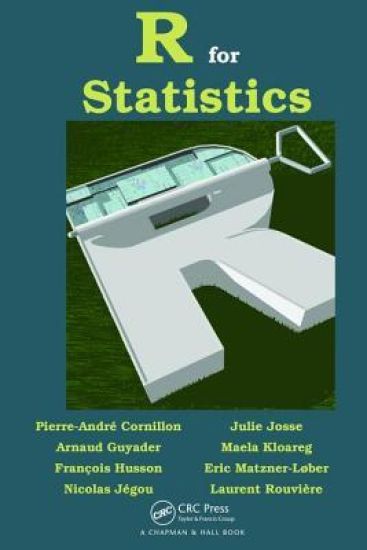
R for Statistics

R for Statistics

Pierre-Andre Cornillon; Arnaud Guyader; Francois Husson; Nicolas Jegou; Julie Josse; Maela Kloareg; Eric Matzner-Lober; Laurent Rouvière

CRC Press
2017
sidottu
Although there are currently a wide variety of software packages suitable for the modern statistician, R has the triple advantage of being comprehensive, widespread, and free. Published in 2008, the second edition of Statistiques avec R enjoyed great success as an R guidebook in the French-speaking world. Translated and updated, R for Statistics includes a number of expanded and additional worked examples. Organized into two sections, the book focuses first on the R software, then on the implementation of traditional statistical methods with R. Focusing on the R software, the first section covers: Basic elements of the R software and data processing Clear, concise visualization of results, using simple and complex graphs Programming basics: pre-defined and user-created functions The second section of the book presents R methods for a wide range of traditional statistical data processing techniques, including: Regression methods Analyses of variance and covariance Classification methods Exploratory multivariate analysis Clustering methods Hypothesis tests After a short presentation of the method, the book explicitly details the R command lines and gives commented results. Accessible to novices and experts alike, R for Statistics is a clear and enjoyable resource for any scientist. Datasets and all the results described in this book are available on the book‘s webpage at http://www.agrocampus-ouest.fr/math/RforStat
Nicholas

Nicholas

Rwg

Rwg Publishing
2019
pokkari
College rule (also known as medium ruled paper) is the most common lined paper in use in the United States. It is generally used in middle school through to college and is also popular with adults. This is a good choice for teen or adult notebooks and composition books (known as exercise books outside the US).
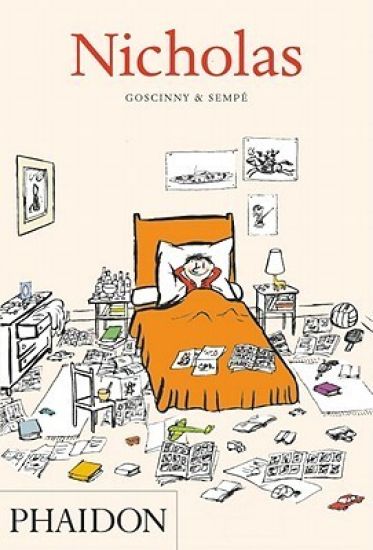
Nicholas

Nicholas

Goscinny Rene; Sempe Jean-Jacques

Phaidon Press Ltd
2011
nidottu
Nicholas is the first in a series of five books, that bring to life the day-to-day adventures of a young school boy - amusing, endearing and always in trouble. An only child, Nicholas appears older at school than he does at home; his touchingly naive reactions to different situations cut through the preconceptions of adults to result in a formidable sequence of escapades. This first book in the series contains a collection of 19 individual stories in which, despite trying to be good, Nicholas and his friends always seem to end up in some sort of mischief. In the school room, at home and in the playground, their exuberance often takes over and the results are calamitous - at least for their teachers and parents. Whether confusing the photographer hired to take the class picture, rescuing a 'stray' dog, or trying desperately to help the teacher when the school inspector pays a visit, Nicholas always manages to make matters worse. This hilarious and heart-warming book will ignite laughter in children and adults alike. These stories of Nicholas' cureless antics blend a wonderfully imaginative sense of humour with a refreshing take on life, to leave a lingering aftertaste of ageless romantic charm in any reader.
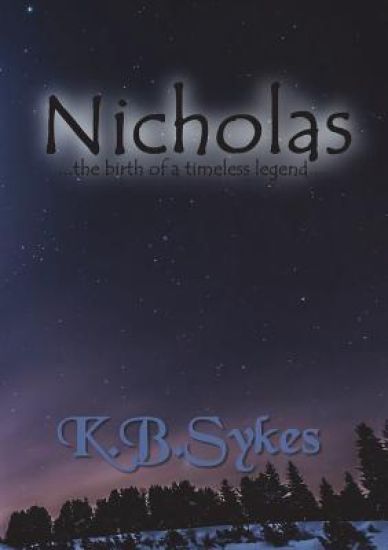
Nicholas

Nicholas

K B Sykes

K B Sykes
2018
pokkari
Set as a fairy-tale in a small friendly village, we follow the story of Sophie and her two younger sisters, a kind hearted boy called Nicholas, and his cruel father, the landlord. Written as a children's short story, or to be read to younger children, this tale explores some of the mythical origins of our favourite Christmas traditions. Why do we have trimmings? Where did the idea for Christmas stockings and chocolate coins come from? And of course - Who is Santa Claus? Well, dear reader ... one version of events is here, in this book.