Kirjojen hintavertailu. Mukana 12 390 323 kirjaa ja 12 kauppaa.

Kirjahaku

Etsi kirjoja tekijän nimen, kirjan nimen tai ISBN:n perusteella.

1000 tulosta hakusanalla Nicholas P. Greco

"Only If You Are Really Interested"

"Only If You Are Really Interested"

Nicholas P. Greco

McFarland Co Inc
2011
pokkari
One of the keys to the enduring popularity of the British singer Morrissey is his carefully crafted enigmatic persona. This critical book examines the role of enigma in the celebrity's public life, exploring how a level of mystery is maintained through television interviews, videos, reviews and concerts, as well as through his music and lyrics. Of particular interest is the way in which enigma stimulates interest and desire in his audience, and how the artist manipulates traditional modes of masculinity and the conventions of pop music to further cultivate enigma.
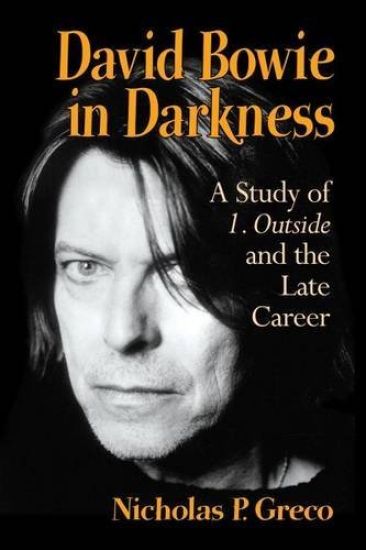
David Bowie in Darkness

David Bowie in Darkness

Nicholas P. Greco

McFarland Co Inc
2015
pokkari
As an artist, David Bowie was widely considered a "chameleon," shedding one persona to create another and thus staying popular, relevant and compelling. In reality, Bowie was able to work with the resources around him to create something new, causing many to see him as a sort of lone artist rather than a collaborator in the creation of his own celebrity. Mid-career, Bowie began presenting himself as a figure in darkness, progressively more hidden. He required an audience for his continued celebrity but worked against that audience in the creation--or rather the destruction--of his star image. This tension is made clear in his 1995 album 1. Outside, which has him performing for an audience while simultaneously shunning them. This book explores Bowie's negotiation of his celebrity during his later career, with particular focus on 1. Outside, an album symptomatic of deep-seated societal and personal anxiety.
The Rosary and the Microphone

The Rosary and the Microphone

Nicholas P Greco

Equinox Publishing Ltd
2019
sidottu
The Rosary and the Microphone explores U2 as a politically engaged band that manifests a particular brand of Christianity through the band's mediation in a global context and for a global audience. Through the primarily semiotic study of U2's various mediations, this book maps the band's strategies for negotiating its place in the world as a global band--and mediated brand--and as a proponent of a kind of cosmopolitanism, or global care. U2's brand is heavily informed by Bono's own personal religious formation. This religious viewpoint is expressed in a global concern--a Christian cosmopolitanism--that looks outward and draws others to do the same.
The Rosary and the Microphone

The Rosary and the Microphone

Nicholas P Greco

Equinox Publishing Ltd
2019
pokkari
The Rosary and the Microphone explores U2 as a politically engaged band that manifests a particular brand of Christianity through the band's mediation in a global context and for a global audience. Through the primarily semiotic study of U2's various mediations, this book maps the band's strategies for negotiating its place in the world as a global band--and mediated brand--and as a proponent of a kind of cosmopolitanism, or global care. U2's brand is heavily informed by Bono's own personal religious formation. This religious viewpoint is expressed in a global concern--a Christian cosmopolitanism--that looks outward and draws others to do the same.
La langue des grenouilles: Un conte de fées traditionnel grec en Français et en grec

La langue des grenouilles: Un conte de fées traditionnel grec en Français et en grec

Nicholas Vafio

Createspace Independent Publishing Platform
2014
nidottu
Les temps anciens Thessalos fils du l gendaire Hercule cherchant fortune arriva dans notre contr e. Comme il venait de traverser la vall e de Tempi, l o vivait Appolon le Dieu de la Lumi re avec sa bien aim e Daphn e, il a vu tout merveill de s' tendre devant lui une plaine toute verte. Il ne s'imaginait pas qu'on marchant cot de l'eau argent de la rivi re de P n e il venait d' arriver sa destination. Sur ses rives, depuis 4000 ans existe la ville de Laisse b tie par le l gendaire Larissos. A sa droite Olympe s' rigeait jusqu'aux nuages, residence de douze dieux. A sa gauche Ossa une montagne en forme pyramidale. Autrefois sur le sommet les g ants Otos et Ephialtis ait entass P lion, parce qu'ils voulaient d tr ner Jupiter d'Olympe. Plus au fond d'autres montagnes bien hautes s' levaient et se perdaient dans les nuages. La cha ne de montagnes de Pinde o selon la l gende est n e P n e de ses larmes au moment o les dieux voulaient la s parer de son poux Ligo parce qu'ils enviaient leur bonheur. Je veux rester ici, pensa-t-il. Ce pays merveilleux aura comme nom Thessalie Le conte commence ici Bonsoir mes amis N'importe quelle pierre tu bouges une histoire est cach e, n'importe quelle branche tu soul ves elle aura un conte a te raconter. Un conte pareil on l' coutait aussi narr par notre grand p re et notre m re lorsqu' on tait des enfants: Alors, un jeune homme semblant nous, cherchant sa fortune il a appris une langue extraordinaire La langue des grenouilles Lui sera-t-elle utile ou pas? Qui sait Mais n'importe quoi que l'homme apprenne faire c'est utile, disait notre grand p re. "Apprends un m tier, oublie le mais quand tu auras faim exerce le", dit un proverbe grec.
The Legend of Annapolis Grecco

The Legend of Annapolis Grecco

Nicholas R. Regan

Lulu.com
2010
nidottu
This is the second edition paperback print of Annapolis Grecco...When Annapolis Grecco's queen gets kidnapped, he and his companions are hurled into an action fueled plot to find her. He and his loyal friends are sent sailing around the Mediterranean to find his beloved queen. The epic adventure casts them into storm fueled seas, action packed battles, and several sea faring adventures. Will Annapolis find his queen? Will the great Greek king survive the quest? Find out in the Legend of Annapolis Grecco.
Le coq boiteux: Un conte de fees traditionnel grec en Francais et en grec

Le coq boiteux: Un conte de fees traditionnel grec en Francais et en grec

Frank Vafio; Nicholas Vafio

Createspace Independent Publishing Platform
2016
nidottu
Autrefois, autour de la mer M diterran e, taient r unis divers peuples, parmi eux et les Grecs. Comme des grenouilles autour d'un tang ... ", comme le dit Platon, y ont v cu et y ont cr de grandes civilisations L'un des visages les plus authentiques de notre culture populaire est nos contes populaires. Ceux ci de bouche oreille, de g n ration en g n ration sont parvenus jusqu'e chez nous. Nous les avons accueillis tr s respectueusement et nous les transmettons aux g n rations futurs, comme le veut la tradition populaire. Nous les enregistreurs nous sommes n s et nous avons grandis dans le coeur de la plaine de Thessalie. Les grands-parents remplissaient de nombreuses nuits de r ve nous racontant vieilles fables. Dans la lueur de lumi re d'une vieille lampe huile, o plus d'ombres remplissaient la salle au lieu de l' clairer, les h ros de contes de f es prenaient vie. Tant t nous effrayaient. Sept + un contes de f es Thessaliens intemporels, instructifs et magiques, tir s des meilleurs moments de notre culture populaire sont pr t divertir nos enfants et tous les enfants du monde. Antidote la tristesse, c'est la joie Antidote la haine, c'est l'amour La langue des grenouilles tait notre premi re conte de cette s rie contenant les deux la fois. Le coq boiteux est la seconde conte et nous continuons et nous continuerons faire dans ce domaine.
Rise of Yeast: How the Sugar Fungus Shaped Civilization
The great Victorian biologist Thomas Huxley once wrote, "I know of no familiar substance forming part of our every-day knowledge and experience, the examination of which, with a little care, tends to open up such very considerable issues as does yeast." Huxley was right. Beneath the very foundations of human civilization lies yeast--also known as the sugar fungus. Yeast is responsible for fermenting our alcohol and providing us with bread--the very staples of life. Moreover, it has proven instrumental in helping cell biologists and geneticists understand how living things work, manufacturing life-saving drugs, and producing biofuels that could help save the planet from global warming. In The Rise of Yeast, Nicholas P. Money--author of Mushroom and The Amoeba in the Room--argues that we cannot ascribe too much importance to yeast, and that its discovery and controlled use profoundly altered human history. Humans knew what yeast did long before they knew what it was. It was not until Louis Pasteur's experiments in the 1860s that scientists even acknowledged its classification as a fungus. A compelling blend of science, history, and sociology The Rise of Yeast explores the rich, strange, and utterly symbiotic relationship between people and yeast, a stunning and immensely readable account that takes us back to the roots of human history.
Mr. Bloomfield's Orchard

Mr. Bloomfield's Orchard

Nicholas P. Money

Oxford University Press Inc
2004
nidottu
Stinkhorns, puffballs, the "corpse finder," deadly Galerina, Satan's bolete, birch conks, black mold, the old man of the woods--the world of fungi is infinitely varied and not a little weird. Now, in Mr. Bloomfield's Orchard, Nicholas Money introduces readers to a dazzling array of fungi, from brewer's yeast and Penicillium to the highly lethal death cap. We learn of Madurella, which can erode bones until they look moth-eaten; Cordyceps, which wracks insects with convulsions, kills them, then sends a stalk out of the insect's head to release more infectious spores; and Claviceps, the poisonous ergot fungus, which causes hallucinations. Money also showcases the lives of famed mycologists--including Reginald Buller who wore horse blinders as he walked to work, the better to study luminescent fungi in his dark lab, and Charles Tulasne, the Audubon of fungi, whose illustrations of specimens border on art. And he recounts his own childhood introduction to fungi in Mr. Bloomfield's orchard, where trees and fruit were devoured by a rogue's gallery of bitter rot, canker, rust, powdery mildew, rubbery wood, and scab. Replete with historical photographs and simple yet effective illustrations, told with a refreshing sense of humor,Mr. Bloomfield's Orchard will fascinate anyone interested in the natural world.
Carpet Monsters and Killer Spores

Carpet Monsters and Killer Spores

Nicholas P. Money

Oxford University Press Inc
2004
sidottu
Molds are everywhere: we inhale their microscopic spores from birth to death. But when an investigation in Ohio revealed that babies suffering from a serious lung illness had been exposed to a toxic black mold in their homes, millions of Americans became nervous about patches of mold in their own basements and bathrooms. Before long, lawsuits were filed by the residents of mold-contaminated homes in every state. By failing to address water damage, building contractors, plumbers, and insurance agents were held liable for exposing families to an unprecedented microbiological hazard. The mold crisis soon developed into a fully-fledged media circus. In Carpet Monsters and Killer Spores, Nicholas Money explores the science behind the headlines and courtroom dramas, and profiles the toxin-producing mold that is a common inhabitant of water-damaged buildings. Nicholas Money tells the most important mycological story since potato blight, with his inimitable style of scientific clarity and dark humor.
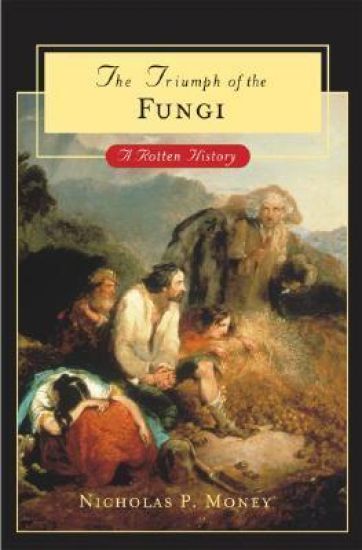
Triumph of the Fungi

Triumph of the Fungi

Nicholas P. Money

Oxford University Press Inc
2006
sidottu
This book is concerned with the most devastating fungal diseases in history. These are the plagues of trees and crop plants, caused by invisible spores that have reshaped entire landscapes and decimated human populations. The Triumph of the Fungi focuses on the fascinating biology of the well- and lesser-known diseases, and also tells the stories of the scientists involved in their study, and of the people directly impacted by the loss of forest trees like the chestnut, and cash crops such as coffee and cacao. In a surprisingly brief time, human knowledge of the fungi that infect plants has evolved from Biblical superstition, to the recognition of the true nature of plant disease, and, more recently, to a sense of awe for the sophistication of these microbes. The crucial issue of human culpability in these fungal epidemics is addressed in the books closing chapter.
Why Have You Come Here?

Why Have You Come Here?

Nicholas P. Cushner

Oxford University Press Inc
2006
nidottu
Christian evangelism was the ostensible motive for much of the early European interaction with the indigenous population of America. The religious orders of the Catholic Church were the front-line representatives of Western culture and the ones who met indigenous America face-to-face. They were also the primary agents of religious change. In this book, Nicholas Cushner provides the first comprehensive overview and analysis of the American missionary activities of the Jesuits. From the North American encounter with the Indians of Florida in 1565, through Mexico, New France, the Paraguay Reductions, Andean Perus, to contact with Native Americans in Maryland on the eve of the American Revolution, members of the order interacted with both native elites and colonizers. Drawing on the abundant documentation of and scholarship about these encounters, Cushner examines how the Jesuits behaved toward the indigenous population and analyzes the way in which native belief systems were replaced by Christianity. He seeks to understand how and why the initial European-Indian encounter changed not only the religion of the natives, but also their material culture, economic activity, social organization, and even their sexual behavior. Always sensitive to the influence of European "cultural filters" on Jesuit accounts, Cushner attempts as far as possible to discover the authentic voices of the Native Americans with whom they interacted. The result is a fascinating and highly accessible introduction to the earliest colonial encounters in the Americas.
The Rise of Yeast

The Rise of Yeast

Nicholas P. Money

Oxford University Press
2018
sidottu
From breakfast toast to evening wine, yeast is the microscopic thing that we cannot live without. We knew what yeast did as an invisible brewer and baker long before we had a clue about the existence of microorganisms. Ten thousand years ago, our ancestors abandoned bush meat and wild fruit in favor of farming animals and cultivating grain. Leaving the forests and grasslands, our desire for beer and wine produced by the fungus was a major stimulus for agricultural settlement. It takes a village to run a brewery or tend a vineyard. We domesticated wild yeast and yeast domesticated us. With the inevitable escape of the fungus from beer vats into bread dough, our marriage with yeast was secured by an appetite for fresh loaves of leavened bread. Over the millennia, we have adapted the technologies of brewing, winemaking, and baking and have come to rely on yeast more and more. Yeast produces corn ethanol and other biofuels and has become the genetically-modified darling of the pharmaceutical business as a source of human insulin and a range of life-saving medicines. These practical uses of yeast have been made possible by advances in our understanding of its biology, and the power of genetic engineering has been used to modify the fungus to do just about anything we wish. We know more about yeast than any other organism built from complex cells like our own. To understand yeast is to understand life. In this book Nicholas P. Money offers a celebration of our favorite microorganism.
The Amoeba in the Room

The Amoeba in the Room

Nicholas P. Money

Oxford University Press
2014
sidottu
Animals and plants rule the world - or do they? A cup of seawater contains 100 million cells which are preyed upon by billions of viruses; a pinch of soil swarms with cryptic microbes whose activities are a mystery; 50 million tons of fungal spores are released into the atmosphere every year and affect the weather; and, human beings are mobile ecosystems that farm, and are farmed by, vast populations of bacteria and viruses involved with almost every aspect of our wellbeing. These are the vast, unnoticed, unmentioned 'elephants in the room' of planet earth. The more we learn about microbial biodiversity, the less important do animals and plants become in our understanding life on earth. The flowering of microbial science is revolutionizing biology and medicine in ways unimagined even a decade or two ago, and is inspiring a new view of what it means to be human. Nicholas P. money explores the extraordinary breadth of the microbial world and the vast swathes of biological diversity that are now becoming recognized using molecular methods. Money argues for nothing less than a revolution in our perception of the living world: the big lumbering forms we see are just froth on a vast ocean of single-celled protists, bacteria, and viruses that constitute most of life on earth.
Microbiology

Microbiology

Nicholas P. Money

Oxford University Press
2014
nidottu
In recent decades we have come to realize that the microbial world is hugely diverse, and can be found in the most extreme environments. Fungi, single-celled protists, bacteria, archaea, and the vast array of viruses and sub-viral particles far outnumber plants and animals. Microbes, we now know, play a critical role in ecosystems, in the chemistry of atmosphere and oceans, and within our bodies. The field of microbiology, armed with new techniques from molecular biology, is now one of the most vibrant in the life sciences. In this Very Short Introduction Nicholas P. Money explores not only the traditional methods of microscopy and laboratory culture but also the modern techniques of genetic detection and DNA sequencing, genomic analysis, and genetic manipulation. In turn he demonstrates how advances in microbiology have had a tremendous impact on the areas of medicine, agriculture, and biotechnology. ABOUT THE SERIES: The Very Short Introductions series from Oxford University Press contains hundreds of titles in almost every subject area. These pocket-sized books are the perfect way to get ahead in a new subject quickly. Our expert authors combine facts, analysis, perspective, new ideas, and enthusiasm to make interesting and challenging topics highly readable.
Fungi

Fungi

Nicholas P. Money

Oxford University Press
2016
nidottu
The variety of the mycological world is far greater than most people imagine. Tens of thousands of fungal species have been described and many more are known only from the abundance of their genes in soil and water. Fungi are hugely important as agents of wood decay in forests, and, as parasites, they have caused the deaths of millions of people by ravaging crops and reshaping natural ecosystems. Fungi perform a variety of essential functions in ecosystems, and are important to both agriculture and biotechnology. Their importance is now becoming better appreciated among scientists, though there is much still to be understood concerning their taxonomy and evolution. This Very Short Introduction highlights the variety and extraordinary natures of fungi, revealing the remarkable facts of fungal biology and the global significance of these enchanting organisms. ABOUT THE SERIES: The Very Short Introductions series from Oxford University Press contains hundreds of titles in almost every subject area. These pocket-sized books are the perfect way to get ahead in a new subject quickly. Our expert authors combine facts, analysis, perspective, new ideas, and enthusiasm to make interesting and challenging topics highly readable.
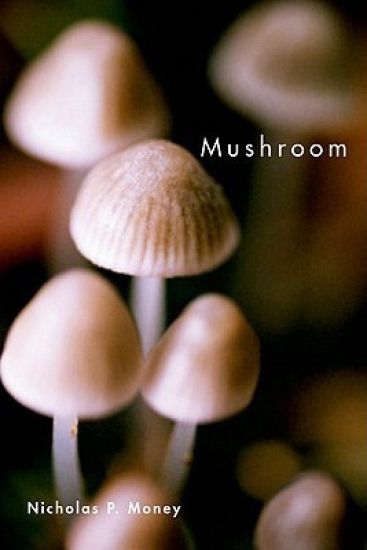
Mushroom

Mushroom

Nicholas P. Money

Oxford University Press Inc
2012
sidottu
The overnight appearance of mushrooms in a meadow or on a suburban lawn is a marvelous sight. It is one of many awe-inspiring, magical processes that have evolved among the fungi, yet this group remains the least studied and most poorly understood kingdom of organisms. In Mushroom, Nicholas Money offers a vibrant introduction to the world of mushrooms, investigating the science behind these organisms as well as their enduring cultural and imaginative appeal. Beginning with the basics of mushroom biology, Money leads us through a history of mushroom research, painting portraits of the colorful characters involved in their study--among them, Beatrix Potter, the celebrated author and creator of Peter Rabbit, and Captain Charles McIlvaine, a Civil War veteran who engaged in a dangerous quest to determine the edibility of every mushroom in North America. Money also discusses the uses of mushrooms today, exploring their importance as food and medicine, their use as recreational drugs, and as the cause of horrific poisonings. A cultural, natural, and scientific history in one, Mushroom is a must-read for mycophiles, mushroom gatherers, and nature lovers alike.
The Religious Roots of the First Amendment

The Religious Roots of the First Amendment

Nicholas P. Miller

Oxford University Press Inc
2012
sidottu
Traditional understandings of the genesis of the separation of church and state rest on assumptions about 'Enlightenment' and the republican ethos of citizenship. Nicholas Miller does not seek to dislodge that interpretation but to augment and enrich it by recovering its cultural and discursive religious contexts - specifically the discourse of Protestant dissent. He argues that commitments by certain dissenting Protestants to the right of private judgment in matters of Biblical interpretation, an outgrowth of the doctrine of the priesthood of all believers, helped promote religious disestablishment in the early modern West. This movement climaxed in the disestablishment of religion in the early American colonies and nation. Miller identifies a continuous strand of this religious thought from the Protestant Reformation, across Europe, through the English Reformation, Civil War, and Restoration, into the American colonies. He examines seven key thinkers who played a major role in the development of this religious trajectory as it came to fruition in American political and legal history: William Penn, John Locke, Elisha Williams, Isaac Backus, William Livingston, John Witherspoon, and James Madison. Miller shows that the separation of church and state can be read, most persuasively, as the triumph of a particular strand of Protestant nonconformity - that which stretched back to the Puritan separatist and the Restoration sects, rather than to those, like Presbyterians, who sought to replace the 'wrong' church establishment with their own, 'right' one. The Religious Roots of the First Amendment contributes powerfully to the current trend among some historians to rescue the eighteenth-century clergymen and religious controversialists from the enormous condescension of posterity.