Kirjahaku
Etsi kirjoja tekijän nimen, kirjan nimen tai ISBN:n perusteella.
1000 tulosta hakusanalla Nicholas Phelps
Enclosed within these pages are the Musings of a young man struggling at the border of adulthood. From professions of love to battles with anxiety and depression, this is an exploration of the complex nature surrounding human life at a junction of many paths. The collection does not follow a specific progression rather it separates certain poems into sets as they tackle specific ideas and notions. These poems may on occasion conflict in terms of the conclusion to which they arrive. This is because the author has compiled all of these poems from a five-year period from High School to the beginning of college in the hopes of reflecting change and exemplifying multiple, time-changed, perspectives on the same topic in an attempt to exhibit the growth of someone going through this period in their life. Without further ado, the author hopes you, the reader, glean some meaning from this collection and thus enjoy it.
This book examines the role of the multinational firms in processes of European integration. It is primarily concerned with the implications of market integration and industrial restructuring for peripheral European regions. Nicholas Phelps argues that, because of the complex relationship between competition and economies of scale, the persistence of market segmentation, and because of the embeddedness of multinational investment in established production locations, there is considerable inertia in the existing trade and investment patterns of multinationals in the EU. This argument is explored empirically in relation to multinationals operating in Wales. This study suggests that processes of restructuring accompanying market integration are slow to take effect and based on a diversity of motives.
Much of the world's economic activity takes place in between cities and nations - the geographical containers that we have taken for granted for hundreds of years now. In this book Nicholas Phelps provides a guide to this uncharted territory within urban and economic geography. He highlights the importance of intermediary actors and processes in shaping this economy in between. From the airports, shopping malls, and office parks that have sprung up on the road between cities, to work done on the move in cars and trains, to the decisions made by internationally mobile networks of experts in conferences and negotiations. The geography of the economy in between is revealed as one involving four recurring and coexisting economic geographical formations - the agglomeration, the enclave, the networks, and the arena. Phelps sets out a multidisciplinary perspective and agenda on the question of the how, why, and where much contemporary economic activity takes place.
Post-Suburban Europe
Nicholas A. Phelps; N. Parsons; Dimitris Ballas; Andrew Dowling
Palgrave Macmillan
2006
sidottu
The term 'edge city' describes the rapid growth of urban centres at the edge of established cities. Widely discussed in the US, very little has been written about European edge cities. This book gives a comparative analysis of examples in Greece, Spain, Paris, Finland and the UK, with a theoretical analysis of edge cities and post-suburban Europe.
Despite the combined efforts of British planners, politicians, the public and interest groups, the ‘Solent City’ stands as one of a number of instances of a peculiar instance of urban sprawl – muted, and slow to emerge – yet produced paradoxically by very strong interests in promoting conservation and restraint.This unique and valuable case study, while focusing on the planning and development of South Hampshire in particular, enables an in-depth study of the issues surrounding planning strategies with regards to growing populations.
This book examines the role of the multinational firms in processes of European integration. It is primarily concerned with the implications of market integration and industrial restructuring for peripheral European regions. Nicholas Phelps argues that, because of the complex relationship between competition and economies of scale, the persistence of market segmentation, and because of the embeddedness of multinational investment in established production locations, there is considerable inertia in the existing trade and investment patterns of multinationals in the EU. This argument is explored empirically in relation to multinationals operating in Wales. This study suggests that processes of restructuring accompanying market integration are slow to take effect and based on a diversity of motives.
Post-Suburban Europe
Nicholas A. Phelps; N. Parsons; Dimitris Ballas; Andrew Dowling
Palgrave Macmillan
2006
nidottu
The term 'edge city' describes the rapid growth of urban centres at the edge of established cities. Widely discussed in the US, very little has been written about European edge cities. This book gives a comparative analysis of examples in Greece, Spain, Paris, Finland and the UK, with a theoretical analysis of edge cities and post-suburban Europe.
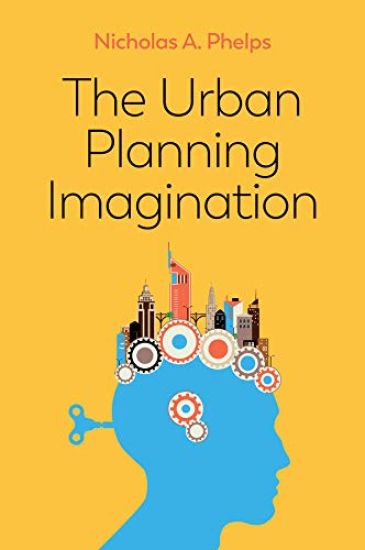
Urban planning is not just about applying a suite of systematic principles or plotting out pragmatic designs to satisfy the briefs of private developers or public bodies. Planning is also an activity of imagination, with a stock of wisdom and an array of useful methods for making decisions and getting things done. This critical introduction uncovers and celebrates this imagination and its creative potential. Nicholas A. Phelps explores the key themes and driving questions in the circulation of planning ideas and methods over time and across spaces, identifying the contrasts and commonalities between urban planning systems and cultures. He argues that the tools for inclusive urban planning are today, more than ever, not solely restricted to the hands of planning bodies, but are distributed across citizens, a variety of organizations (what Phelps calls ‘clubs’) and states. As a result, the book sets the ground for the new arrangements between these groups and actors which will be central to the future of urban planning. By unsettling standard accounts, this book compels us towards more critical and creative thinking to ensure that the imagination, wisdom and methods of urban planning are mobilized towards achieving the aspiration of shaping better places.
The Microeconomic Foundations of Employment and Inflation Theory
Edmund S. Phelps; Armen A. Alchian; Charles C. Holt; Dale T. Mortensen; G.C. Archibald; Robert E. Lucas; Leonard A. Rapping; Sidney G. Winter; John P. Gould; Donald F. Gordon; Allan Hynes; Donald A. Nichols; Paul J. Taubman; Maurice Wilkinson
WW Norton Co
1973
nidottu
College rule (also known as medium ruled paper) is the most common lined paper in use in the United States. It is generally used in middle school through to college and is also popular with adults. This is a good choice for teen or adult notebooks and composition books (known as exercise books outside the US).
Nicholas is the first in a series of five books, that bring to life the day-to-day adventures of a young school boy - amusing, endearing and always in trouble. An only child, Nicholas appears older at school than he does at home; his touchingly naive reactions to different situations cut through the preconceptions of adults to result in a formidable sequence of escapades. This first book in the series contains a collection of 19 individual stories in which, despite trying to be good, Nicholas and his friends always seem to end up in some sort of mischief. In the school room, at home and in the playground, their exuberance often takes over and the results are calamitous - at least for their teachers and parents. Whether confusing the photographer hired to take the class picture, rescuing a 'stray' dog, or trying desperately to help the teacher when the school inspector pays a visit, Nicholas always manages to make matters worse. This hilarious and heart-warming book will ignite laughter in children and adults alike. These stories of Nicholas' cureless antics blend a wonderfully imaginative sense of humour with a refreshing take on life, to leave a lingering aftertaste of ageless romantic charm in any reader.
Set as a fairy-tale in a small friendly village, we follow the story of Sophie and her two younger sisters, a kind hearted boy called Nicholas, and his cruel father, the landlord. Written as a children's short story, or to be read to younger children, this tale explores some of the mythical origins of our favourite Christmas traditions. Why do we have trimmings? Where did the idea for Christmas stockings and chocolate coins come from? And of course - Who is Santa Claus? Well, dear reader ... one version of events is here, in this book.
Nicholas
GHOSTWRITY
2023
pokkari
Any female unmated and of age with any sense did her best toremain undesirable and inconspicuous, she kept her head low andher mouth shut. If you didn't attract attention, perhaps what mightbe your future mate wouldn't see you. Wouldn't notice you. Youmight survive another year.
Nicholas Craigdon always thought the reason he was continuously overlooked by his father was because he's the fourth-born son. Now he's discovered the truth. Henry Craigdon treated him so unfairly because Henry always believed Nicholas wasn't his. Now Henry has issued the final insult on his deathbed. He's given the family company Nicholas put his heart and soul into to someone else.Logan Craigdon has never had any interest in his uncle's company. He's as shocked as anyone when Henry leaves the company to him. Logan knows how much the company means to his cousin. He agrees to hand over the day-to-day running of Craigdon Enterprises to Nicholas.Grateful for the opportunity afforded by Logan, Nicholas is determined to put his own stamp on the company. Going through some of his father's papers, he's disturbed to discover his father had a practice of buying social housing apartments with a view to redeveloping them. Henry dealt with the existing tenants by raising the rents to levels they couldn't afford and would then forcibly evict them.Harper Wyburn grew up in one of the social housing apartments Henry Craigdon purchased. At the age of fourteen, she and her mother were evicted. They spent years living on the streets. Eventually her mother died. Harper blamed Henry for her death.Determined to get her revenge on the man who destroyed her life, Harper tracks down Henry Craigdon and demands retribution. Henry laughs in her face. Incensed, Harper vows to destroy him. When Henry dies unexpectedly, Harper's plan is momentarily sent awry. Then she comes up with a new plan. She'll destroy the company Henry Craigdon loved so much. The same company Nicholas has just taken over control.When Harper meets Nicholas, she's immediately attracted to his good-looking, quiet strength. But he's the son of Henry Craigdon. Nothing else matters. He must pay for his father's sins...The Craigdon Family Dynasty series follows the lives and loves of the Craigdon Family and the fallout they all experience when the patriarch of the family dies. Henry Craigdon was worth billions. He was also a man with many secrets. He's divided up his estate between his wife and six children, but not all of them have been treated fairly...Come on an adventure filled with drama and intrigue with USA Today bestselling author Chris Taylor and ride the highs and lows of a family in turmoil, the secrets, the deception, the lies...and the inevitable ties of love and loyalty that bind this family together, no matter what.
Heir to the Bellefonte earldom, Nicholas Haddonfield has made a promise to his dying father that he'll marry before the Season's over. When Nick meets Lady Leah Lindsey, he realizes he's found not only a damsel in need of rescuing, but also a perfect countess of convenience. Then he spoils everything by falling in love with his wife...the one woman he can never, ever have.
Doctor Perricone reveals how poor diet, excessive sun exposure, environmental pollutants and other skin irritants cause facial skin to wrinkle, form lines and sag. Using his dietary suggestions and exercises over a 28 day period aims to result in a noticeable difference in appearance and general health.