Kirjojen hintavertailu. Mukana 12 479 114 kirjaa ja 12 kauppaa.

Kirjahaku

Etsi kirjoja tekijän nimen, kirjan nimen tai ISBN:n perusteella.

1000 tulosta hakusanalla Nicholas Ryder

Money Laundering - An Endless Cycle?
This book provides a detailed examination of anti-money laundering policies and legislative frameworks in a number of jurisdictions and considers how successful these jurisdictions have been in implementing international measures to combat money laundering. Looking at the instruments and proposals put in place by a number of institutions including the United Nations (UN), the Financial Action Task Force (FATF) and the European Union, the book begins by reclassifying and expanding the traditional global anti-laundering policy to include aspects such as having a national money laundering strategy in place, the implementation of international instruments and the role of government and regulatory agencies. Ryder then offers a comparative analytical review of the anti-money laundering policies adopted in the United States of America, Canada, the United Kingdom and Australia and considers to what extent they have followed and implemented the identified global anti-money laundering policy. Money Laundering – An Endless Cycle? will be of particular interest to academics and students in the fields of Law, Finance, Banking and Criminology.
The Financial War on Terrorism

The Financial War on Terrorism

Nicholas Ryder

Routledge
2015
sidottu
On September 11, 2001, 19 terrorists committed the largest and deadliest terrorist attack in the United States of America. The response from the inter-national community, and in particular the US, was swift. President George Bush declared what has commonly been referred to as either the ‘War on Terror’ or the ‘Global War on Terror’ on September 20, 2001. Four days later, he instigated the ‘Financial War on Terrorism’. This book defines and identifies the so-called ‘Financial War on Terrorism’. It provides a critical review of the impact of counter-terrorist financing strategies enacted by both individual jurisdictions and international organisations. Taking a comparative approach, the book highlights the levels of compliance in each selected jurisdiction and organisation with the requirements of the ‘Financial War on Terrorism’. The book analyses measures introduced by the United Nations, including the UN sanctions against terrorists and the operation of its anti-terrorist sanctions committees, and the Recommendations of the Financial Action Task Force. It also reviews the counter-terrorist financing measures of the European Union and the Council of Europe, paying particular attention to the Framework Decisions on Combating Terrorism, the Council Common Positions on Combating Terrorism and the EU Anti-Terrorism Sanctions Regime. The book goes on to review the measures put in place in the US following September 11, 2001. Offering a much-needed legal analysis of the measures enacted under the ‘Financial War on Terrorism’, this book is a valuable resource for those researching in law, terrorism studies, criminal justice, and finance.
Money Laundering – An Endless Cycle?
This book provides a detailed examination of anti-money laundering policies and legislative frameworks in a number of jurisdictions and considers how successful these jurisdictions have been in implementing international measures to combat money laundering. Looking at the instruments and proposals put in place by a number of institutions including the United Nations (UN), the Financial Action Task Force (FATF) and the European Union, the book begins by reclassifying and expanding the traditional global anti-laundering policy to include aspects such as having a national money laundering strategy in place, the implementation of international instruments and the role of government and regulatory agencies. Ryder then offers a comparative analytical review of the anti-money laundering policies adopted in the United States of America, Canada, the United Kingdom and Australia and considers to what extent they have followed and implemented the identified global anti-money laundering policy. Money Laundering – An Endless Cycle? will be of particular interest to academics and students in the fields of Law, Finance, Banking and Criminology.
Financial Crime in the 21st Century

Financial Crime in the 21st Century

Nicholas Ryder

Edward Elgar Publishing Ltd
2012
nidottu
This book focuses on the financial crime policies adopted by the international community and how these have been implemented in the United Kingdom and the United States of America. Nicholas Ryder also considers the appropriateness of confiscation and forfeiture of the proceeds of crime as well as the financial crime agencies in both jurisdictions and the effectiveness of their sentencing policies towards financial crime. The author recommends a 'model financial crime policy' based on a detailed analysis of the measures discussed in this book. Financial Crime in the 21st Century is aimed at those specializing in the fields of; international financial crime, commercial fraud, corporate and financial crime, money laundering and white-collar crime, amongst others. It is also of great use to undergraduate and postgraduate students undertaking modules within these areas.
The Financial War on Terrorism

The Financial War on Terrorism

Nicholas Ryder

Routledge
2017
nidottu
On September 11, 2001, 19 terrorists committed the largest and deadliest terrorist attack in the United States of America. The response from the inter-national community, and in particular the US, was swift. President George Bush declared what has commonly been referred to as either the ‘War on Terror’ or the ‘Global War on Terror’ on September 20, 2001. Four days later, he instigated the ‘Financial War on Terrorism’. This book defines and identifies the so-called ‘Financial War on Terrorism’. It provides a critical review of the impact of counter-terrorist financing strategies enacted by both individual jurisdictions and international organisations. Taking a comparative approach, the book highlights the levels of compliance in each selected jurisdiction and organisation with the requirements of the ‘Financial War on Terrorism’. The book analyses measures introduced by the United Nations, including the UN sanctions against terrorists and the operation of its anti-terrorist sanctions committees, and the Recommendations of the Financial Action Task Force. It also reviews the counter-terrorist financing measures of the European Union and the Council of Europe, paying particular attention to the Framework Decisions on Combating Terrorism, the Council Common Positions on Combating Terrorism and the EU Anti-Terrorism Sanctions Regime. The book goes on to review the measures put in place in the US following September 11, 2001. Offering a much-needed legal analysis of the measures enacted under the ‘Financial War on Terrorism’, this book is a valuable resource for those researching in law, terrorism studies, criminal justice, and finance.
The Financial Crisis and White Collar Crime

The Financial Crisis and White Collar Crime

Nicholas Ryder

Edward Elgar Publishing Ltd
2014
sidottu
Concentrating on the relationship between the 2007 financial crisis and white-collar crime in both the United States of America and the United Kingdom this unique book asserts that such activity was an important variable that contributed towards the crisis. It also reveals a number of similarities and differences in the approach towards white-collar crime emanating from the financial crisis.Offering an important analysis of the factors which contributed to the global financial crisis and the role played by economic crime, the author provides an insightful critique of the legislative, regulatory and enforcement responses on both sides of the Atlantic. Specific examples include mortgage fraud, predatory lending, Ponzi fraud schemes, market misconduct and the manipulation of LIBOR. Nicholas Ryder's conclusions are powerful, and those responsible for policing the financial markets should take careful note of the recommendations he puts forward.This timely book will be of great use to both teachers and students of financial crime relevant modules. It will also appeal to policy-makers in government departments, law enforcement agencies and financial regulatory agencies, as well as professionals within the financial services sector, law and accountancy.
Financial Crime in the 21st Century

Financial Crime in the 21st Century

Nicholas Ryder

Edward Elgar Publishing Ltd
2011
sidottu
This book focuses on the financial crime policies adopted by the international community and how these have been implemented in the United Kingdom and the United States of America. Nicholas Ryder also considers the appropriateness of confiscation and forfeiture of the proceeds of crime as well as the financial crime agencies in both jurisdictions and the effectiveness of their sentencing policies towards financial crime. The author recommends a 'model financial crime policy' based on a detailed analysis of the measures discussed in this book. Financial Crime in the 21st Century is aimed at those specializing in the fields of; international financial crime, commercial fraud, corporate and financial crime, money laundering and white-collar crime, amongst others. It is also of great use to undergraduate and postgraduate students undertaking modules within these areas.
Financial Intelligence, the Exchange of Information and Tackling Financial Crime in the United Kingdom
This book examines the international standards relating to information exchange, identifying its importance in relation to combatting money laundering, terrorist financing and fraud. Its timely publication follows the Financial Action Task Force (FATF) rating the UK’s anti-money laundering and counter-terrorism financing regimes as amongst the best in the world in its fourth Mutual Evaluation Report. The book features an alternative review via four case studies - money laundering, terrorism financing and general fraud. These illustrate the importance of information exchange and highlight flaws in the UK’s legal framework, challenging the conclusions of the FATF. Considering this comprehensive analysis, the book then provides recommendations for reform.
Commercial Law

Commercial Law

Nicholas Ryder; Margaret Griffiths; Lachmi Singh

Cambridge University Press
2012
pokkari
This innovative textbook examines commercial law and the social and political context in which it develops. Topical examples, such as funding for terrorism, demonstrate this fast-moving field's relevance to today's concerns. This wide-ranging subject is set within a clear structure, with part and chapter introductions setting out the student's course of study. Recommendations for further reading at the end of every chapter point the reader to important sources for advanced study and revision questions encourage understanding. The extensive coverage and detailed commentary has been extensively market tested to ensure that the contents are aligned with the needs of university courses in commercial law.
Commercial Law

Commercial Law

Nicholas Ryder; Margaret Griffiths; Lachmi Singh

Cambridge University Press
2012
sidottu
This innovative textbook examines commercial law and the social and political context in which it develops. Topical examples, such as funding for terrorism, demonstrate this fast-moving field's relevance to today's concerns. This wide-ranging subject is set within a clear structure, with part and chapter introductions setting out the student's course of study. Recommendations for further reading at the end of every chapter point the reader to important sources for advanced study and revision questions encourage understanding. The extensive coverage and detailed commentary has been extensively market tested to ensure that the contents are aligned with the needs of university courses in commercial law.
The International Law on Financial Crime

The International Law on Financial Crime

Nicholas Ryder; Umut Turksen

Routledge
2023
sidottu
This ground-breaking textbook provides a comprehensive guide to the law, policy and strategies relating to international financial crime.Alongside a clear exposition of the current law, the text critically examines the institutions and agencies tasked with regulation and prevention of financial crime; it also covers sentencing policy, the attitude of the courts, and procedures designed to recover the proceeds.This text will be invaluable to students studying the subject at postgraduate or undergraduate level. It will also be of great value to practitioners, policymakers, regulators and all others who require a solid understanding of the key issues in an international context.
The International Law on Financial Crime

The International Law on Financial Crime

Nicholas Ryder; Umut Turksen

Routledge
2023
nidottu
This ground-breaking textbook provides a comprehensive guide to the law, policy and strategies relating to international financial crime.Alongside a clear exposition of the current law, the text critically examines the institutions and agencies tasked with regulation and prevention of financial crime; it also covers sentencing policy, the attitude of the courts, and procedures designed to recover the proceeds.This text will be invaluable to students studying the subject at postgraduate or undergraduate level. It will also be of great value to practitioners, policymakers, regulators and all others who require a solid understanding of the key issues in an international context.
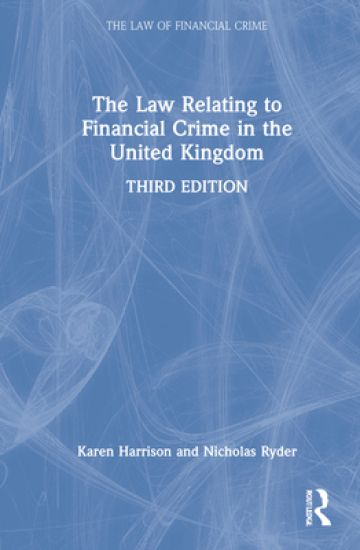
The Law Relating to Financial Crime in the United Kingdom

The Law Relating to Financial Crime in the United Kingdom

Karen Harrison; Nicholas Ryder

TAYLOR FRANCIS LTD
2022
nidottu
Outlining the different types of financial crime and their impact, this book is a user-friendly, up-to-date guide to the regulatory processes, systems and legislation which exist in the UK. Each chapter has a similar structure and covers individual financial crimes including money laundering, terrorist financing, fraud, insider dealing, market abuse, bribery and corruption and finally tax avoidance and evasion. Offences are summarized and their extent is evaluated using national and international documents. Detailed assessments of financial institutions and regulatory bodies are made and the achievements of these institutions are analysed. Sentencing and policy options for different financial crimes are included and suggestions are made as to how criminal proceeds might be recovered. This third edition has been fully updated and includes a new chapter on corporate financial crime.
The Law Relating to Financial Crime in the United Kingdom

The Law Relating to Financial Crime in the United Kingdom

Karen Harrison; Nicholas Ryder

TAYLOR FRANCIS LTD
2022
sidottu
Outlining the different types of financial crime and their impact, this book is a user-friendly, up-to-date guide to the regulatory processes, systems and legislation which exist in the UK. Each chapter has a similar structure and covers individual financial crimes including money laundering, terrorist financing, fraud, insider dealing, market abuse, bribery and corruption and finally tax avoidance and evasion. Offences are summarized and their extent is evaluated using national and international documents. Detailed assessments of financial institutions and regulatory bodies are made and the achievements of these institutions are analysed. Sentencing and policy options for different financial crimes are included and suggestions are made as to how criminal proceeds might be recovered. This third edition has been fully updated and includes a new chapter on corporate financial crime.
Market Manipulation and Insider Trading

Market Manipulation and Insider Trading

Ester Herlin-Karnell; Nicholas Ryder

Hart Publishing
2019
sidottu
The European Union regime for fighting market manipulation and insider trading – commonly referred to as market abuse – was significantly reshuffled in the wake of the financial crisis of 2007/2008 and new legal instruments to fight market abuse were eventually adopted in 2014. In this monograph the authors identify the association between the financial crisis and market abuse, critically consider the legislative, policy and enforcement responses in the European Union, and contrast them with the approaches adopted by the United States of America and the United Kingdom respectively. The aftermath of the financial crisis, ongoing security concerns and increased legislation and policy responses to the fight against irregularities and market failures demonstrate that we need to understand, in context, the regulatory responses taken in this area. Specifically, the book investigates how the regulatory responses have changed over time since the start of the financial crisis. Market Manipulation and Insider Trading places the fight against market abuse in the broader framework of the fight against white collar crime and also considers some associated questions in order to better understand the contemporary market abuse regime.
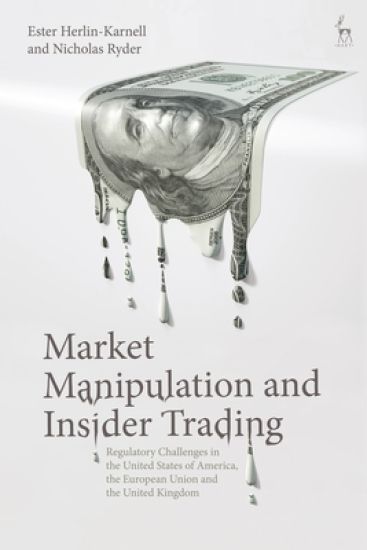
Market Manipulation and Insider Trading

Market Manipulation and Insider Trading

Ester Herlin-Karnell; Nicholas Ryder

Hart Publishing
2021
nidottu
The European Union regime for fighting market manipulation and insider trading – commonly referred to as market abuse – was significantly reshuffled in the wake of the financial crisis of 2007/2008 and new legal instruments to fight market abuse were eventually adopted in 2014. In this monograph the authors identify the association between the financial crisis and market abuse, critically consider the legislative, policy and enforcement responses in the European Union, and contrast them with the approaches adopted by the United States of America and the United Kingdom respectively. The aftermath of the financial crisis, ongoing security concerns and increased legislation and policy responses to the fight against irregularities and market failures demonstrate that we need to understand, in context, the regulatory responses taken in this area. Specifically, the book investigates how the regulatory responses have changed over time since the start of the financial crisis. Market Manipulation and Insider Trading places the fight against market abuse in the broader framework of the fight against white collar crime and also considers some associated questions in order to better understand the contemporary market abuse regime.
An Aid to the MRCP

An Aid to the MRCP

Nicholas Boeckx; Robert E. J. Ryder; E. Anne Freeman; M. Afzal Mir

Wiley-Blackwell (an imprint of John Wiley Sons Ltd)
2007
nidottu
Allay your anxieties about the MRCP exams and increase your confidence with An Aid to the MRCP: Essential Lists, Facts and Mnemonics. In order to pass the MRCP exams you will need to learn a large number of lists and key facts. This book provides the essential lists and facts you need to know together with memory aids to speed learning and recall. Armed with this knowledge you will be able to rapidly narrow your differential diagnosis and identify the most likely answer. This essential new MRCP title has been written by a recent candidate for the MRCP exams who used this technique to pass first time, in conjunction with Dr Bob Ryder, Dr Anne Freeman and Dr Mir Afzal; all established authorities in the MRCP field and authors of the two volumes of An Aid to the MRCP PACES. An Aid to the MRCP: Essential Lists, Facts and Mnemonics presents memory aids, facts and lists that are based on questions faced whilst revising for, or encountered during the MRCP exams and also features a free audio revision tool at www.anaidtothemrcp.com with a summary of the mnemonics contained in the book.
High Riders, Saints and Death Cars

High Riders, Saints and Death Cars

Nicholas Herrera

Groundwood Books Ltd ,Canada
2011
sidottu
A USBBY Outstanding International Books Honor Book Nicholas Herrera started life as a mischievous, dyslexic boy, born into one of the old Spanish families of New Mexico. Bad teachers and poor schooling helped him to lose himself in drugs, drinking, riding motorcycles and driving fast cars. A near-death experience, a wonderful mother and a fascination with making art saved him. Today Nicholas Herrera is one of the most noted Santeros -- artists who create images of saints and other religious figures -- in the U.S. The text, as told to Elisa Amado, tells Nicholas's story through his art and expounds the hard-earned wisdom that his experience has brought him. Herrera's life, his political views about drugs, his sense of social justice, and his support for oppressed people will speak directly to young readers, especially those who might feel that life has nothing to offer them due to their economic circumstances or their class or ethnic backgrounds.
The Sea Riders: An Eldarendar Book

The Sea Riders: An Eldarendar Book

Nicholas Farrell; James Farrell

Createspace Independent Publishing Platform
2015
nidottu
Supers are persecuted. Into the woods one and another of them trickle, banding together. Two of these soon acquire new members, including Robin and Charles O'Connell, of the terrible House of Fayblood. The band decides to call themselves the Sea Riders, after their old leader Sea Horse.But the other O'Connells have superpowers too, and they are in no mind to be heros or even live in peaceful hiding. They want to be supervillains. They join a gang of supers and take it over, calling themselves the Dark Riders.All across the barren basalt hills of central Connecticut the war plays out, between the Sea Riders who really just want to let things be and the Dark Riders, who never rest in the ceaseless laboring for evil. And federal agents are snooping....