Kirjojen hintavertailu. Mukana 11 699 587 kirjaa ja 12 kauppaa.

Kirjahaku

Etsi kirjoja tekijän nimen, kirjan nimen tai ISBN:n perusteella.

1000 tulosta hakusanalla Nicolas Lewkowicz

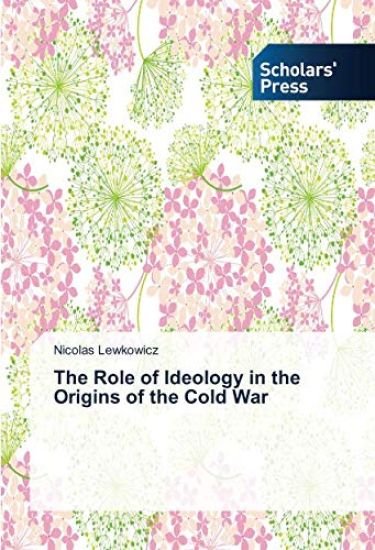
The Role of Ideology in the Origins of the Cold War
This book argues that American Exceptionalism and Eurasianism engendered the ideological principles that propelled the geostrategic interests of the United States and the Soviet Union in the post-World War Two period. The correlation between ideology and the pursuit of certain geostrategic aims led to the creation of the interventionist mechanisms that established a sound management of the international order in the post-World War Two era.
The German Question and the Origins of the Cold War
This book analyzes the role of the German Question in the origins of the Cold War. The work evaluates the transformation which occurred in Germany and the post-war international order due to the inter-Allied work on denazification. The author analyses the Rationalist aspects of superpower interaction, with particular emphasis on the legal and diplomatic framework which sustained not only the treatment of the German Question but also the general context of inter-Allied relations. The author also tackles the conflictual aspects of the treatment of the German Question by examining superpower interaction in relation to the enforcement of their structural interests. The main argument of the book is that due to the interaction between the elements of intervention and coexistence, the German Question constituted the most significant issue in the configuration of the post-war international order.
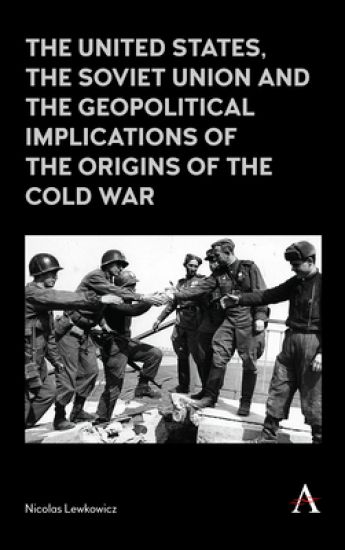
The United States, the Soviet Union and the Geopolitical Implications of the Origins of the Cold War
‘The United States, the Soviet Union and the Geopolitical Implications of the Origins of the Cold War, 1945–1949’ describes how the United States and the Soviet Union deployed their hard and soft power resources to create the basis for the institutionalization of the international order in the aftermath of World War Two. The book argues that the origins of the Cold War should not be seen from the perspective of a magnified spectrum of conflict but should be regarded as a process by which the superpowers attempted to forge a normative framework capable of sustaining their geopolitical needs and interests in the post-war scenario. ‘The United States, the Soviet Union and the Geopolitical Implications of the Origins of the Cold War, 1945–1949’ examines how the use of ideology and the instrument of political intervention in the spheres of influence managed by the superpowers were conducive to the establishment of a stable international order. It postulates that the element of conflict present in the early period of the Cold War served to demarcate the scope of manoeuvring available to each of the superpowers and studies the notion that the United States and the Soviet Union were primarily interested in establishing the conditions for the accomplishment of their vital geostrategic interests. This required the implementation of social norms imposed in the respective spheres of influence, a factor that provided certainty to the spectrum of interstate relations after the period of turmoil that culminated with the onset of World War Two.
The Cold War in the 1950s

The Cold War in the 1950s

Nicolas Lewkowicz

ANTHEM PRESS
2024
sidottu
The book claims that the United States and the Soviet Union attained the mastery of the international order by projecting universalist values that responded to the particularist markers of the domestic order that was generated in the 1950s. The geopolitical orientation adopted by the superpowers in the 1950s was shaped by the way in which their societies developed politically, socially and economically in the 1950s. The main argument of this book is that the quest for the mastery of the international order that informed superpower relations in the 1950s was guided by the need to respond to the local circumstances that emerged in the United States and the Soviet Union. The particularist markers that arose in the 1950s led to the establishment of a geopolitical project underpinned by certain universalist values that could be applied in order to build the superpowers’ sphere of influence.
The German Question and the Origins of the Cold War
This book analyses the role of the German Question in the origins of the Cold War. The work evaluates the transformation which occurred in Germany and the post-war international order due to the inter-Allied work on denazification. The author analyses the Rationalist aspects of superpower interaction, with particular emphasis on the legal and diplomatic framework which sustained not only the treatment of the German Question but also the general context of inter-Allied relations. The author also tackles the conflictual aspects of the treatment of the German Question by examining superpower interaction in relation to the enforcement of their structural interests. The main argument of the book is that due to the interaction between the elements of intervention and coexistence, the German Question constituted the most significant issue in the configuration of the post-war international order.
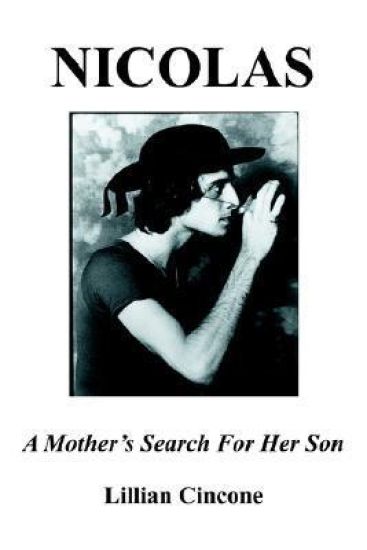
Nicolas

Nicolas

Lillian Cincone

iUniverse
2005
pokkari
Brings to life the Sixties through the voices of teen-agers. They thought they could change the world by changing themselves, changing the way they lived. Were they successful? You be the judge. Accompany a mother on her search into her son's life, where she learns a great deal, and comes to understand that one can never know another completely.
Nicolas

Nicolas

Pascal Girard

Drawn and Quarterly
2016
sidottu
Burdened with grief, confusion, and anger, Pascal Girard explores the childhood passing of his five-year-old brother. Girard delves into the emotional repercussions of this life-changing trauma, from his memories as a nine-year old struggling to understand up until present day, twenty-five years after the shattering loss. At the heart of Nicolas lies the question shared by most undergoing bereavement: why? This confusion multiplies for a young boy with few answers to his questions, lacking even a basic explanation of the cause of his brother's departure. As sorrow and guilt are muffled by time and the flurry of even the most typical childhood and adolescence, this is a story of grief not grieved, and a glimpse into the ongoing process of reckoning. Pascal struggles to reconcile the magnitude of this tragedy with the minutiae of his daily experience of loss. Nicolas is a delicate, minimalist portrait of the many faces of mourning, identified with surprising humor and pathos by an artist who knows them intimately. Originally published in a micro-run ten years ago, Girard creates new comics and an introduction that contemplate the larger effect of Nicolas's death on his current behaviors and habits. With masterful visual restraint, Girard pens a work of great honesty and integrity: Nicolas resonates long after the book is closed, the weight of the story echoing closely the heft of the personal loss.
Nicolas Nabokov

Nicolas Nabokov

Giroud Vincent

Oxford University Press Inc
2015
sidottu
Composer and cultural official Nicolas Nabokov (1903-78) led an unusual life even for a composer who was also a high-level diplomat. Nabokov was for nearly three decades an outstanding and far-sighted player in international cultural exchanges during the Cold War, much admired by some of the most distinguished minds of his century for the range of his interests and the breadth of his vision. Nicolas Nabokov: A Life in Freedom and Music follows Nabokov's life through its fascinating details: a privileged Russian childhood before the Revolution; exile, first to Germany, then to France; the beginnings of a promising musical career, launched under the aegis of Diaghilev and his Ballets Russes with Ode in 1928; his twelve-year "American exile" during which he occupied several academic positions; his return to Europe after the war to participate in the denazification of Germany; his involvement in anti-Stalinist causes in the first years of the Cold War; his participation in the Congress for Cultural Freedom; his role as cultural adviser to the Mayor of Berlin and director of the Berlin Festival in the early 1960s; the resumption of his American academic and musical career in the late 1960s and 1970s. Nabokov is unique not only in that he was involved on a high level in international cultural politics, but also in that his life intersected at all times with a vast array of people within, and also well beyond, the confines of classical music. Drawing on a vast array of primary sources, Vincent Giroud's first-ever biography of Nabokov will be of interest readers interested in twentieth-century music, Russian music, Russian emigration, and the Cold War, particularly in its cultural aspects. Musicians and musicologists interested in Nabokov as a composer, or in twentieth century Russian composers in general, will find in the book information not available anywhere else.
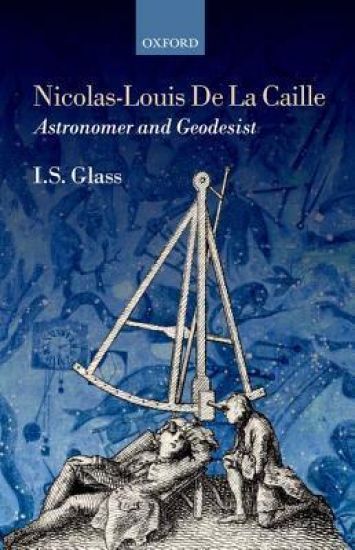
Nicolas-Louis De La Caille, Astronomer and Geodesist

Nicolas-Louis De La Caille, Astronomer and Geodesist

Ian Stewart Glass

Oxford University Press
2012
sidottu
La Caille was one of the observational astronomers and geodesists who followed Newton in developing ideas about celestial mechanics and the shape of the earth. He provided data to the great 18th-century mathematicians involved in understanding the complex gravitational effects that the heavenly bodies have on one another. Observing from the Cape of Good Hope, he made the first ever telescopic sky survey and gave many of the southern constellations their present-day names. He measured the paths of the planets and determined their distances by trigonometry. In addition, he made a controversial measurement of the radius of the earth that seemed to prove it was pear-shaped. On a practical level, La Caille developed the method of `Lunars' for determining longitudes at sea. He mapped the Cape. As an influential teacher he propagated Newton's theory of universal gravitation at a time when it was only beginning to be accepted on the European continent. This book gives the most comprehensive overview so far available of La Caille's life and work, showing how he interacted with his often difficult colleagues. It places special emphasis on his life at, and his observations and comments on, the Cape of Good Hope, where he spent the years 1751-53.