Kirjojen hintavertailu. Mukana 12 390 323 kirjaa ja 12 kauppaa.

Kirjahaku

Etsi kirjoja tekijän nimen, kirjan nimen tai ISBN:n perusteella.

1000 tulosta hakusanalla Nigel Barber

Why Parents Matter

Why Parents Matter

Nigel Barber

Praeger Publishers Inc
2000
sidottu
There is a feeling of helplessness in the hearts of many parents. The social problems that they used to only read about in newspapers are becoming manifest in their children's school, in their neighborhoods, and in their own homes. This is the most appropriate time for a book that affirms the importance of good parenting in promoting happiness, self-esteem, and a desire for achievement. Why Parents Matter challenges parents and parental figures to take responsibility for their children. Barber argues that parental investment is an essential ingredient for a child's successful upbringing. Parents must see that the paramount role they play can improve their children's lives and, by extension, create a better community and society. Genetic and societal causes of delinquency are excuses used merely to avoid blame, according to Barber, who supports this argument with clearly explained evidence. In today's world, teen pregnancy, divorce, and crime are undeniable and common realities, but it is time to change these realities. This change can begin with effective parenting. Our world will improve as we more actively parent our children to become responsible, well-adjusted adults. This book offers guidance to parents and parental figures who wish to explore why it is that our youth are in danger and how we can help to inspire them to learn the elements necessary to lead healthy, creative, and balanced lives.
Evolution in the Here and Now

Evolution in the Here and Now

Nigel Barber

Prometheus Books
2020
sidottu
This book argues that the two most influential theories on modern human behavior, cultural determinism and evolutionary psychology, are quite inadequate. Cultural deterministic theories deny personal experience and too often fall prey to anthropocentric bias. Most evolutionary psychologists argue that humans are shaped to fit our ancestral past, effectively freezing us in time. Evolution in the Here and Now looks to new factors like social learning and adaptation to explain the idiosyncrasies of human behavior in a more complete and nuanced way. Evolutionary psychologist Nigel Barber shows that human behavior is uniquely crafted by the surrounding environment in underappreciated and surprising ways. For example, commerce and agriculture can be interpreted as adaptive alternatives to hunting and gathering. Irrigated farming was a response to land scarcity, which ultimately permitted the rise of early cities. This cross-discliplinary approach unites the missing ingredients that have for so long impeded our understanding of our own species and its variation across cultures. Evolution in the Here and Now is a bold step forward in the evolutionary understanding of human behavior that marries our biology with our history in ways that have never been attempted before.
The Science of Romance

The Science of Romance

Barber Nigel

Prometheus Books
2002
sidottu
Have you ever wondered why divorce is so much more common now than a century ago? Why the sex appeal of certain body types and clothing styles changes so dramatically over time? Why so many liberated young women today prefer emotional commitment from men while their male counterparts seem always more interested in 'sowing their wild oats'? According to evolutionary psychologist Nigel Barber, each of these aspects of modern life reflects two million years of hominid evolution. In "The Science of Romance" he explains that much of our present behaviour can be traced back to the ancient evolved motives of our hunter-gatherer ancestors. In short, we exhibit the behaviours that have evolved over millennia to increase the reproductive success of the species. Also drawing on the mating behaviour of various animals, Barber finds illuminating comparisons that help to explain human actions and reactions.Barber delves into a host of interesting topics: dating competition and aggression; female courtship signals that subtly manipulate male behaviour; how exposure to different sex hormones shapes the evolving brain in utero, which may account for the different behaviours of men and women; and much more. This absorbing book educates and entertains, while showing that many seemingly irrational aspects of our intimate romantic behaviour make sense when understood in terms of our prehistoric ancestors and evolution.
Travels of Richard and John Lander into the interior of Africa, for the discovery of the course and termination of the Niger From unpublished documents in the possession of the late Capt. John William Barber Fullerton ... with a prefatory analysis of the previous travels of Park, Denham, Clapperton, Adams, Lyon, Ritchie, &c. into the hitherto unexplored countries of Africa (Edition1)
The Story of Scotch, is a classical book and has been considered important throughout the human history. So that this book is never forgotten we at Alpha Editions have made efforts in its preservation by republishing this again in a modern format book for present and future generations. This whole book has been reformatted, retyped and designed. These books are not made of scanned copies of their original work and hence the text is clear and readable.
Operation Barbarossa

Operation Barbarossa

Nigel Askey

Nigel Askey
2017
sidottu
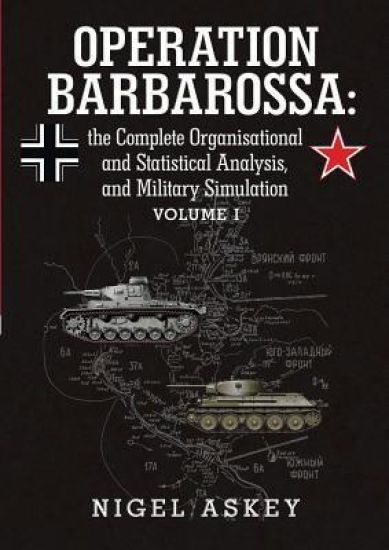
In June 1941 the German Wehrmacht launched Operation Barbarossa: the attack on the USSR and the largest land invasion in recorded history. The titanic battles that followed led to the greatest loss of life ever experienced in a military campaign. Since the end of WWII there has been intense discourse about the key operational and strategic decisions made by the German and Soviet high commands on the East-Front, especially during the critical period from July to September 1941.Operation Barbarossa: the Complete Organisational and Statistical Analysis, and Military Simulation focuses on 1941 - when the USSR came closest to defeat. It includes full analyses of the belligerents' armed forces, weapons, equipment, personnel, transport, logistics, war-production, mobilisation and replacements. Uniquely, the work formalises a sophisticated military simulation methodology extending from the tactical to the strategic level, and applies this methodology to each of the belligerents. Volume I, the first of six volumes, is primarily concerned with the structure of this methodology, but uses many of the events and weapons from Operation Barbarossa as illustrative case studies. The complete work represents the most historically accurate, advanced and comprehensive quantitative analysis yet, of the 1941 campaign on the East-Front.Operation Barbarossa: the Complete Organisational and Statistical Analysis, and Military Simulation is the culmination of over ten years of research and collation. It brings together an immense amount of information from many published and unpublished sources, and presents it with contextual history and analyses. The professional researcher or amateur scholar of WWII is provided with a comprehensive data source, containing the details of all the armed forces involved on the East-Front during 1941, as well as the relevant economic and logistical support. Currently no other single work provides a comparable reference of the actual Soviet and Axis land, air and naval forces involved in what was the most decisive and destructive campaign of WWII.
Operation Barbarossa

Operation Barbarossa

Nigel Askey

Nigel Askey
2017
sidottu
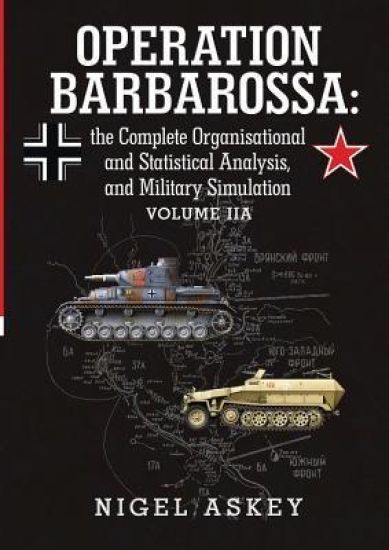
Operation Barbarossa: the Complete Organisational and Statistical Analysis, and Military Simulation includes full analyses of the Axis and Soviet armed-forces organisation, weapons, equipment, personnel, transport, logistics, war-production, mobilisation and replacements during 1941. Uniquely, the work employs a sophisticated military simulation methodology extending from the tactical to the strategic level, and applies this methodology to each of the belligerents. Volume IIA is concerned with the Wehrmacht. All the significant German weapon systems and combat squads used in the campaign are analysed using the quantitative methodology detailed in Volume I, along with the contextual history. An assessment of each weapon system's inherent 'combat power' is provided, as well as attributes such as the relative anti-tank, anti-personnel and anti-aircraft values. Volume IIA then focuses on the detailed Kriegstarkenachweisungen (KStN, or TOE) for German land units (including those in the West), as well as the unit's actual organisation and equipment. All significant units in the German Army, Waffen SS, Luftwaffe and security forces are included; ranging from the largest panzer divisions, down to small anti-aircraft companies, military-police units, Landesschutzen battalions, and rail-road and construction companies. In all cases the data is presented in detailed tables, using the weapon systems and combat squads previously analysed. Operation Barbarossa: the Complete Organisational and Statistical Analysis, and Military Simulation collates an immense amount of information from many sources, and presents it with contextual history and analyses. The professional researcher or amateur scholar is provided with a comprehensive data source, containing the details of all the armed forces involved on the East-Front during 1941, as well as the relevant economic and logistical support. The complete work represents the most accurate, advanced and comprehensive quantitative analysis yet, of the East-Front campaign. Currently no other single work provides a comparable reference on the actual Soviet and Axis land, air and naval forces involved in what was the most decisive campaign of WWII.
Operation Barbarossa

Operation Barbarossa

Nigel Askey

Nigel Askey
2018
sidottu
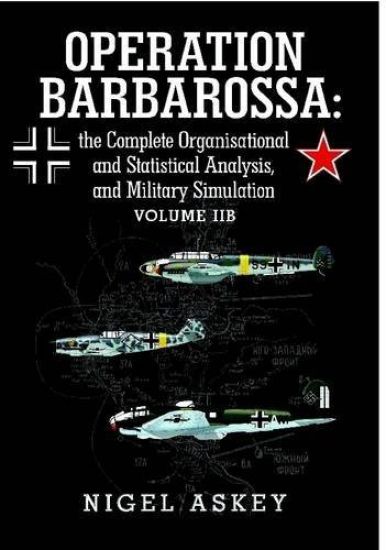
Volume IIB is the second volume relating to (and completing) the Wehrmacht, and the German mobilisation and war-economy, from June to December 1941. It includes the most detailed Orders of Battle ever published on the German Heer, Luftwaffe, Waffen SS and Kriegsmarine, in all areas of the Reich, between 22nd June and 4th July 1941. Even small and obscure units are included, such as: flak companies, artillery HQs, observation battalions, bridging columns, Landessch tzen battalions, MP battalions, railroad companies, and Luftwaffe Kurierstaffeln, Verbindungsstaffeln and Sanit tsflugbereitschaften. The Luftwaffe OOBs also include details on aircraft types and strengths in each air unit.Also scrutinised in detail are: the personnel and equipment allocated to combat-units in each army, army-group or reserve-force, in all areas across the Reich during the initial phase of Barbarossa; the ground and air units used as reinforcements as well as those newly mobilised; the total available military personnel and equipment in the Reich from June to December 1941; the Replacement Army; the overall mobilisation process and resources used; the available replacements and those sent east; the logistical supply of the Wehrmacht (i.e. the changing Supply Distribution Efficiency); the Kriegsmarine forces in the East; and the Wehrmacht and Waffen SS casualties from June 1941 to February 1942. The latter includes details on killed, wounded, missing/POW, sick and unfit, and recuperated casualties.Operation Barbarossa: the Complete Organisational and Statistical Analysis collates an immense amount of information from many sources, and presents it with contextual history and analyses. The professional or amateur scholar is provided with comprehensive details of all the armed forces on the East Front during 1941, as well as the relevant economic and logistical support. The complete work represents the most accurate and comprehensive quantitative analysis yet, of the East-Front campaign. Currently no other single work provides a comparable reference on what was the most decisive and destructive campaign of WWII.
Operation Barbarossa

Operation Barbarossa

Nigel Askey

Nigel Askey
2018
sidottu
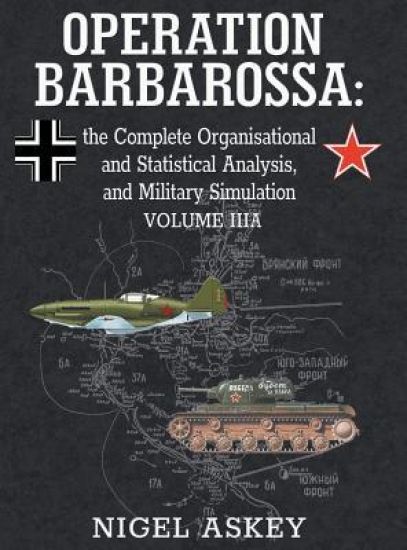
Volume IIIA is the first of two volumes relating to the Soviet armed forces, mobilisation and war-economy from June to December 1941. All the significant Soviet weapon systems and combat squads used in the campaign are analysed using the quantitative methodology detailed in Volume I, along with the contextual history. An assessment of each weapon system's inherent 'combat power' is provided, as well as attributes such as the relative anti-tank, anti-personnel and anti-aircraft values.Volume IIIA then focuses on the detailed Shtaty (TOEs) for all the Soviet land unit types fielded across the USSR during 1941. All significant units in the RKKA (Red Army), VVS, VMF, PVO and NKVD are included; ranging from the largest mechanised corps and tank divisions, down to small mortar battalions, PVO anti-aircraft battalions and NKVD security companies. In all cases the data is presented in detailed tables, using the weapon systems and combat squads previously analysed. Volume IIIA also includes the most detailed Orders of Battle ever published on the Red Army, PVO and NKVD forces on 22nd June 1941. Even small and obscure units are included down to battalion and company level. Lastly, Volume IIIA examines in detail every unit's actual personnel and equipment in each of the USSR's Western Military Districts when the Axis forces invaded.Operation Barbarossa: the Complete Organisational and Statistical Analysis collates an immense amount of information from many sources, and presents it with contextual history and analyses. The professional or amateur scholar is provided with comprehensive details of all the armed forces on the East Front during 1941, as well as the relevant economic and logistical support. The complete work represents the most accurate and comprehensive quantitative analysis yet, of the East-Front campaign. Currently no other single work provides a comparable reference on what was the most decisive and destructive campaign of WWII.

Operation Barbarossa

Operation Barbarossa

Nigel Askey

NVA Publications
2020
sidottu
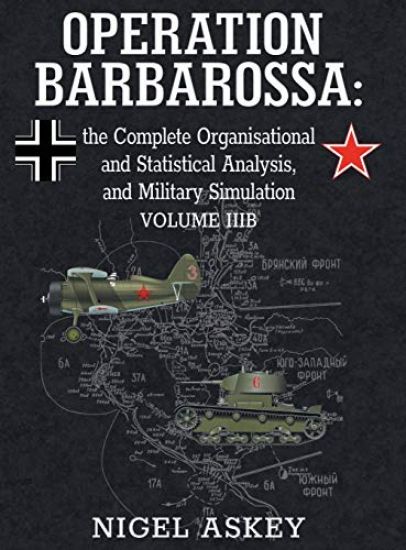
Operation Barbarossa: the Complete Organisational and Statistical Analysis, and Military Simulation, Volume IIIB is the second of two volumes relating to (and completing) the Soviet armed forces, mobilisation and war-economy from June to December 1941. The Soviet mobilisation that followed the start of Operation Barbarossa remains the largest and fastest mobilisation ever carried out in human history; involving some 11,790,000 conscripts and reservists. Volume IIIB represents the first ever complete and comprehensive quantitative analysis of this immense Soviet mobilisation program. Every major Soviet combat unit formed in the Red Army, Air Force, Navy, NKVD and PVO is included, along with minor units down to HQ and battalion level. All the combat units mobilised, along with the resources used, are presented in a precisely documented and structured fashion.Volume IIIB also includes the most detailed study published to date of the Soviet Air Forces (the VVS and PVO) fielded during 1941. It includes: the VVS command and authorised air-unit structures, detailed Orders of Battle (including aircraft types, strengths and readiness) in each VVS command area in June 1941, air-unit reinforcements, and overall aircraft usage, production, replacements and losses during the second half of 1941. The Soviet Navy (the VMF) is similarity treated, with every significant naval vessel accounted for (including those lost and newly commissioned) in each of the USSR's naval command areas during 1941.Also analysed to the same level of detail are: the actual strength and deployment of Soviet forces in the USSR's internal military districts and Stavka Reserves on 22nd June 1941, pre-war stockpiles and war production of all types of weapon systems and transport, the personnel and equipment used in the formation of newly mobilised forces, the personnel and equipment replacements used by existing combat units, logistical supply of the Soviet armed forces during 1941 (i.e. the changing Supply Distribution Efficiency) and a detailed examination of the Soviet military casualties. The latter includes details on killed, wounded, missing, POW and unfit casualties during 1941, and also reviews the losses from 1942 to 1945.Operation Barbarossa: the Complete Organisational and Statistical Analysis collates an immense amount of information from many sources, and presents it with contextual history and analyses. The professional or amateur scholar is provided with comprehensive details of all the armed forces on the East Front during 1941, as well as the relevant economic and logistical support. The complete work represents the most accurate and comprehensive quantitative analysis yet, of the East-Front campaign. Currently no other single work provides a comparable reference on what was the most decisive and destructive campaign of WWII.

Operation Barbarossa: the Complete Organisational and Statistical Analysis, and Military Simulation Volume I
In June 1941 the Wehrmacht launched Operation Barbarossa: the attack on the USSR and the largest land invasion in recorded history. Operation Barbarossa: the Complete Organisational and Statistical Analysis, and Military Simulation focuses on 1941 - when the USSR came closest to defeat. It includes full analyses of the belligerents' armed forces, weapons, equipment, personnel, transport, logistics, war-production, mobilisation and replacements. The work employs a unique military simulation methodology, extending from the tactical to the strategic level, and applies this methodology to each of the belligerents. Volume I, the first of six volumes, is primarily concerned with the structure of this methodology, but uses many of the events and weapons from Operation Barbarossa as illustrative case studies. The complete work represents the most historically accurate, advanced and comprehensive analysis of the first six months of the largest and most decisive military campaign of WWII.
Operation Barbarossa: the Complete Organisational and Statistical Analysis, and Military Simulation Volume IIA
Operation Barbarossa: Volume IIA concerns the Wehrmacht. All the significant German weapon systems and combat squads used in the campaign are analysed using the quantitative methodology detailed in Volume I, along with the contextual history. An assessment of each weapon system's inherent 'combat power' is provided, as well as attributes such as the relative anti-tank, anti-personnel and anti-aircraft values. Volume IIA then focuses on the detailed Kriegstarkenachweisungen (KStN, or TOE) for German land units (including those in the West), as well as the unit's actual organisation and equipment. All significant units in the German Army (Heer), Waffen SS, Luftwaffe and security forces are included; ranging from the largest panzer divisions, down to small anti-aircraft companies, military-police units, Landesschutzen battalions, and rail-road and construction companies. In all cases the data is presented in detailed tables, using the weapon systems and combat squads previously analysed.
Operation Barbarossa: the Complete Organisational and Statistical Analysis, and Military Simulation Volume Iib
Volume IIB completes the Wehrmacht, and the German mobilisation and war-economy, in 1941. It includes the most detailed Orders of Battle ever published on the German Army (Heer), Luftwaffe and Waffen SS (across the whole Reich) in June-July 1941. Even the smallest and most obscure ground and air units are included, while the Luftwaffe OOBs include details on aircraft types and strengths. Also scrutinised are: the personnel and equipment assigned to combat-units in each army or reserve-force in all areas of the Reich; the ground and air unit reinforcements as well as those newly mobilised; the military personnel and equipment that became available in the Reich during 1941; the Replacement Army; the mobilisation process and resources used; the available replacements and those sent east; the logistical supply of the Wehrmacht (the varying Supply Distribution Efficiency); the Kriegsmarine forces in the east; and the Wehrmacht killed, wounded, missing/POW, unfit and recuperated casualties.
Operation Barbarossa: the Complete Organisational and Statistical Analysis, and Military Simulation Volume Iiia
Volume IIIA relates to the Soviet armed forces, mobilisation and war-economy during 1941. All significant Soviet weapon systems and combat squads used in the campaign are analysed, along with a contextual history. An assessment of each weapon system's inherent 'combat power' is provided, as well as attributes such as the relative anti-tank and anti-personnel values. Volume IIIA then focuses on the detailed Shtaty (TOEs) for all the Soviet land unit types fielded during 1941. All significant units in the RKKA (Red Army), VVS, VMF, PVO and NKVD are included; ranging from the largest mechanised corps and tank divisions, down to small mortar battalions and NKVD security companies. Also included are the most detailed Orders of Battle ever published on the Red Army, PVO and NKVD forces in June 1941. Even small and obscure units are included down to battalion and company level. Lastly, Volume IIIA examines in detail every unit's actual personnel and equipment in each of the USSR's Western Military Districts.
Empires of Violence

Empires of Violence

Philip Dwyer; Barbara Alice Mann; Nigel Penn; Lyndall Ryan

BLOOMSBURY PUBLISHING PLC
2025
nidottu
This comparative, global study of violence on the colonial frontier from 1780 to 1820 looks at four regions of the world: the expansion of Britain into the Australian and African continents, the westward and southern expansion of the United States, and the expansion of France in Europe during the Revolutionary and Napoleonic Wars. It seeks to re-think the past oppression and exploitation of colonized peoples by placing the violence committed against them in a comparative perspective.Violence and massacre were a tool at the disposal of the colonizer, and often used to subjugate unruly populations. In this book four experts specializing in four different regions of the world come together to interrogate the violence committed against indigenous peoples of these countries, and to ask whether this was a new form of violence, or the same that Europeans had always used against conquered peoples? Examining the changing nature of warfare and killing that occurred on colonial frontiers from both a European and indigenous perspective, Empires of Violence shows how race, othering and fear were maintained and buoyed by violence, in spite of prevailing discourses on humanitarianism, civilization and progress.
Empires of Violence

Empires of Violence

Philip Dwyer; Barbara Alice Mann; Nigel Penn; Lyndall Ryan

BLOOMSBURY PUBLISHING PLC
2025
sidottu
This comparative, global study of violence on the colonial frontier from 1780 to 1820 looks at four regions of the world: the expansion of Britain into the Australian and African continents, the westward and southern expansion of the United States, and the expansion of France in Europe during the Revolutionary and Napoleonic Wars. It seeks to re-think the past oppression and exploitation of colonized peoples by placing the violence committed against them in a comparative perspective.Violence and massacre were a tool at the disposal of the colonizer, and often used to subjugate unruly populations. In this book four experts specializing in four different regions of the world come together to interrogate the violence committed against indigenous peoples of these countries, and to ask whether this was a new form of violence, or the same that Europeans had always used against conquered peoples? Examining the changing nature of warfare and killing that occurred on colonial frontiers from both a European and indigenous perspective, Empires of Violence shows how race, othering and fear were maintained and buoyed by violence, in spite of prevailing discourses on humanitarianism, civilization and progress.
Flirtations

Flirtations

Barbara Natalie Nagel; Lauren Shizuko Stone

Fordham University Press
2015
sidottu
What is flirtation, and how does it differ from seduction? In historical terms, the particular question of flirtation has tended to be obscured by that of seduction, which has understandably been a major preoccupation for twentieth-century thought and critical theory. Both the discourse and the critique of seduction are unified by their shared obsession with a very determinate end: power. In contrast, flirtation is the game in which no one seems to gain the upper hand and no one seems to surrender. The counter-concept of flirtation has thus stood quietly to the side, never quite achieving the same prominence as that of seduction. It is this elusive (and largely ignored) territory of playing for play's sake that is the subject of this anthology. The essays in this volume address the under-theorized terrain of flirtation not as a subgenre of seduction but rather as a phenomenon in its own right. Drawing on the interdisciplinary history of scholarship on flirtation even as it re-approaches the question from a distinctly aesthetic and literary-theoretical point of view, the contributors to Flirtations thus give an account of the practice of flirtation and of the figure of the flirt, taking up the act's relationship to issues of mimesis, poetic ambiguity, and aesthetic pleasure. The art of this poetic playfulness—often read or misread as flirtation's "empty gesture"—becomes suddenly legible as the wielding of a particular and subtle form of nonteleological power.
Flirtations

Flirtations

Barbara Natalie Nagel; Lauren Shizuko Stone

Fordham University Press
2015
pokkari
What is flirtation, and how does it differ from seduction? In historical terms, the particular question of flirtation has tended to be obscured by that of seduction, which has understandably been a major preoccupation for twentieth-century thought and critical theory. Both the discourse and the critique of seduction are unified by their shared obsession with a very determinate end: power. In contrast, flirtation is the game in which no one seems to gain the upper hand and no one seems to surrender. The counter-concept of flirtation has thus stood quietly to the side, never quite achieving the same prominence as that of seduction. It is this elusive (and largely ignored) territory of playing for play's sake that is the subject of this anthology. The essays in this volume address the under-theorized terrain of flirtation not as a subgenre of seduction but rather as a phenomenon in its own right. Drawing on the interdisciplinary history of scholarship on flirtation even as it re-approaches the question from a distinctly aesthetic and literary-theoretical point of view, the contributors to Flirtations thus give an account of the practice of flirtation and of the figure of the flirt, taking up the act's relationship to issues of mimesis, poetic ambiguity, and aesthetic pleasure. The art of this poetic playfulness—often read or misread as flirtation's "empty gesture"—becomes suddenly legible as the wielding of a particular and subtle form of nonteleological power.
O impacto do desenvolvimento da terra na distribuição do nível de ruído rodoviário
Este livro foi escrito para designers, engenheiros de estruturas, empreiteiros, pessoal de manuten o de estradas, ambientalistas, engenheiros paisagistas, urbanistas e tamb m estudantes das faculdades de engenharia de estradas, pontes e paisagens. Capa de capa: Agata Misztal A fotografia na capa mostra uma travessia da A20 na Alemanha, (Fotografia cortesia de Radoslaw Maron). Autor: Prof. Alicja Solowczuk Reitor da Faculdade de Engenharia de Estradas e Pontes, Departamento de Constru o e Arquitectura Universidade de Tecnologia da Pomer nia Ocidental em Szczecin, Pol nia.