

Kirjahaku
Etsi kirjoja tekijän nimen, kirjan nimen tai ISBN:n perusteella.
1000 tulosta hakusanalla Octavio Solis

Dramatic Comedy / 6m, 3f Inspired by Life is a Dream, the towering achievement of Spanish drama, Dreamlandia explores the terrain between illusion and reality. Set in the borderlands between Mexico and Texas, this haunting new play vibrates with the clash of cultures, NAFTA, narcotics, and illegal immigration. In an everchanging world, family, cultural and sexual identities collide. "In Teatro Vista's provocative staging of Solis's latest work, Marquez meets Beckett in a surreal, tragicomic telenovela. Here the U.S.-Mexico border isn't so much a patrolled place as a state of mind." - Time Out Chicago
Drama / 4m, 3f Set in the 1970s on the Texas border separating the United States and Mexico, Lydia is an intense, lyrical, and magical new play. The Flores family welcomes Lydia, an undocumented maid, into their El Paso home to care for their daughter Ceci, who was tragically disabled in a car accident on the eve of her quinceanera, her fifteenth birthday. Lydia's immediate and seemingly miraculous bond with the girl sets the entire family on a mysterious and shocking journey of discovery. Lydia is an unflinching and deeply emotional portrait of a Mexican immigrant family caught in a web of dark secrets.
Drama Characters: 2 male, 5 female Winner of the 2003 National Latino Playwriting Award A dark work about self-knowledge and the nature of evil, where the devil lives in a godless world. Lee, accompanied by his photographer girlfriend Dru, arrives in El Paso to interview Mateo, (a convicted murderer recently released), over a period of a few days. During the intense interview process, Lee so empathizes with his subject's life in the past that he merges his own past with it in order to reenact it. The bloody conclusion draws upon the dangers of defining the nature of evil.

A man and woman awaken from an apparent drugged-out night to find their baby missing. The pair relive their history in order to remember their way back to their child and to try to set things right. This haunted, poetic journey moves through time from past to present to future, and from darkness and doubt to the glimmer of miraculous light.
Al has to take the rap for his pal Duane's botched robbery but before he goes he leaves his drunken ex-beaty queen wife Sylvie in the care of his father Jefe. In the year he is gone Jefe and Sylvie fall in love and when Al is granted early parole he enlists Duane in a mad and murderous hunt for the fleeing lovers. In the course of their search they meet China a weird changeling who wields a water gun filled with ammonia and purports to know where his wife has been taken.

A crime saga about the Santos Family Law Practice in El Paso of the 1980's loosely based on the Chagra brothers' killing of Judge John Wood. Drugs gambling and trafficking fuel the law office of Santos & Santos and the brothers are quick to incorporate the younger brother after the death of their father. He questions his relationship to his heritage as he sees his brothers so eagerly trying to live the life of the "American."When one of the brothers is tried fo

Recommended by the New York Times and NBC News, and called one of the Best Books of the Year by Buzzfeed! The New York Times directs readers to Retablos if you want to know "what's life really like on the Mexican border." "Solis grew up just a mile from the Rio Grande in El Paso, Texas, and he tells stories about his childhood and coming of age, including his parents migration to the United States from Mexico, his first encounter with racism and finding a Mexican migrant girl hiding in the cotton fields."—Concepción de León, New York Times Seminal moments, rites of passage, crystalline vignettes—a memoir about growing up brown at the U.S./Mexico border. More praise for Octavio Solis's Retablos: "This is American and Mexican literature a stone's throw from the always hustling El Paso border."—Gary Soto, author of The Elements of San Joaquin "We inhabit a border world rich in characters, lush with details, playful and poignant, a border that refutes the stereotypes and divisions smaller minds create. Solis reminds us that sometimes the most profound truths are best told with crafted fictions--and he is a master at it."—Julia Alvarez, author of How the García Girls Lost Their Accents " … it's hard not to consider the border itself as a representation of a 'terrible rift,' a split between homes, communities, identities, generations. While reading this generous and eye-opening account, it's easy to see how, for the country at large, the rift has only deepened.”—Arianna Rebolini, Buzzfeed Best Books of Fall 2018 "Landing somewhere between Neil Gaiman and Juan Rulfo, Solis secularizes the mythological by turning men and women into saintly figures—like their criada [maid], Consuelo, and a white priest who shows his family empathy—and monsters: border agents who take his friends away and school bullies."—Michael Adam Carroll, The Millions "There has never been a border book like Retablos, a collection of smoldering epiphanies suffering the baptizing waters of recall. . . ."—Roberto Ontiveros, San Antonio Current "The book is rendered in tight, stand-alone recollections rich with poetry and honesty. . . . If retablos are offerings, then Solis' book is a gift of memory, not always pleasant, but always true."—Beatriz Terrazas, Dallas Morning News "The experience of reading his tightly contained memories in succession is a bit like drawing old coins up from a wishing well. Filtered through veils of distance and time, these scenes and reflections are wonderful and weird flashes of childhood, adolescence and early adulthood in the life of this particular Mexican American boy."-- Sophie Haigney, San Francisco Chronicle "Octavio Solis' Retablos recounts a 'beautiful, messy' youth on the border. Though its title evokes Mexican folk art, Retablos is closer in effect to that of French pointillism. Its small dabs of vivid color produce a brilliant cumulative effect."—Steven G. Kellman, The Texas Observer "In this debut memoir, playwright Solis delivers top-notch vignettes of his youth with riveting imagery and empathy, recounting--and embellishing, he says--memories of growing up brown in El Paso, Tex. . . . These brilliantly told stories of missteps and redemption are a treat."--Publishers Weekly ". . .what struck me most about each chapter was Solis's ability to plant a specific image in your mind. With every retablo, you can see in ferocious detail exactly what the author wants you to see, like a special kind of telepathy. I found myself wanting to paint them."—Caitlyn Reynolds, The Los Angeles Review of Books "In all, a beautiful, evocative, and timely expression of border culture for every collection."--Sara Martinez, Booklist "In this coming-of-age memoir, a playwright illuminates the culture of the El Paso border as he perceived it when he was young. . . . An intriguing work that transcends category, drawing from facts but reading like fiction."--Kirkus Reviews
Edward III
William Shakespeare; Octavio Solis
Arizona Center for Medieval Renaissance Studies,US
2022
nidottu
Edward III comes to life in a new version by playwright Octavio Solis. Written after England’s victory over the Spanish Armada in 1588, Edward III follows the exploits of King Edward III and his son Edward, the Black Prince of Wales. England dominates on the battlefield as the play explores questions of kinghood and chivalry through the actions of King Edward and his son. Octavio Solis’s translation of the play provides all of the complexity and richness of the original while renewing the allusions and metaphors lost through time. This translation of Edward III was written as part of the Oregon Shakespeare Festival’s Play On! project, which commissioned new translations of thirty-nine Shakespeare plays. These translations present work from “The Bard” in language accessible to modern audiences while never losing the beauty of Shakespeare’s verse. Enlisting the talents of a diverse group of contemporary playwrights, screenwriters, and dramaturges from diverse backgrounds, this project reenvisions Shakespeare for the twenty-first century. These volumes make these works available for the first time in print—a new First Folio for a new era.
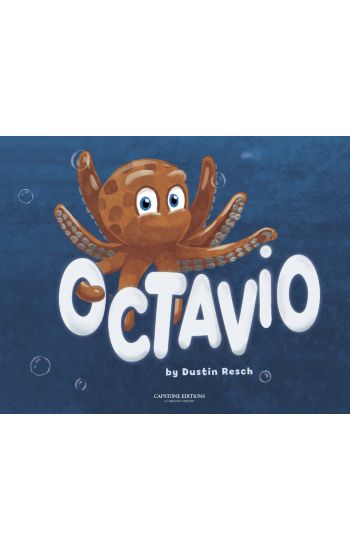
Curious Octavio is not your average young octopus. Instead of staying hidden in his coral reef, his nosiness gets the better of him, and he pops out to observe the divers who are observing him Told in hilarious mockumentary style, this is the tale of Octavio and his octopus "superpowers"--including his talent for getting out of tight situations Scuba diver and debut author illustrator Dustin Resch shares the charming story of a little octopus who hitches a ride on a diver's tank and goes on an unexpected adventure.
This study traces the history of Octavio Paz's engagement with T. S. Eliot in Latin American and Spanish periodicals of the 1930s and 1940s. It establishes the Mexican context, or horizon of expectations, in which the earliest translations of Eliot appeared.

Octavio Paz (1914–1998), the eminent Mexican poet and critic, attempted to evaluate the neglected role of poetry in the twentieth century in terms of a liberating, semi-religious vocation. Jason Wilson, in this study, approaches Paz's poetics through his close relationship with André Breton (1896–1966), the surrealist leader. This is a 'spiritual biography' of a poet-thinker (Paz); a study of a fertile relationship (Paz and Breton); a re-evaluation of surrealism itself and, finally, a coping with those acute problems that all poets and readers of poetry must face in an age lacking an acceptable cultural tradition: why write? What is a poem? Who are the genuine poets? Who am I? Wilson analyses Paz's reaction to these related concerns in the poet's examination of 'the values of poetry' in terms of a liberating poetics.

Octavio Paz (1914–1998), the eminent Mexican poet and critic, attempted to evaluate the neglected role of poetry in the twentieth century in terms of a liberating, semi-religious vocation. Jason Wilson, in this study, approaches Paz's poetics through his close relationship with André Breton (1896–1966), the surrealist leader. This is a 'spiritual biography' of a poet-thinker (Paz); a study of a fertile relationship (Paz and Breton); a re-evaluation of surrealism itself and, finally, a coping with those acute problems that all poets and readers of poetry must face in an age lacking an acceptable cultural tradition: why write? What is a poem? Who are the genuine poets? Who am I? Wilson analyses Paz's reaction to these related concerns in the poet's examination of 'the values of poetry' in terms of a liberating poetics.

The Poems of Octavio Paz
Octavio Paz; Eliot (EDT) Weinberger; Elizabeth (TRN) Bishop
New Directions Publishing Corporation
2012
sidottu
In 1990, the Swedish Academy awarded Octavio Paz the Nobel Prize in Literature for impassioned writing with wide horizons, characterized by sensuous intelligence and humanistic integrity. Paz is a writer for the entire world to celebrate (Chicago Tribune), the poet-archer who goes straight to the heart and mind, where the center of being is one (Nadine Gordimer), the living conscience of his age (Mario Vargas Llosa), a poet-prophet, a genius (Harold Bloom). Here at last is the first retrospective collection of Paz 's poetry to span his entire writing career, from the first published poem, at age seventeen, to his magnificent last poem; the whole is assiduously edited and translated by acclaimed essayist Eliot Weinberger who has been translating Paz for over forty years with additional translations by several poet-luminaries. This edition includes many poems that have never been translated into English before, new translations based on Paz 's final revisions, and a brilliant capsule biography of Paz by Weinberger, as well as notes on the poems in Paz 's own words, taken from various interviews he gave throughout his life.
The Poems of Octavio Paz is the first retrospective collection of Paz's poetry to span his entire writing career from his first published poem, at age seventeen, to his magnificent last poem. This landmark bilingual edition contains many poems that have never been translated into English before, plus new translations based on Paz's final revisions. Assiduously edited by Eliot Weinberger--who has been translating Paz for over forty years--The Poems of Octavio Paz also includes translations by the poet-luminaries Elizabeth Bishop, Paul Blackburn, Denise Levertov, Muriel Rukeyser, and Charles Tomlinson. Readers will also find Weinberger's capsule biography of Paz, as well as notes on many poems in Paz's own words, taken from various interviews he gave throughout his long and singular life.

Octavio Paz: Nobel Prize winner, author of The Labyrinth of Solitude and Sor Juana, or, the Traps of Faith, precursor and pathfinder, a guiding light of the Mexican intelligentsia in the twentieth century. In this small, memorable meditation on Octavio Paz as a thinker and man of action, Ilan Stavans described by the Washington Post as "one of our foremost cultural critics" and by the New York Times as "the czar of Latino culture in the United States" ponders Paz's intellectual courage against the ideological tapestry of his epoch and shows us what lessons can be learned from him. He does so by exploring such timeless issues as the crossroads where literature and politics meet, the place of criticism in society, and Mexico's difficult quest to come to terms with its own history. Stavans reflects on Paz's personal struggle with Marxism and surrealism, his reflections on pachucos, his analysis of love and eroticism, his study of the life and legacy of Sor Juana Ines de la Cruz, and his influence as a magazine editor. But this extraordinary rumination is not only a thought-provoking appraisal of Paz; it is also a feast for the myriad admirers of Stavans, himself a spirited, mordant essayist who is not afraid of controversy. This explains why Richard Rodriguez has portrayed Stavans as "the rarest of North American writers he sees the Americas whole," and then added, "Not since Octavio Paz has Mexico given us an intellectual so able to violate borders with learning and grace." Octavio Paz: A Meditation is a fitting addition to Stavans's own oeuvre that will stimulate discerning readers.
Octavio Paz: Nobel Prize winner, author of The Labyrinth of Solitude and Sor Juana, or, the Traps of Faith, precursor and pathfinder, a guiding light of the Mexican intelligentsia in the twentieth century. In this small, memorable meditation on Octavio Paz as a thinker and man of action, Ilan Stavans - described by the Washington Post as "one of our foremost cultural critics" and by the New York Times as "the czar of Latino culture in the United States" - ponders Paz's intellectual courage against the ideological tapestry of his epoch and shows us what lessons can be learned from him. He does so by exploring such timeless issues as the crossroads where literature and politics meet, the place of criticism in society, and Mexico's difficult quest to come to terms with its own history. Stavans reflects on Paz's personal struggle with Marxism and surrealism, his reflections on pachucos, his analysis of love and eroticism, his study of the life and legacy of Sor Juana InÉs de la Cruz, and his influence as a magazine editor. But this extraordinary rumination is not only a thought-provoking appraisal of Paz; it is also a feast for the myriad admirers of Stavans, himself a spirited, mordant essayist who is not afraid of controversy. This explains why Richard Rodriguez has portrayed Stavans as "the rarest of North American writers - he sees the Americas whole," and then added, "Not since Octavio Paz has Mexico given us an intellectual so able to violate borders with learning and grace." Octavio Paz: A Meditation is a fitting addition to Stavans's own oeuvre that will stimulate discerning readers.

Octavio's Little Black Book: The Perfect Dating Companion for a Handsome Man Named Octavio. A secret place for names, phone numbers, and addresses.
Wingman Publishing
Independently Published
2019
nidottu
Keep a record of all the girls that catch your eye
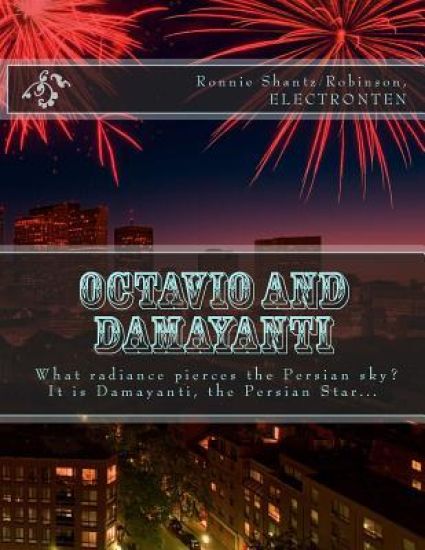
The first moment Octavio saw Damayanti, he knew she was the one. A ravishing, dark haired beauty placed into his hands on a silver platter due to circumstance. Daughter of billionaire Jordan Meredith, how to win the love of fair damsel living in the Hollywood Hills was the problem. Peter Coverdale, 22 and dashing, would become his second obstacle along with Damayanti's step mother, Vanessa, and their friends who had a rather unflattering view of Octavio due to his lower status, his third. However, Octavio had a wild card up his sleeve. Saviness, his gorgeous good looks, and his quietly charismatic improvisational skills in which he would use against her snobbish community in a winner take all or nothing night out to impress her in the form of an ancient, East Indian fable entitled the The Golden Swan, hoping to eliminate the final roadblock holding them apart in 1959 Los Angeles.
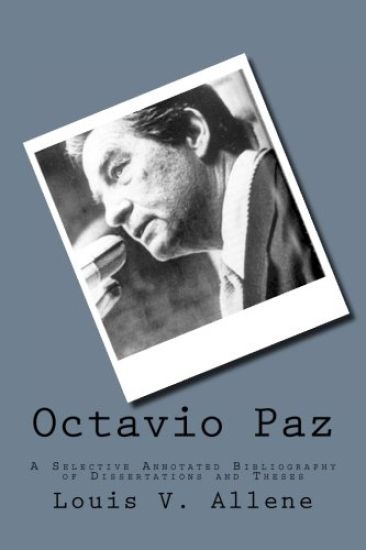
Octavio Paz: A Selective Annotated Bibliography of Dissertations and Theses
Louis V. Allene
Createspace Independent Publishing Platform
2015
nidottu