Kirjahaku
Etsi kirjoja tekijän nimen, kirjan nimen tai ISBN:n perusteella.
1000 tulosta hakusanalla Pascal Paul Piazza


The Pisan Interlude intersected over two-hundred years forming a transcendent arc in Corsican history. This book completes the initial trilogy of the Cycle of Cyrnos. The first book explored the origins of the Corsican people from the Mesolithic to the Bronze Age, The second book developed the foundation of the Corsican people from the Bronze Age to the Preaching of the First Crusade and Pisa's acquisition of Corsica.
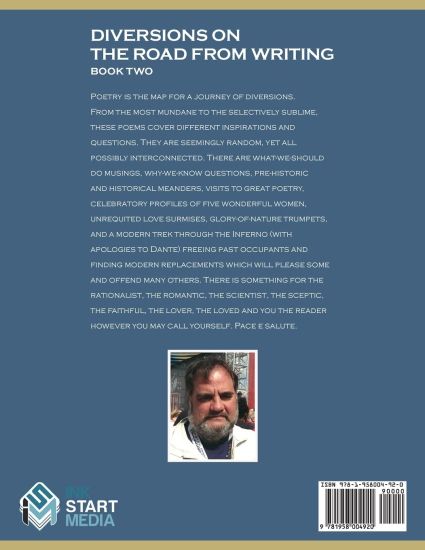
Poetry is the map for a journey of diversions. From the most mundane to the selectively sublime, these poems cover different inspirations and questions. They are seemingly random, yet all possibly interconnected. There are what-we-should do musings, why-we-know questions, pre-historic and historical meanders, visits to great poetry, celebratory profiles of five wonderful women, unrequited love surmises, glory-of-nature trumpets, and a modern trek through the Inferno (with apologies to Dante) freeing past occupants and finding modern replacements which will please some and offend many others. There is something for the rationalist, the romantic, the scientist, the sceptic, the faithful, the lover, the loved and you the reader however you may call yourself. Pace e salute.
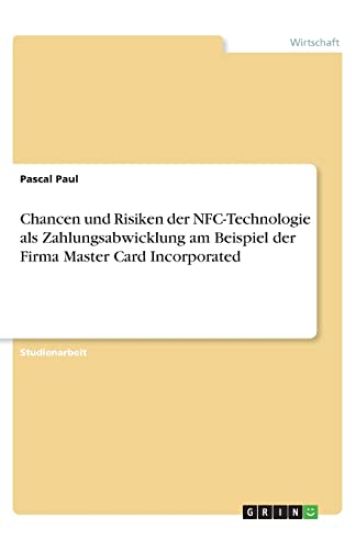
Chancen und Risiken der NFC-Technologie als Zahlungsabwicklung am Beispiel der Firma Master Card Incorporated
Pascal Paul
GRIN Verlag
2019
nidottu
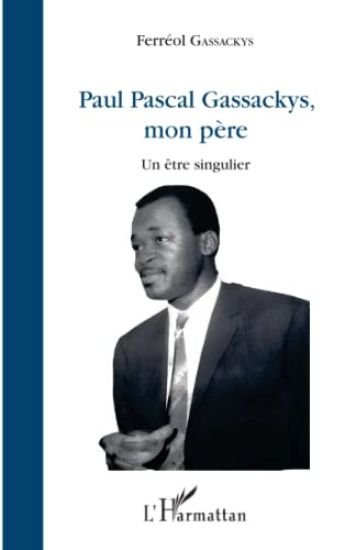

Trois mots: Libert , galit , Fraternit , forment la devise de la R publique. Elle fut adopt e dans le grand lan r volutionnaire de juin 1793, reni e en 1814, reprise sous la Deuxi me R publique de 1848 1851. Elle redevint devise officielle sous la Troisi me R publique en 1875 et le resta jusqu' nos jours, sauf la triste interruption de 1940 1944. Libert , galit , Fraternit , tous les jours vous apercevez ces mots aux frontons des monuments publics. Mais les voyez-vous r alis s dans votre vie de chaque jour? Inscrite au dessus de nos t tes, la devise R publicaine ne demeure-t-elle pas comme un id al plus ou moins inaccessible? Que faisons-nous pour la faire descendre et p n trer dans la r alit vivante de la nation? Certains vont m me jusqu' penser qu'elle est inopportune, contraire aux r alit s pr sentes et jusqu' dire que le mot galit d vore, efface les deux autres.
Eine Gegenüberstellung von Paul Watzlawick und Erving Goffman
Pascal Heberlein
Grin Publishing
2009
pokkari
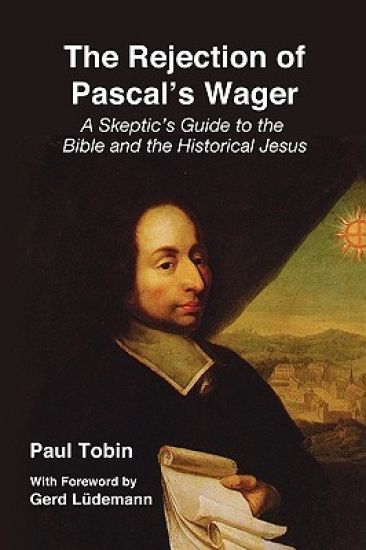
Armed with the results of critical historical research and a mind free from the shackles of dogma, Paul Tobin dissects the Bible and the historical Jesus in a way only a sceptic can. Tobin shows the bible, with its numerous contradictions, historical errors and scientific inaccuracies, cannot be considered inerrant. He guides us through the intricacies of modern archaeology and comparative mythology, showing us that the much told stories in the Bible - Adam and Eve, Noah and Moses - are myths, invented by the ancient Hebrews under the influence of Babylonian beliefs. He demonstrates that the gospels, far from being eye-witness accounts, were written by authors unknown to us and were composed many decades after Jesus' death. He reveals that the stories regarding Jesus in the gospels are a combination of historical memory, legendary development and mythical fabrication.With the field of biblical scholarship increasingly packed with evangelicals - where the results of "research" are always in line with traditional church teachings - this book fills an important gap in the literature on Christianity and the Bible.

Blaise Pascal (1623-1662) is known in the English-speaking world principally for the wager (an argument that it is rational to do what will affect belief in God and irrational not to), and, more generally, for the Pensées, a collection of philosophical and theological fragments of unusual emotional and intellectual intensity collected and published after his death. He thought and wrote, however, about much more than this: mathematics; physics; grace, freedom, and predestination; the nature of the church; the Christian life; what it is to write and read; the order of things; the nature and purpose of human life; and more. He was among the polymaths of the seventeenth century, and among the principal apologists of his time for the Catholic faith, against both its Protestant opponents and its secular critics.Why Read Pascal? engages all the major topics of Pascal's theological and philosophical writing. It provides discussion of Pascal's literary style, his linked understandings of knowledge and of the various orders of things, his anthropology (with special attention to his presentation of affliction, death, and boredom), his politics, and his understanding of the relation between Christianity and Judaism. Pascal emerges as a literary stylist of a high order, a witty and polemical writer (never have the Jesuits been more thoroughly eviscerated), and, perhaps above all else, as someone concerned to show to Christianity's cultured despisers that the fabric of their own lives implies the truth of Christianity if only they can be brought to look at what their lives are like.Why Read Pascal? is the first book in English in a generation to engage all the principal themes in Pascal's theology and philosophy. The book takes Pascal seriously as an interlocutor and as a contributor of continuing relevance to Catholic thought; but it also offers criticisms of some among the positions he takes, showing, in doing so, how lively his writing remains for us now.
An easy to read introduction to programming in Pascal which assumes no basic programming knowledge. Illustrated throughout with code samples and includes suggested tutorial exercises, some with solutions for review purposes. Based on slides written to deliver Introduction to Programming in Pascal 101.
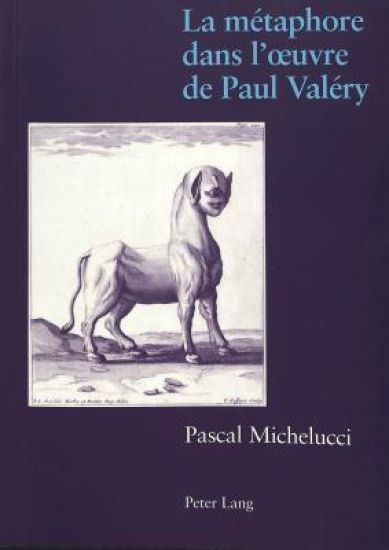
Cette etude poursuit a travers les Cahiers, les essais publies et les poemes de Paul Valery, une question centrale dont les enjeux excedent aussi bien la formalisation linguistique que l'evaluation philosophique. La metaphore, moment d'une prise de conscience pendant les actes de la creation, operation metacritique dans la decouverte, est un lieu d'entendement des plus producteurs chez l'auteur de Monsieur Teste. Valery apporte a sa consideration l'eclairage neuf et varie d'une observation singulierement en dehors des cloisonnements disciplinaires, mais toujours consciente de ses limites. Cette conscience aigue rythme le mouvement de l'oeuvre dans son ensemble, et fait saillir les positions linguistiques de Valery et leur evolution. Les premiers Cahiers, tout comme l'etude de la genese de quelques-unes de ses oeuvres poetiques temoignent de l'apport essentiel de la metaphore dans la pensee theorique valeryenne. Cette etude montre comment un savoir linguistique devient une technique de composition chez un createur conscient des actes materiels de la creation, comment une forme rhetorique singuliere prend place dans la genese d'une oeuvre tout entiere.
The Thoughts of Blaise Pascal
Blaise Pascal; Auguste Molinier; C Kegan (Charles Kegan) Paul
Anson Street Press
2025
pokkari
The Thoughts of Blaise Pascal
Blaise Pascal; Auguste Molinier; C Kegan (Charles Kegan) Paul
Anson Street Press
2025
sidottu
Le Diacre Paris Et Les Convulsionnaires De St. Medard Le Jansenisme Et Port-Royal Le Masque De Pascal (1900)
Paul Valet
KESSINGER PUBLISHING, LLC
2010
pokkari