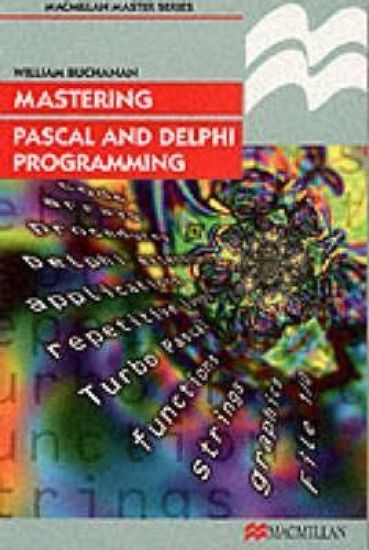
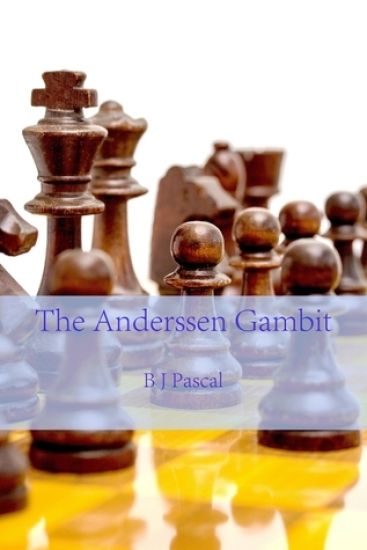
The book provides an introduction to programming with Pascal and extends this to show how Borland Delphi is used to development Microsoft Windows programs. It is packed full of real-life application and splits into three main sections:* Pascal programming* Pascal applications* Delphi programmingPractical applications include: software interrupts, hardware interrupts, graphics, date and time, system commands, RS-232 and parallel ports.
En novembre prochain, la Nouvelle-Cal donie se prononcera sur son destin par voie de r f rendum, un vote qui intervient trente ans apr s les accords de Matignon, sign s en 1988, et vingt ans apr s ceux de 1998, dits accords de Noum a. M decin de brousse Pon rihouen, village situ sur la c te est de la Grande Terre, l'auteur a v cu au coeur de ce que furent les v nements de novembre 1984 quand les Canaques firent entendre bruyamment leur revendication pour l'ind pendance. Le r cit pr cis et parfois difiant de ces v nements laisse place une analyse de la situation politique sous le double regard du m tropolitain et du zoreille comme on d signe, l -bas, ceux qui s journent sur le Territoire. De retour sur place trente ans plus tard, en 2013, l'auteur laisse aller sa r flexion sur ce qu'est devenue la Nouvelle-Cal donie et s'interroge sur ce que pourrait tre l'avenir de sa population apr s le r f rendum.
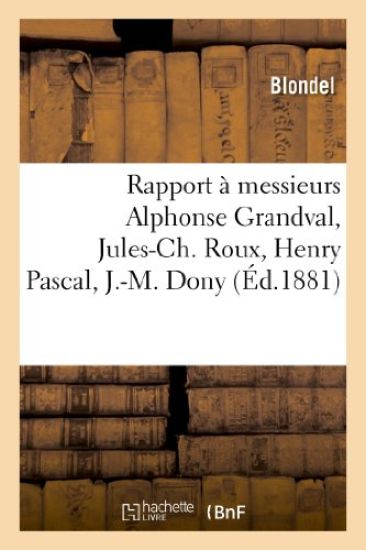
Rapport a messieurs Alphonse Grandval, Jules-Ch. Roux, Henry Pascal, J.-M. Dony, Honore Rossolin, Georges Rubaton, Eugene Velten, Ernest Martin, Marius Ricoux, Alfred Chailan / signe: Blondel et Bernard]Date de l'edition originale: 1881Ce livre est la reproduction fidele d'une oeuvre publiee avant 1920 et fait partie d'une collection de livres reimprimes a la demande editee par Hachette Livre, dans le cadre d'un partenariat avec la Bibliotheque nationale de France, offrant l'opportunite d'acceder a des ouvrages anciens et souvent rares issus des fonds patrimoniaux de la BnF.Les oeuvres faisant partie de cette collection ont ete numerisees par la BnF et sont presentes sur Gallica, sa bibliotheque numerique.En entreprenant de redonner vie a ces ouvrages au travers d'une collection de livres reimprimes a la demande, nous leur donnons la possibilite de rencontrer un public elargi et participons a la transmission de connaissances et de savoirs parfois difficilement accessibles.Nous avons cherche a concilier la reproduction fidele d'un livre ancien a partir de sa version numerisee avec le souci d'un confort de lecture optimal. Nous esperons que les ouvrages de cette nouvelle collection vous apporteront entiere satisfaction.Pour plus d'informations, rendez-vous sur www.hachettebnf.fr
To the Second Edition This book is designed both for introductory courses in computer problem solving, at the freshman and sophomore college level, and for individual self study. The first edition of this book has been used for teaching introductory classes at University of California San Diego (UCSD), University of California Irvine (UCI), and many other schools. This second edition is based on our experience using the text over the past six years with a broad range of students. We have taught the course using variations on Keller's Personalized System of Instruction (PSI). The organization of this book is conducive to this approach but does not require it. PSI methods allow slightly more material to be absorbed by the students than is the case with the traditional lecture/recitation presentation. PSI allows grading according to the number of chapter units completed. In a 10 week quarter, virtually all students who pass the course at UCSDand UCI complete the material covered in the first eleven chapters and the exercises associated with them. A substantial portion complete the entire fifteen chapters. For a conventional presentation under the semester system, the 15 chapters should present an appropriate amount of material for the average student.
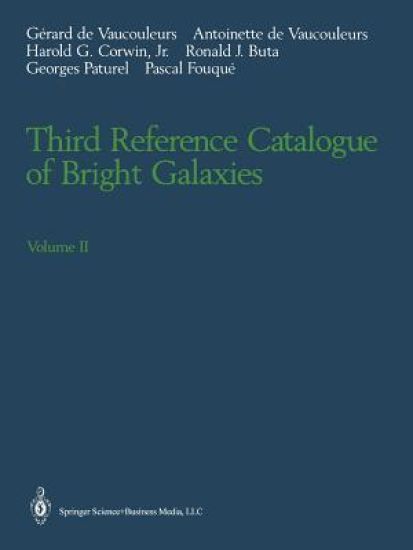
This second volume of RC3 includes data for galaxies between Oh and 12h. For convenience, we repeat the explanation of the catalogue entries below. Details of the reduction procedures, and Notes, References, and Appendices are in Volume 1. 2. The Catalogue The data for each galaxy are found on four successive lines on a single page. The entries are as follows: Column 1: Positions Line 1: RA and DEC = right ascension and declination for the equinox 2000.0, precessed from the 1950.0 position in Column 1, Line 4, given to 0.1 second of time and 1 aresec when available, and to 0.1 minute of time and 1 arcmin otherwise (Section 3.l.a). Line 2: I and b = galactic longitude and latitude in the lAU 1958 system (Blaauw et al. 1960); both to 0?01. Line 3: SGL and SGB = supergaladie longitude and latitude in the RC2 system (Section 3.l.b), both to 0?01. Line 4: RA and DEC = right ascension and declination for the equinox 1950.0 (Sec- tion 3.l.a). Column 2: Names = commonly used designations for the galaxies (Section 3.2). Line 1: Names ( e.g., LMC, SMC) or NGC and IC designations. Line 2: UGC (Nilson 1973), ESO (Lauberts 1982), MCG (Vorontsov-Velyaminov et al. 1962-1974), UGCA (Nilson 1974), and CGCG (Zwicky et al. 1961-1968) des- ignations, given in that order of preference. MCG designations not listed here are given in UGC and ESO.
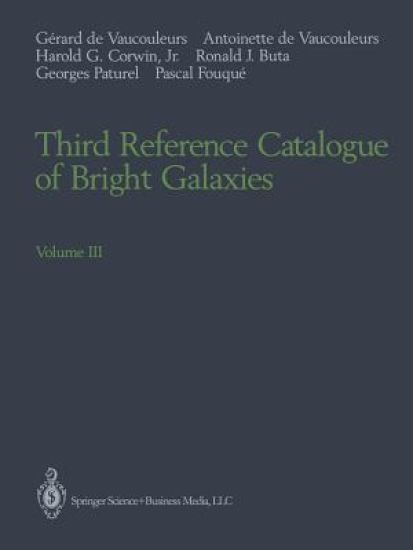
h h This third volume of RC3 indudes data for galaxies between 12 and 24 . For convenience, we repeat the explanation of the catalogue entries below. Details of the reduction procedures, and Notes, References, and Appendices are in Volume 1. 2. The Catalogue The data for each galaxy are found on four successive lines on a single page. The entries are as follows: Column 1: Positions Line 1: RA and DEC = right ascension and dedination for the equinox 2000.0, precessed from the 1950.0 position in Column 1, Line 4, given to 0.1 second of time and 1 arcsec when available, and to 0.1 minute of time and 1 arcmin otherwise (Section 3.1.a). Line 2: land b = galactic longitude and latitude in the lAU 1958 system (Blaauw et al. 1960); both to O~O1. Line 3: SGL and SGB = supergalactic longitude and latitude in the RC2 system (Section 3.1.b), both to O~O1. Line 4: RA and DEC = right ascension and dedination for the equinox 1950.0 (Sec- tion 3.1.a). Column 2: Names = commonly used designations for the galaxies (Section 3.2). Line 1: Names (e.g., LMC, SMC) or NGC and IC designations. Line 2: UGC (Nilson 1973), ESO (Lauberts 1982), MCG (Vorontsov-Velyaminov et al. 1962-1974), UGCA (Nilson 1974), and CGCG (Zwicky et al. 1961-1968) des- ignations, given in that order of preference. MCG designations not listed here are given in UGC and ESO.
Alexey Arbatov; David J. Betz; Philip Bobbitt; Christopher Coker; Rolf Ekéus; Richard J. Evans; Gregory Feifer; Lawrence Freedman; Janne Haaland Matláry; Dick Harrison; Tom Holland; Rob Johnson; Frederick Kagan; Kimberly Kagan; Elisabeth Kendall; Fredrik Logevall; Rana Mitter; Peter Pomerantsev; Andrew Preston; Malise Ruthven; Charly Salonius-Pasternak; Hew Strachan; Nathan Shachar; Lilia Shevtsova; Jessica Stern; Pascal Vennesson
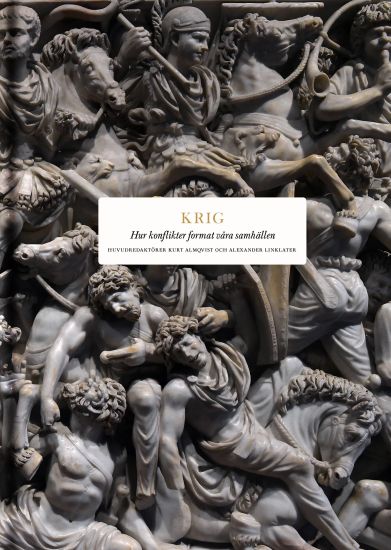
Det påstås att ungefär 14 500 krig har utkämpats sedan år 3 500 f.Kr. Mänskligheten har bara erfarit 300 år av fred på jorden. Under 1900-talet dödades fler människor i krig än något tidigare sekel. Relativt sett dödar vi dock varandra mer sällan. Håller vi gradvis på att bli mer fredliga? Oavsett hur många som dödas, och med vilken metod, kan vi vara säkra på att krig kommer att fortsätta utkämpas. Ligger orsakerna till krig i samhället eller i biologin, i tävlan om ekonomiska resurser eller sexuella, i historiska omständigheter eller i en universell våldsinstinkt? Allt sedan antiken fram till dagens terrorism har krig varit förstörare och skapare av stater och civilisationer. Essäerna i denna antologi har sitt ursprung i det internationellt välrenommerade Engelsbergsseminariet 2015 och är skrivna av historiker, journalister, tänkare, forskare och författare från hela världen. Huvudredaktörer är Kurt Almqvist och Alexander Linklater.
Anne Grace; Elizabeth Hutton Turner; Carlson W. Bernard; Linda Dalrymple Henderson; Pascal Jacob; Abigail Mack; Vanja Malloy; Nagy Eleanora; Pierre Arnauld; Emily C. Reed; Taylor Alex J.; Raymond Claire
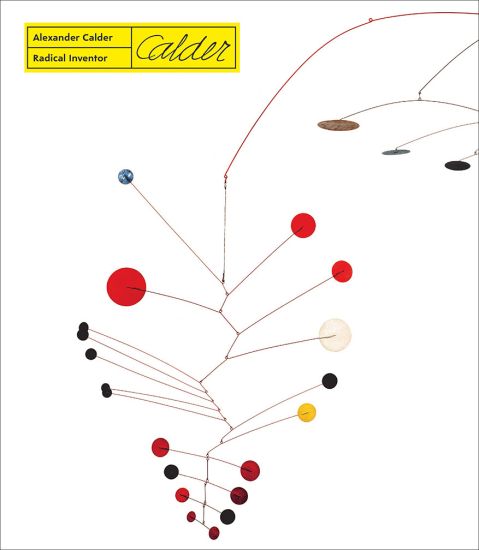
Alexander Calder (1898-1976) was a radical inventor: an artist who discarded convention and disrupted hierarchies, overturning the traditional basis of culture while revolutionising the way people perceive and interact with art. Calder's 'new line' was not simply an evolution of forms and styles. From the start, it was quite clear to all who witnessed him at work that - in his way of drawing attention and gaining notoriety - he was doing something radically new. This catalogue shows how Calder's work emerged from expectations of change in American popular culture. Calder, who was initially attracted by the structure and functions of the circus, looked for alternative models to triumph over respectability, public decorum, and the ambitions of industry. The catalogue, with twelve essays from major contributors, will examine how Calder, among the first college-trained artists, found techniques and inspiration in many disciplines and their development: technology, engineering, architecture, physics, and astronomy, among others. All these contributed to the development of his wire sculptures, mobiles, and stabiles. More than 100 works and comparative illustrations will guide the reader through this innovative and unique path.
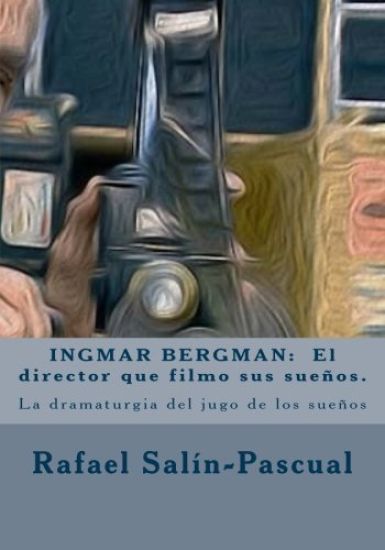
En el presente libro sobre el Director de Cine, Teatro, Radio y Televisi n, es una revisi n de la mayor a de su filmograf a, por lo menos la disponible en M xico. La perspectiva que he tratado de seguir es haciendo una rese a de estas pel culas, tratando de a adir una serie de reflexiones, la mayor a en el contexto de su biograf a, para lo cual hay dos libros claves: "Linterna M gica", que es la autobiograf a, que el propio Ingmar Bergman escribi cando estaba en la sesta d cada de su vida. Esta obra da una visi n "a vuelo de p jaro", de los or genes del artista, de su tenacidad en el trabajo del teatro y cine, de sus problemas que el estado sueco le ocasion , por una posible evasi n de impuestos, y las relaciones pareja, y su modo de vincularse a sus hijos. Esto, a mi juicio es la parte medular de la obra cinematogr fica de este genio. Las preguntas t picas de la filosof a, quiz s un poco en el terreno de la metaf sica: Qui n soy? Existe dios? qu es la m sica? Hay un motivo central de vida? A d nde vamos al morir? Por qu hay que tener una relaci n de pareja? Por qu eran los padres tan r gidos en la educaci n? Por qu nos castigaban severamente si nos quer an? Lo mas interesantes de Ingmar Bergman, adem s del aspecto artesanal en sus pel culas, es que no vacil en filmar peque os fragmentos de su vida, de su relaci n con el padre, Pastor luterano, capell n de la familia Real Sueca, que educ a sus hijos con golpes, perdones, y otras cosas poco agradables. Pero en la otra faceta, estaba el hombre sabio, con humor, que quer a a su manera a su esposa, la madre de Bergman, Karin. Bergman fue un genio, pero al mismo tiempo un hombre de su poca, que sali delante de sus estilos conflictivos de personalidad, por su entrega al arte. Situaci n con la cual explicaba, porque era un padre-flojo, es decir con poca presencia f sica con sus hijos, pero siempre los mantuvo econ micamente. Escribo este libro, con admiraci n y respeto hacia uno de los directores de cine que mas admiro, y de que hoy en d a he aprendido mucho, su forma de ser profesionalmente me ha cambiado, como psiquiatra, recomiendo ciertas escenas de sus pel culas, que son ilustradoras de la compulsi n a la repetici n y malestar hacia las personas que queremos y cuidamos de ellas. Este libro es para que no se olvide la obra de Ingmar Bergman, el director que film sus sue os.
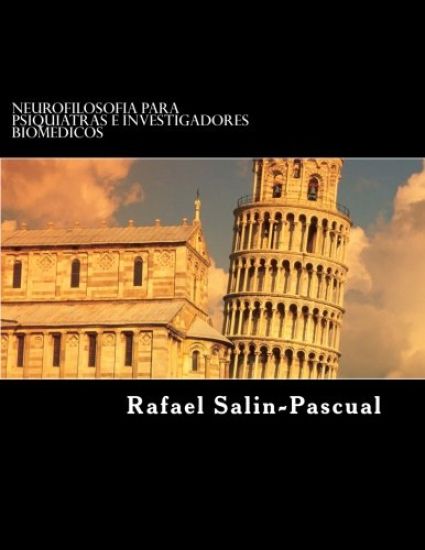
Se revisan los temas cl sicos de la filosof a a la luz de los conocimientos de las neurociencias y psicolog a cognitiva. La filosof a vuelve a tener una nueva perspectiva, al cuestionar los conceptos y las generalizaciones que puedan hacerse a las preguntas que se resuelven con el m todo cient fico. Esta uni n entre neurociencias y filosof a, se ha denominado Neurofilosof a.
This work has been selected by scholars as being culturally important and is part of the knowledge base of civilization as we know it.This work is in the public domain in the United States of America, and possibly other nations. Within the United States, you may freely copy and distribute this work, as no entity (individual or corporate) has a copyright on the body of the work.Scholars believe, and we concur, that this work is important enough to be preserved, reproduced, and made generally available to the public. To ensure a quality reading experience, this work has been proofread and republished using a format that seamlessly blends the original graphical elements with text in an easy-to-read typeface.We appreciate your support of the preservation process, and thank you for being an important part of keeping this knowledge alive and relevant.