Kirjahaku
Etsi kirjoja tekijän nimen, kirjan nimen tai ISBN:n perusteella.
1000 tulosta hakusanalla Patricia Emison
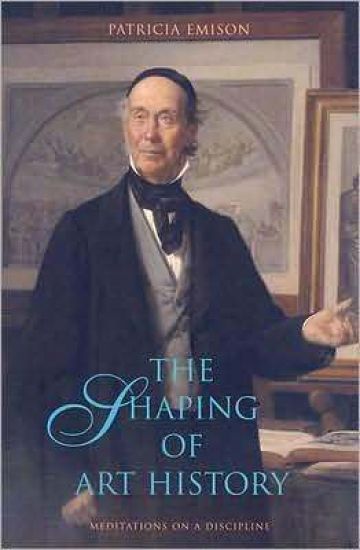
In this provocative book, Patricia Emison invites the reader to consider and reconsider how past thinkers—from Pliny and Alberti to Freud and Fried—have conceptualized the history of Western art. What a book review attempts to be for a book, this extended essay attempts to be for several hundred years’ worth of books in a field: an indicator of problems with the old attempts and hopes for the new ones. It is a defense of art history for those outside the field who question its reliability or even its importance; it is a critique of art history for those in the field who may have been preoccupied with looking at trees but who might be interested in trying to see the forest.
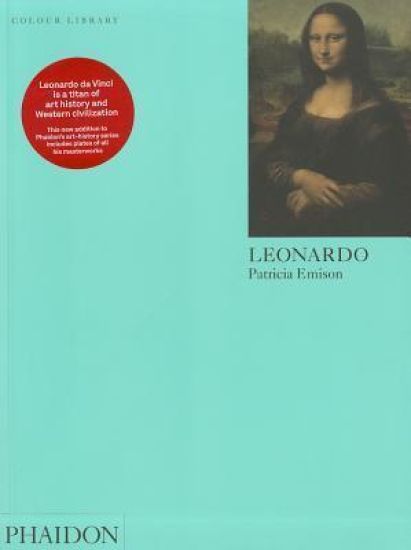
The latest addition to the best-selling Colour Library series of introductory books on the great masters and movements in art features all Leonardo's painted works and a detailed illustrated introduction.
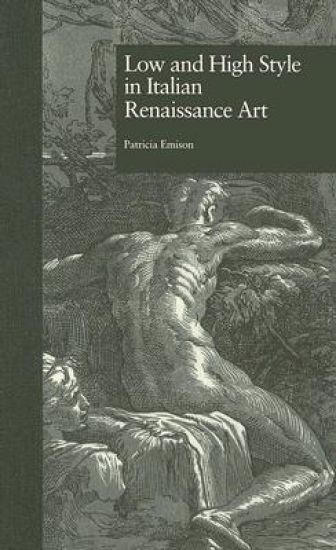
During the later 15th and in the 16th centuries pictures began to be made without action, without place for heroism, pictures more rueful than celebratory. In part, Renaissance art adjusted to the social and economic pressures with an art we may be hard pressed to recognize under that same rubric-an art not so much of perfected nature as simply artless. Granted, the heroic and epic mode of the Renaissance was that practiced most self-consciously and proudly. Yet it is one of the accomplishments of Renaissance art that heroic and epic subjects and style occasionally made way for less affirmative subjects and compositional norms, for improvisation away from the Vitruvian ideal. The limits of idealizing art, during the very period denominated as High Renaissance, is a topic that involves us in the history of class prejudice, of gender stereotypes, of the conceptualization of the present, of attitudes toward the ordinary, and of scruples about the power of sight Exploring the low style leads us particularly to works of art intended for display in private settings as personally owned objects, potentially as signs of quite personal emotions rather than as subscriptions to publicly vaunted ideologies. Not all of them show shepherds or peasants; none of them-not even Giorgione's La tempesta -is a classic pastoral idyll. The rosso stile is to be understood as more comprehensive than that. The issue is not only who is represented, but whether the work can or cannot be fit into the mold of a basically affirmative art.
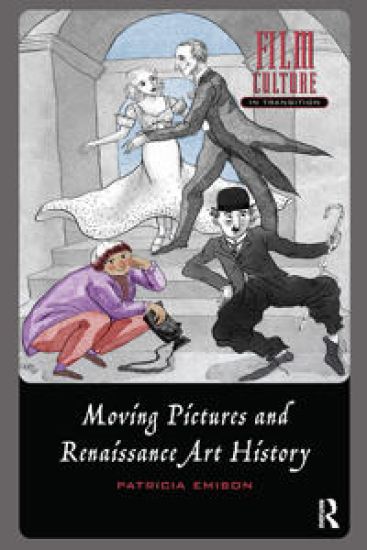
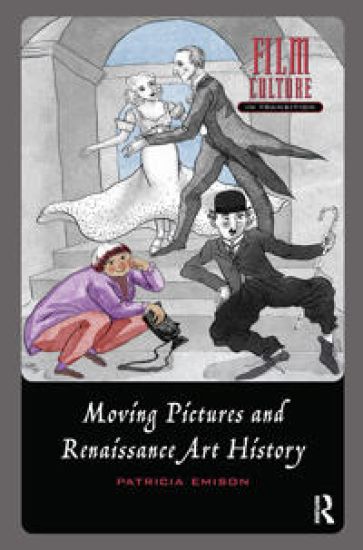
Film, like the printed imagery inaugurated during the Renaissance, spread ideas – not least the idea of the power of visual art – across not only geographical and political divides but also strata of class and gender. Moving Pictures and Renaissance Art History examines the early flourishing of film, from the 1920s to the mid-1960s, as partly reprising the introduction of mass media in the Renaissance, allowing for innovation that reflected an art free of the control of a patron though required to attract a broad public. Rivalry between word and image, between the demands of narrative and those of visual composition, spurred new ways of addressing the compelling nature of the visual. The twentieth century also saw the development of the discipline of art history; transfusions between cinematic practice and art historical postulates are part of the story told here.
Why did Renaissance art come to matter so much, so widely, and for so long? Patricia Emison's answer draws on a recalibrated view of the long Renaissance – from 1300 to 1600 – synthesizing the considerable evolution in our understanding of the epoch since the foundational nineteenth-century studies of Jacob Burckhardt and Heinrich Wölfflin. Demonstrating that the imitation of nature and of antiquity must no longer define its limits, she exposes the self-consciously modern aspect of Renaissance style. She sets the art against the literary and political interests of time and analyzes works of both very familiar artists – Leonardo, Michelangelo, and Raphael – and lesser-known figures, such as Cima da Conegliano and Federico Barocci, as well as various printmakers. Succinct yet expansive, this treatment of the period also explores its layered significance for subsequent generations, from the Old Masters to the Post-Modernists.
During the later 15th and in the 16th centuries pictures began to be made without action, without place for heroism, pictures more rueful than celebratory. In part, Renaissance art adjusted to the social and economic pressures with an art we may be hard pressed to recognize under that same rubric-an art not so much of perfected nature as simply artless. Granted, the heroic and epic mode of the Renaissance was that practiced most self-consciously and proudly. Yet it is one of the accomplishments of Renaissance art that heroic and epic subjects and style occasionally made way for less affirmative subjects and compositional norms, for improvisation away from the Vitruvian ideal. The limits of idealizing art, during the very period denominated as High Renaissance, is a topic that involves us in the history of class prejudice, of gender stereotypes, of the conceptualization of the present, of attitudes toward the ordinary, and of scruples about the power of sight Exploring the low style leads us particularly to works of art intended for display in private settings as personally owned objects, potentially as signs of quite personal emotions rather than as subscriptions to publicly vaunted ideologies. Not all of them show shepherds or peasants; none of them-not even Giorgione's La tempesta -is a classic pastoral idyll. The rosso stile is to be understood as more comprehensive than that. The issue is not only who is represented, but whether the work can or cannot be fit into the mold of a basically affirmative art.
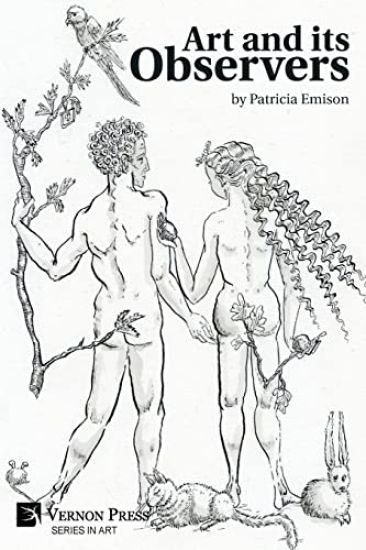
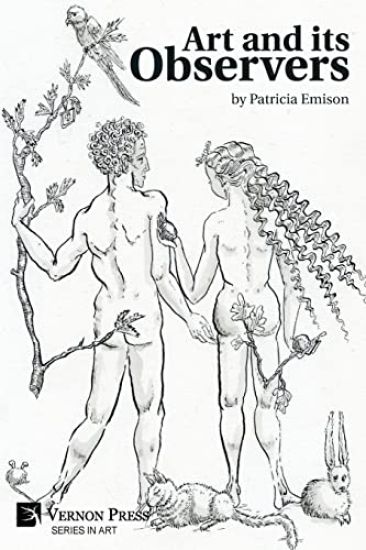
What ties western art together? This extended essay attempts to distill some of the basic ideas with which artists and observers of their art have grappled, ideas worthy of ongoing consideration and debate. The fostering of visual creativity as it has morphed from ancient Greece to the present day, the political and economic forces underpinning the commissioning and displacement of art, and the ways in which contemporary art relates to past periods of art history (and in particular, the Renaissance), are among the topics broached. Architecture, drawings, prints, films, painting, sculpture, and decorative arts from Europe and the US are considered and examined, often including nonstandard examples, occasionally including ones from the immediate surroundings of the author (who is based in New England). Although this book is primarily geared to those who would like a brief introduction to some basic aspects of a visual tradition spanning thousands of years, students of aesthetics might also discover useful benchmarks in this concise overview. The author places the emphasis on how art has been used and loved (or sometimes despised or ignored) more than on which works should be most famous.
The Long Picturesque, or Unraveling the Rules of Art
Patricia Emison
Springer International Publishing AG
2024
sidottu
This book provides a Renaissance art historian’s view of how the picturesque aesthetic developed from roots in the sixteenth century (mostly in painting, but with ramifications for printmaking, landscape design, and architecture), and further, how the picturesque aesthetic fundamentally changed the relationship between art and nature, between viewer and image. The book's argument is based on wide reading of obscure yet piquant critical texts, mostly of the seventeenth and eighteenth centuries, together with consideration of varied works of art, ranging from Fra Angelico to Raphael and Michelangelo, and from Rubens to Canaletto, and from James Gibbs to Jacques Demy, all of them studied not for their place in the history of style, but for their spatial imagination.
Film, like the printed imagery inaugurated during the Renaissance, spread ideas – not least the idea of the power of visual art – across not only geographical and political divides but also strata of class and gender. Moving Pictures and Renaissance Art History examines the early flourishing of film, from the 1920s to the mid-1960s, as partly reprising the introduction of mass media in the Renaissance, allowing for innovation that reflected an art free of the control of a patron though required to attract a broad public. Rivalry between word and image, between the demands of narrative and those of visual composition, spurred new ways of addressing the compelling nature of the visual. The twentieth century also saw the development of the discipline of art history; transfusions between cinematic practice and art historical postulates are part of the story told here.
Thomas Edison and His Bright Idea
Patricia Brennan Demuth
Penguin Putnam Books for Young Readers
2016
pokkari
As a curious child who was always asking questions, it's no wonder Thomas Edison grew up to become a famous prolific inventor. This easy to read nonfiction story follows Edison from his time in school to his career as a full-time inventor. While it focuses on his ground-breaking creation of the Lightbulb, this illuminating account also details other important innovations of his, like the phonograph and the microphone. Edison's discoveries will fascinate and inspire all curious young minds.
¿Acceso al capital o sólo más blues? Toma de decisiones del emisor
Patricia Hureston Lee
Ediciones Nuestro Conocimiento
2024
nidottu
Formación de Formadores para las Ciencias de la Salud
Liset Barreda Jorge; Msc Alfredo Hernándes Rodríguez; Dr C Edison Patricio Lanas Guevara
Editorial Academica Espanola
2024
pokkari
Ausbildung von Ausbildern für Gesundheitswissenschaften
Liset Barreda Jorge; Msc Alfredo Hernándes Rodríguez; Dr C Edison Patricio Lanas Guevara
Verlag Unser Wissen
2024
pokkari
Training of Trainers for the Health Sciences" ist ein umfassendes Werk, das die grundlegenden Aspekte der Gesundheitserziehung behandelt. Von grundlegenden p dagogischen Prinzipien bis hin zu den neuesten Trends in der Bildungsinnovation bietet dieses Buch einen umfassenden Leitfaden f r die Vorbereitung kompetenter und engagierter Gesundheitsp dagogen. Auf allen Seiten werden die Leser Schl sselthemen erkunden, wie z. B. die Identifizierung von Ausbilderkompetenzen und -rollen, die Entwicklung effektiver Lehr- und Lernstrategien, die Bewertung der Lehrleistung und des Lernerfolgs der Studierenden sowie die Integration von Bildungstechnologien und Multimedia-Ressourcen in den Bildungsprozess.Dar ber hinaus untersucht das Buch die Bedeutung von Forschung und Innovation f r das Lehren und Lernen im Gesundheitswesen sowie die Notwendigkeit, Qualit t und Akkreditierung in der Ausbildung von Gesundheitsfachkr ften zu f rdern. Herausforderungen und Chancen im Bereich der medizinischen und pflegerischen Ausbildung werden hervorgehoben, und es werden praktische Vorschl ge zu deren erfolgreicher Bew ltigung gemacht.
Training of Trainers for Health Sciences
Liset Barreda Jorge; Msc Alfredo Hernándes Rodríguez; Dr C Edison Patricio Lanas Guevara
Our Knowledge Publishing
2024
pokkari
Formation des formateurs pour les sciences de la santé
Liset Barreda Jorge; Msc Alfredo Hernándes Rodríguez; Dr C Edison Patricio Lanas Guevara
Editions Notre Savoir
2024
pokkari
"La formation des formateurs en sciences de la sant est un ouvrage complet qui aborde les aspects fondamentaux de l' ducation la sant . Au fil des pages, les lecteurs exploreront des sujets cl s tels que l'identification des comp tences et des r les des formateurs, le d veloppement de strat gies d'enseignement et d'apprentissage efficaces, l' valuation de la performance de l'enseignement et de l'apprentissage des tudiants, et l'int gration des technologies ducatives et des ressources multim dias dans le processus ducatif.En outre, le livre examine l'importance de la recherche et de l'innovation dans l'enseignement et l'apprentissage de la sant , ainsi que la n cessit de promouvoir la qualit et l'accr ditation dans la formation des professionnels de la sant . Les d fis et les opportunit s dans le domaine de la formation m dicale et infirmi re sont mis en vidence, et des suggestions pratiques sont propos es pour les relever avec succ s.
Formazione dei formatori per le Scienze della Salute
Liset Barreda Jorge; Msc Alfredo Hernándes Rodríguez; Dr C Edison Patricio Lanas Guevara
Edizioni Sapienza
2024
pokkari
"Formazione dei formatori per le scienze della salute" un'opera completa che affronta gli aspetti fondamentali della formazione sanitaria. Dai principi pedagogici di base alle ultime tendenze dell'innovazione educativa, questo libro fornisce una guida completa per preparare educatori sanitari competenti e impegnati. Nelle sue pagine, i lettori esploreranno argomenti chiave come l'identificazione delle competenze e dei ruoli dei formatori, lo sviluppo di strategie efficaci di insegnamento e apprendimento, la valutazione delle prestazioni didattiche e dell'apprendimento degli studenti, l'integrazione delle tecnologie educative e delle risorse multimediali nel processo educativo.Inoltre, il libro esamina l'importanza della ricerca e dell'innovazione nell'insegnamento e nell'apprendimento in ambito sanitario, nonch la necessit di promuovere la qualit e l'accreditamento nella formazione professionale sanitaria. Vengono evidenziate le sfide e le opportunit nel campo della formazione medica e infermieristica e vengono offerti suggerimenti pratici per affrontarle con successo.