
Kirjahaku
Etsi kirjoja tekijän nimen, kirjan nimen tai ISBN:n perusteella.
1000 tulosta hakusanalla Patrick Doherty


Cold Waves, Cold Blood
Patrick Doherty; Christopher (EDT) Warner; Patrick Doherty
All about Kids Publishing
2015
pokkari
BACR Cardiovascular Prevention and Rehabilitation - Evidence for Practice
Patrick Doherty; David R. Thompson; David A. Wood
Wiley-Blackwell (an imprint of John Wiley Sons Ltd)
2020
nidottu
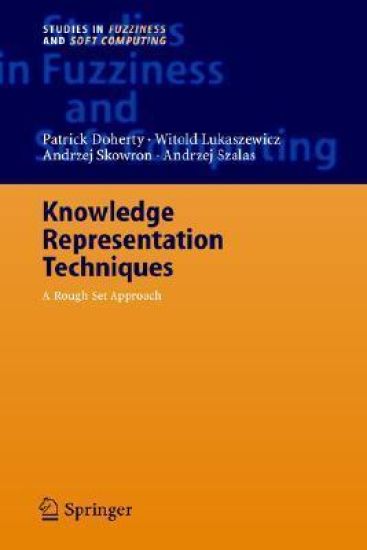
Knowledge Representation Techniques
Patrick Doherty; Witold Lukaszewicz; Andrzej Szalas
Springer-Verlag Berlin and Heidelberg GmbH Co. K
2006
sidottu
1. 1 Background The basis for the material in this book centers around research done in an ongoing long-term project which focuses on the development of highly au- 1 tonomousunmannedaerialvehiclesystems. Theactualplatformwhichserves as a case study for the research in this book will be described in detail later in this chapter. Before doing that, a brief background of the motivations - hind this research will be provided. One of the main research topics in the project is knowledge representation and reasoning and its use in Uav pl- forms. A very strong constraint has been placed on the nature of research done in the project where theoretical results, to the greatest extent possible, should serve as a basis for tractable reasoning mechanisms for use in a fully deployed autonomous Uav operating under soft real-time constraints asso- ated with the types of mission scenarios envisioned. Considering that much of the work with knowledge representation in this context focuses on application domains where one can only hope for an incomplete characterization of such domains, this methodological constraint has proven to be quite challenging since, in essence, the focus is on tractable approximate and nonmonotonic reasoning systems. As is well known, until recently, nonmonotonic formalisms have had a notorious reputation for lack of tractable and scalable reasoning systems.
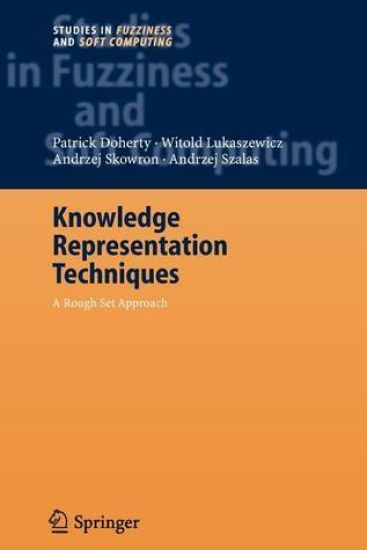
Knowledge Representation Techniques
Patrick Doherty; Witold Lukaszewicz; Andrzej Szalas
Springer-Verlag Berlin and Heidelberg GmbH Co. K
2010
nidottu
1. 1 Background The basis for the material in this book centers around research done in an ongoing long-term project which focuses on the development of highly au- 1 tonomousunmannedaerialvehiclesystems. Theactualplatformwhichserves as a case study for the research in this book will be described in detail later in this chapter. Before doing that, a brief background of the motivations - hind this research will be provided. One of the main research topics in the project is knowledge representation and reasoning and its use in Uav pl- forms. A very strong constraint has been placed on the nature of research done in the project where theoretical results, to the greatest extent possible, should serve as a basis for tractable reasoning mechanisms for use in a fully deployed autonomous Uav operating under soft real-time constraints asso- ated with the types of mission scenarios envisioned. Considering that much of the work with knowledge representation in this context focuses on application domains where one can only hope for an incomplete characterization of such domains, this methodological constraint has proven to be quite challenging since, in essence, the focus is on tractable approximate and nonmonotonic reasoning systems. As is well known, until recently, nonmonotonic formalisms have had a notorious reputation for lack of tractable and scalable reasoning systems.

Principal English Writings Of P. J. Doherty
Patrick John Doherty
KESSINGER PUBLISHING CO
2009
pokkari
Electronic Checklists on Multi-Purpose Displays: A Better Way for Fighter Pilots to Manage Information and Situational Awareness During Periods of Hig
Patrick J. Doherty
BiblioScholar
2012
nidottu
After accumulating mishap data from the 1990's, accident investigations are revealing that pilot error causes approximately 80% of aviation mishaps. But, apply a bit more aggressive critical analysis into the type of human errors occurring highlight the fact that task saturation, lack of situational awareness, and checklist errors are the leading factors. Although 'stick and rudder' errors still occur due to poor piloting skills or deficiencies in training, the majority of the human errors are linked to the pilot's mental abilities. Current USAF fighters are pushing the limit of the pilot's ability to collect and comprehend enormous amounts of information. The cumulative effects of these technologies, which were intended to increase situational awareness and lethality, are in actuality responsible for the loss of situational awareness due to task saturation. The focus of this research will be on pilots' mental abilities and identifying known limitations within the cognitive process. But, innovative information technologies and other ergonomic efforts within the cockpit will also be looked at because it is impossible to look at the cognitive perspective in isolation. We must also look at the interaction the mind has with physical characteristics of a fighter aircraft. Renovating the vehicle in which the checklist information is communicated to pilots could be a potential solution to fight task saturation, susceptibility to spatial disorientation and overall mental errors in today's cockpit. The fundamental conclusion resulting from this research is electronic checklists and data-based information banks can optimize pilot workload, situation awareness, and improve overall air combat performance by taking advantage of new information storage capabilities. The ultimate goal is to integrate this information into the "glass cockpit" seamlessly without increasing pilot workload resulting in decreased pilot errors. Vital to the success of this endeavor is the ability to pr This work has been selected by scholars as being culturally important, and is part of the knowledge base of civilization as we know it. This work was reproduced from the original artifact, and remains as true to the original work as possible. Therefore, you will see the original copyright references, library stamps (as most of these works have been housed in our most important libraries around the world), and other notations in the work. This work is in the public domain in the United States of America, and possibly other nations. Within the United States, you may freely copy and distribute this work, as no entity (individual or corporate) has a copyright on the body of the work. As a reproduction of a historical artifact, this work may contain missing or blurred pages, poor pictures, errant marks, etc. Scholars believe, and we concur, that this work is important enough to be preserved, reproduced, and made generally available to the public. We appreciate your support of the preservation process, and thank you for being an important part of keeping this knowledge alive and relevant.

Partiality, Modality, and Nonmonotonicity
Patrick A. Doherty
Centre for the Study of Language Information
1996
pokkari
This edited volume of articles provides a state-of-the-art description of research in logic-based approaches to knowledge representation which combines approaches to reasoning with incomplete information that include partial, modal, and nonmonotonic logics. The collection contains two parts: foundations and case studies. The foundations section provides a general overview of partiality, multi-valued logics, use of modal logic to model partiality and resource-limited inference, and an integration of partial and modal logics. The case studies section provides specific studies of issues raised in the foundations section. Several of the case studies integrate modal and partial modal logics with nonmonotonic logics. Both theoretical and practical aspects of such integration are considered. Knowledge representation issues such as default reasoning, theories of action and change, reason maintenance, awareness, and automation of nonmonotonic reasoning are covered.
One Hat Too Many: The JFC and Component Command
Major Usaf Patrick J. Doherty
Createspace Independent Publishing Platform
2012
nidottu
The joint force commander (JFC) and his staff are increasingly challenged with emerging complexities of the 21st Century security environment. The purpose of this paper was to analyze the joint force command environment, trying to assess the factors that influence a JFC's ability to effectively prosecute dual-hatted responsibilities. More specifically, the research investigated to determine whether it is in the best interest of the joint force and the overall objectives of the theater campaign to have a JFC dual-hat himself as a subordinate functional or Service component commander in a major theater of war. The analysis started with an examination of the commander in chief's (CINC's) environment by way of legislation, doctrine, and international developments. The purpose of this analysis was two-fold: First, to make the reader clearly aware of the JFC's complex environment, to include the CINC's roles and responsibilities; Second, to highlight the preeminent task of organizing an effective command and control (C2) structure for the entire force. The analysis then proceeded to look at the true aim of an effective C2 structure: the ability to empower the decision-maker and his staff with superior situational awareness and an ability to make better decisions faster than the adversary. Situational awareness (SA) is the dominant feature that gives a JFC the ability to comprehend and predict future actions within his theater. A C2 structure that enables high SA acknowledges the cognitive limitations of humans and sets an acceptable span of control that optimizes the workload of the JFC and his staff. The analysis concluded with historical examples of three JFCs who dual-hatted themselves as subordinate component commanders. The issue was and is one of effectiveness for a JFC. The JFC can help his cause by maintaining a theater perspective through organizing an effective command and control structure that embraces the complexities of his environment. The JFC and his staff are susceptible to information overload, task saturation, and poor situational awareness. The implication is these varying effects could lead to ineffective decisions that involve an entire joint/multinational force. If the CINC decides to dual-hat himself as the JFC and a subordinate component commander, he will not be able to direct his attention, focus, and efforts towards theater responsibilities. Instead of concentrating on the "big picture", he will become task saturated with details of his component fight and lose situational awareness at the theater level. For these reasons, a JFC should not commit himself, and his staff, to component command responsibilities in a major theater of war.
Set in an era of brutal conflict and turmoil, this epic adventure tells the story of the slave who became a saint, of the man who rose to the challenge of his time and changed the course of history.
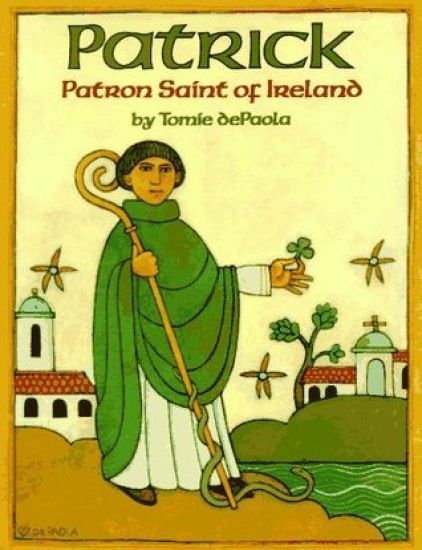
An illustrated tribute to the Irish patron saint from the best-selling author of Quiet, Strega Nona, and many others. This timeless picture book, available in large-format paperback or as the board book Saint Patrick, is a perfect introduction to important Irish legends and an ideal St. Patrick's day gift. Beloved children's book author-illustrator Tomie dePaola recounts the life of Saint Patrick--from his noble birth in Britain, to his captivity in Ireland, to the visions which led him to return and found the first Christian church in Ireland. With his signature bold illustrations and engaging prose, Tomie dePaola recounts a number of legends about the Saint--including the well-known story of how he drove the snakes from Ireland, and his association with the shamrock.
In fifth century Britain the privileged son of a Patrician family is captured by Irish Pirates. Sold as a slave into a barbarian nation, he struggles to make sense of his surroundings and survive amongst a savage race. However, in the midst of all the turmoil he finds that he is not alone... Dramatic and raw, 'Patrick' tells the story of a boy who became a saint, and changed the world forever.


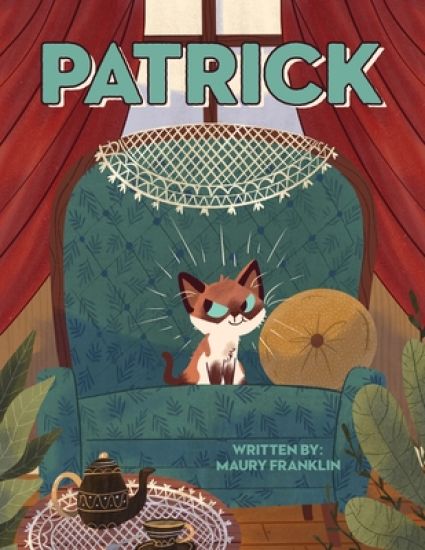
PatrickBy: Maury FranklinPatrick tells the story of a runt Siamese cat.Unloved, unwanted, and not exactly handsome, his family dumped him at the local animal shelter.After being adopted by eleven-year-old Billy's older neighbor, Mrs. Bushon, Billy and Patrick develop an extraordinary bond, and Patrick proves he's more than just any ol' cat. Patrick learns to do remarkable tricks and even saves Billy and his family during a break-in. Patrick's story is an inspiring take for all the un-beautiful and unloved kids who have big dreams.About the AuthorMaury Franklin is a writer and corporate trainer who specializes in interpersonal communications, leadership and management skills, and maximizing human potential in the workplace and your personal life. He has also taught arts and humanities at the collegiate level. Patrick is his second book for young readers on the development of unlimited human potential.

Born in the 1930s, John Mullen grows up in poverty-stricken Dundalk, Ireland. Although he has the love of a big family, a warm and caring mother, and great friends, his is a simple childhood with little money to spare and often not enough, even for food. He attends Catholic schools and survives the cruelty of the system in those early days, but his childhood experiences prepare him well for life ahead.We follow John's life story as he faces huge challenges until he can finally enjoy what he has spent a lifetime earning.As working parents, John and his wife Anthea are devastated when their firstborn son, Patrick, after a difficult birth, grows up 'backward' and not able to join the mainstream school system. Through all the frustrations, anger, and sadness, but ever-present love and compassion, they make tough decisions to help Patrick, while caring for their other two sons. But are they the right decisions and what will become of Patrick?