
Kirjahaku
Etsi kirjoja tekijän nimen, kirjan nimen tai ISBN:n perusteella.
1000 tulosta hakusanalla Patrick J Doherty
Electronic Checklists on Multi-Purpose Displays: A Better Way for Fighter Pilots to Manage Information and Situational Awareness During Periods of Hig
Patrick J. Doherty
BiblioScholar
2012
nidottu
After accumulating mishap data from the 1990's, accident investigations are revealing that pilot error causes approximately 80% of aviation mishaps. But, apply a bit more aggressive critical analysis into the type of human errors occurring highlight the fact that task saturation, lack of situational awareness, and checklist errors are the leading factors. Although 'stick and rudder' errors still occur due to poor piloting skills or deficiencies in training, the majority of the human errors are linked to the pilot's mental abilities. Current USAF fighters are pushing the limit of the pilot's ability to collect and comprehend enormous amounts of information. The cumulative effects of these technologies, which were intended to increase situational awareness and lethality, are in actuality responsible for the loss of situational awareness due to task saturation. The focus of this research will be on pilots' mental abilities and identifying known limitations within the cognitive process. But, innovative information technologies and other ergonomic efforts within the cockpit will also be looked at because it is impossible to look at the cognitive perspective in isolation. We must also look at the interaction the mind has with physical characteristics of a fighter aircraft. Renovating the vehicle in which the checklist information is communicated to pilots could be a potential solution to fight task saturation, susceptibility to spatial disorientation and overall mental errors in today's cockpit. The fundamental conclusion resulting from this research is electronic checklists and data-based information banks can optimize pilot workload, situation awareness, and improve overall air combat performance by taking advantage of new information storage capabilities. The ultimate goal is to integrate this information into the "glass cockpit" seamlessly without increasing pilot workload resulting in decreased pilot errors. Vital to the success of this endeavor is the ability to pr This work has been selected by scholars as being culturally important, and is part of the knowledge base of civilization as we know it. This work was reproduced from the original artifact, and remains as true to the original work as possible. Therefore, you will see the original copyright references, library stamps (as most of these works have been housed in our most important libraries around the world), and other notations in the work. This work is in the public domain in the United States of America, and possibly other nations. Within the United States, you may freely copy and distribute this work, as no entity (individual or corporate) has a copyright on the body of the work. As a reproduction of a historical artifact, this work may contain missing or blurred pages, poor pictures, errant marks, etc. Scholars believe, and we concur, that this work is important enough to be preserved, reproduced, and made generally available to the public. We appreciate your support of the preservation process, and thank you for being an important part of keeping this knowledge alive and relevant.
One Hat Too Many: The JFC and Component Command
Major Usaf Patrick J. Doherty
Createspace Independent Publishing Platform
2012
nidottu
The joint force commander (JFC) and his staff are increasingly challenged with emerging complexities of the 21st Century security environment. The purpose of this paper was to analyze the joint force command environment, trying to assess the factors that influence a JFC's ability to effectively prosecute dual-hatted responsibilities. More specifically, the research investigated to determine whether it is in the best interest of the joint force and the overall objectives of the theater campaign to have a JFC dual-hat himself as a subordinate functional or Service component commander in a major theater of war. The analysis started with an examination of the commander in chief's (CINC's) environment by way of legislation, doctrine, and international developments. The purpose of this analysis was two-fold: First, to make the reader clearly aware of the JFC's complex environment, to include the CINC's roles and responsibilities; Second, to highlight the preeminent task of organizing an effective command and control (C2) structure for the entire force. The analysis then proceeded to look at the true aim of an effective C2 structure: the ability to empower the decision-maker and his staff with superior situational awareness and an ability to make better decisions faster than the adversary. Situational awareness (SA) is the dominant feature that gives a JFC the ability to comprehend and predict future actions within his theater. A C2 structure that enables high SA acknowledges the cognitive limitations of humans and sets an acceptable span of control that optimizes the workload of the JFC and his staff. The analysis concluded with historical examples of three JFCs who dual-hatted themselves as subordinate component commanders. The issue was and is one of effectiveness for a JFC. The JFC can help his cause by maintaining a theater perspective through organizing an effective command and control structure that embraces the complexities of his environment. The JFC and his staff are susceptible to information overload, task saturation, and poor situational awareness. The implication is these varying effects could lead to ineffective decisions that involve an entire joint/multinational force. If the CINC decides to dual-hat himself as the JFC and a subordinate component commander, he will not be able to direct his attention, focus, and efforts towards theater responsibilities. Instead of concentrating on the "big picture", he will become task saturated with details of his component fight and lose situational awareness at the theater level. For these reasons, a JFC should not commit himself, and his staff, to component command responsibilities in a major theater of war.
Principal English Writings Of P. J. Doherty
Patrick John Doherty
KESSINGER PUBLISHING CO
2009
pokkari


This work has been selected by scholars as being culturally important and is part of the knowledge base of civilization as we know it.This work is in the public domain in the United States of America, and possibly other nations. Within the United States, you may freely copy and distribute this work, as no entity (individual or corporate) has a copyright on the body of the work.Scholars believe, and we concur, that this work is important enough to be preserved, reproduced, and made generally available to the public. To ensure a quality reading experience, this work has been proofread and republished using a format that seamlessly blends the original graphical elements with text in an easy-to-read typeface.We appreciate your support of the preservation process, and thank you for being an important part of keeping this knowledge alive and relevant.

Patrick J. Hurley is a book in the English language by Don Lohbeck.This scarce antiquarian book is a facsimile reprint of the old original and may contain some imperfections such as library marks and notations. Because we believe this work is culturally important, we have made it available as part of our commitment for protecting, preserving, and promoting the world's literature in affordable, high quality, modern editions, that are true to their original work.


Patrick J Leach, Selected Paintings Volume One
Patrick J. Leach
Createspace Independent Publishing Platform
2011
nidottu

Patrick J. Leach Selected Paintings Volume Two
Patrick J. Leach
Createspace Independent Publishing Platform
2015
nidottu
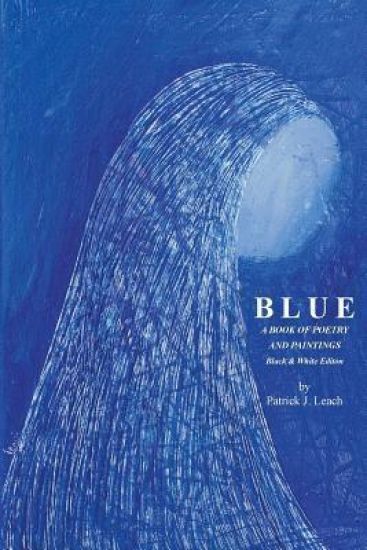
Blue: Poetry and Art by Patrick J. Leach - Black & White Edition
Patrick J. Leach
Createspace Independent Publishing Platform
2013
nidottu

Patrick J. Leach: Selected Paintings Volume Three
Patrick J. Leach
Createspace Independent Publishing Platform
2015
nidottu

The Eleventh Sky: Art and Poetry by Patrick J. Leach
Patrick J. Leach
Independently Published
2019
nidottu

The Map of Time: Poetry and Art by Patrick J. Leach
Patrick Joseph Leach
Independently Published
2019
nidottu



The Dear Old Hills of Patrick: J. E. B. Stuart and Patrick County Virginia
Thomas D. Perry
Createspace Independent Publishing Platform
2013
nidottu

American Apostle of the Family Rosary The Life of Patrick J. Peyton, CSC
Richard Gribble
Crossroad Publishing
2024
nidottu

The United States of America, on Relation of Lucien H. Greathouse et al., Petitioners, V. Patrick J. Hurley, as Secretary of War, et al. U.S. Supreme Court Transcript of Record with Supporting Pleadings
J Harry Covington
Gale, U.S. Supreme Court Records
2011
pokkari