Kirjahaku
Etsi kirjoja tekijän nimen, kirjan nimen tai ISBN:n perusteella.
1000 tulosta hakusanalla Peter Manning
In this new edition of the classic text on the history and evolution of electronic music, Peter Manning extends the definitive account of the medium from its birth to include key developments from the dawn of the 21st century to the present day.After explaining the antecedents of electronic music from the turn of the 20th century to the Second World War, Manning discusses the emergence of the early 'classical' studios of the 1950s, and the subsequent evolution of more advanced analogue technologies during the 1960s and '70s, leading in turn to the birth and development of the MIDI synthesizer. Attention then turns to the characteristics of the digital revolution, from the pioneering work of Max Mathews at Bell Telephone Laboratoriesin the 1950s to the wealth of resources available today, facilitated by the development of the personal computer and allied digital technologies. The scope and extent of the technical and creative developments that have taken place since the late 1990s are considered in an extended series of new andupdated chapters. These include topics such as the development of the digital audio workstation, laptop music, the Internet, and the emergence of new performance interfaces.Manning offers a critical perspective of the medium in terms of the philosophical and technical features that have shaped its growth. Emphasizing the functional characteristics of emerging technologies and their influence on the creative development of the medium, Manning covers key developments in both commercial and the non-commercial sectors to provide readers with the most comprehensive resource available on the evolution of this ever-expanding area of creativity.
Memories of violence, suffering and atrocities in Cambodia are today being pulled in different directions. A range of transitional justice practices have been put to work in the name of redressing, restoring and renewing memory. At the centre of this stage is the Extraordinary Chambers in the Courts of Cambodia (ECCC), a hybrid tribunal established to prosecute the leaders of the Khmer Rouge regime, under which 1.6 million Cambodians died of hunger or disease or were executed. This book unpicks the way memory is reconstructed through appeals to a national memory, the legal reframing and coding of memories as crimes, and bids to locate personal memories within collective biographies. Analysing the techniques and interventions of the ECCC, as well as exploring the role of non-governmental organisations (NGOs), the book explores the relationships in which Cambodian communities navigate memories of political violence. This book is essential for understanding transitional justice in Cambodia in, and beyond, the courtroom. Transitional Justice and Memory in Cambodia shows that the governing logic of transitional justice interventions – that societies are unable to 'deal with' memories of atrocity and violence without some form of transitional justice mechanism – neglects the complexity of memory and remembering in post-atrocity contexts and the agency of the subjects to which such mechanisms are addressed.Drawing on documentary sources, legal transcripts, interviews and participant observation data, the book situates transitional justice processes in Cambodia within a wider context of social and cultural memory politics, examining (old and new) conflicts of memory that have emerged between the varied accounts and uses of the past that exist in Cambodia now. As such, it will appeal to students and scholars in sociology, human rights, law and criminology.
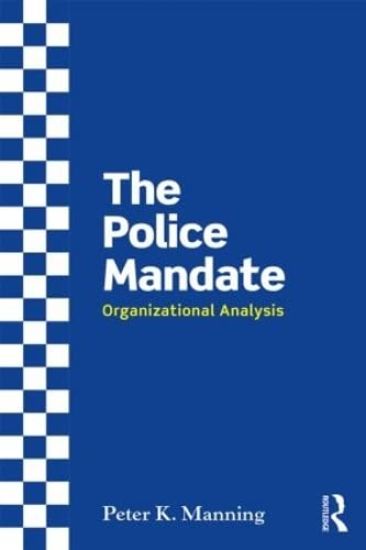
Peter K Manning has been a key figure in scholarship on police organization for the past three decades. His work has been widely celebrated for its contribution to key debates on democratic policing, crime analysis and technology.Building on a wealth of original ethnographic research, in this book Manning develops his dramaturgical framework to formulate a theory of police organization. The Police Mandate will be essential reading for all policing scholars, as well as sociologists and criminologists alike.
After more than half a century, the Israel-Palestine conflict continues to dominate headlines. But how has the coverage of Palestinians by foreign media changed? How did foreign correspondents influence the perception of Palestine amongst their audiences? And why is understanding this so important?Based on extensive original research in the archives of Australia's oldest newspaper, Peter Manning shows how the Sydney Morning Herald portrayed Palestine during three key periods - the end of World War I (1917-8); the Nakba and the creation of Israel (1947-8); and 9/11 and its aftermath (2000-2). In the process, he takes the reader on a unique journey from the moment information was gathered on the ground in Palestine, through to its final processing and publication. Crucially, when correspondents neglected to write about Palestinians, their perspective never made it to readers and a space emerged for stereotyping and misunderstanding. Manning reveals how the newspaper reported on key events such as Australian troops in Palestine and the Holocaust, but also how the newspaper failed to cover massacres and forced migrations. Combining close textual analysis of more than 10,000 articles with cutting-edge quantitative research methods, this book is important reading for anyone with an interest in how the print media has portrayed the conflict in Palestine - both in Australia and beyond.
Memories of violence, suffering and atrocities in Cambodia are today being pulled in different directions. A range of transitional justice practices have been put to work in the name of redressing, restoring and renewing memory. At the centre of this stage is the Extraordinary Chambers in the Courts of Cambodia (ECCC), a hybrid tribunal established to prosecute the leaders of the Khmer Rouge regime, under which 1.6 million Cambodians died of hunger or disease or were executed. This book unpicks the way memory is reconstructed through appeals to a national memory, the legal reframing and coding of memories as crimes, and bids to locate personal memories within collective biographies. Analysing the techniques and interventions of the ECCC, as well as exploring the role of non-governmental organisations (NGOs), the book explores the relationships in which Cambodian communities navigate memories of political violence. This book is essential for understanding transitional justice in Cambodia in, and beyond, the courtroom. Transitional Justice and Memory in Cambodia shows that the governing logic of transitional justice interventions – that societies are unable to 'deal with' memories of atrocity and violence without some form of transitional justice mechanism – neglects the complexity of memory and remembering in post-atrocity contexts and the agency of the subjects to which such mechanisms are addressed.Drawing on documentary sources, legal transcripts, interviews and participant observation data, the book situates transitional justice processes in Cambodia within a wider context of social and cultural memory politics, examining (old and new) conflicts of memory that have emerged between the varied accounts and uses of the past that exist in Cambodia now. As such, it will appeal to students and scholars in sociology, human rights, law and criminology.
Australian painter Janet Venn-Brown has led an extraordinary life. Moving to Rome in the early 1960s, she joined a circle of intellectuals and artists, began exhibiting her work – and fell in love with Palestinian activist Wael Zuaiter. When Zuaiter was murdered by Mossad in 1972, it changed Venn-Brown’s life,bringing Palestinian activism to the forefront of her next four decades. Peter Manning’s richly illustrated book celebrates her life and her work – her 40 years in Rome, her artistic successes and experiments, her political engagement and travels in the Middle East, and her return to Australia in 2011.
Guide to Essentials in Emergency Medicine
Shirley Ooi; Matthew Low; Peter Manning
McGraw-Hill Education (Asia)
2022
nidottu
This book aims to achieve a fine balance between a practical evidence-based tool, that can be carried around to be used at the patients’ bedside, and a comprehensive reference with sufficient information for examination requirements in Emergency Medicine, both at undergraduate and postgraduate level.This edition preserves several of its predecessor’s hallmark features, in particular:Easy-to-read format: clinical descriptions are presented succinctly, key points are highlighted, and problems are introduced with a symptom-based approach in Part 1;Popular sections such as Caveats, covering pitfalls likely to be encountered in clinical practice, and Special Tips for GPs.New features of this edition include:Clear demarcation between chapters for basic learners (medical students) and advanced learners, with 805 pages for basic learners and advanced chapters marked with blue bars on the sides;Thorough revision of all chapters, including more comprehensive illustrations;9 additional brand-new chapters, including 3 chapters on emergency CT interpretation;QR codes to: more than 100 between clinical photos, radiological images and videos; reference chapters, to ensure that the extra information is available without making the book too voluminous.
Longman Anthology of British Literature, The
David Damrosch; Kevin Dettmar; Susan Wolfson; Peter Manning
Pearson
2012
nidottu
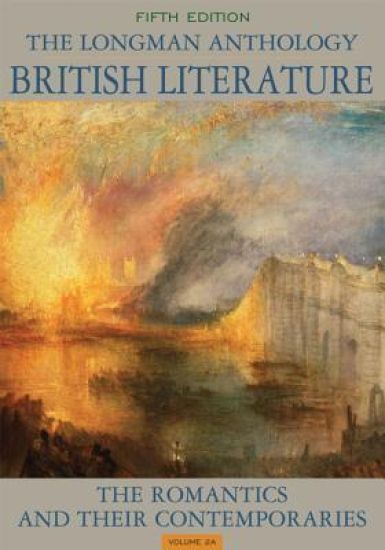
The Longman Anthology of British Literature is the most comprehensive and thoughtfully arranged text in the field, offering a rich selection of compelling British authors through the ages. With its first edition, The Longman Anthology of British Literature created a new paradigm for anthologies. Responding to major shifts in literary studies over the past thirty years, it was the first collection to pay sustained attention to the contexts within which literature is produced, even as it broadened the scope of that literature to embrace the full cultural diversity of the British Isles. Within its pages, canonical authors mingle with newly visible writers; English accents are heard next to Anglo-Norman, Welsh, Gaelic, and Scottish ones; female and male voices are set in dialogue; literature from the British Isles is integrated with post-colonial writing; and major works are illumined by clusters of shorter texts that bring literary, social, and historical issues vividly to life. The Fifth Edition builds on the pioneering features of the previous four editions, expanding the strong core of frequently taught works while continuing to lead the way in responding to the shifting interests of the discipline.
After more than half a century, the Israel-Palestine conflict continues to dominate headlines. But how has the coverage of Palestinians by foreign media changed? How did foreign correspondents influence the perception of Palestine amongst their audiences? And why is understanding this so important? Based on extensive original research in the archives of Australia's oldest newspaper, Peter Manning shows how the Sydney Morning Herald portrayed Palestine during three key periods - the end of World War I (1917-8); the Nakba and the creation of Israel (1947-8); and 9/11 and its aftermath (2000-2). In the process, he takes the reader on a unique journey from the moment information was gathered on the ground in Palestine, through to its final processing and publication. Crucially, when correspondents neglected to write about Palestinians, their perspective never made it to readers and a space emerged for stereotyping and misunderstanding. Manning reveals how the newspaper reported on key events such as Australian troops in Palestine and the Holocaust, but also how the newspaper failed to cover massacres and forced migrations. Combining close textual analysis of more than 10,000 articles with cutting-edge quantitative research methods, this book is important reading for anyone with an interest in how the print media has portrayed the conflict in Palestine - both in Australia and beyond.
Inside Computer Music
Michael Clarke; Frédéric Dufeu; Manning Peter
Oxford University Press Inc
2020
sidottu
Inside Computer Music is an investigation of how new technological developments have influenced the creative possibilities of composers of computer music in the last 50 years. This book combines detailed research into the development of computer music techniques with nine case studies that analyze key works in the musical and technical development of computer music. The book's companion website offers demonstration videos of the techniques used and downloadable software. There, readers can view interviews and test emulations of the software used by the composers for themselves. The software also presents musical analyses of each of the nine case studies to enable readers to engage with the musical structure aurally and interactively.
Inside Computer Music
Michael Clarke; Frédéric Dufeu; Manning Peter
Oxford University Press Inc
2020
nidottu
Inside Computer Music is an investigation of how new technological developments have influenced the creative possibilities of composers of computer music in the last 50 years. This book combines detailed research into the development of computer music techniques with nine case studies that analyze key works in the musical and technical development of computer music. The book's companion website offers demonstration videos of the techniques used and downloadable software. There, readers can view interviews and test emulations of the software used by the composers for themselves. The software also presents musical analyses of each of the nine case studies to enable readers to engage with the musical structure aurally and interactively.
The Longman Anthology of British Literature, Compact Edition, Volumes A & B
Damrosch David; Baswell Christopher; Carroll Clare; Kevin J. H. Dettmar; Henderson Heather; Jordan Constance; Manning Peter J.; Schotter Anne Howland; Sharpe William Chapman; Sherman Stuart; Wicke Jennifer; Wolfson Susan J.
PEARSON EDUCATION (US)
2004
nidottu
The Longman Anthology of British Literature, Compact Edition is a concise and thoughtfully arranged survey of British literature for the one-semester course. Within its pages, canonical authors mingle with newly visible writers; English accents are heard next to Anglo-Norman, Welsh, Gaelic, and Scottish ones; female and male voices are set in dialogue; literature from the British Isles is integrated with post-colonial writing; and major works are illumined by clusters of shorter texts that bring literary, social, and historical issues vividly to life. The Second Edition builds on the pioneering features of its predecessor, retaining a strong core of frequently taught works while continuing to lead the way in responding to the shifting interests of the discipline.
These thirteen essays, some previously published and others appearing here for the first time, are united by a continuing endeavour to join formalism with wider concerns. They seek to reconnect literature with the motives from which it springs and the social relations within which it exists. There is fusion of psychoanalytic insight, textual criticism, and historical scholarship. Amongst the writers discussed are Wordsworth and Byron.
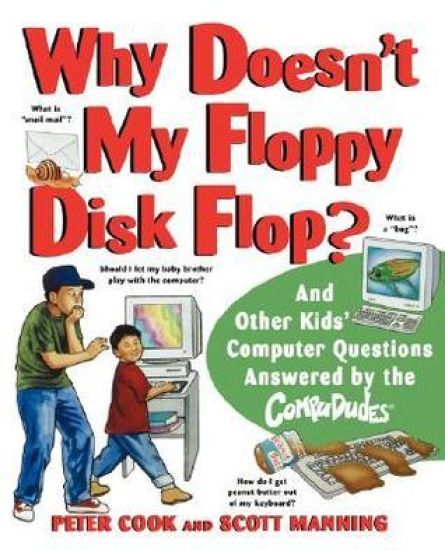
Why Doesn't my Floppy Disk Flop? And Other Kids' Computer Questions Answered by the Compududes. For the best answers, coolest Web sites, and excellent cyber-activities, pick up Why Doesn't My Floppy Disk Flop? This lively, informative guide provides the answers to dozens of questions that you (and your parents!) really want to know. Combining their popular brand of humor with cartoon illustrations, sidebars, and tons of advice, the Compududes make all the learning seem like play. From the ins and outs of hardware and software to the best ways to take advantage of the Internet to the exciting future of computing, the answers and explanations in Why Doesn't My Floppy Disk Flop? are guaranteed to plug you in, log you on, and turn you into a computer whiz in no time!
Ethnographic fieldwork and formal linguistic analysis have traditionally been thought to be diametric opposites. But in this provocative analysis, these diverse methods of qualitative research are demonstrated to be complementary. The author reveals that the formalism of semiotics adds breadth and depth to the particularism of traditional fieldwork; similarly, the many details of ethnographic description give semiotic analysis a more realistic perspective. After examining the potential benefits and limitations of each method of analysis, the author shows how the synthesis of the two is potentially more powerful that either alone. "This book succeeds in bringing together two branches of science that are rather different with respect to traditions and levels of abstraction." --Methodika "Provides a brief and useful statement of the method....It is both a summary of what has been said and a commentary on the simultaneous deformalization and formalization of American life." --Social Forces
With the rise of surveillance technology in the last decade, police departments now have an array of sophisticated tools for tracking, monitoring, even predicting crime patterns. In particular crime mapping, a technique used by the police to monitor crime by the neighborhoods in their geographic regions, has become a regular and relied-upon feature of policing. Many claim that these technological developments played a role in the crime drop of the 1990s, and yet no study of these techniques and their relationship to everyday police work has been made available. Noted scholar Peter K. Manning spent six years observing three American police departments and two British constabularies in order to determine what effects these kinds of analytic tools have had on modern police management and practices. While modern technology allows the police to combat crime in sophisticated, detail-oriented ways, Manning discovers that police strategies and tactics have not been altogether transformed as perhaps would be expected. In The Technology of Policing, Manning untangles the varying kinds of complex crime-control rhetoric that underlie much of today's police department discussion and management, and provides valuable insight into which are the most effective?and which may be harmful—in successfully tracking criminal behavior. The Technology of Policing offers a new understanding of the changing world of police departments and information technology's significant and undeniable influence on crime management.
Natural Quiet and Natural Darkness
Robert Manning; Peter Newman; Jesse Barber; Christopher Monz; Jeffrey Hallo
Dartmouth College Press
2018
sidottu
Excess noise and light challenge the ecological integrity of the natural environment, along with our enjoyment of the natural world. Although a substantive body of scientific and professional literature on quiet and darkness in national parks and related areas has developed over the past two decades, such work has been widely scattered over academic and professional journals in several environmental fields. This anthology brings together both new and previously published work on the topic. An introduction outlines the evolution of current thought about what constitutes national park resources and suggests a series of conceptual frameworks to inform management of natural quiet and natural darkness. Individual chapters address the biological, ecological, and experiential components of both of these valuable resources. A final chapter develops a series of principles or best practices for studying, managing, and protecting natural quiet and natural darkness in the national parks and related reserves. Hardcover is un-jacketed.