The Lost Treasures Of Wyoming: SOUTHEAST REGION covers the lost treasures to be found in the counties of: ALBANY, GOSHEN, LARAMIE, NIOBRARA, and PLATTE. Many of us have heard about some form of lost or hidden treasure, maybe even made an attempt at locating it. Some of the lost treasures described in this book are large enough that a person could retire after finding one of them Some will be smaller than they are claimed to be, no doubt. Most hidden treasures are little-known since they were not considered anything but "rainy day money" when they were hidden away. The little caches could be hidden in baking powder tins or Mason jars or other common containers. The farmer down the road may have buried his meager life savings long ago, and no one knew of its existence when he died. The purpose of this "The Lost Treasures Of Wyoming" book is to present a brief look at some of Wyoming's still hidden treasures, while providing a few facts that can validate their existence and, hopefully, help to pinpoint the actual locations of the hidden riches. The book is full of maps and details about the location of lost outlaw loot, lost mines, and lots of background history and interesting facts about the people and events of Wyoming's early days.YOU DO NOT HAVE TO BE A TREASURE HUNTER TO ENJOY THE BOOKS IN THE SERIES The books contain many historical details and firsthand accounts of the people and events of days past. This book, The Lost Treasures Of Wyoming: SOUtheast Region, contains intriguing treasure legends, maps, historical accounts, and photos of Wyoming's Old West days.
The Lost Treasures Of Wyoming-NORTHWEST REGION by Peter Netzel.This is the first book in Peter Netzel's Lost Treasures Of Wyoming series. The Lost Treasures Of Wyoming-NORTHWEST REGION covers many outlaw caches, lost mines, and other forgotten treasures in the counties of: Bighorn, Fremont, Hot Springs, Park, Teton, and Washakie. Each lost treasure tale includes detailed maps and a description of where to begin a search. BUT - YOU DO NOT HAVE TO BE A TREASURE HUNTER TO ENJOY THE BOOKS IN THE SERIES Besides lost treasure tales, the books The Lost Treasures Of Wyoming series are filled with regional history and stories of the characters who lived in this portion of the Old West. The books are filled with Western history and firsthand accounts of many of the people and the times.You may ask: "Why write a book on State treasure stories?" The answer is: "Because most everyone dreams of finding treasure " Many of us have heard about some form of lost or hidden treasure, maybe even made an attempt at locating it. Some of the lost treasures described in the book are large enough that a person could retire after finding one of them Some will be smaller than they are claimed to be, no doubt. Most hidden treasures are little-known since they were not considered anything but "rainy day money" when they were hidden away. The little caches could be hidden in baking powder tins or Mason jars or other common containers. The farmer down the road may have buried his meager life savings long ago, and no one knew of its existence when he died. The purpose of this "The Lost Treasures Of Wyoming" book is to present a brief look at some of Wyoming's still hidden treasure stories, while providing a few facts that can validate their existence and, hopefully, help to pinpoint the actual locations of the hidden riches. The book is full of maps pinpointing the location of lost outlaw loot, hidden mines, and other interesting facts about Wyoming's past. The stories in this book contain many historical details and firsthand accounts of the people and events of days gone by. Included are dozens of intriguing lost treasure stories, maps, historical accounts, and photos of Wyoming's historical past.
THE LOST TREASURES OF WYOMING: CENTRAL REGION covers the lost treasures to be found in the counties of: Carbon, Converse, and Natrona. Many of us have heard about some form of lost or hidden treasure, maybe even made an attempt at locating it. Some of the lost treasures described in the book are large enough that a person could retire after finding one of them Some will be smaller than they are claimed to be, no doubt. Most hidden treasures are little-known since they were not considered anything but "rainy day money" when they were hidden away. The little caches could be hidden in baking powder tins or Mason jars or other common containers. The farmer down the road may have buried his meager life savings long ago, and no one knew of its existence when he died. The purpose of this "The Lost Treasures Of Wyoming" book is to present a brief look at some of Wyoming's still hidden treasure stories, while providing a few facts that can validate their existence and, hopefully, help to pinpoint the actual locations of the hidden riches. The book is full of maps pinpointing the location of lost outlaw loot, hidden mines, and other interesting facts about Wyoming's past. BUT - YOU DO NOT HAVE TO BE A TREASURE HUNTER TO ENJOY THE BOOKS IN THE SERIES The stories contain many historical details and firsthand accounts of the people and events of days gone by. This book contains dozens of intriguing true stories, maps, historical accounts, and photos of Wyoming's historical past.
THE LOST TREASURES OF WYOMING: NORTHEAST REGION covers the lost treasures to be found in the counties of: Campbell, Crook, Johnson, Sheridan, and Weston. It was in Johnson County and vicinity that the bitter and bloody "Johnson County War" was fought between big established cattle ranchers and newly-arrived homesteading farmers in the early 1890's. Why write a book on State treasure stories? Because Most everyone dreams of finding treasure Many of us have heard about some form of lost or hidden treasure, maybe even made an attempt at locating it. Some of the lost treasures described in the book are large enough that a person could retire after finding one of them Some will be smaller than they are claimed to be, no doubt. Most hidden treasures are little-known since they were not considered anything but "rainy day money" when they were hidden away. The little caches could be hidden in baking powder tins or Mason jars or other common containers. The farmer down the road may have buried his meager life savings long ago, and no one knew of its existence when he died. The purpose of this "The Lost Treasures Of Wyoming" book is to present a brief look at some of Wyoming's still hidden treasure stories, while providing a few facts that can validate their existence and, hopefully, help to pinpoint the actual locations of the hidden riches. The book is full of maps pinpointing the location of lost outlaw loot, hidden mines, and other interesting facts about Wyoming's past. BUT - YOU DO NOT HAVE TO BE A TREASURE HUNTER TO ENJOY THE BOOKS IN THE SERIES The stories contain many historical details and firsthand accounts of the people and events of days gone by. This book contains dozens of intriguing true stories, maps, historical accounts, and photos of Wyoming's historical past.
"Keyes Lost Diggings" by Peter Netzel is an account, told through newspaper articles, of an incredible discovery of gold by Chris Keyes in 1865 in The Little Rockies, a mountain range in north-central Montana. The ending to the story of the Lost Keyes Diggings is as tragic as the find was fabulous. To this day, the location of the Keyes placer diggings is wrapped in profound mystery.Chris Keyes, was prospecting in the Red Water River region near the Bear's Paw Mountains, when he came upon a bonanza of gold. Unfortunately, the location of his rich diggings was lost because Keyes was killed in a massacre by hostile Sioux in the same year that he found it, 1865.The year prior, in 1864, prospector Chris Keyes and his partner, John Lepley, had discovered the first gold in Lewis and Clark County on Silver Creek in Montana. A modest strike, they made six or seven dollars a day; but Keyes became impatient and wanted to move on in search of something better. He carried in his pocket three small nuggets of gold that he had picked up in the valleys of the Bear's Paw in 1862 while engaged in hunting for the American Fur Company at Fort Benton. He was obsessed with the desire to prospect these mountains, and had utmost faith in finding rich diggings there. In February 1865, he shook hands with his partner and set out for what he believed was a glittering gold field. But we will never know where the treasure was located because Keyes was massacred by the Sioux. His secret died with him. While profitable diggings were afterward discovered in the Bear's Paw, there has been no such a find as was made by Keyes. To this day, the location of the Keyes placer diggings is wrapped in profound mystery.The ending to the story of the Lost Keyes Diggings is as tragic as the find was fabulous. If you look, you can almost see the gold out there, hidden somewhere in the Bear's Paw Mountains of north-central Montana
Yellowstone Country is the first in the series "The Lost Treasures of Montana", books that cover the entire state, by region. Based on a decade of research of old treasure legends, the author has successfully pinned down the locations of most of these caches on topographic maps. Many of these detailed maps are included with the stories in the book.A few of these Yellowstone Country, Montana, treasure sites are narrowed down to a very small location, which makes you wonder why they haven't been found yet In addition to pinpointing actual locations, you will discover several lost treasure stories never before presented in books The lost treasure stories of Montana are mostly forgotten with the passage of time. Now they are preserved for future generations in "The Lost Treasures of Montana" book series by Peter Netzel. The journey begins with Yellowstone Country.
ON THE TRAIL OF THE BENDERS is the account of the grisly details of the mass murders perpetrated by the Bender Family in Kansas and what happened to them after their crimes were discovered. Their story is told through a series of newspaper accounts from the time.On April 3, 1873, a party of men rode up to this roadside tavern and asked the Bender family if they had heard or seen anything of the missing Dr. York. They claimed to be ignorant of his whereabouts. A few days afterward, another party called and made the same inquiry. The Bender family, fearing that they were suspected, hitched up their team and drove away. On May 9, another searching party, while passing Bender's inn, noticed it was deserted. This seemed odd to them. So they investigated the empty house and grounds around it. In certain places, the ground had settled noticeably; and the indentations were about the size of graves. The ground was then dug up and the badly decomposed body of Dr. York was found. His skull had been crushed and throat cut. Before nightfall seven more bodies were exhumed.
COEUR D'ALENE GOLD BUST is the tale of a short-lived gold stampede to northern Idaho that occurred in the early 1880's, as told through newspaper accounts of the times. In 1881, a lone prospector by the name of A.J. Pritchard, who had been grub-staked by a rich widow, discovered gold along the North Fork of the Coeur d'Alene River in Idaho Territory. He set about filing claims to tie up much of the land. Through Pritchard's boastful talk and letters to friends, as well as the promotional literature put out by the Northern Pacific Railway, promising "free gold in North Idaho for the price of a ticket on the railroad," word got out that there was a fortune to be had for anyone willing to come there and seek it. Hundreds of people flocked to the area. However, once they got there, most of them had their dreams shattered. The promised gold bonanza did not exist. They returned home penniless and defeated. In an ironic twist, this book, COEUR D'ALENE GOLD BUST, ends with the tale of how it was a small burro that made the richest find of all in the Coeur d'Alene gold stampede of the 1880's. Despite mighty efforts and sacrifices put forth by hundreds of fools with gold fever, who endured untold harsh conditions in search of a gold bonanza, it was not one of these two-legged jackasses-but a four-legged one-that made the biggest fortune of all from what turned out to be the great Coeur d'Alene gold bust.
THE LOST TREASURES OF MONTANA - Custer Country, BLACK & WHITE version: The Lost Treasures of Montana is a series of books on the lost treasures that can be found in Montana, by region. The series is based on over two decades of researching old treasure legends. This book contains details of locations of buried caches and lost treasures in Custer Country, Montana.Counties covered in this edition of The Lost Treasures of Montana: CUSTER COUNTRY, are: Big Horn, Carter, Custer, Dawson, Fallon, Golden Valley, Musselshell, Powder River, Prairie, Rosebud, Treasure, Wibaux, and Yellowstone counties. CUSTER COUNTRY also includes the Little Bighorn Battlefield National Monument. In the Lost Treasures of Montana series, you will even find a few lost treasures never before presented in books Stories of likely locations of hidden treasure covered in this book are: Horse Thief Cache, Pompey's Pillar Caches, Cache Creek, Soldiers' Treasure, Bighorn's Lost Cabin Mine, and Pryor Mountain Gold. Background and details are given for finding buried loot and other outlaw caches in stories like: Billings Questions, Big Nose George Parrott, Point of Rocks, Klan Butte, Could There Be More, and The Far West.The stories take you back to the time of the Wild West; you will meet the colorful outlaw characters who stole the loot and how they did it. Most of the stories also include maps, in case you wish to search for hidden treasure yourself
The Lost Treasures of Montana is a series of books on the lost treasures that can be found in Montana, by region. The series is based on over a decade of researching old treasure legends. This black and white version of the book contains details of locations of buried caches and lost treasures in Missouri Country, Montana. Counties covered in this edition of The Lost Treasures of Montana: MISSOURI COUNTRY, are: Roosevelt, McCone, Garfield, Sheridan, Phillips, Richland, Daniels, and Valley counties. In the Lost Treasures of Montana series, you will even find a few lost treasures never before presented in books The stories take you back to the time of the Wild West. You will meet the colorful outlaw characters who stole the loot and learn how they did it. Most of these stories also include maps, in case you wish to search for hidden treasure yourself Stories of likely locations of hidden treasure covered in this book include: The story of George Whitney: Livestock Rustler, the outlaw who was described by locals as a polite gentleman and ladies man, while at the same time being dubbed by the Montana Stockgrower's Association as "the major rustler in eastern Montana," who met anyone approaching his cabin with his guns at the ready.Another tale, Fort Musselshell or "Two Sleeps," where the Gros Ventre tribe would bring gold dust and nuggets for trading giving only a hint at the site of the source of the gold as being "two sleeps to the south of the post."There is the legend of Fort Peck's William Kittering, the wealthy merchant, who buried 35,000 in gold coins on one of his properties, but died without divulging its location to anyone in Died Without Telling.Dragged To The Bottom & Swept Away, details the story of a gold miner whose heavy money belt took him to the bottom of the river where he and his gold could still lay. There is the legend of The Mysterious Case Of Bill Crane, which tells of a hermit who was a prolific counterfeiter living on an island. When he was killed, counterfeit $10 and $20 gold pieces were found along the lake shore; but, had he buried the real money he had made from shipments of the counterfeits to Chicago?There are several intriguing stories: Never Seen Again, Keyes Gold Mine Update, Nepee's Gold, and Boating Down The Missouri, which relate the lurid details about men who sought after, but never found a rich lost gold cache in the Little Rockies which was first reported by Chris Keyes. Also included in The Lost Treasures Of Montana: Missouri Country are the legends of lost silver and gold mines in this region of Montana; these appear in the stories: Piney Buttes, The Lost Laverdure Mine, Lost Arch Silver Placer and North of Poplar.The book also includes descriptions of several outlaw loot stashes that were never found in stories like: Hidden At The Forks, West of Malta, The Great Northern Train Robbery, Six-Shooter Bob Walsh, and Base Of Operations South Of Landusky.Not only will reading the books in this series appeal to treasure hunters, but any reader will enjoy reading about the rich and colorful history of the Old West in its gold rush days.
LESSER KNOWN OUTLAWS OF WYOMINGby Peter NetzelA gang, led by "Big Nose" George Parrott, attempted to rob a train by Medicine Bow, in southern Wyoming, in 1878. The attempt was foiled by a railroad worker who discovered the damaged track in time. The initial manhunt resulted in the ambush and murder of two deputies, Robert Widdowfield and Tip Vincent, men well-liked by all who knew them. Posses were formed and intense efforts began to capture the treacherous outlaws, who included: "Big Nose" George Parrott, Dutch Charley Burris, Frank Towle, Sim Wan, Reddy McKimie, Tom Reed, Jack "Sandy" Campbell, Culley McDonald, and John Erwin. Vivid details of the events are brought to life by the addition of old news articles from the times. These are the stories of the attempted Medicine Bow train robbery in 1878; the double-murder of 2 deputies; and the fate of the very bad men who were responsible. Many of them were lynched by angry citizens.This book will take you on the journey of Big Nose George Parrott and four of his later gang associates: Dutch Charley Burris, Frank Towle, Reddy McKimie, John Erwin, and Sim Wan. Their outlaw exploits were notorious at the time. And, their lives were shortened, often brutally, by angry citizens and lawmen. George had a fondness for Wyoming's Big Horn Mountains. He and his gang returned there after many a robbery to hide out. In 1878, Parrott met up with other outlaws, one of whom was "Dutch Charley" Buress, in Rawlins, Wyoming. The group decided to rob a train near Medicine Bow Station. Big Nose George kept watch while the others attempted to damage the track in order to stop the train. Before they got very far with their tampering, a Union Pacific railroad worker came around a bend pumping a hand car. Thus began a series of events that would leave two deputies killed and massive manhunts for the gang members. Although all of them escaped, most of them ended up being lynched, imprisoned, or murdered. This book, LESSER KNOWN OUTLAWS OF WYOMING, contains many old newspaper articles, which will take you back in time; you will ride alongside the desperadoes and the lawmen; you will hear the angry voices and view the lynchings, and all the vivid details of the events surrounding this story.
THE LOST TREASURES OF THE BLACK HILLS is the latest addition to Peter Netzel's lost treasure series of books. This volume covers lost treasure stories and legends from the Black Hills. This area is composed of several South Dakota counties: Lawrence, Pennington, Custer, Meade and Fall River; it also includes Crook and Weston counties of Wyoming. This is the addition to the 7-volume series, The Lost Treasures Of Montana; and the 5-volume series of the Lost Treasures Of Wyoming. These books have garnered widespread attention. In addition to appearances on local television stations, in podcasts, and local television stations, the author has appeared on the naionally syndicated Travel Channel. YOU DO NOT NEED TO BE A TREASURE HUNTER TO ENJOY THESE STORIES These books are filled with Western history, firsthand accounts, and newspaper clippings containing details of the days gone by. From frontiersmen, Native Americans, cowboys, settlers, and gold rushers, the Black Hills are filled with stories. Many of these tales are centered on lost, buried, or hidden treasures throughout the region that have not been recovered to this day.The Black Hills area is beautiful, and a great place to visit. Even if treasure hunting is not your hobby, you will find places where interesting Old West history took place. This background history, fleshed out by actual newspaper accounts of the times, and coupled with detailed topo maps and other terrain descriptions, make Peter Netzel's lost treasures series the most comprehensive works of their kind published to date. What makes THE LOST TREASURES OF THE BLACK HILLS and the other books in the Lost Treasure series unique from others, is that they are enriched with maps and detailed descriptions of the locale near where the lost treasures lie hidden. Best of all, lots of firsthand accounts and historical material are included within the stories. You do not have to be a treasure hunter to enjoy these books The state of South Dakota - and especially, the Black Hills - are rich in American history and possibilities for lost treasure. As settlers, gold seekers, and adventurers moved into Dakota Territory with the discovery of gold in the Black Hills, the U.S. Army followed to provide protection from the tribes determined to defend their lands against the encroaching settlers. Sites to explore include: former Native Americans camps and villages; the forts and other military establishments that housed the soldiers sent to protect emigrants from Native American attacks; farms and ranches where white people first settled the land; and, finally, anywhere prospectors roamed the hills and canyons in search of gold. There were trails and wagon roads criss-crossing the state of South Dakota and the Black Hills. Early on, gold from the Black Hills was transported by stagecoach to be taken further by train. Also, over these trails was freighted supplies needed by the mining camps and other settlements. Towns sprang up around the stage routes to serve the needs of the travelers, workers, and local residents. Most of these hastily mushrooming towns vanished as the railroads pushed westward. Any settlement along the old pioneer trails and the developing railroads, holds the possibility for lost treasure. And, more importantly, this is where history happened.
THE LOST TREASURES OF THE DAKOTAS is the latest addition to Peter Netzel's lost treasure series. It is the companion volume to THE LOST TREASURES OF THE BLACK HILLS, and covers the lost treasure stories and legends from North Dakota and South Dakota. There are even several bonus stories of lost treasures in the Black Hills. The South Dakota counties covered in THE LOST TREASURES OF THE DAKOTAS are: Davison, Ziebach, Brown, Turner, Minnehaha, Codington, Charles Mix, Butte, Haakon, Marshall, Roberts, Lincoln, Walworth, and Hughes. The North Dakota counties covered in the book are: Grand Forks, Richland, Ward, Billings, Rolette, Burke, Morton, Williams, Burleigh, Mercer, Slope, Stark, McClean, Traill, Benson, Golden Valley, McKenzie, Ransom, and McHenry. There are also bonus lost treasure tales from the Black Hills counties of Pennington, Lawrence, and Custer. YOU DO NOT NEED TO BE A TREASURE HUNTER TO ENJOY THESE STORIES These books are filled with Western history, historical details, newspaper clippings, firsthand accounts and details that bring to life THE DAKOTAS in their early days.This is the latest addition to the group which includes the 7-volume series, THE LOST TREASURES OF MONTANA; and the 5-volume series of THE LOST TREASURES OF WYOMING; and THE LOST TREASURES OF THE BLACK HILLS. All of the books include maps and geographical details of locations of lost treasures and Western history. Peter Netzel's LOST TREASURES series have garnered the author national attention. In addition to features on local television stations and Internet podcasts, the author has also appeared on the nationally syndicated Travel Channel.
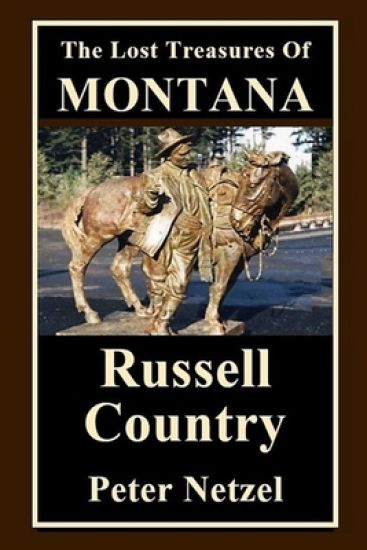
THE LOST TREASURES OF MONTANA: Russell Country, by Peter NetzelThe Lost Treasures of Montana is a series of books on the lost treasures that can be found in Montana, by region. Covered in this edition of The Lost Treasures of Montana is RUSSELL COUNTRY, the fourth in this series of books. This volume covers the Russell Country region of the state, which is comprised of the counties: Blaine, Cascade, Chouteau, Fergus, Hill, Judith Basin, Liberty, Pondera, Teton, Toole, and Wheatland. It is a compilation of the legends of lost silver and gold mines in this region of Montana. Details and background of locations of buried loot and hidden caches are covered in the stories in this book. There are many maps included, along with rich details of the colorful history that took place in this section of the Old West in the wild, exciting days of its gold and silver rushes. I have been researching old treasure legends for over a decade and have been successful in pinning down the locations of most of them on topographic maps. I include these detailed maps with the stories in this series. In addition to pinpointing actual locations, I have even found a few lost treasures never before presented in books Portions of the Russell Country region of Montana are where the Henry Plummer Gang is alleged to have operated. There were other outlaws active in Russell Country in the 1800's and early 1900's also. The most common and repeated crimes involved cattle rustling; horse stealing; and robbing stagecoaches, banks, and trains. During the short reign of terror by Plummer and his road agents, it is believed that they hid much of their loot. Some sources believe it more likely that they spent it as fast as they could on whiskey, wild women, and gambling. Several of the treasures that are claimed to have been hidden by Plummer are said to lay in this region. He and his accomplices were lynched for their crimes in the early days of Montana history. Years later, books were written averring that Henry Plummer was innocent of the crimes of which he was accused. Nonetheless, his life was cut short by vigilantes. Not all lost treasures covered in this book were the result of outlaw gangs hiding loot. Some of the hidden caches concern lost mines and rich gold and silver ledges which were never found a second time. The purpose of this book is to look at all of these lost treasures and see if they could be real or not. Some, I have my doubts about; and some accounts seem to hold water. It is up to you, the reader, to come to your own conclusions. No matter what you decide you will find the history of the Old West interesting.Stories of likely locations of hidden treasure covered in this book include: Chased To Montana, which explores the question of whether Kid Curry, his brothers, and the other gang members have loot stashed in the Russell Country region of Montana. Gold Butte Lost Lode tells of a rich gold deposit in the Sweet Grass Hills, at Gold Butte, the source of which was never found. It is said that every state that had a mining boom, has at least one tale of a rich, lost mine. Fergus County, Montana, has the legend of Kelley's Lost Mine. There are several intriguing stories of places throughout Russell Country where Henry Plummer, and his gang, had loot buried. Plummer could have stashed stolen loot in multiple caches. Henry Plummer's Lost Loot, Cascade Cache, St. Peter's Mission, Searching The River Banks, and Ever Hear Of Dearborn offer details of the locations of some of Henry Plummer's possible hidden loot caches. You do not have to be an avid treasure hunter in order to enjoy the books in The Lost Treasures Of Montana series. Anyone will enjoy reading about the colorful characters and rich history of Montana's early days.
The Lost Treasures Of Montana: GLACIER COUNTRY by Peter Netzel, is a series of books on the lost treasures that can be found in Montana, by region. This series is a compilation of the legends of lost silver and gold in Montana. The Lost Treasures Of Montana: GLACIER COUNTRY, is the fifth book in the series and includes the counties of Mineral, Granite, Flathead, Lake, Lincoln, Ravalli, Sanders, Glacier, and Missoula. Located in northwestern Montana, Glacier Country also includes Glacier National Park, and the Flathead and Blackfeet Native American Indian Reservations. Details and background of locations of buried loot and hidden caches are covered in the stories in this book. Many maps are included with the stories. Best of all, rich details of the colorful history of this section of the Old West fill the pages. You don't have to be a treasure hunter to enjoy the books in this series because they also contain page upon page of historical accounts of the people and places of Montana in its early days. Based on decades of research, these books enable the reader to pin down the locations of lost treasures on the included maps. The region covered in this edition of The Lost Treasures of Montana is Glacier Country, which is comprised of the counties: Mineral, Granite, Flathead, Lake, Lincoln, Ravalli, Sanders, Glacier, and Missoula. Located in northwestern Montana, Glacier Country includes the Flathead and the Blackfeet Native American Indian Reservations, and Glacier National Park. Montana's Glacier Country spans millions of acres of stunning natural wonders and wild beauty. This book, The Lost Treasures of Montana: GLACIER COUNTRY, is the fifth in a series of books that takes a look at the lost treasures of Montana. Portions of this region are where Henry Plummer and his gang hid themselves and their stolen loot. Even though some sources believe it more likely that outlaws spent the loot they stole as fast as they could on whiskey, wild women, and gambling, thieves like Henry Plummer took way more than he could squander rapidly, so he had to stash it somewhere. But, not all of the lost treasure caches covered in this book were the result of outlaw gangs hiding loot. Some concern lost mines and rich gold and silver ledges which were never found a second time.
THE LOST TREASURES OF MONTANA: Gold West Country, Volume 1By Peter NetzelThe Lost Treasures of Montana is a series of books on the lost treasures that can be found in Montana, by region. The series is based on over twenty years of researching old treasure legends. This book contains details of locations of buried caches and lost treasures in Gold West Country, Montana. Counties covered in this edition of The Lost Treasures of Montana: GOLD WEST COUNTRY, Volume. I are: Beaverhead County, and Madison County. The stories take you back to the time of the Wild West and its gold rush days; you will meet the colorful outlaw characters who stole the loot, how they did it, and where it may have ended up. Most of the stories include maps, in case you wish to search for hidden treasure yourself In the Lost Treasures of Montana series, you will even find a few lost treasures never before presented in books Details and background of locations of buried loot and hidden caches are covered in the book. Along with the many maps included, are rich details of the colorful history that paint a vivid word portrait of the history that took place in this section of Montana in the wild, exciting days of its gold and silver rushes. Author, Peter Netzel, explains: "I have been researching old treasure legends for twenty years and have been successful in pinning down the locations of most of the lost treasures in this region on topographic maps. I include these detailed maps with the stories in this series. In addition to pinpointing actual locations, I have even found a few lost treasures never before presented in books "Portions of the Gold West Country region of Montana are where the Henry Plummer Gang is alleged to have operated. There were other outlaws active in Russell Country in the 1800's and early 1900's also. The most common and repeated crimes involved cattle rustling; horse stealing; and robbing stagecoaches, banks, and trains. During the short reign of terror by Plummer and his road agents, it is believed that they hid much of their loot. (Some sources believe it more likely that they spent it as fast as they could on whiskey, wild women, and gambling ) Several of the treasures that are claimed to have been hidden by Plummer and other outlaws are said to lay in this region. Henry Plummer and his accomplices were lynched for their crimes in the early 1860's. Years later, books were written averring that Henry Plummer was innocent of the crimes of which he was accused. Nonetheless, his life was cut short by vigilantes. Not all lost treasures covered in this book were the result of outlaws hiding loot. Some of the hidden caches concern lost mines and rich gold and silver ledges which were never found a second time. The purpose of this book is to look at all of these lost treasures and see if they could be real or not. Some may be doubtful, and some accounts seem to hold water. It is up to you, the reader, to come to your own conclusions. No matter what you decide, you will find the history of the Montana's Gold West Country interesting and entertaining. You do not have to be a treasure hunter to enjoy this book series
THE LOST TREASURES OF MONTANA, Gold West Country-Vol. 2Author, Peter NetzelThe Lost Treasures of Montana is a series of books on the lost treasures that can be found in Montana, by region. The series is based on over twenty years of researching old treasure legends. This book contains details of locations of buried caches and lost treasures in Gold West Country, Montana. Counties covered in this edition of The Lost Treasures of Montana-GOLD WEST COUNTRY, Volume 2 are Broadwater County, Deer Lodge County, Jefferson County, Lewis and Clark County, Powell County, and Silver Bow County. Even though some regions have more lost treasures than others, all of The Treasure State's regions have an interesting history and intriguing stories of the characters who lived in the gold rush days of the Old West.Montana's state capitol, Helena, is located in this region. Helena was the site of one of the richest gold strikes in U.S. History, at Last Chance Gulch, in July of 1864. About 67 miles southwest of Helena, is Butte, another former boom town. Butte began as nothing more than a group of gold mining camps back in the early 1870's. Then, silver and copper were discovered. These discoveries brought in a flood of people and new companies to Butte. By the late 1870's, a large and bustling city had been born. While silver and gold were actively mined in Butte, it was copper that truly put Butte on the map. The stories take you back to the time of the Wild West and its gold rush days. You will meet the colorful outlaw characters who stole the loot, how they did it, and where it may have ended up. Most of the stories include maps, in case you wish to search for hidden treasure yourself Details and background of locations of buried loot and hidden caches are covered in the book. Along with the many maps included, are rich details of the colorful history that paint a vivid word portrait of the history that took place in this section of Montana in the wild, exciting days of its gold and silver rushes. Author, Peter Netzel, explains - "I have been researching old treasure legends for twenty years and have been successful in pinning down the locations of most of the lost treasures in this region on topographic maps. I include these detailed maps with the stories in this series. In addition to pinpointing actual locations, I have even found a few lost treasures never before presented in books "Portions of the Gold West Country region of Montana are where the Henry Plummer Gang is alleged to have operated. There were other outlaws active in Gold West Country in the 1800's and early 1900's also. The most common and repeated crimes involved cattle rustling; horse stealing; and robbing stagecoaches, banks, and trains. During the short reign of terror by Plummer and his road agents, it is believed that they hid much of their loot. (Some sources believe it more likely that they spent it as fast as they could on whiskey, wild women, and gambling ) Several of the treasures that are claimed to have been hidden by Plummer and other outlaws are said to lay in this region. Not all lost treasures covered in this book were the result of outlaws hiding loot. Some of the hidden caches concern lost mines and rich gold and silver ledges which were never found a second time. The purpose of this book is to look at all of these lost treasures and see if they could be real or not. Some may be doubtful, and some accounts seem to hold water. It is up to you, the reader, to come to your own conclusions. No matter what you decide, you will find the history of the Montana's Gold West Country interesting and entertaining. You do not have to be a treasure hunter to enjoy this book series.In the Lost Treasures of Montana series, you will even find a few lost treasures never before presented in books