Kirjahaku
Etsi kirjoja tekijän nimen, kirjan nimen tai ISBN:n perusteella.
1000 tulosta hakusanalla Philip Tetlock; Dan Gardner
Tetlock's latest project â?? an unprecedented, government-funded forecasting tournament involving over a million individual predictions â?? has since shown that there are, however, some people with real, demonstrable foresight.
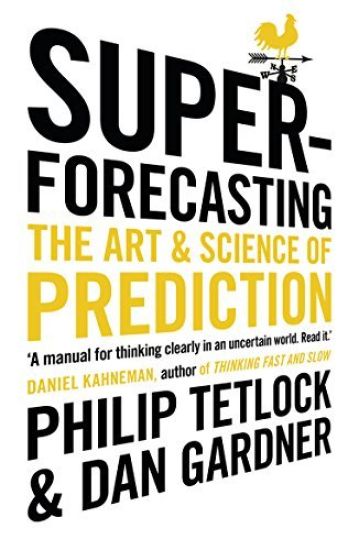
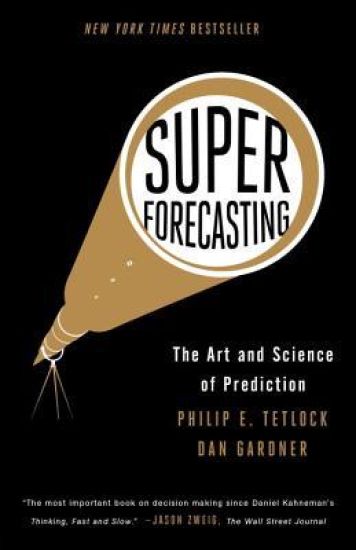
Superforecasting: The Art and Science of Prediction
Philip E. Tetlock; Dan Gardner
Crown Publishing Group (NY)
2016
nidottu
NEW YORK TIMES BESTSELLER - NAMED ONE OF THE BEST BOOKS OF THE YEAR BY THE ECONOMIST "The most important book on decision making since Daniel Kahneman's Thinking, Fast and Slow."--Jason Zweig, The Wall Street Journal Everyone would benefit from seeing further into the future, whether buying stocks, crafting policy, launching a new product, or simply planning the week's meals. Unfortunately, people tend to be terrible forecasters. As Wharton professor Philip Tetlock showed in a landmark 2005 study, even experts' predictions are only slightly better than chance. However, an important and underreported conclusion of that study was that some experts do have real foresight, and Tetlock has spent the past decade trying to figure out why. What makes some people so good? And can this talent be taught? In Superforecasting, Tetlock and coauthor Dan Gardner offer a masterwork on prediction, drawing on decades of research and the results of a massive, government-funded forecasting tournament. The Good Judgment Project involves tens of thousands of ordinary people--including a Brooklyn filmmaker, a retired pipe installer, and a former ballroom dancer--who set out to forecast global events. Some of the volunteers have turned out to be astonishingly good. They've beaten other benchmarks, competitors, and prediction markets. They've even beaten the collective judgment of intelligence analysts with access to classified information. They are "superforecasters." In this groundbreaking and accessible book, Tetlock and Gardner show us how we can learn from this elite group. Weaving together stories of forecasting successes (the raid on Osama bin Laden's compound) and failures (the Bay of Pigs) and interviews with a range of high-level decision makers, from David Petraeus to Robert Rubin, they show that good forecasting doesn't require powerful computers or arcane methods. It involves gathering evidence from a variety of sources, thinking probabilistically, working in teams, keeping score, and being willing to admit error and change course. Superforecasting offers the first demonstrably effective way to improve our ability to predict the future--whether in business, finance, politics, international affairs, or daily life--and is destined to become a modern classic.
Konsten att förutsäga framtiden : en bok om superprognostik
Philip E. Tetlock; Dan Gardner
Bokförlaget Daidalos
2016
sidottu
Alla gör vi förutsägelser, i stort och i smått. Om världshändelser, om vem som vinner val eller fotbollsmatcher, om samhällsekonomi och privatekonomi, om vad som kommer att ske på jobbet och så vidare. Vi är alla prognostiker, men de flesta av oss är dåliga på att förutsäga framtiden. Psykologen Philip Tetlock visade i sin uppmärksammade bok "Expert Political Judgment" hur dåliga politiska experter är på att göra förutsägelser trots att de gör det hela tiden. Men bland de experter han studerade fanns också en del som var påfallande träffsäkra. I "Konsten att förutsäga framtiden" presenterar han resultaten av ett omfattande forskningsprojekt som har involverat tusentals människor som ställt prognoser om världshändelser. Dessa var inte experter på det de tillfrågades om, men en del av dem visade sig vara utomordentligt träffsäkra. De var "superprognostiker". Vad gjorde dem så bra på att förutsäga? Hur samlade de information, hur resonerade de och hur förhöll de sig till sitt eget resonerande och till ny information? Och vad kan vi andra lära oss om tankefel som vi lätt gör, men som superprognostikerna lyckas undvika. Lättillgängligt och underhållande redogör Tetlock tillsammans med Dan Gardner för sina forskningsresultat. Daniel Kahneman, nobelpristagare i ekonomi och känd för sin banbrytande forskning om tankefel, säger följande om boken: "... en underbar bok om hur Tetlock och hans forskarlag fick vanliga människor att slå experter. Det är också en handbok för klart tänkande i en osäker värld. Läs den!"."Philip Tetlock är en världsledande expert inom ett viktigt fält. ... en underbar bok om hur Tetlock och hans forskarlag fick vanliga människor att slå experter. Det är också en handbok för klart tänkande i en osäker värld. Läs den! /Daniel Kahneman "Det är en väldigt bra bok. Den borde faktiskt vara obligatorisk läsning – något jag aldrig tidigare skrivit i en recension. Den borde finnas på varje chefs och investerares läslista ..." /Management Today Tetlock, tillsammans med sin medförfattare Dan Gardner, redovisar och diskuterar projektet i den mycket läsvärda ”Konsten att förutsäga framtiden”. De undersöker några av deltagarna i den grupp de arbetat med – de som visat sig vara mycket bra på att förutsäga framtiden – från tre olika perspektiv. De studerar deras intelligens, deras matematiska förmåga och deras konsumtion av nyheter – och finner i nyanserade och intressanta resultat att alla dessa tre faktorer har en positiv påverkan på deltagarnas förutsägelser, men att de inte ensamma räcker för att förklara de extremt goda resultat som vissa av deltagarna uppvisar." /SvD Under strecket
Since its original publication, Expert Political Judgment by New York Times bestselling author Philip Tetlock has established itself as a contemporary classic in the literature on evaluating expert opinion. Tetlock first discusses arguments about whether the world is too complex for people to find the tools to understand political phenomena, let alone predict the future. He evaluates predictions from experts in different fields, comparing them to predictions by well-informed laity or those based on simple extrapolation from current trends. He goes on to analyze which styles of thinking are more successful in forecasting. Classifying thinking styles using Isaiah Berlin's prototypes of the fox and the hedgehog, Tetlock contends that the fox--the thinker who knows many little things, draws from an eclectic array of traditions, and is better able to improvise in response to changing events--is more successful in predicting the future than the hedgehog, who knows one big thing, toils devotedly within one tradition, and imposes formulaic solutions on ill-defined problems. He notes a perversely inverse relationship between the best scientific indicators of good judgement and the qualities that the media most prizes in pundits--the single-minded determination required to prevail in ideological combat. Clearly written and impeccably researched, the book fills a huge void in the literature on evaluating expert opinion. It will appeal across many academic disciplines as well as to corporations seeking to develop standards for judging expert decision-making. Now with a new preface in which Tetlock discusses the latest research in the field, the book explores what constitutes good judgment in predicting future events and looks at why experts are often wrong in their forecasts.
Jokainen hyötyisi tulevaisuuteen katsomisesta, jos osaisimme tehdä sen oikein. Osaisimme ostaa osakkeita, juonia politiikassa, lanseerata uusia tuotteita tai yksinkertaisesti suunnitella arjen elämää.Valitettavasti me ihmiset olemme todella huonoja ennustajia.Vuonna 2005 professori Philip E. Tetlock todisti tämän laajan kokeensa tuloksella: jopa asiantuntijoiden ennustukset omalla alallaan ovat vain hieman sattumanvaraista arvausta parempia.Tutkimuksen osatulos oli kuitenkin, että jotkut asiantuntijat ovat johdonmukaisesti vertaisiaan parempia. Miksi? Ja voiko taidon oppia?Superennustajat on yhteenveto Tetlockin uudesta tutkimuksesta, Hyvä arvio -projektista, joka selvittää näitä kysymyksiä. Kymmenettuhannet tavalliset vapaaehtoiset ryhtyivät ennustamaan asiantuntemuksensa ulkopuolella olevia maailman tapahtumia ja kävi ilmi, että osa heistä suoriutui hämmästyttävän hyvin. He ylittivät asetetut tavoitteet ja voittivat kilpailijansa ja ennustusmarkkinat. He olivat jopa parempia kuin tiedustelutiedon analyytikoiden kollektiiviset tulokset.Superennustajat kertoo, miten nämä ihmiset toimivat. Ennustaminen ei edellytä valtavia tietokoneita tai salaperäisiä menetelmiä. Superennustajat keräävät aineistoaan eri lähteistä, heidän ajattelunsa perustuu todennäköisyyksiin, he työskentelevät ryhmissä, pitävät kirjaa tuloksistaan ja ennen kaikkea ovat valmiit myöntämään virheensä ja muuttamaan mielipiteitään.
The Clash of Rights
Paul M. Sniderman; Joseph F. Fletcher; Peter Russell; Philip E. Tetlock
Yale University Press
1997
pokkari
Why do citizens in pluralist democracies disagree collectively about the very values they agree on individually? This provocative book highlights the inescapable conflicts of rights and values at the heart of democratic politics. Based on interviews with thousands of citizens and political decision makers, the book focuses on modern Canadian politics, investigating why a country so fortunate in its history and circumstances is on the brink of dissolution. Taking advantage of new techniques of computer-assisted interviewing, the authors explore the politics of a wide array of issues, from freedom of expression to public funding of religious schools to government wiretapping to antihate legislation, analyzing not only why citizens take the positions they do but also how easily they can be talked out of them. In the process, the authors challenge a number of commonly held assumptions about democratic politics. They show, for example, that political elites do not constitute a special bulwark protecting civil liberties; that arguments over political rights are as deeply driven by commitment to the master values of democratic politics as by failure to understand them; and that consensus on the rights of groups is inherently more fragile than on the rights of individuals.
HBR's 10 Must Reads on Managing Risk (with bonus article "Managing 21st-Century Political Risk" by Condoleezza Rice and Amy Zegart)
Harvard Business Review; Robert S. Kaplan; Condoleezza Rice; Philip E. Tetlock; Paul J. H. Schoemaker
Harvard Business Review Press
2020
pokkari
Is your business playing it safe—or taking the right risks?If you read nothing else on managing risk, read these 10 articles. We've combed through hundreds of Harvard Business Review articles and selected the most important ones to help your company make smart decisions and thrive, even when the future is unclear.This book will inspire you to:Avoid the most common errors in risk managementUnderstand the three distinct categories of risk and tailor your risk-management processes accordinglyEmbrace uncertainty as a key element of breakthrough innovationAdopt best practices for mitigating political threatsUpgrade your organization's forecasting capabilities to gain a competitive edgeDetect and neutralize cyberattacks originating inside your companyThis collection of articles includes "Managing Risks: A New Framework," by Robert S. Kaplan and Anette Mikes; "How to Build Risk into Your Business Model," by Karan Girotra and Serguei Netessine; "The Six Mistakes Executives Make in Risk Management," by Nassim N. Taleb, Daniel G. Goldstein, and Mark W. Spitznagel; "From Superstorms to Factory Fires: Managing Unpredictable Supply-Chain Disruptions," by David Simchi-Levi, William Schmidt, and Yehua Wei; "Is It Real? Can We Win? Is It Worth Doing?: Managing Risk and Reward in an Innovation Portfolio," by George S. Day; “Superforecasting: How to Upgrade Your Company's Judgment," by Paul J. H. Schoemaker and Philip E. Tetlock; "Managing 21st-Century Political Risk," by Condoleezza Rice and Amy Zegart; "How to Scandal-Proof Your Company," by Paul Healy and George Serafeim; "Beating the Odds When You Launch a New Venture," by Clark Gilbert and Matthew Eyring; "The Danger from Within," by David M. Upton and Sadie Creese; and "Future-Proof Your Climate Strategy," by Joseph E. Aldy and Gianfranco Gianfrate.
Reasoning and Choice
Paul M. Sniderman; Richard A. Brody; Phillip E. Tetlock
Cambridge University Press
1991
sidottu
Drawing on a multitude of data sets and building on analyses carried out over more than a decade, this book offers a major new theoretical explanation of how ordinary citizens figure out what they favour and oppose politically. Reacting against the conventional wisdom, which stresses how little attention the general public pays to political issues and the lack of consistency in their opinions, the studies presented in this book redirect attention to the processes of reasoning that can be discerned when people are confronted with choices about political issues. These studies demonstrate that ordinary people are in fact capable of reasoning dependably about political issues by the use of judgmental heuristics, even if they have only a limited knowledge of politics and of specific issues.
Reasoning and Choice
Paul M. Sniderman; Richard A. Brody; Phillip E. Tetlock
Cambridge University Press
1993
pokkari
Drawing on a multitude of data sets and building on analyses carried out over more than a decade, this book offers a major new theoretical explanation of how ordinary citizens figure out what they favour and oppose politically. Reacting against the conventional wisdom, which stresses how little attention the general public pays to political issues and the lack of consistency in their opinions, the studies presented in this book redirect attention to the processes of reasoning that can be discerned when people are confronted with choices about political issues. These studies demonstrate that ordinary people are in fact capable of reasoning dependably about political issues by the use of judgmental heuristics, even if they have only a limited knowledge of politics and of specific issues.
____________________________________________________________________________________ THE SUNDAY TIMES TOP 10 BESTSELLER 'It is a beautifully written book about a unique and extraordinary man who was the longest-serving consort to the longest reigning monarch in British history. I have read many other books about Philip but this is the best.' - DAILY EXPRESS'Gloriously witty and incisive' - DAILY MAIL'It's bloody brilliant, totally inspiring ... it's a joy to read a book that comes from a perspective of fondness. There are whole pages I want to read to the kids and stick to the fridge.' - KIRSTIE ALLSOPP, THE TIMES'As a sparkling celebration of Prince Philip, the book will be hard to beat' - THE TELEGRAPH'Brandreth explores a temperament on the brink of anger and agitation with immense tact, even affection.' - THE SPECTATOR'This affectionate biography of Prince Philip is stuffed with entertaining anecdotes ... so readable and refreshing even after the millions of words that have been written about Prince Philip in the past couple of weeks.' - THE TIMES'Brilliant... there is so much in this book you won't find anywhere else.' - LORRAINE'A stately, respectful and joyful tribute. It is an extraordinary story, told with unique insight and authority by an author who knew him for more than 40 years.' - EDINBURGH EVENING NEWS'A warm, affectionate portrait of the much-missed Duke ... a rich source of insights and anecdotes.' - SAGA MAGAZINE______________________________________________________________________________________This is the story of Prince Philip, Duke of Edinburgh - the longest-serving consort to the longest-reigning sovereign in British history. It is an extraordinary story, told with unique insight and authority by an author who knew the prince for more than forty years. Philip - elusive, complex, controversial, challenging, often humorous, sometimes irascible - is the man Elizabeth II once described as her 'constant strength and guide'. Who was he? What was he really like? What is the truth about those 'gaffes' and the rumours of affairs? This is the final portrait of an unexpected and often much-misunderstood figure. It is also the portrait of a remarkable marriage that endured for more than seventy years. Philip and Elizabeth were both royal by birth, both great-great-grandchildren of Queen Victoria, but, in temperament and upbringing, they were two very different people. The Queen's childhood was loving and secure, the Duke's was turbulent; his grandfather assassinated, his father arrested, his family exiled, his parents separated when he was only ten. Elizabeth and Philip met as cousins in the 1930s. They married in 1947, aged twenty-one and twenty-six. Philip: The Final Portrait tells the story of two contrasting lives, assesses the Duke of Edinburgh's character and achievement, and explores the nature of his relationships with his wife, his children and their families - and with the press and public and those at court who were suspicious of him in the early days. This is a powerful, revealing and, ultimately, moving account of a long life and a remarkable royal partnership.
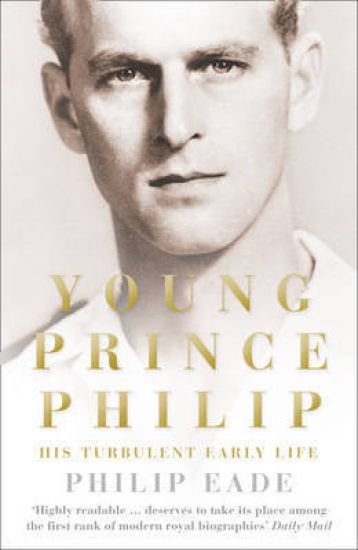
'The narrative is as suspenseful as any thriller. Truly, an excellent read' Lynn Barber, Sunday Times Married for almost seventy years to the most famous woman in the world, Prince Philip is the longest-serving royal consort in British history. Yet his origins have remained curiously shrouded in obscurity.
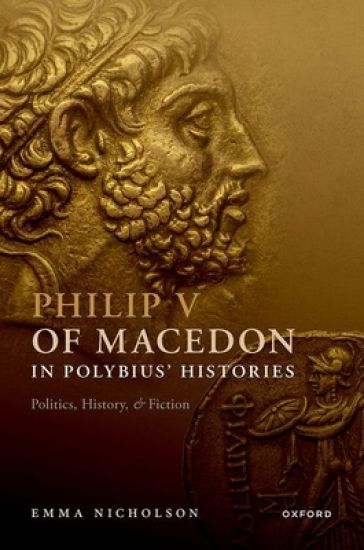
Philip V of Macedon in Polybius' Histories: Politics, History, and Fiction offers a historiographical and literary study of Polybius' portrait of Philip V and aims to advance our knowledge of both the Macedonian king and the historian. It takes a chronological and thematic approach, exploring how Polybius' political, historiographical, and didactic aims impact the king's depiction from beginning to end. The first half focuses on political and rhetorical aspects: it highlights the embedded Achaean perspective of the narrative and how this fundamentally shapes Philip's image; it re-evaluates key character-defining episodes, such as the sack of Thermum and the attempt on Messene; and it problematizes Polybius' claim that Philip became increasingly treacherous and tyrannical towards the Greeks after 215 BC. The second half explores how Polybius develops his interpretation of the king through ideological and literary means: it investigates how Polybius uses cultural politics to blacken Philip's image and justify the exchange of Macedon and Rome as hegemonic powers in the Greek world; it rationalizes his use of a tragic mode for Philip's last years, examining the implications this styling has for our historical understanding of the king; and it considers how tensions between Polybius' narrative and commentary on Philip may be the result of his combination of historiographical and biographical modes of presentation. It finishes by resituating Philip in the broader context of the Histories, drawing comparisons between his portrait and that of other kings and leaders, and discussing how kings are shaped by and contribute to the arguments in the Histories.
Philip Pullman and the Historical Imagination takes the general reader on a fascinating tour of seventeenth-century thought, exploring how this time period shaped Pullman's extraordinary trilogies His Dark Materials and The Book of Dust. In Part One, readers are taken into the mysteries of Renaissance allegory and hieroglyphics, tracing how the alethiometer and Lyra's way of reading the device emerged from these traditions. Part Two enters the exciting and revolutionary world of seventeenth-century science. We see how the amber spyglass imitates Galileo's telescope, how early modern fantasies of space travel led to ideas of multiple worlds, how alchemy entered Lyra's later adventures in Oxford and Prague, and how the concept of Dust shares in the physics and philosophies of early scientists like Margaret Cavendish. Part Three invites readers into the thrilling epic poem Paradise Lost--John Milton's dramatic account of the creation of the world following a violent war in Heaven--that was Pullman's inspiration for His Dark Materials. Pullman's vibrant re-telling of this core story brings us rebel angels, recasts Satan as a brooding Lord Asriel, and presents Lyra as the new Eve. Written by an eminent scholar of seventeenth-century literature and history, Philip Pullman and the Historical Imagination is crafted in an engaging and accessible style aimed at popular readers and fans of Pullman's work. It enlivens a historical period that has long attracted Pullman himself, bringing to life intriguing figures and the richly complex ideas of the time. This book is an exploration of history through the worlds and characters Pullman has invented. Ultimately, it not only reveals how seventeenth-century history helps readers better understand Pullman's novels, but shows how reading history through the lens of Pullman's imagination offers new ways of thinking about the past.