

Kirjahaku
Etsi kirjoja tekijän nimen, kirjan nimen tai ISBN:n perusteella.
1000 tulosta hakusanalla Philo


Trieste Publishing has a massive catalogue of classic book titles. Our aim is to provide readers with the highest quality reproductions of fiction and non-fiction literature that has stood the test of time. The many thousands of books in our collection have been sourced from libraries and private collections around the world.The titles that Trieste Publishing has chosen to be part of the collection have been scanned to simulate the original. Our readers see the books the same way that their first readers did decades or a hundred or more years ago. Books from that period are often spoiled by imperfections that did not exist in the original. Imperfections could be in the form of blurred text, photographs, or missing pages. It is highly unlikely that this would occur with one of our books. Our extensive quality control ensures that the readers of Trieste Publishing's books will be delighted with their purchase. Our staff has thoroughly reviewed every page of all the books in the collection, repairing, or if necessary, rejecting titles that are not of the highest quality. This process ensures that the reader of one of Trieste Publishing's titles receives a volume that faithfully reproduces the original, and to the maximum degree possible, gives them the experience of owning the original work.We pride ourselves on not only creating a pathway to an extensive reservoir of books of the finest quality, but also providing value to every one of our readers. Generally, Trieste books are purchased singly - on demand, however they may also be purchased in bulk. Readers interested in bulk purchases are invited to contact us directly to enquire about our tailored bulk rates.
Syncretistic exegesis.The philosopher Philo was born about 20 BC to a prominent Jewish family in Alexandria, the chief home of the Jewish Diaspora as well as the chief center of Hellenistic culture; he was trained in Greek as well as Jewish learning. In attempting to reconcile biblical teachings with Greek philosophy he developed ideas that had wide influence on Christian and Jewish religious thought. The Loeb Classical Library edition of the works of Philo is in ten volumes and two supplements, distributed as follows. Volume I: Creation; Interpretation of Genesis II and III. II: On the Cherubim; The Sacrifices of Abel and Cain; The Worse Attacks the Better; The Posterity and Exile of Cain; On the Giants. III: The Unchangeableness of God; On Husbandry; Noah's Work as a Planter; On Drunkenness; On Sobriety. IV: The Confusion of Tongues; The Migration of Abraham; The Heir of Divine Things; On the Preliminary Studies. V: On Flight and Finding; Change of Names; On Dreams. VI: Abraham; Joseph; Moses. VII: The Decalogue; On Special Laws Books I–III. VIII: On Special Laws Book IV; On the Virtues; Rewards and Punishments. IX: Every Good Man Is Free; The Contemplative Life; The Eternity of the World; Against Flaccus; Apology for the Jews; On Providence. X: On the Embassy to Gaius; indexes. Supplement I: Questions on Genesis. II: Questions on Exodus; index to supplements.
Syncretistic exegesis.The philosopher Philo was born about 20 BC to a prominent Jewish family in Alexandria, the chief home of the Jewish Diaspora as well as the chief center of Hellenistic culture; he was trained in Greek as well as Jewish learning. In attempting to reconcile biblical teachings with Greek philosophy he developed ideas that had wide influence on Christian and Jewish religious thought. The Loeb Classical Library edition of the works of Philo is in ten volumes and two supplements, distributed as follows. Volume I: Creation; Interpretation of Genesis II and III. II: On the Cherubim; The Sacrifices of Abel and Cain; The Worse Attacks the Better; The Posterity and Exile of Cain; On the Giants. III: The Unchangeableness of God; On Husbandry; Noah's Work as a Planter; On Drunkenness; On Sobriety. IV: The Confusion of Tongues; The Migration of Abraham; The Heir of Divine Things; On the Preliminary Studies. V: On Flight and Finding; Change of Names; On Dreams. VI: Abraham; Joseph; Moses. VII: The Decalogue; On Special Laws Books I–III. VIII: On Special Laws Book IV; On the Virtues; Rewards and Punishments. IX: Every Good Man Is Free; The Contemplative Life; The Eternity of the World; Against Flaccus; Apology for the Jews; On Providence. X: On the Embassy to Gaius; indexes. Supplement I: Questions on Genesis. II: Questions on Exodus; index to supplements.
Syncretistic exegesis.The philosopher Philo was born about 20 BC to a prominent Jewish family in Alexandria, the chief home of the Jewish Diaspora as well as the chief center of Hellenistic culture; he was trained in Greek as well as Jewish learning. In attempting to reconcile biblical teachings with Greek philosophy he developed ideas that had wide influence on Christian and Jewish religious thought. The Loeb Classical Library edition of the works of Philo is in ten volumes and two supplements, distributed as follows. Volume I: Creation; Interpretation of Genesis II and III. II: On the Cherubim; The Sacrifices of Abel and Cain; The Worse Attacks the Better; The Posterity and Exile of Cain; On the Giants. III: The Unchangeableness of God; On Husbandry; Noah's Work as a Planter; On Drunkenness; On Sobriety. IV: The Confusion of Tongues; The Migration of Abraham; The Heir of Divine Things; On the Preliminary Studies. V: On Flight and Finding; Change of Names; On Dreams. VI: Abraham; Joseph; Moses. VII: The Decalogue; On Special Laws Books I–III. VIII: On Special Laws Book IV; On the Virtues; Rewards and Punishments. IX: Every Good Man Is Free; The Contemplative Life; The Eternity of the World; Against Flaccus; Apology for the Jews; On Providence. X: On the Embassy to Gaius; indexes. Supplement I: Questions on Genesis. II: Questions on Exodus; index to supplements.
Syncretistic exegesis.The philosopher Philo was born about 20 BC to a prominent Jewish family in Alexandria, the chief home of the Jewish Diaspora as well as the chief center of Hellenistic culture; he was trained in Greek as well as Jewish learning. In attempting to reconcile biblical teachings with Greek philosophy he developed ideas that had wide influence on Christian and Jewish religious thought. The Loeb Classical Library edition of the works of Philo is in ten volumes and two supplements, distributed as follows. Volume I: Creation; Interpretation of Genesis II and III. II: On the Cherubim; The Sacrifices of Abel and Cain; The Worse Attacks the Better; The Posterity and Exile of Cain; On the Giants. III: The Unchangeableness of God; On Husbandry; Noah's Work as a Planter; On Drunkenness; On Sobriety. IV: The Confusion of Tongues; The Migration of Abraham; The Heir of Divine Things; On the Preliminary Studies. V: On Flight and Finding; Change of Names; On Dreams. VI: Abraham; Joseph; Moses. VII: The Decalogue; On Special Laws Books I–III. VIII: On Special Laws Book IV; On the Virtues; Rewards and Punishments. IX: Every Good Man Is Free; The Contemplative Life; The Eternity of the World; Against Flaccus; Apology for the Jews; On Providence. X: On the Embassy to Gaius; indexes. Supplement I: Questions on Genesis. II: Questions on Exodus; index to supplements.
Syncretistic exegesis.The philosopher Philo was born about 20 BC to a prominent Jewish family in Alexandria, the chief home of the Jewish Diaspora as well as the chief center of Hellenistic culture; he was trained in Greek as well as Jewish learning. In attempting to reconcile biblical teachings with Greek philosophy he developed ideas that had wide influence on Christian and Jewish religious thought. The Loeb Classical Library edition of the works of Philo is in ten volumes and two supplements, distributed as follows. Volume I: Creation; Interpretation of Genesis II and III. II: On the Cherubim; The Sacrifices of Abel and Cain; The Worse Attacks the Better; The Posterity and Exile of Cain; On the Giants. III: The Unchangeableness of God; On Husbandry; Noah's Work as a Planter; On Drunkenness; On Sobriety. IV: The Confusion of Tongues; The Migration of Abraham; The Heir of Divine Things; On the Preliminary Studies. V: On Flight and Finding; Change of Names; On Dreams. VI: Abraham; Joseph; Moses. VII: The Decalogue; On Special Laws Books I–III. VIII: On Special Laws Book IV; On the Virtues; Rewards and Punishments. IX: Every Good Man Is Free; The Contemplative Life; The Eternity of the World; Against Flaccus; Apology for the Jews; On Providence. X: On the Embassy to Gaius; indexes. Supplement I: Questions on Genesis. II: Questions on Exodus; index to supplements.
Syncretistic exegesis.The philosopher Philo was born about 20 BC to a prominent Jewish family in Alexandria, the chief home of the Jewish Diaspora as well as the chief center of Hellenistic culture; he was trained in Greek as well as Jewish learning. In attempting to reconcile biblical teachings with Greek philosophy he developed ideas that had wide influence on Christian and Jewish religious thought. The Loeb Classical Library edition of the works of Philo is in ten volumes and two supplements, distributed as follows. Volume I: Creation; Interpretation of Genesis II and III. II: On the Cherubim; The Sacrifices of Abel and Cain; The Worse Attacks the Better; The Posterity and Exile of Cain; On the Giants. III: The Unchangeableness of God; On Husbandry; Noah's Work as a Planter; On Drunkenness; On Sobriety. IV: The Confusion of Tongues; The Migration of Abraham; The Heir of Divine Things; On the Preliminary Studies. V: On Flight and Finding; Change of Names; On Dreams. VI: Abraham; Joseph; Moses. VII: The Decalogue; On Special Laws Books I–III. VIII: On Special Laws Book IV; On the Virtues; Rewards and Punishments. IX: Every Good Man Is Free; The Contemplative Life; The Eternity of the World; Against Flaccus; Apology for the Jews; On Providence. X: On the Embassy to Gaius; indexes. Supplement I: Questions on Genesis. II: Questions on Exodus; index to supplements.
Syncretistic exegesis.The philosopher Philo was born about 20 BC to a prominent Jewish family in Alexandria, the chief home of the Jewish Diaspora as well as the chief center of Hellenistic culture; he was trained in Greek as well as Jewish learning. In attempting to reconcile biblical teachings with Greek philosophy he developed ideas that had wide influence on Christian and Jewish religious thought. The Loeb Classical Library edition of the works of Philo is in ten volumes and two supplements, distributed as follows. Volume I: Creation; Interpretation of Genesis II and III. II: On the Cherubim; The Sacrifices of Abel and Cain; The Worse Attacks the Better; The Posterity and Exile of Cain; On the Giants. III: The Unchangeableness of God; On Husbandry; Noah's Work as a Planter; On Drunkenness; On Sobriety. IV: The Confusion of Tongues; The Migration of Abraham; The Heir of Divine Things; On the Preliminary Studies. V: On Flight and Finding; Change of Names; On Dreams. VI: Abraham; Joseph; Moses. VII: The Decalogue; On Special Laws Books I–III. VIII: On Special Laws Book IV; On the Virtues; Rewards and Punishments. IX: Every Good Man Is Free; The Contemplative Life; The Eternity of the World; Against Flaccus; Apology for the Jews; On Providence. X: On the Embassy to Gaius; indexes. Supplement I: Questions on Genesis. II: Questions on Exodus; index to supplements.
Syncretistic exegesis.The philosopher Philo was born about 20 BC to a prominent Jewish family in Alexandria, the chief home of the Jewish Diaspora as well as the chief center of Hellenistic culture; he was trained in Greek as well as Jewish learning. In attempting to reconcile biblical teachings with Greek philosophy he developed ideas that had wide influence on Christian and Jewish religious thought. The Loeb Classical Library edition of the works of Philo is in ten volumes and two supplements, distributed as follows. Volume I: Creation; Interpretation of Genesis II and III. II: On the Cherubim; The Sacrifices of Abel and Cain; The Worse Attacks the Better; The Posterity and Exile of Cain; On the Giants. III: The Unchangeableness of God; On Husbandry; Noah's Work as a Planter; On Drunkenness; On Sobriety. IV: The Confusion of Tongues; The Migration of Abraham; The Heir of Divine Things; On the Preliminary Studies. V: On Flight and Finding; Change of Names; On Dreams. VI: Abraham; Joseph; Moses. VII: The Decalogue; On Special Laws Books I–III. VIII: On Special Laws Book IV; On the Virtues; Rewards and Punishments. IX: Every Good Man Is Free; The Contemplative Life; The Eternity of the World; Against Flaccus; Apology for the Jews; On Providence. X: On the Embassy to Gaius; indexes. Supplement I: Questions on Genesis. II: Questions on Exodus; index to supplements.
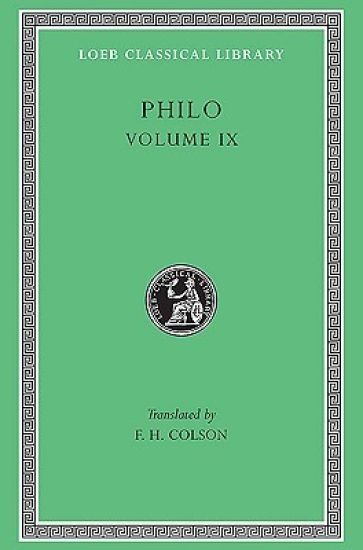
Syncretistic exegesis.The philosopher Philo was born about 20 BC to a prominent Jewish family in Alexandria, the chief home of the Jewish Diaspora as well as the chief center of Hellenistic culture; he was trained in Greek as well as Jewish learning. In attempting to reconcile biblical teachings with Greek philosophy he developed ideas that had wide influence on Christian and Jewish religious thought. The Loeb Classical Library edition of the works of Philo is in ten volumes and two supplements, distributed as follows. Volume I: Creation; Interpretation of Genesis II and III. II: On the Cherubim; The Sacrifices of Abel and Cain; The Worse Attacks the Better; The Posterity and Exile of Cain; On the Giants. III: The Unchangeableness of God; On Husbandry; Noah's Work as a Planter; On Drunkenness; On Sobriety. IV: The Confusion of Tongues; The Migration of Abraham; The Heir of Divine Things; On the Preliminary Studies. V: On Flight and Finding; Change of Names; On Dreams. VI: Abraham; Joseph; Moses. VII: The Decalogue; On Special Laws Books I–III. VIII: On Special Laws Book IV; On the Virtues; Rewards and Punishments. IX: Every Good Man Is Free; The Contemplative Life; The Eternity of the World; Against Flaccus; Apology for the Jews; On Providence. X: On the Embassy to Gaius; indexes. Supplement I: Questions on Genesis. II: Questions on Exodus; index to supplements.

A diplomatic mission to the emperor Caligula.The philosopher Philo was born about 20 BC to a prominent Jewish family in Alexandria, the chief home of the Jewish Diaspora as well as the chief center of Hellenistic culture; he was trained in Greek as well as Jewish learning. In attempting to reconcile biblical teachings with Greek philosophy he developed ideas that had wide influence on Christian and Jewish religious thought. The Loeb Classical Library edition of the works of Philo is in ten volumes and two supplements, distributed as follows. Volume I: Creation; Interpretation of Genesis II and III. II: On the Cherubim; The Sacrifices of Abel and Cain; The Worse Attacks the Better; The Posterity and Exile of Cain; On the Giants. III: The Unchangeableness of God; On Husbandry; Noah's Work as a Planter; On Drunkenness; On Sobriety. IV: The Confusion of Tongues; The Migration of Abraham; The Heir of Divine Things; On the Preliminary Studies. V: On Flight and Finding; Change of Names; On Dreams. VI: Abraham; Joseph; Moses. VII: The Decalogue; On Special Laws Books I–III. VIII: On Special Laws Book IV; On the Virtues; Rewards and Punishments. IX: Every Good Man Is Free; The Contemplative Life; The Eternity of the World; Against Flaccus; Apology for the Jews; On Providence. X: On the Embassy to Gaius; indexes. Supplement I: Questions on Genesis. II: Questions on Exodus; index to supplements.
Title: Philo: a romance of life in the first century.Publisher: British Library, Historical Print EditionsThe British Library is the national library of the United Kingdom. It is one of the world's largest research libraries holding over 150 million items in all known languages and formats: books, journals, newspapers, sound recordings, patents, maps, stamps, prints and much more. Its collections include around 14 million books, along with substantial additional collections of manuscripts and historical items dating back as far as 300 BC.The FICTION & PROSE LITERATURE collection includes books from the British Library digitised by Microsoft. The collection provides readers with a perspective of the world from some of the 18th and 19th century's most talented writers. Written for a range of audiences, these works are a treasure for any curious reader looking to see the world through the eyes of ages past. Beyond the main body of works the collection also includes song-books, comedy, and works of satire. ++++The below data was compiled from various identification fields in the bibliographic record of this title. This data is provided as an additional tool in helping to insure edition identification: ++++ British Library Hamilton, John M.A.; 1867. 3 vol.; 8 . 12625.aaa.6.