"Das Leben ist eine Kom die f r diejenigen, die denken, eine Trag die f r diejenigen, die f hlen. Dieser Satz des englischen Schriftstellers und Politikers H. Walpole illustriert perfekt, was schon Aristoteles ber die intelligente F hrung des Gef hlslebens analysiert hatte. Das Problem sind nicht die Emotionen selbst, sondern deren Richtigkeit und Ausdruck. Emotionale Intelligenz (EI) ist der Schl ssel zum Erreichen dieser Harmonie zwischen Intelligenz und Emotionen, denn emotional intelligent zu sein bedeutet, sich seiner Emotionen und deren Einfluss auf die so genannte traditionelle Intelligenz bewusst zu sein. Das Konzept der EI ist sowohl einfach als auch komplex zu begreifen. Die Idee meiner Forschung ist es, zu zeigen, dass unsere Emotionale Intelligenz entwickelt werden kann und dass die positiven externen Effekte dieser EI-Ausbildung auf n tzliche und entscheidende Weise in der Gesch ftswelt und globaler in unseren t glichen intra- und zwischenmenschlichen Beziehungen angewendet werden k nnen.
"Life is a comedy for those who think, a tragedy for those who feel". This sentence of the English writer and politician H. Walpole illustrates perfectly what Aristotle had already analyzed concerning the intelligent conduct of the emotional life. The problem would not come from the emotions themselves, but from their accuracy and their expression. Emotional intelligence (EI) is the key to achieve this harmony between intelligence and emotions because to be emotionally intelligent is to be aware of one's emotions and their influence on the so-called traditional intelligence. The concept of EI is both simple and complex to grasp. The idea of my research is to demonstrate that our Emotional Intelligence can be developed and that the positive externalities of this EI education can be applied in useful and decisive ways to the business world, and more globally to our daily intra and interpersonal relationships.
"La vita una commedia per chi pensa, una tragedia per chi sente. Questa frase dello scrittore e politico inglese H. Walpole illustra perfettamente ci che Aristotele aveva gi analizzato riguardo alla condotta intelligente della vita emotiva. Il problema non sono le emozioni in s , ma la loro correttezza ed espressione. L'intelligenza emotiva (EI) la chiave per raggiungere questa armonia tra l'intelligenza e le emozioni, perch essere emotivamente intelligenti significa essere consapevoli delle proprie emozioni e della loro influenza sulla cosiddetta intelligenza tradizionale. Il concetto di IE sia semplice che complesso da comprendere. L'idea della mia ricerca quella di dimostrare che la nostra Intelligenza Emotiva pu essere sviluppata e che le esternalit positive di questa educazione EI possono essere applicate in modo utile e decisivo al mondo degli affari, e pi globalmente alle nostre relazioni quotidiane intra e interpersonali.
"Życie jest komedią dla tych, kt rzy myślą, tragedią dla tych, kt rzy czują. To zdanie angielskiego pisarza i polityka H. Walpole'a doskonale ilustruje to, co już Arystoteles analizowal na temat inteligentnego prowadzenia życia uczuciowego. Problemem nie są same emocje, ale ich poprawnośc i ekspresja. Inteligencja emocjonalna (EI) jest kluczem do osiągnięcia tej harmonii między inteligencją a emocjami, ponieważ byc inteligentnym emocjonalnie to byc świadomym swoich emocji i ich wplywu na tzw. tradycyjną inteligencję. Koncepcja EI jest zar wno prosta, jak i skomplikowana do uchwycenia. Ideą moich badań jest wykazanie, że inteligencja emocjonalna może byc rozwijana i że pozytywne efekty zewnętrzne tej edukacji EI mogą byc zastosowane w użyteczny i decydujący spos b w świecie biznesu, a bardziej globalnie w naszych codziennych relacjach intra i interpersonalnych.
"A vida uma com dia para aqueles que pensam, uma trag dia para aqueles que sentem. Esta frase do escritor e pol tico ingl s H. Walpole ilustra perfeitamente o que Arist teles j tinha analisado a respeito da conduta inteligente da vida emocional. O problema n o s o as emo es em si, mas a sua correc o e express o. A intelig ncia emocional (EI) a chave para alcan ar esta harmonia entre intelig ncia e emo es porque ser emocionalmente inteligente estar consciente das emo es e da sua influ ncia sobre a chamada intelig ncia tradicional. O conceito de EI ao mesmo tempo simples e complexo de entender. A ideia da minha investiga o demonstrar que a nossa Intelig ncia Emocional pode ser desenvolvida e que as externalidades positivas desta educa o EI podem ser aplicadas de forma til e decisiva ao mundo empresarial, e mais globalmente s nossas rela es intra e interpessoais di rias.
Entrez dans une galerie d'art merveilleuse... D couvrez Quentin, un tableau de ma tre, un de ceux qui sont valu s tr s chers par les experts. Et comprenez que celui-ci est "vivant", qu'il veut choisir lui-m me son acqu reur, sans consid ration d'argent... Une histoire originale et tendre, mise en images par Marie-Ang lique Delara, artiste-peintre au style na f, plein de fra cheur. Livre n 7 de la collection Les contes de Val rie Bonenfant . Des ouvrages dont la vocation est: - de porter l'expression libre d'artistes de tous horizons: illustrateurs, graphistes, peintres, artistes urbains, mais aussi photographes, designers, architectes... - de susciter chez le lecteur, jeune et moins jeune, l'imaginaire, le r ve, l' motion... - d'offrir du beau, de la po sie, de la douceur au monde... Chaque livre est une pi ce unique, porteuse d'art, de cr ativit , d'authenticit . L ger, il s'emm ne facilement avec soi, mais a aussi sa place en biblioth que. - Format A5, 32 pages. - Public: tout ge, partir de 7 ans.
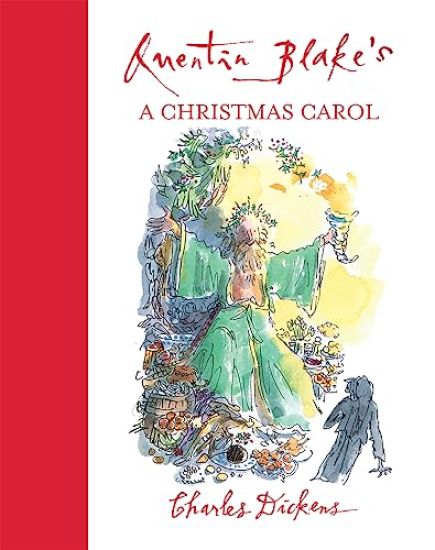
Illustrated by one of the most popular artists working today. Quentin Blake's A Christmas Carol is a beautiful edition of the timeless Christmas classic. A great gift for the season of giving. The wonderful Quentin Blake turns his artistic talents to Dickens’ much-loved Christmas story. A beautiful edition of Dickens' timeless Christmas classic. A Christmas Carol is the book that defines the Christmas spirit. Ebenezer Scrooge, a mean-spirited miser, is visited by three ghosts one Christmas Eve. The ghosts show Scrooge the true value of Christmas: charity, good humour and love for his fellow man. Quentin Blake's colourful illustrations guide the reader through Scrooge's lively journey to find the meaning of Christmas. This unabridged edition contains a foreword by the illustrator and is the ultimate Christmas gift book.
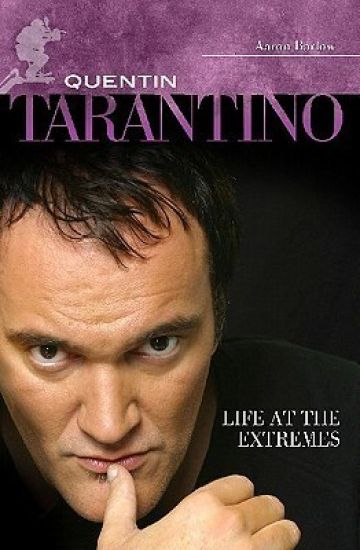
This book places Quentin Tarantino at the heart of Hollywood, showing a director who speaks film through film, who examines the world beyond the movies in a way few have previously attempted, and at which fewer still have succeeded.Quentin Tarantino: Life at the Extremes explores the uses of violence in the films Tarantino has written, directed, and produced. Arguing that extreme violence is central to Tarantino’s art, the book helps readers understand its purpose in his films—as metaphor, as movement, and as motivation. For Tarantino, the book explains, violence serves the purposes of film. In each of his movies, he explores the boundaries of taste and audience reaction, using violence and shock to bring questions of responsibility and expectation to the forefront of discussions on cinema.After introductory chapters placing Tarantino and his films within the broader context of American cinema, author Aaron Barlow focuses on Tarantino's six major directorial efforts. Each film is discussed from its genre starting point and the differing directions the films take are explored, as are the structural elements. In the end, readers will see how Tarantino deliberately pushes film in new directions through old techniques, styles, and even actors, crafting original art from what others have discarded.A chronology dates events in the life of Quentin Tarantino, as well as significant developments in the world of the moviesIncludes a detailed listing of Tarantino's film career, noting his participation in projects as an actor, writer, producer, and director, with details on each film, including cast and other participants
'In recent years I have found myself working increasingly in sequences of drawings which explore subjects and techniques which interest me. These sequences vary in approach and tone, and between reality and fantasy. But I hope that in each of them in its own way will appeal to anyone who like looking at drawings.' Quentin Blake 2019 Quentin Blake, like many illustrators, works essentially in isolation. In normal times he would make two daily trips to his office across the square from where he lives to see what business there was for him to deal with. But during the lockdowns he had no such distractions and demands made of his time. There was still some commissioned works; he finished two books and he did some work for charities raising funds to deal with the lockdowns. But Quentin had a lot more time to explore his visual interests and go wherever his imagination took him. Some of these series were drawn at 6.00 am while he was still in bed. The medium he used for each series was partly decided by whatever was to hand; pencil, biro or Sennelier oil pastels. Similarly, the size, colour and quality of the paper would be decided by what was available. This book is an edited selection of over 3,000 drawings Quentin produced from March 2020 to February 2021; a portfolio of new personal work, not commissioned and not meant for publication. They provide a unique insight into what happens when a great artist is left to his own devices.
As Australia's first female Governor-General, Quentin Bryce handwrote more than fifty letters each week. She wrote to those she had met and connected with as her role took her from palaces to outback schools, from war zones to memorials, from intimate audiences to lavish ceremonies. She received even more letters from every corner of the country. Generous, witty and always heartfelt, her letter-writing skills were honed at boarding school, from where she would write to her parents every Sunday.Dear Quentin is a rich collection of the letters the Governor-General wrote and received during her six-year term to prime ministers Rudd and Gillard, VC Mark Donaldson, pals Anne Summers and Wendy McCarthy, Indigenous elders, war vets, Girl Guides, grandchildren, as well as the proud owner of a calf called Quentin.Royalties from this book will be donated to Murdoch Childrens Research Institute, making a real difference to child health through world-leading research and disease prevention.
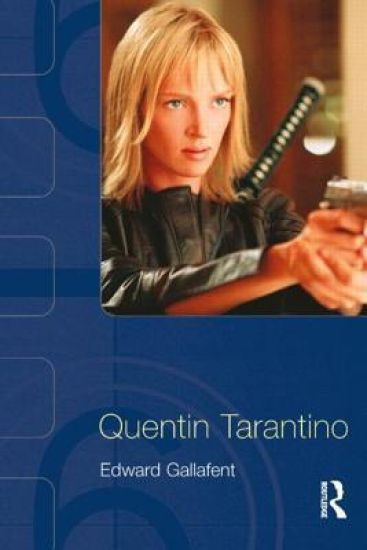
Quentin Tarantino is one of the best-known living American filmmakers in the world, and the story of his career has been the subject of a number of books and articles. But what do his films mean? In this new study, Edward Gallafent does not look at Tarantino’s story but at the films themselves. He asks to what extent Tarantino can be seen as a specifically American filmmaker, with the kinds of preoccupations and interests that have formed part of Hollywood’s traditions, and also how he explores the expressive possibilities of current cinema. The book concentrates on the main feature films of Tarantino’s career so far: Reservoir Dogs, Pulp Fiction, Jackie Brown, and the two volumes of Kill Bill. Apart from Kill Bill the films are not treated individually, but in terms of some of the subjects that connect them together, such as success and tradition, their notorious deployment of violence, and Tarantino’s approach to story-telling: his interest in presenting events out of chronological order. The book also covers adaptations of Tarantino’s work, looking at the screenplays of True Romance and Natural Born Killers as well as the films made from them, and compares Tarantino’s approach to adapting Elmore Leonard with that of another important American filmmaker, Paul Schrader. The aim of the book is to explore these topics and to take the reader back to what the American critic Robert Warshow called the ‘actual, immediate experience of seeing and responding to the movies’. It is designed to appeal both to those who were excited by the films on first seeing them in the cinema and to those taking the opportunity of reconsidering them on the screen or on DVD.
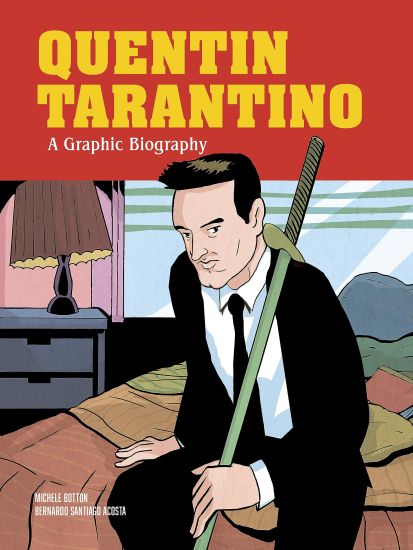
Unofficial and unauthorised.'When people ask me if I went to film school I tell them, "No, I went to films"'. From the set of 1993’s Pulp Fiction, to a bar room meeting with Robert Rodriguez and an inspirational lunch with Leonardo di Caprio, this unique graphic novel takes us across a series of Hollywood-inspired vignettes covering the movie-obsessed life and career of one of modern cinema’s greatest filmmakers – Quentin Tarantino. Join the conversation as Tarantino talks John Travolta into starring in Pulp Fiction, find out about the inspiration for his earliest screenplays and learn about Tarantino’s obsessive childhood growing up in California. For those who already know what they call a Quarter Pounder with Cheese in Paris – as well as those looking for an insight into Tarantino’s influences, inspirations and the development of his signature style – we present Quentin Tarantino: A Graphic Life.
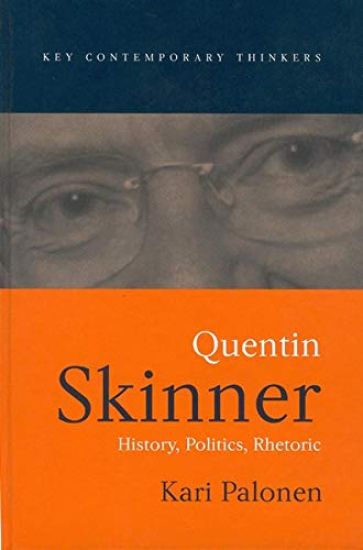
This book is the first comprehensive exposition of the work of one of the most important intellectual historians and political theorists writing today. Quentin Skinner's treatment of political theory as a dimension of political life marks a revolutionary move in the historical as well as the philosophical study of political thought. Skinner brings the study of political theory closer to the language of agents and treats theorists as politicians of a special kind. This is as true of his accounts of his contemporaries, such as Rawls, Rorty, Geertz and Habermas, as it is of his interpretations of classical thinkers such as Machiavelli and Hobbes. Skinner has become internationally renowned for this approach, which ties together historical and contemporary analysis in order to integrate the study of the past and the present, and which tries fully to uncover the historical context and development of key concepts in political theory such as freedom and the state. This volume charts Skinner's work from the early 1960s right up to the present, including his most recent studies in the theory of persuasive speech, and is organized around five major themes: history, linguistic action, political thought, liberty and rhetoric. It pays particular attention to Skinner's work in relation to that of continental thinkers, especially Max Weber and Reinhart Koselleck. The book will be essential reading for students and scholars of political and social theory, history, philosophy and cultural studies.
An exposition of the work of the important intellectual historian and political theorist Quentin Skinner. The volume charts Skinner's work from the early 1960s onwards and is organized around five major themes: history; linguistic action; political thought; liberty and rhetoric.
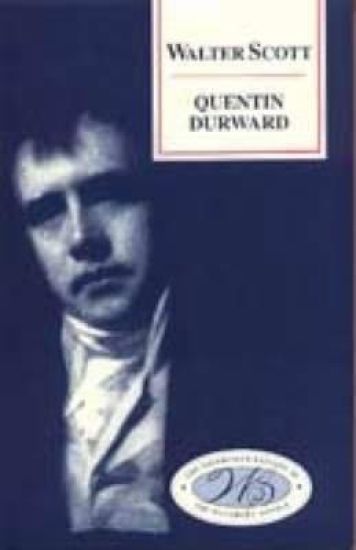
Quentin Durward is a young Scotsman seeking fame and fortune in the France of Louis XI in the fifteenth century. He knows little and understands less, but Scott represents his ignorance and naivete as useful to 'the most sagacious prince in Europe' who needs servants motivated solely by the desire for coin and credit and lacking any interest in France which would interfere with the execution of his political aims. In Quentin Durward Scott studies the first modern state in the process of destroying the European feudal system. By far the most important of Scott's sources for Quentin Durward is the splendid Memoirs of Philippe de Comines. Comines, who has more than a walk-on role in the novel itself, was trusted councillor of Charles the Bold of Burgundy until 1472, when Louis XI persuaded him to enter his service. Scott's contrasting portraits of Louis and Charles, crafty king and fiery duke, essentially derives from Comines, whose memoirs are generally regarded as the first example of modern analytical history rather than chronicle. But it is as story that Quentin Durward succeeds, and it is one of Scott's most absorbing tales.