ARE YOU ONE OF "THE CALLED"? This "novel" is an un-intimidating compliment to the first 32 chapters of Genesis, intent on making God's story/plan clear to all "seekers of truth."
A shocking, groundbreaking oral history of the infamous Rikers jail complex and an unflinching portrait of injustice and resilience told by the people whose lives have been forever altered by it "This mesmerizing and gut-wrenching book shows the brutal realities that tens of thousands of people have been forced to navigate, and survive, in America's most notorious jail."--Piper Kerman, New York Times bestselling author of Orange is the New Black What happens when you pack almost a dozen jails, bulging at the seams with society's cast-offs, onto a spit of landfill purposefully hidden from public view? Prize-winning journalists Graham Rayman and Reuven Blau have spent two years interviewing more than 130 people comprising a broad cross section of lives touched by New York City's Rikers Island prison complex--from incarcerated people and their relatives, to officers, lawyers, and commissioners, with stories spanning the 1970s to the present day. The portrait that emerges calls into question the very nature of justice in America. Offering a 360-degree view inside the country's largest detention complex, the deeply personal accounts--featured here for the first time--take readers on a harrowing journey into every corner of Rikers, a failed society unto itself that reflects society's failings as a whole. Dr. Homer Venters was shocked by the screams on his first day working at Rikers: "They're in solitary, just yelling . . . the yelling literally never stops." After a few months, though, Dr. Venters notes, one's ears adjust to the sounds. Nestor Eversley recalls how detainees made weapons from bones. Barry Campbell recalls hiding a razor blade in his mouth--"just in case". These are visceral stories of despair, brutality, resilience, humor, and hope, told by the people who were marooned on the island over the course of decades. As calls to shutter jails and reduce the number of incarcerated people grow louder across the country, with the movement to close the island complex itself at the forefront, Rikers is a resounding lesson about the human consequences of the incarceration industry.
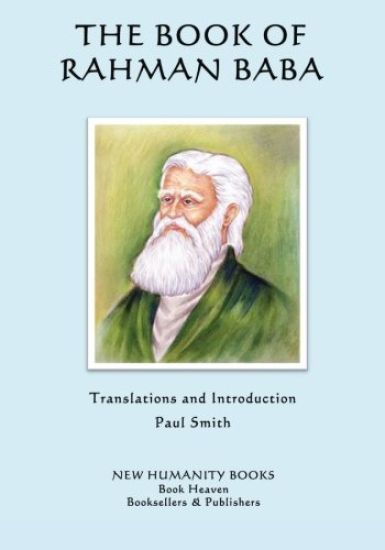
RAHMAN BABA: SELECTED POEMS Translation & Introduction by Paul Smith Rahman Baba (1652 to 1711) is considered the greatest Sufi Pashtun poet to compose poems, mainly ghazals, in the Pashtu language. Born in Mohmand region of Afghanistan near Peshawar he was called 'The Nightingale of Peshawar'. This was a time of struggle and hardship and in the midst of the turmoil he was an excellent student with a natural gift for poetry. He eventually questioned the value of such pursuits and withdrew from the world, dedicating himself to prayer and devotion. In solitary worship he began to write again and his poetry spread. Religious figures used it to inspire the devout, political leaders to inspire the independence movement. His Divan is 343 poems... ghazals and a few qasidas and mukhammas. Introduction is on his Life & Times & Poetry and the Forms in which he wrote and on Sufism & Poetry. The correct rhyme-structure is kept as well as the meaning of these beautiful, enlightened poems. 141 pages COMMENTS ON PAUL SMITH'S TRANSLATION OF HAFIZ'S 'DIVAN'."It is not a joke... the English version of ALL the ghazals of Hafiz is a great feat and of paramount importance. I am astonished. If he comes to Iran I will kiss the fingertips that wrote such a masterpiece inspired by the Creator of all." Dr. Mir Mohammad Taghavi (Dr. of Literature) Tehran."Superb translations. 99% Hafiz 1% Paul Smith." Ali Akbar Shapurzman, translator of many mystical works in English into Persian and knower of Hafiz's Divan off by heart."I was very impressed with the beauty of these books." Dr. R.K. Barz. Faculty of Asian Studies, Australian National University."Smith has probably put together the greatest collection of literary facts and history concerning Hafiz." Daniel Ladinsky (Penguin Books author of poems inspired by Hafiz). Paul Smith is a poet, author and translator of over 80 books of Sufi poets of the Persian, Arabic, Urdu, Turkish, Pashtu and other languages... including Hafiz, Sadi, Nizami, Rumi, 'Attar, Sana'i, Jahan Khatun, Obeyd Zakani, Nesimi, Kabir, Anvari, Ansari, Jami, Khayyam, Rudaki, Yunus Emre and many others, as well as poetry, fiction, plays, biographies, children's books and screenplays. amazon.com/author/smithpa
RAHMAN BABA: LIFE & POEMS Translation & Introduction by Paul Smith Rahman Baba (1652 to 1711) is considered the greatest Sufi Pashtun poet to compose poems, mainly ghazals, in the Pashtu language. Born in Mohmand region of Afghanistan near Peshawar he was called 'The Nightingale of Peshawar'. This was a time of struggle and hardship and in the midst of the turmoil he was an excellent student with a natural gift for poetry. He eventually questioned the value of such pursuits and withdrew from the world, dedicating himself to prayer and devotion. In solitary worship he began to write again and his poetry spread. Religious figures used it to inspire the devout, political leaders to inspire the independence movement. His Divan is ghazals, qasidas and mukhammas. Introduction is on Life & Times & Poetry and Forms in he wrote and Sufism & Poetry. The correct rhyme-structure is kept as well as the meaning of these beautiful, enlightened poems. 90 pages Introduction to Sufi Poets Series Life & Poems of the following Sufi poets, Translations & Introductions: Paul Smith AMIR KHUSRAU, ANSARI, ANVARI, AL-MA'ARRI, 'ATTAR, ABU SA'ID, AUHAD UD-DIN, BABA FARID, BABA AZFAL, BABA TAHIR, BEDIL, BULLEH SHAH, DARA SHIKOH, GHALIB, HAFIZ, IBN 'ARABI, IBN YAMIN, IBN AL-FARID, IQBAL, 'IRAQI, JAHAN KHATUN, JAMI, KAMAL AD-DIN, KABIR, KHAQANI, KHAYYAM, LALLA DED, MAKHFI, MANSUR HALLAJ, MU'IN UD-DIN CHISHTI, NAZIR AKBARABADI, NESIMI, NIZAMI, OBEYD ZAKANI, RAHMAN BABA, RUMI, SANA'I, SADI, SARMAD, SHABISTARI, SHAH LATIF, SHAH NI'MAT'ULLAH, SULTAN BAHU, YUNUS EMRE, EARLY ARABIC SUFI POETS, EARLY PERSIAN SUFI POETS, URDU SUFI POETS, TURKISH SUFI POETS, AFGHAN SUFI POETS 90 pages each. Paul Smith is a poet, author and translator of over 80 books of Sufi poets of the Persian, Arabic, Urdu, Turkish, Pashtu and other languages... including Hafiz, Sadi, Nizami, Rumi, 'Attar, Sana'i, Jahan Khatun, Obeyd Zakani, Nesimi, Kabir, Anvari, Ansari, Jami, Khayyam, Rudaki, Yunus Emre and many others, as well as poetry, fiction, plays, biographies, children's books and screenplays. New Humanity Books amazon.com/author/smithpa
Homd Alloh icindir. O'ndon vord1m ister, hidovet ve bog1;;lomo-s1n1 tolep ederiz.Nefislerimizin;;erlerinden ve omellerimizin kotuluklerindenO'nos1g1n1r1z.Alloh'1nhidovet verdigini (dogru volo ilettigini) sopt1rocok, sopt1rd1g1no do hidovet verecek voktur. Biz;;ehodet ederiz ki Alloh'don bo;;ko iloh voktur ve vine;;ehodet ederiz ki Muhommed - sollollohu olevhi ve sellem- O'nun kulu ve Resuludur. Hok olon bir din, hOdo ve dininhepsini os1klomok is in Resulunu gondermi;;tir. Alloh;;ohit olorok veter.
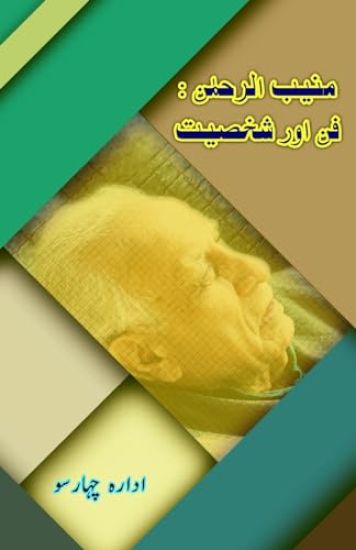
Muneebur Rahman has a well-known position in the academic and literary world. His special field of academic research has been modern Persian poetry. He has played an important role in exposing Urdu poetry to new trends. His thought covers internal and external topics, in which different qualities of language and expression are found. Research articles and criticism on his published works and poetry are included in this book.