Kirjojen hintavertailu. Mukana 11 244 527 kirjaa ja 12 kauppaa.

Kirjahaku

Etsi kirjoja tekijän nimen, kirjan nimen tai ISBN:n perusteella.

1000 tulosta hakusanalla Ralph Ellison

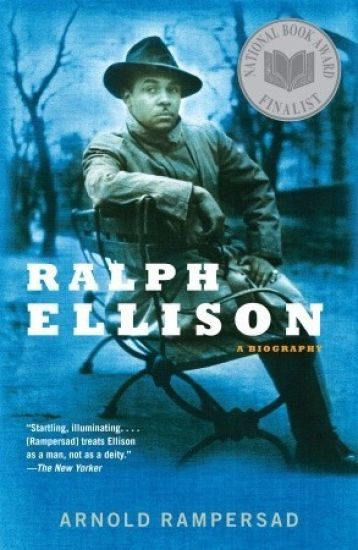
Ralph Ellison

Ralph Ellison

Arnold Rampersad

Random House USA Inc
2008
pokkari
A critical biography of the author of Invisible Man draws on access to Ellison's personal papers to offer a definitive study of the life, work, and influence of Ralph Ellison, detailing his poverty-stricken Oklahoma youth, his education and involvement in New York's liberal intellectual circles, his personal relationships, and the influence of racism on his life. Reprint. 20,000 first printing.
The Collected Essays of Ralph Ellison

The Collected Essays of Ralph Ellison

Ralph Ellison

Modern Library
2024
nidottu
From the renowned author of Invisible Man, a classic, "elegant" (The New York Times) collection of essays that captures the breadth and complexity of his insights into racial identity, jazz and folklore, and citizenship across six decades. Compiled, edited, and newly revised by Ralph Ellison's literary executor, John F. Callahan, this definitive volume includes posthumously discovered reviews, criticism, and interviews, as well as the essay collections Shadow and Act (1964), hailed by Robert Penn Warren as "a body of cogent and subtle commentary on the questions that focus on race," and Going to the Territory (1986), an exploration of literature and folklore, jazz and culture, and the nature and quality of lives that Black Americans lead. With newly discovered essays and speeches, The Collected Essays reveals a more vulnerable, intimate side of Ellison than what we've previously seen. "Raph Ellison," wrote Stanley Crouch, "reached across race, religion, class and sex to make us all Americans."
The Collected Essays of Ralph Ellison

The Collected Essays of Ralph Ellison

Ralph Ellison

Modern Library Inc
2003
pokkari
A complete collection of essays, reviews, interviews, and criticism by the acclaimed author of Invisible Man includes the collections Shadow and Act and Going to the Territory, along with newly discovered and previously uncollected works, covering such topics as literature, folklore, jazz, black culture, and the African-American experience. Reprint. 25,000 first printing.
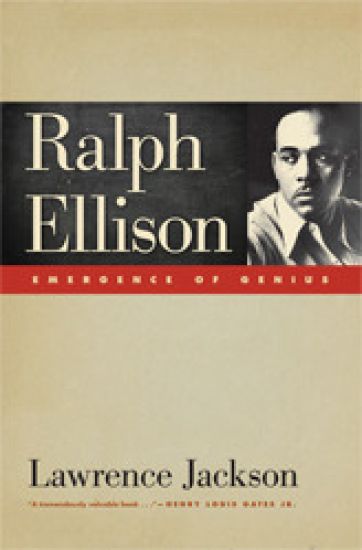
Ralph Ellison

Ralph Ellison

Lawrence Jackson

University of Georgia Press
2007
pokkari
Author, intellectual, and social critic, Ralph Ellison (1913-1994) was a pivotal figure in American literature and history and arguably the father of African American modernism. Universally acclaimed for his first novel, Invisible Man, a masterpiece of modern fiction, Ellison was recognized with a stunning succession of honors, including the 1953 National Book Award. Despite his literary accomplishments and political activism, however, Ellison has received surprisingly sparse treatment from biographers. Lawrence Jackson’s biography of Ellison, the first when it was published in 2002, focuses on the author’s early life.Powerfully enhanced by rare photographs, this work draws from archives, literary correspondence, and interviews with Ellison’s relatives, friends, and associates. Tracing the writer’s path from poverty in dust bowl Oklahoma to his rise among the literary elite, Jackson explores Ellison’s important relationships with other stars, particularly Langston Hughes and Richard Wright, and examines his previously undocumented involvement in the Socialist Left of the 1930s and 1940s, the black radical rights movement of the same period, and the League of American Writers. The result is a fascinating portrait of a fraternal cadre of important black writers and critics—and the singularly complex and intriguing man at its center.
Ralph Ellison

Ralph Ellison

Judy Ronald; Arac Jonathan

Duke University Press
1996
pokkari
While Ralph Ellison is perhaps best known for his novel Invisible Man, he was also a significant twentieth-century intellectual, having authored numerous essays and papers that shaped thought on subjects from jazz to liberalism. Ralph Ellison: The Next Fifty Years gathers outstanding scholars in the fields of American and African American studies to engage Ellison's theoretical and critical writings. Several essays in this collection focus on an area of Ellison's thinking that has yet to be adequately scrutinized-his study of, and writing about, music, specifically jazz and the blues. Although not a systematic philosopher of music, Ellison exhibited the seriousness and rigor associated with the critical musical writings of Theodor Adorno and Edward Said. Other essays in this special issue examine salient questions raised by Ellison's work, including the nature of the connection between the novel and the democratic mind, Vietnam and the crisis of liberal society, and the problematic of modernism and freedom. Ralph Ellison addresses the ways in which Ellison's writings about art were also efforts to think about and discuss political agency. Contributors. Jonathan Arac, Kevin Bell, Adam Gussow, Ronald A. T. Judy, Robert O'Meally, Donald E. Pease, Barry Shank, Hortense Spillers, Kenneth Warren, Alexander G. Weheliye, John Wright
Ralph Ellison, Temporal Technologist

Ralph Ellison, Temporal Technologist

Michael Germana

Oxford University Press Inc
2018
sidottu
Ralph Ellison, Temporal Technologist examines Ralph Ellison's body of work as an extended and ever-evolving expression of the author's philosophy of temporalitya philosophy synthesized from the writings of Henri Bergson and Friedrich Nietzsche that anticipates the work of Gilles Deleuze. Germana presents Ellison's theory of temporality and social change as going up against all forms of linear causality and historical determinisma theory that views time as a multiplicity of dynamic processes, rather than a static container for the events of our lives. Integral to this theory is Ellison's observation that the social, cultural, and legal processes constitutive of racial formation are embedded in static temporalities reiterated by historians and sociologists. In other words, Ellison's critique of US racial history is, fundamentally, a matter of time. This book shows how Ellison's fiction, criticism, and photography reclaims technologies through which static time and linear history are formalizedin effect, revealing intensities implicit in the present that, if actualized, could help us "act un-historically." The result is a reinterpretation of Ellison's oeuvre, as well as an extension of Ellison's ideas about the dynamism of becoming and the open-endedness of the future. Ralph Ellison, Temporal Technologist reveals the chaos of possibility lurking beneath the patterns of living we mistake for enduring certainties.
Ralph Ellison's Invisible Man

Ralph Ellison's Invisible Man

Oxford University Press Inc
2004
nidottu
Ralph Ellisons' Invisible Man: A Casebook offers students and scholars a rich variety of interpretations from which to fashion their own views of the novels and the man who created it. Both Ellison's comments, a number of which appear in print here for the first time, and those of ten distignuished scholars of American and African-American literature take the position that there can be no last word on Invisible Man. Different as they are, the essays share a respect for the novel's fluidity and for every reader's encounter with its narrator, story, and meanings.
Ralph Ellison in Progress

Ralph Ellison in Progress

Adam Bradley

Yale University Press
2012
pokkari
A major reassessment of Ralph Ellison’s literary legacy that explores the mysteries surrounding his unfinished second novel Ralph Ellison may be the preeminent African-American author of the twentieth century, though he published only one novel, 1952’s Invisible Man. He enjoyed a highly successful career in American letters, publishing two collections of essays, teaching at several colleges and universities, and writing dozens of pieces for newspapers and magazines, yet Ellison never published the second novel he had been composing for more than forty years. A 1967 fire that destroyed some of his work accounts for only a small part of the novel’s fate; the rest is revealed in the thousands of pages he left behind after his death in 1994, many of them collected for the first time in the recently published Three Days Before the Shooting . . . .Ralph Ellison in Progress is the first book to survey the expansive geography of Ellison’s unfinished novel while re-imaging the more familiar, but often misunderstood, territory of Invisible Man. It works from the premise that understanding Ellison’s process of composition imparts important truths not only about the author himself but about race, writing, and American identity. Drawing on thousands of pages of Ellison’s journals, typescripts, computer drafts, and handwritten notes, many never before studied, Adam Bradley argues for a shift in scholarly emphasis that moves a greater share of the weight of Ellison’s literary legacy to the last forty years of his life and to the novel he left forever in progress.
Ralph Ellison's Invisible Man

Ralph Ellison's Invisible Man

Michael D. Hill; Lena M. Hill

Greenwood Press
2008
sidottu
Ralph Ellison's Invisible Man is one of the most widely read works of African American literature. This book gives students a thorough yet concise introduction to the novel. Included are chapters on the creation of the novel, its plot, its historical and social contexts, the themes and issues it addresses, Ellison's literary style, and the critical reception of the work. Students will welcome this book as a guide to the novel and the concerns it raises. The volume offers a detailed summary of the plot of Invisible Man as well as a discussion of its origin. It additionally considers the social, historical, and political contexts informing Ellison's work, along with the themes and issues Ellison addresses. It explores Ellison's literary art and surveys the novel's critical reception. Students will value this book for what it says about Invisible Man as well as for its illumination of enduring social concerns.
The Selected Letters of Ralph Ellison

The Selected Letters of Ralph Ellison

Ralph Ellison; John F. Callahan

RANDOM HOUSE USA INC
2024
nidottu
A NEW YORK TIMES NOTABLE BOOK - A radiant collection of letters from the renowned author of Invisible Man that traces the life and mind of a giant of American literature, with insights into the riddle of identity, the writer's craft, and the story of a changing nation over six decades These extensive and revealing letters span the life of Ralph Ellison and provide a remarkable window into the great writer's life and work, his friendships, rivalries, anxieties, and all the questions about identity, art, and the American soul that bedeviled and inspired him until his death. They include early notes to his mother, written as an impoverished college student; lively exchanges with the most distinguished American writers and thinkers of his time, from Romare Bearden to Saul Bellow; and letters to friends and family from his hometown of Oklahoma City, whose influence would always be paramount. These letters are beautifully rendered first-person accounts of Ellison's life and work and his observations of a changing world, showing his metamorphosis from a wide-eyed student into a towering public intellectual who confronted and articulated America's complexities.
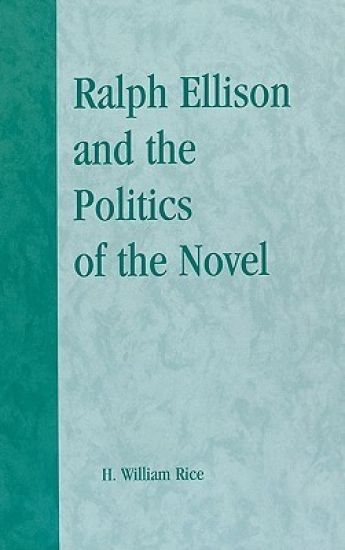
Ralph Ellison and the Politics of the Novel

Ralph Ellison and the Politics of the Novel

William H. Rice

Lexington Books
2003
sidottu
In this engaging study, H. William Rice illuminates the mystery that is Ralph Ellison: the author of one complex, important novel who failed to complete his second; a black intellectual who remained notably reticent on political issues during the desegregation of his native South. Rice reads both Invisible Man and the posthumously published Juneteenth as novels that focus on the political uses of language. He explores Ellison's concept of the novel, promulgated in that author's two collections of essays, as an inherently political form of art. And he carefully considers the political context that undoubtedly impacted Ellison's work and thought: a world and a time rocked to its foundation by such revolutionary actors as Martin Luther King, Jr., and Malcolm X. Rice guides his reader to a greater understanding of Ralph Ellison, his oeuvre, and the American novel.
Ralph Ellison and the Politics of the Novel

Ralph Ellison and the Politics of the Novel

William H. Rice

Lexington Books
2007
nidottu
In this engaging study, H. William Rice illuminates the mystery that is Ralph Ellison: the author of one complex, important novel who failed to complete his second; a black intellectual who remained notably reticent on political issues during the desegregation of his native South. Rice reads both Invisible Man and the posthumously published Juneteenth as novels that focus on the political uses of language. He explores Ellison's concept of the novel, promulgated in that author's two collections of essays, as an inherently political form of art. And he carefully considers the political context that undoubtedly impacted Ellison's work and thought: a world and a time rocked to its foundation by such revolutionary actors as Martin Luther King, Jr., and Malcolm X. Rice guides his reader to a greater understanding of Ralph Ellison, his oeuvre, and the American novel.
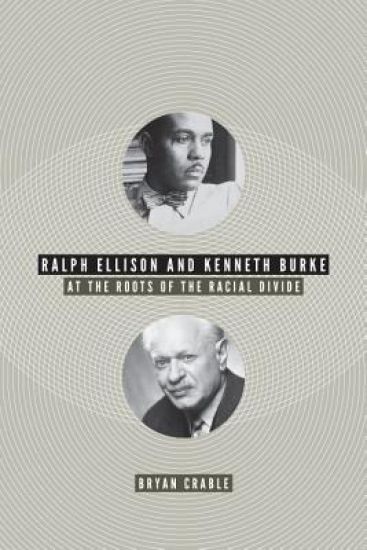
Ralph Ellison and Kenneth Burke

Ralph Ellison and Kenneth Burke

Bryan Crable

University of Virginia Press
2011
sidottu
Ralph Ellison and Kenneth Burke focuses on the little-known but important friendship between two canonical American writers. The story of this fifty-year friendship, however, is more than literary biography; Bryan Crable argues that the Burke-Ellison relationship can be interpreted as a microcosm of the American ""racial divide."" Through examination of published writings and unpublished correspondence, he reconstructs the dialogue between Burke and Ellison about race that shaped some of their most important works, including Burke's A Rhetoric of Motives and Ellison's Invisible Man. In addition, the book connects this dialogue to changes in American discourse about race. Crable shows that these two men were deeply connected, intellectually and personally, but the social division between white and black Americans produced hesitation, embarrassment, mystery, and estrangement where Ellison and Burke might otherwise have found unity. By using Ellison's non fiction and Burke's rhetorical theory to articulate a new vocabulary of race, the author concludes not with a simplistic ""healing"" of the divide but with a challenge to embrace the responsibility inherent to our social order.
Ralph Ellison and Kenneth Burke

Ralph Ellison and Kenneth Burke

Bryan Crable

University of Virginia Press
2011
nidottu
Ralph Ellison and Kenneth Burke focuses on the little-known but important friendship between two canonical American writers. The story of this fifty-year friendship, however, is more than literary biography; Bryan Crable argues that the Burke-Ellison relationship can be interpreted as a microcosm of the American ""racial divide."" Through examination of published writings and unpublished correspondence, he reconstructs the dialogue between Burke and Ellison about race that shaped some of their most important works, including Burke's A Rhetoric of Motives and Ellison's Invisible Man. In addition, the book connects this dialogue to changes in American discourse about race. Crable shows that these two men were deeply connected, intellectually and personally, but the social division between white and black Americans produced hesitation, embarrassment, mystery, and estrangement where Ellison and Burke might otherwise have found unity. By using Ellison's non fiction and Burke's rhetorical theory to articulate a new vocabulary of race, the author concludes not with a simplistic ""healing"" of the divide but with a challenge to embrace the responsibility inherent to our social order.
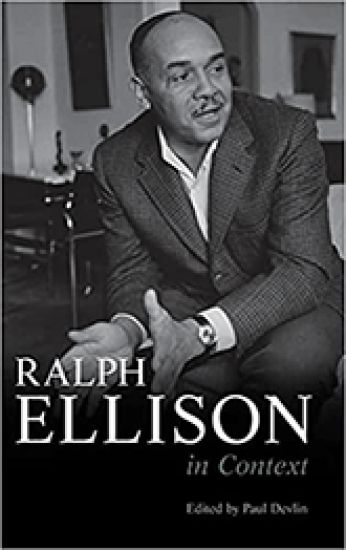
Ralph Ellison in Context

Ralph Ellison in Context

Cambridge University Press
2021
sidottu
Ralph Ellison's Invisible Man is the second-most assigned American novel since 1945 and is one of the most enduring. It is studied by many thousands of high school and college students every year and has been since the 1950s. His landmark essays, with their blend of personal history and cultural theory, have been extraordinarily influential. Ralph Ellison in Context includes authoritative chapters summing up longstanding conversations, while offering groundbreaking essays on a variety of topics not yet covered in the copious critical and biographical literature. It provides fresh perspectives on some of the most important people and places in Ellison's life, and explores where his work and biography cross paths with some of the pressing topics of his time. It includes chapters on Ellison's literary influences and offers a definitive overview of his early writings. It also provides an overview of Ellison's reception and reputation from his death in 1994 through 2020.
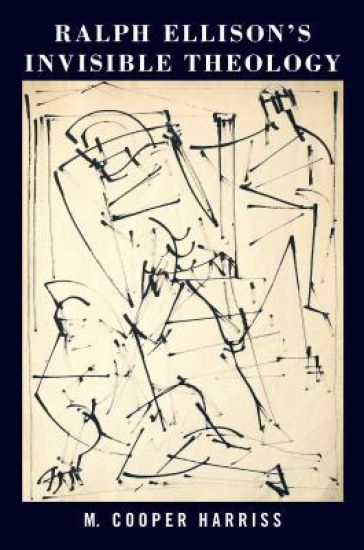
Ralph Ellison's Invisible Theology

Ralph Ellison's Invisible Theology

M. Cooper Harriss

New York University Press
2017
sidottu
Examines the religious dimensions of Ralph Ellison's concept of race Ralph Ellison's 1952 novel Invisible Man provides an unforgettable metaphor for what it means to be disregarded in society. While the term "invisibility" has become shorthand for all forms of marginalization, Ellison was primarily concerned with racial identity. M. Cooper Harriss argues that religion, too, remains relatively invisible within discussions of race and seeks to correct this through a close study of Ralph Ellison's work. Harriss examines the religious and theological dimensions of Ralph Ellison's concept of race through his evocative metaphor for the experience of blackness in America, and with an eye to uncovering previously unrecognized religious dynamics in Ellison's life and work. Blending religious studies and theology, race theory, and fresh readings of African-American culture, Harriss draws on Ellison to create the concept of an "invisible theology," and uses this concept as a basis for discussing religion and racial identity in contemporary American life. Ralph Ellison's Invisible Theology is the first book to focus on Ellison as a religious figure, and on the religious dynamics of his work. Harriss brings to light Ellison's close friendship with theologian and literary critic Nathan A. Scott, Jr., and places Ellison in context with such legendary religious figures as Reinhold and Richard Niebuhr, Paul Tillich and Martin Luther King, Jr. He argues that historical legacies of invisible theology help us make sense of more recent issues like drone warfare and Clint Eastwood's empty chair. Rich and innovative, Ralph Ellison's Invisible Theology will revolutionize the way we understand Ellison, the intellectual legacies of race, and the study of religion.
Ralph Ellison and the Genius of America

Ralph Ellison and the Genius of America

Timothy Parrish

University of Massachusetts Press
2012
nidottu
Ralph Ellison has long been admired as the author of one of the most important American novels of the twentieth century, Invisible Man. Yet he has also been dismissed by some critics as a writer who only published one major work of fiction and a black intellectual out of touch with his times. In this book, Timothy Parrish offers a fundamentally different assessment of Ellison’s legacy, describing him as the most important American writer since William Faulkner and someone whose political and cultural achievements have not been fully recognised. Embracing jazz artist Wynton Marsalis’s characterisation of Ellison as the unacknowledged “political theorist” of the civil rights movement, Parrish argues that the defining event of Ellison’s career was not Invisible Man but the 1954 Supreme Court decision that set his country on the road to racial integration. In Parrish’s view, no other American intellectual, black or white, better grasped the cultural implications of the new era than Ellison did; no other major American writer has been so misunderstood. Drawing on Ellison’s recently published “unfinished” novel, newly released archival materials, and unpublished correspondence, Parrish provides a sustained reconsideration of the writer’s crucial friendships with Richard Wright, Robert Penn Warren, and C. Vann Woodward to show how his life was dedicated to creating an American society in which all could participate equally. By resituating Ellison’s career in the historical context of its making, Parrish challenges the premises that distorted the writer’s reception in his own lifetime to make the case for Ellison as the essential visionary of post–Civil War America.
Ralph Ellison and Cinema

Ralph Ellison and Cinema

Sam Halliday

Anthem Press
2026
nidottu
Ralph Ellison and Cinema reveals the crucial role of cinema throughout Ellison’s career. In his most famous work, Invisible Man (1952), cinema is part of a cultural and institutional landscape; as such, it is integral to the way the novel’s protagonist feels and thinks. In Ellison’s critical essays, cinema is simultaneously a crystallization of racial prejudice, a vehicle of ideas about history, and an index of the variously illusory and the revelatory character of dreams. But it is in his monumental, unfinished second novel, posthumously published as Three Days Before the Shooting . . . (2010), that Ellison’s thinking about cinema is brought to its imaginative and theoretical peak. Here, Ellison gives full rein to a sensibility that is both cinephile and cine-sceptical; in the book, Ellison is as much concerned with cinematic form as he is with cinematic content. To chart the breadth and depth of Ellison’s cinematic interests, Ralph Ellison and Cinema discusses the author’s major works alongside private correspondence, Hollywood films in which Ellison took particular interest, and marginalia in the author’s personal library. Ralph Ellison and Cinema also provides a detailed account of the intellectual and social contexts in which Ellison’s works took shape.
Ralph Ellison: Photographer
The first ever book on Ellison's lifelong photography practice, from New York scenes to domestic vignettesRalph Ellison is a leading figure in American literature, hailed for his seminal novel Invisible Man (1952), a breakthrough representation of the American experience and Black everyday life. Lesser known, however, is his lifelong engagement with photography. Photographer is the first book dedicated to Ellison's extensive work in the medium, which spans the 1930s to the '90s.Throughout his life, photography played multiple roles for Ellison: a hobby, a source of income, a notetaking tool and an artistic outlet. During his formative years in New York City in the 1940s, he keenly photographed his surroundings--at times alongside fellow photographer Gordon Parks--with many images serving as field notes for his writing. In the last decades of his life, as he grappled with his much-anticipated second novel, Ellison turned inward, and he studied his private universe at home with a Polaroid camera. At all times his photography reveals an artist steeped in modernist thinking who embraced experimentation to interpret the world around him, particularly Black life in America. In a 1956 letter to fellow writer Albert Murray, Ellison underscored photography's importance to his creative process: "You know me, I have to have something between me and reality when I'm dealing with it most intensely." Accompanying the photographs in this book are several essays situating Ellison's work within his broader career as a writer, as well an excerpt from his 1977 essay "The Little Man at Chehaw Station: The American Artist and His Audience."Ralph Ellison was born in Oklahoma City in 1913. His love of music led him to enroll at Booker T. Washington's Tuskegee Institute in Macon County, Alabama, as a music major. In 1936 he visited New York City, where he befriended established authors and intellectuals who encouraged him to pursue a career in writing. He joined the Federal Writers' Project and began contributing essays and short stories for publications such as New Masses, The Negro Quarterly, New Republic and Saturday Review. By 1945 he had signed a contract to write what was to become Invisible Man (1952); it won the National Book Award in 1953 but remained his only novel published during his lifetime. He published two subsequent collections of essays, Shadow and Act (1964) and Going to the Territory (1986). For many years Ellison worked on a second novel, which he never completed; its central narrative was published posthumously as Three Days Before the Shooting... (2010). Ellison died in 1994.
Ralph Ellisons Roman «Invisible Man»
Was haben internationale amerikanistische Forschung und literarische Publizistik zur Deutung dieses modernen Klassikers beigetragen? Welche erganzende oder berichtigende Neuarbeit ist noch zu leisten? Der Verfasser versucht, den Gang der Rezeptionsgeschichte nachzuzeichnen und Neues zur Auslegung von -Invisible Man- beizutragen. Im Mittelpunkt des Interpretationsteils stehen Konstituenten des Romans, die kontrovers oder noch nicht ausfuhrlich behandelt worden sind."