Kirjahaku
Etsi kirjoja tekijän nimen, kirjan nimen tai ISBN:n perusteella.
1000 tulosta hakusanalla Randall J. Stephens
Today pentecostalism claims nearly 500 million followers worldwide. An early stronghold was the American South, where believers spoke in unknown tongues, worshipped in free-form churches, and broke down social barriers that had long divided traditional Protestants. Thriving denominations made their headquarters in the region and gathered white and black converts from the Texas plains to the Carolina low country. Pentecostalism was, in fact, a religious import. It came to the South following the post-Civil War holiness revival, a northern-born crusade that emphasized sinlessness and religious empowerment. Adherents formed new churches in the Jim Crow South and held unconventional beliefs about authority, power, race, and gender. Such views set them at odds with other Christians in the region. By 1900 nearly all southern holiness folk abandoned mainline churches and adopted a pessimistic, apocalyptic theology. Signs of the last days, they thought, were all around them. The faith first took root among anonymous religious zealots. It later claimed southern celebrities and innovators like televangelists Oral Roberts, Jimmy Swaggart, T. D. Jakes, and John Hagee; rock-and-roll icons Elvis Presley, Jerry Lee Lewis, and Little Richard; and, more recently, conservative political leaders such as John Ashcroft.With the growth of southern pentecostal denominations and the rise of new, affluent congregants, the movement moved cautiously into the evangelical mainstream. By the 1980s the once-apolitical faith looked entirely different. Many still watched and waited for spectacular signs of the end. Yet a growing number did so as active political conservatives.
When rock ’n’ roll emerged in the 1950s, ministers denounced it from their pulpits and Sunday school teachers warned of the music’s demonic origins. The big beat, said Billy Graham, was “ever working in the world for evil.” Yet by the early 2000s Christian rock had become a billion-dollar industry. The Devil’s Music tells the story of this transformation.Rock’s origins lie in part with the energetic Southern Pentecostal churches where Elvis, Little Richard, James Brown, and other pioneers of the genre worshipped as children. Randall J. Stephens shows that the music, styles, and ideas of tongue-speaking churches powerfully influenced these early performers. As rock ’n’ roll’s popularity grew, white preachers tried to distance their flock from this “blasphemous jungle music,” with little success. By the 1960s, Christian leaders feared the Beatles really were more popular than Jesus, as John Lennon claimed.Stephens argues that in the early days of rock ’n’ roll, faith served as a vehicle for whites’ racial fears. A decade later, evangelical Christians were at odds with the counterculture and the antiwar movement. By associating the music of blacks and hippies with godlessness, believers used their faith to justify racism and conservative politics. But in a reversal of strategy in the early 1970s, the same evangelicals embraced Christian rock as a way to express Jesus’s message within their own religious community and project it into a secular world. In Stephens’s compelling narrative, the result was a powerful fusion of conservatism and popular culture whose effects are still felt today.
American evangelicalism often appears as a politically monolithic, textbook red-state fundamentalism that elected George W. Bush, opposes gay marriage, abortion, and evolution, and promotes apathy about global warming. Prominent public figures hold forth on these topics, speaking with great authority for millions of followers. Authors Stephens and Giberson, with roots in the evangelical tradition, argue that this popular impression understates the diversity within evangelicalism—an often insular world where serious disagreements are invisible to secular and religiously liberal media consumers. Yet, in the face of this diversity, why do so many people follow leaders with dubious credentials when they have other options? Why do tens of millions of Americans prefer to get their science from Ken Ham, founder of the creationist Answers in Genesis, who has no scientific expertise, rather than from his fellow evangelical Francis Collins, current Director of the National Institutes of Health?Exploring intellectual authority within evangelicalism, the authors reveal how America’s populist ideals, anti-intellectualism, and religious free market, along with the concept of anointing—being chosen by God to speak for him like the biblical prophets—established a conservative evangelical leadership isolated from the world of secular arts and sciences.Today, charismatic and media-savvy creationists, historians, psychologists, and biblical exegetes continue to receive more funding and airtime than their more qualified counterparts. Though a growing minority of evangelicals engage with contemporary scholarship, the community’s authority structure still encourages the “anointed” to assume positions of leadership.
A Course in Differential Equations with Boundary Value Problems
Stephen A. Wirkus; Randall J. Swift; Ryan Szypowski
TAYLOR FRANCIS LTD
2023
nidottu
A Course in Differential Equations with Boundary Value Problems, 2nd Edition adds additional content to the author’s successful A Course on Ordinary Differential Equations, 2nd Edition. This text addresses the need when the course is expanded. The focus of the text is on applications and methods of solution, both analytical and numerical, with emphasis on methods used in the typical engineering, physics, or mathematics student’s field of study. The text provides sufficient problems so that even the pure math major will be sufficiently challenged.The authors offer a very flexible text to meet a variety of approaches, including a traditional course on the topic. The text can be used in courses when partial differential equations replaces Laplace transforms. There is sufficient linear algebra in the text so that it can be used for a course that combines differential equations and linear algebra. Most significantly, computer labs are given in MATLAB®, Mathematica®, and Maple™. The book may be used for a course to introduce and equip the student with a knowledge of the given software. Sample course outlines are included. Features MATLAB®, Mathematica®, and Maple™ are incorporated at the end of each chapter. All three software packages have parallel code and exercises; There are numerous problems of varying difficulty for both the applied and pure math major, as well as problems for engineering, physical science and other students. An appendix that gives the reader a "crash course" in the three software packages. Chapter reviews at the end of each chapter to help the students review Projects at the end of each chapter that go into detail about certain topics and introduce new topics that the students are now ready to see Answers to most of the odd problems in the back of the book
A Course in Ordinary Differential Equations
Stephen A. Wirkus; Randall J. Swift
TAYLOR FRANCIS LTD
2024
nidottu
A Course in Ordinary Differential Equations, Second Edition teaches students how to use analytical and numerical solution methods in typical engineering, physics, and mathematics applications. Lauded for its extensive computer code and student-friendly approach, the first edition of this popular textbook was the first on ordinary differential equations (ODEs) to include instructions on using MATLAB®, Mathematica®, and Maple™. This second edition reflects the feedback of students and professors who used the first edition in the classroom.New to the Second EditionMoves the computer codes to Computer Labs at the end of each chapter, which gives professors flexibility in using the technology Covers linear systems in their entirety before addressing applications to nonlinear systemsIncorporates the latest versions of MATLAB, Maple, and Mathematica Includes new sections on complex variables, the exponential response formula for solving nonhomogeneous equations, forced vibrations, and nondimensionalization Highlights new applications and modeling in many fieldsPresents exercise sets that progress in difficultyContains color graphs to help students better understand crucial concepts in ODEsProvides updated and expanded projects in each chapter Suitable for a first undergraduate course, the book includes all the basics necessary to prepare students for their future studies in mathematics, engineering, and the sciences. It presents the syntax from MATLAB, Maple, and Mathematica to give students a better grasp of the theory and gain more insight into real-world problems. Along with covering traditional topics, the text describes a number of modern topics, such as direction fields, phase lines, the Runge-Kutta method, and epidemiological and ecological models. It also explains concepts from linear algebra so that students acquire a thorough understanding of differential equations.
A Course in Ordinary Differential Equations
Stephen A. Wirkus; Randall J. Swift
CRC Press Inc
2014
sidottu
A Course in Ordinary Differential Equations, Second Edition teaches students how to use analytical and numerical solution methods in typical engineering, physics, and mathematics applications. Lauded for its extensive computer code and student-friendly approach, the first edition of this popular textbook was the first on ordinary differential equations (ODEs) to include instructions on using MATLAB®, Mathematica®, and Maple™. This second edition reflects the feedback of students and professors who used the first edition in the classroom.New to the Second Edition Moves the computer codes to Computer Labs at the end of each chapter, which gives professors flexibility in using the technology Covers linear systems in their entirety before addressing applications to nonlinear systemsIncorporates the latest versions of MATLAB, Maple, and Mathematica Includes new sections on complex variables, the exponential response formula for solving nonhomogeneous equations, forced vibrations, and nondimensionalization Highlights new applications and modeling in many fieldsPresents exercise sets that progress in difficultyContains color graphs to help students better understand crucial concepts in ODEsProvides updated and expanded projects in each chapter Suitable for a first undergraduate course, the book includes all the basics necessary to prepare students for their future studies in mathematics, engineering, and the sciences. It presents the syntax from MATLAB, Maple, and Mathematica to give students a better grasp of the theory and gain more insight into real-world problems. Along with covering traditional topics, the text describes a number of modern topics, such as direction fields, phase lines, the Runge-Kutta method, and epidemiological and ecological models. It also explains concepts from linear algebra so that students acquire a thorough understanding of differential equations.
A Course in Differential Equations with Boundary Value Problems
Stephen A. Wirkus; Randall J. Swift; Ryan Szypowski
Productivity Press
2016
sidottu
A Course in Differential Equations with Boundary Value Problems, 2nd Edition adds additional content to the author’s successful A Course on Ordinary Differential Equations, 2nd Edition. This text addresses the need when the course is expanded.The focus of the text is on applications and methods of solution, both analytical and numerical, with emphasis on methods used in the typical engineering, physics, or mathematics student’s field of study. The text provides sufficient problems so that even the pure math major will be sufficiently challenged.The authors offer a very flexible text to meet a variety of approaches, including a traditional course on the topic. The text can be used in courses when partial differential equations replaces Laplace transforms. There is sufficient linear algebra in the text so that it can be used for a course that combines differential equations and linear algebra.Most significantly, computer labs are given in MATLAB®, Mathematica®, and Maple™. The book may be used for a course to introduce and equip the student with a knowledge of the given software. Sample course outlines are included.FeaturesMATLAB®, Mathematica®, and Maple™ are incorporated at the end of each chapterAll three software packages have parallel code and exercisesThere are numerous problems of varying difficulty for both the applied and pure math major, as well as problems for engineering, physical science and other students.An appendix that gives the reader a "crash course" in the three software packagesChapter reviews at the end of each chapter to help the students reviewProjects at the end of each chapter that go into detail about certain topics and introduce new topics that the students are now ready to seeAnswers to most of the odd problems in the back of the book
Strategically located at the gateway to the South American continent, Colombia has long been a key player in shaping the United States' involvement with its Latin American neighbors. In this book Stephen J. Randall examines the course of U.S.-Colombian relations over two centuries, taking into account the broad spectrum of political, social, cultural, and economic contacts that have figured in the interaction.A leader in the movement for independence from Spain in the early nineteenth century, Colombia shared with the United States the aspiration of becoming a leader for the entire hemisphere. Its early efforts in this direction—notably its initiation in the 1820s of the first Pan-American Conference—soon languished, however, as the unequal growth between the two countries took its toll. By the turn of the century, after years of destructive civil war, Colombia had slipped far behind its northern neighbor militarily, economically, and politically. The United States, meanwhile, had emerged as a great power, and the first major manifestation of the two countries' divergence came with the U.S.-supported secession of Panama in 1903—an event that deeply shocked Colombians and tainted their view of the United States for subsequent generations.During the twentieth century, Randall explains, a tension in Colombian politics and culture has persisted between those who advocate an independent, even antagonistic, stance toward the United State
The Evolution of Air Breathing in Vertebrates
David J. Randall; Warren W. Burggren; Anthony P. Farrell; M. Stephen Haswell
Cambridge University Press
2009
pokkari
First published in 1981, this book presents an original approach to an area of great importance in comparative zoology and physiology and evolutionary biology: the evolution of air breathing in vertebrates from aquatic ancestors. The subject is approached from a functional as well as an anatomical viewpoint, utilising knowledge of the physiology of extant animals to trace probable evolutionary steps. Opening with a brief summary of current views of vertebrate evolution, the authors then go on to deal with problems of oxygen transfer in water and air and the structure and function of gills and lungs. Carbon dioxide transfer in water-breathing forms is seen as being tightly coupled to an ion and acid-base regulation. The evolution of air breathing is seen as a several-stage process, beginning with the evolution of accessory air-breathing structures for oxygen uptake.
Canada and the United States
John Herd Thompson; Stephen J. Randall
University of Georgia Press
2002
nidottu
From the American Revolution to NAFTA to the Helms-Burton Act and beyond, Canada and the United States offers a current, thoughtful assessment of relations between the two countries. Distilling a mass of detail concerning cultural, economic, and political developments of mutual importance during the past two centuries, this survey enables readers to grasp quickly the essence of the shared experience of these two countries.
Canada and the United States
John Herd Thompson; Stephen J. Randall
University of Georgia Press
2008
pokkari
The United States and Canada have the world’s largest trading relationship and the longest shared border. Spanning the period from the American Revolution to post-9/11 debates over shared security, Canada and the United States offers a current, thoughtful assessment of relations between the two countries. Distilling a mass of detail concerning cultural, economic, and political developments of mutual importance over more than two centuries, this survey enables readers to grasp quickly the essence of the shared experience of these two countries.This edition of Canada and the United States has been extensively rewritten and updated throughout to reflect new scholarly arguments, emphases, and discoveries. In addition, there is new material on such topics as energy, the environment, cultural and economic integration, the wars in Iraq and Afghanistan, border security, missile defense, and the second administration of George W. Bush.
Pearson Etext for Corporate Computer Security - Access Card
Randall J. Boyle; Raymond R. Panko
Pearson College Div
2020
sidottu
James Joyce’s Ulysses is a modern version of Homer’s Odyssey, but Joyce—who was a better scholar of Latin than of Greek—also was deeply influenced by the Aeneid, Virgil’s epic poem about the journey of Aeneas and the foundation of Rome. Joyce wrote Ulysses during the Irish War of Independence, when militants, politicians, and intellectuals were attempting to create a new Irish nation. Virgil wrote the Aeneid when, in the wake of decades of civil war, Augustus was founding what we now call the Roman Empire. Randall Pogorzelski applies modern theories of nationalism, intertextuality, and reception studies to illuminate how both writers confronted issues of nationalism, colonialism, political violence, and freedom during times of crisis.
Reading and Learning in Content Areas
Randall J. Ryder; Michael F. Graves
John Wiley Sons Inc
2020
sidottu
Finite Volume Methods for Hyperbolic Problems
Randall J. LeVeque
Cambridge University Press
2002
pokkari
This book contains an introduction to hyperbolic partial differential equations and a powerful class of numerical methods for approximating their solution, including both linear problems and nonlinear conservation laws. These equations describe a wide range of wave propagation and transport phenomena arising in nearly every scientific and engineering discipline. Several applications are described in a self-contained manner, along with much of the mathematical theory of hyperbolic problems. High-resolution versions of Godunov's method are developed, in which Riemann problems are solved to determine the local wave structure and limiters are then applied to eliminate numerical oscillations. These methods were originally designed to capture shock waves accurately, but are also useful tools for studying linear wave-propagation problems, particularly in heterogenous material. The methods studied are implemented in the CLAWPACK software package and source code for all the examples presented can be found on the web, along with animations of many of the simulations. This provides an excellent learning environment for understanding wave propagation phenomena and finite volume methods.
Joe Davis's comfortable life as a humor blogger and low-level Twin Cities celebrity gets shaken up by his ex-girlfriend, Tess, and her problems at the office. Tess asks Joe for a simple favor: escort her to a swanky corporate party and make sure a jealous co-worker doesn't fold, spindle or mutilate Tess' person. Hoping to score karma points for their ugly break-up, Joe agrees. However, the party takes an ugly turn when Tess' boss does an eight-story half-gainer through a buffet table. And Tess winds up as the main suspect.With no one else to turn to, Tess asks for Joe's help. Despite being unqualified to take on any investigation more complicated than a search for his car keys, Joe agrees to the job. Armed only with sarcasm and a gaggle of idiot friends, he manages to piece together a conspiracy involving murder, fraud, adultery and, worse, office politics. But as he gets closer to the truth, Joe is left to wonder: is Tess a victim of this conspiracy? Or its mastermind? And just who's winning this break-up?
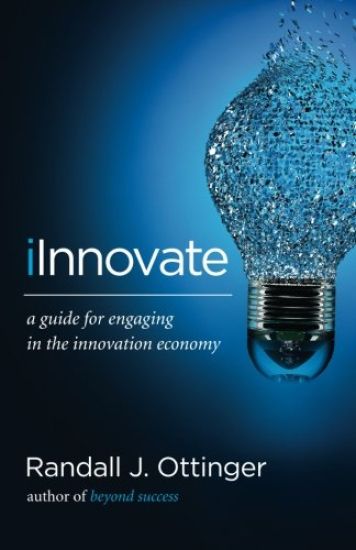
Iinnovate: A Guide for Engaging in the Innovation Economy
Randall J. Ottinger
Leader-2-Leader Publishing Company
2016
nidottu
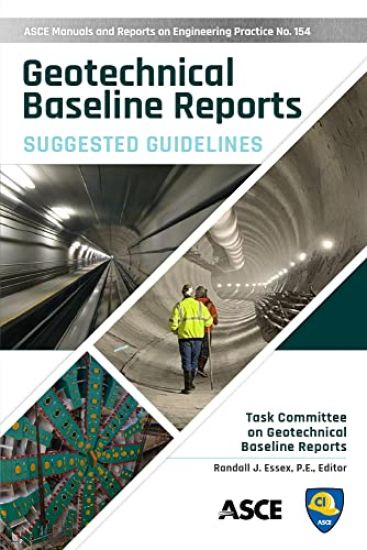
Geotechnical Baseline Reports
Randall J. (EDT) Essex; Task Committee on Geotechnical Baseline Reports (COR)
Amer Society of Civil Engineers
2022
pokkari