Kirjahaku
Etsi kirjoja tekijän nimen, kirjan nimen tai ISBN:n perusteella.
1000 tulosta hakusanalla Randolph T Cuthbert
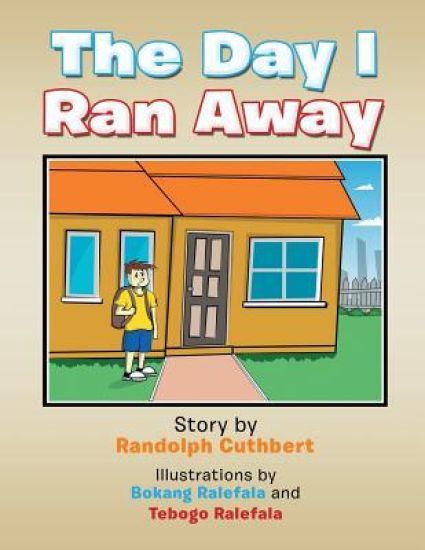
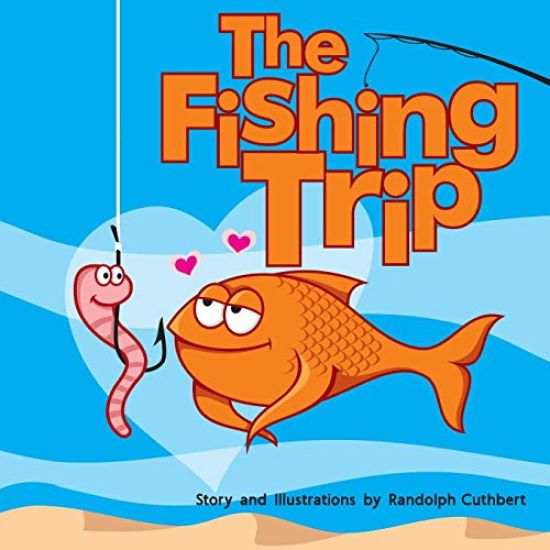
This book was written to let children know that even if a family doesn't enjoy the same activities, they can still have fun together.


Richmond's Story
Julia Cuthbert Pollard; Randolph W. Church; Mary Johnston
Literary Licensing, LLC
2012
sidottu
Richmond's Story is a book written by Julia Cuthbert Pollard. It is a heartwarming and inspiring story about the life of a young boy named Richmond, who is born into poverty in Jamaica. Despite the challenges he faces, Richmond is determined to succeed and make a better life for himself and his family. The book follows Richmond's journey as he grows up, faces adversity, and overcomes obstacles to achieve his dreams. Along the way, he meets a cast of memorable characters who help him on his journey, including his mother, who instills in him a strong work ethic and a love of learning, and his mentor, who teaches him valuable life lessons and helps him develop his talents.Through Richmond's Story, readers will be inspired by the power of determination, resilience, and hard work. The book is a testament to the human spirit and a celebration of the triumph of the human spirit over adversity. It is a must-read for anyone who wants to be inspired and motivated to achieve their own goals and dreams.History Of Richmond, Virginia, Prepared And Published By The Richmond School Board.This scarce antiquarian book is a facsimile reprint of the old original and may contain some imperfections such as library marks and notations. Because we believe this work is culturally important, we have made it available as part of our commitment for protecting, preserving, and promoting the world's literature in affordable, high quality, modern editions, that are true to their original work.
Richmond's Story
Julia Cuthbert Pollard; Randolph W. Church; Mary Johnston
Literary Licensing, LLC
2012
nidottu
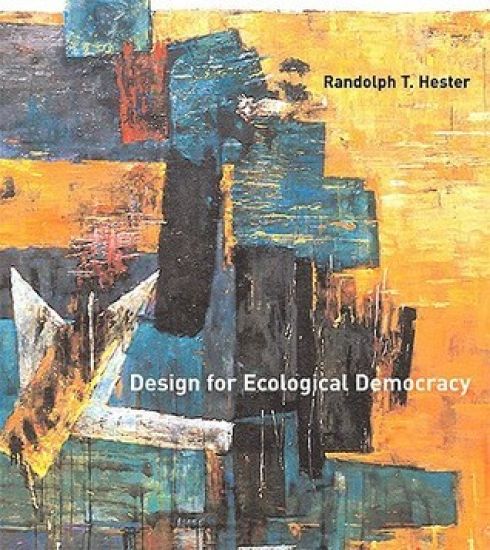
Shows how to combine the forces of ecological science and participatory democracy to design urban landscapes that enable us to act as communities, are resilient rather than imperiled, and touch our hearts.Over the last fifty years, the process of community building has been lost in the process of city building. City and suburban design divides us from others in our communities, destroys natural habitats, and fails to provide a joyful context for our lives. In Design for Ecological Democracy, Randolph Hester proposes a remedy for our urban anomie. He outlines new principles for urban design that will allow us to forge connections with our fellow citizens and our natural environment. He demonstrates these principles with abundantly illustrated examples-drawn from forty years of design and planning practice-showing how we can design cities that are ecologically resilient, that enhance community, and that give us pleasure. Hester argues that it is only by combining the powerful forces of ecology and democracy that the needed revolution in design will take place. Democracy bestows freedom; ecology creates responsible freedom by explaining our interconnectedness with all creatures. Hester's new design principles are founded on three fundamental issues that integrate democracy and ecology: enabling form, resilient form, and impelling form. Urban design must enable us to be communities rather than zoning-segregated enclaves and to function as informed democracies. A simple bench at a centrally located post office, for example, provides an opportunity for connection and shared experience. Cities must be ecologically resilient rather than ecologically imperiled, adaptable to the surrounding ecology rather than dependent on technological fixes. Resilient form turns increased urban density, for example, into an advantage. And cities should impel us by joy rather than compel us by fear; good cities enrich us rather than limit us. Design for Ecological Democracy is essential reading for designers, planners, environmentalists, community activists, and anyone else who wants to improve a local community.
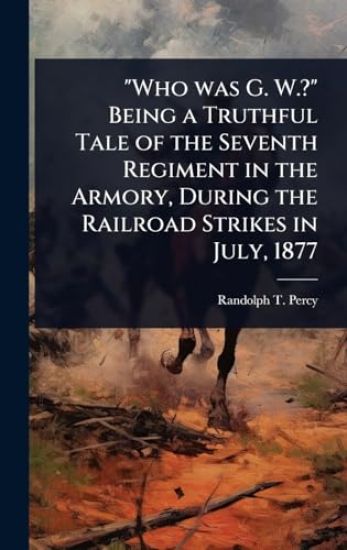
"Who was G. W.?" Being a Truthful Tale of the Seventh Regiment in the Armory, During the Railroad Strikes in July, 1877
Randolph T ] [From Old Catalog] [Percy
Hutson Street Press
2025
sidottu

"Who was G. W.?" Being a Truthful Tale of the Seventh Regiment in the Armory, During the Railroad Strikes in July, 1877
Randolph T ] [From Old Catalog] [Percy
Hutson Street Press
2025
pokkari
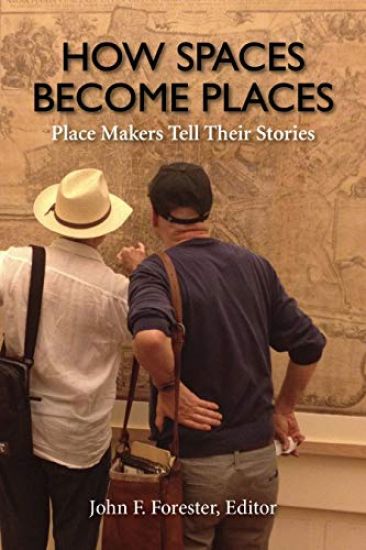
Useful and inspiring cases illustrate participatory placemaking practices and strategies. How Spaces Become Places tells stories of place makers who respond to daunting challenges of affordable housing, racial violence, and immigration, as well as community building, arts development, safe streets, and coalition-building. The book's thirteen contributors share their personal experiences tackling complex and contentious situations in cities ranging from Brooklyn to Los Angeles and from Paris to Detroit. These activists and architects, artists and planners, mediators and gardeners transform ordinary spaces into extraordinary places. These place makers recount working alongside initially suspicious residents to reclaim and enrich the communities in which they live. Readers will learn how place makers listen and learn, diagnose local problems, convene stakeholders, build trust, and invent solutions together. They will find instructive examples of work they can do within their own communities. In the aftermath of the pandemic and the murder of George Floyd, the editor argues, these accessible practice stories are more important than ever.
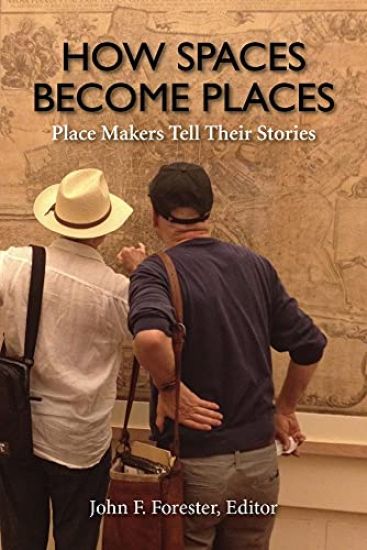
Useful and inspiring cases illustrate participatory placemaking practices and strategies. How Spaces Become Places tells stories of place makers who respond to daunting challenges of affordable housing, racial violence, and immigration, as well as community building, arts development, safe streets, and coalition-building. The book's thirteen contributors share their personal experiences tackling complex and contentious situations in cities ranging from Brooklyn to Los Angeles and from Paris to Detroit. These activists and architects, artists and planners, mediators and gardeners transform ordinary spaces into extraordinary places. These place makers recount working alongside initially suspicious residents to reclaim and enrich the communities in which they live. Readers will learn how place makers listen and learn, diagnose local problems, convene stakeholders, build trust, and invent solutions together. They will find instructive examples of work they can do within their own communities. In the aftermath of the pandemic and the murder of George Floyd, the editor argues, these accessible practice stories are more important than ever.

Inhabiting the Sacred in Everyday Life
Randolph T. Hester Jr.; Amber D. Nelson
George F. Thompson
2019
nidottu
Human beings in the 21st century hunger, often unconsciously, for places to live that are more than efficient, economical machines. Inhabiting the Sacred offers sound and innovative guidance to both citizens and planning professionals who seek to transform public spaces into sites that answer not only practical needs but spiritual and humanitarian needs as well. The book explains how to give form in everyday landscapes to our most deeply held values and most ennobling purposes, thus turning profane spaces into sacred places.This transformation may be accomplished in interior and exterior private and civic spaces alike. Complex projects may require the assistance of a professional designer and planner, but many projects can be carried out by the individual or family. The processes and techniques described in these pages may even assist indigenous people or other groups in defending territories crucial to their cultural survival. To shape neighborhood and civic space into sacred place requires a partnership between citizens, government and public officials, planners and designers; this book is a resource for all who play these various roles in their communities.The book is organized as a practical guide to creating more meaningful and fulfilling habitation that harmonizes with local culture and personal experiences. Each chapter provides theory, case studies, and how-to techniques aggregated from nearly fifty years of research and practice of embedding values into public landscapes.
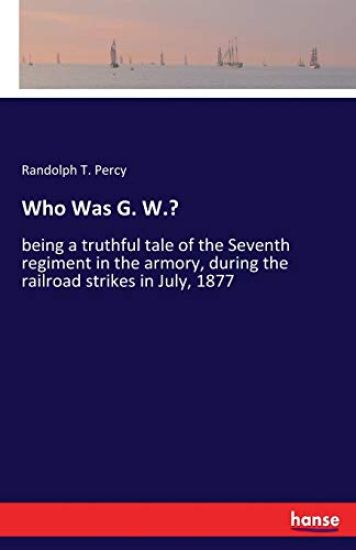
Who Was G. W.? - being a truthful tale of the Seventh regiment in the armory, during the railroad strikes in July, 1877 is an unchanged, high-quality reprint of the original edition of 1879. Hansebooks is editor of the literature on different topic areas such as research and science, travel and expeditions, cooking and nutrition, medicine, and other genres. As a publisher we focus on the preservation of historical literature. Many works of historical writers and scientists are available today as antiques only. Hansebooks newly publishes these books and contributes to the preservation of literature which has become rare and historical knowledge for the future.