Kirjojen hintavertailu. Mukana 11 244 527 kirjaa ja 12 kauppaa.

Kirjahaku

Etsi kirjoja tekijän nimen, kirjan nimen tai ISBN:n perusteella.

1000 tulosta hakusanalla Ray Monk

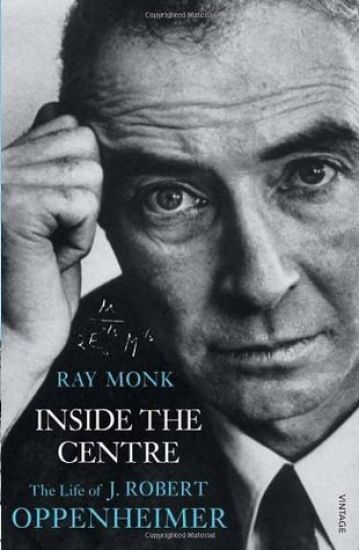
Inside The Centre

Inside The Centre

Ray Monk

Vintage
2013
pokkari
Having formed suspicious connections in the 1930s, in the wake of the Allied victory in World War Two, Oppenheimerâ??s attempts to resist the escalation of the Cold War arms race would lead many to question his loyalties â?? and set him on a collision course with Senator Joseph McCarthy and his witch hunters.
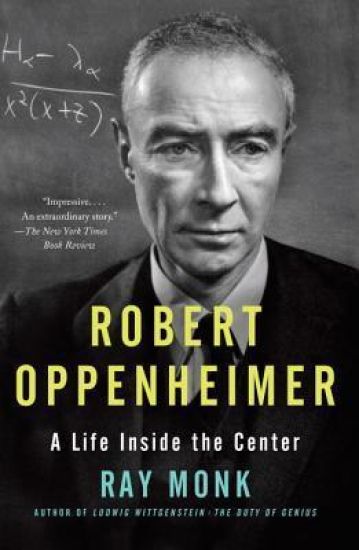
Robert Oppenheimer: A Life Inside the Center
An unforgettable story of discovery and unimaginable destruction and a major biography of one of America's most brilliant--and most divisive--scientists, Robert Oppenheimer: A Life Inside the Center vividly illuminates the man who would go down in history as "the father of the atomic bomb." "Impressive. . . . An extraordinary story."--The New York Times Book Review "Judicious, comprehensive and reliable. . . . By far the most thorough survey yet written of Oppenheimer's physics."--Washington Post Oppenheimer's talent and drive secured him a place in the pantheon of great physicists and carried him to the laboratories where the secrets of the universe revealed themselves. But they also led him to contribute to the development of the deadliest weapon on earth, a discovery he soon came to fear. His attempts to resist the escalation of the Cold War arms race--coupled with political leanings at odds with post-war America--led many to question his loyalties, and brought down upon him the full force of McCarthyite anti-communism. Digging deeply into Oppenheimer's past to solve the enigma of his motivations and his complex personality, Ray Monk uncovers the extraordinary, charming, tortured man--and the remarkable mind--who fundamentally reshaped the world.
How to Read Wittgenstein

How to Read Wittgenstein

Ray Monk

WW Norton Co
2005
pokkari
Approaching the writing of major intellectuals, artists, and philosophers need no longer be daunting. How to Read is a new sort of introduction--a personal master class in reading--that brings you face to face with the work of some of the most influential and challenging writers in history. In lucid, accessible language, these books explain essential topics such as Wittgenstein's determination to insist on the integrity and the autonomy of nonscientific forms of understanding. Though Wittgenstein wrote on the same subjects that dominate the work of other analytic philosophers the nature of logic, the limits of language, the analysis of meaning he did so in a peculiarly poetic style that separates his work sharply from that of his peers and makes the question of how to read him particularly pertinent. At the root of Wittgenstein's thought, Monk argues, is a determination to resist the scientism characteristic of our age, a determination to insist on the integrity and the autonomy of non-scientific forms of understanding. The kind of understanding we seek in philosophy, Wittgenstein tried to make clear, is similar to the kind we might seek of a person, a piece of music, or, indeed, of a poem."
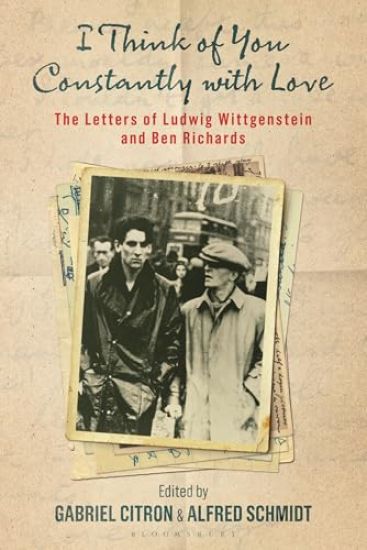
“I Think of You Constantly with Love”

“I Think of You Constantly with Love”

Ray Monk

BLOOMSBURY PUBLISHING PLC
2026
sidottu
Ludwig Wittgenstein met Ben Richards, a medical student, in autumn 1945. It was the beginning of a deep and tempestuous relationship which lasted until Wittgenstein’s death. Their correspondence starts in the summer of 1946 and consists of more than 370 letters, notes, telegrams and photographs. The final letter was sent a week before Wittgenstein died in April 1951.Often defined by his arrogance, difficulty and critical nature of others, Wittgenstein writes letters to Richards which give us another window into his character. Their letters manifest an emotional closeness which is remarkable and unparalleled in Wittgenstein’s voluminous correspondence. They leave no doubt that Ben Richards was Wittgenstein's closest friend in these last years of his life – indeed, perhaps the greatest love of his life.Now available in English for the first time, the letters between Wittgenstein and Richards provide a wholly new perspective on the last years of Wittgenstein’s life: his last years teaching in Cambridge, the resignation of his chair in Cambridge at the end of 1947, and the ensuing restless years spent trying to find a quiet place to do philosophy and complete his magnum opus, the Philosophical Investigations.Their letters are further proof of the extent to which Wittgenstein’s life was inseparable from his philosophy. They are an opportunity to come closer to understanding the work of this intellectual giant, telling us more about the values and beliefs of one of the 20th century’s greatest thinkers.
The Great Philosophers: Russell

The Great Philosophers: Russell

Ray Monk

ORION PUBLISHING CO
2023
pokkari
'The whole problem with the world is that fools and fanatics are always so certain of themselves, and wiser people so full of doubts' Bertrand Russell'Science is what you know. Philosophy is what you don't know'Bertrand Russell discovered mathematics at the age of eleven. It was, he recalled, a transporting experience: 'as dazzling as first love'. From that moment on, he would pursue his passion with undying devotion and fervour. Mathematics might succeed, he felt, where philosophy had failed, reducing thought to its purest form, and freeing knowledge from doubt and contradiction. And for a time, so it seemed. Russell's mathematical investigations effortlessly resolved at a stroke some of philosophy's most intractable problems. Yet if mathematics could be a liberating mistress, she was also an unreliable one... Opening up the work of one of our age's undisputed giants, Ray Monk's exhilaratingly clear, readable guide tells a compelling human tale too: a moving story of love and loss, of ecstatic triumph and deep disillusion.
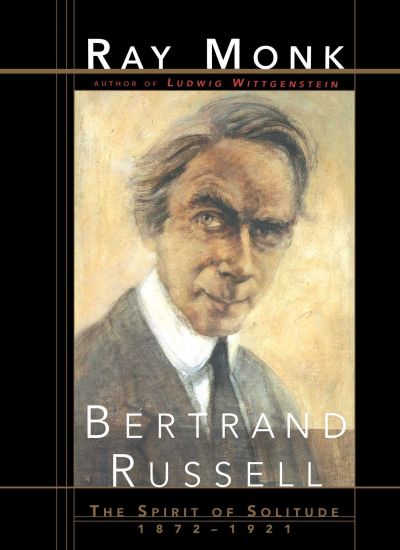
Bertrand Russell: The Spirit of Solitude 1872-1921
From the author of Ludwig Wittegenstein: The Duty of Genius comes a compelling biography of Bertrand Russell, the acclaimed philosopher of the twentieth century and the ingenious author of Principia Mathematica. Over the course of his life, Bertrand Russell grew from a major philosopher into a political activist and popular writer whose name was known around the world. A man who believed in a modern, rational approach to life and was able to guide popular opinion throughout the twentieth century, ended up living a life of tragedy in which he lost everything. Now, based on thousands of documents from the Russell archives in Canada, Ray Monk takes readers through the lifetime of this iconic figure, from the turbulence of his public activities to his often outrageous and sometimes paradoxical pronouncements. Bertrand Russell: The Spirit of Solitude takes readers into the mind of a crazed philosopher, featuring analysis of his public figure that enabled Monk to reveal the inner drama of Russell's personal life that led to his tragic ending.
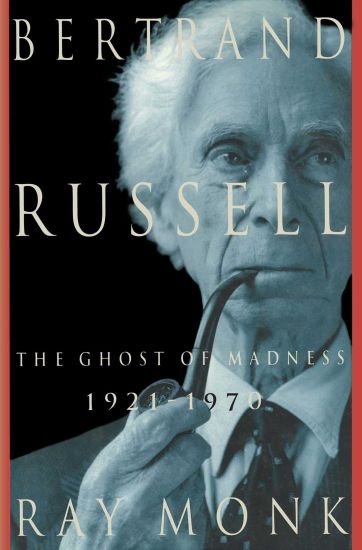
Bertrand Russell: 1921-1970, the Ghost of Madness
In the second half of his life, Bertrand Russell transformed himself from a major philosopher, whose work was intelligible to a small elite, into a political activist and popular writer, known to millions throughout the world. Yet his life is the tragic story of a man who believed in a modern, rational approach to life and who, though his ideas guided popular opinion throughout the twentieth century, lost everything. Russell's views on marriage, religion, education, and politics attracted legions of devoted followers and, at the same time, provoked harsh attacks from every direction. On the one hand, he was stripped of his post at New York's City College because he was thought to be a bad influence on his students, and on the other, he was awarded the Order of Merit, the Nobel Prize in literature, and a lifetime Fellowship of Trinity College, Cambridge. He lived to be ninety-seven, and as he became older he became increasingly controversial. Monk quotes Russell's telegrams to Kennedy and Khrushchev during the Cuban missile crisis, an influence that Russell and his followers believed tipped the balance toward peace. Russell devoted his last years to a campaign organized by his secretary to lend support to Che Guevara's call for a globally coordinated revolutionary struggle against "U.S. imperialism." Until now, this last campaign has been misunderstood as a -- perhaps misguided, but nevertheless innocent -- plea for world peace. Monk reveals it was no such thing. Drawing on thousands of documents collected at the Russell archives in Canada, Monk steers through the turbulence of Russell's public activities, scrutinizing his sometimes paradoxical and often outrageous pronouncements. Monk's focus, however, is on the tragedy of Russell's personal life, and in revealing this inner drama Monk has relied heavily on the cooperation of Russell's surviving relatives and access to previously unexamined legal and private correspondence. A central player in Russell's life was his first son, John. Russell applied the methods of the new science of child psychology in his parenting, believing that a new generation of children could be reared to be "independent, fearless, and free." But instead of being a model of this new generation, John became anxious, withdrawn, and eventually schizophrenic. Nor was John's daughter Lucy (who was Russell's favorite grandchild) to be a model of the new generation; gradually she grew so emotionally disturbed that, at the age of twenty-six, she took her own life. The Ghost of Madness completes the most searching examination yet published of Bertrand Russell's unique life and work. Together with Ray Monk's highly praised first volume of the biography, The Spirit of Solitude, this is the classic account of an extraordinary man who championed the great ideas of the twentieth century and was all but destroyed by them. It is a portrait of the mind of a century.
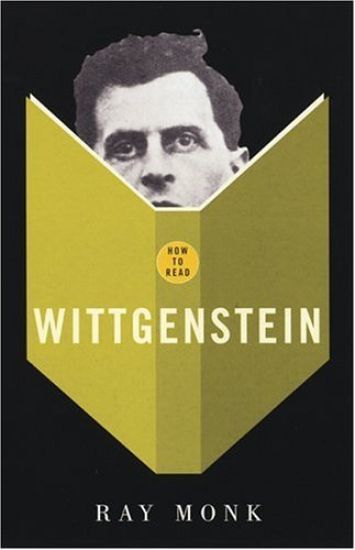
How To Read Wittgenstein

How To Read Wittgenstein

Ray Monk

Granta Books
2005
nidottu
Though Wittgenstein wrote on the same subjects that dominate the work of other analytic philosophers - the nature of logic, the limits of language, the analysis of meaning - he did so in a peculiarly poetic style that separates his work sharply from that of his peers and makes the question of how to read him particularly pertinent. At the root of Wittgenstein's thought, Ray Monk argues, is a determination to resist the scientism characteristic of our age, a determination to insist on the integrity and the autonomy of non-scientific forms of understanding. The kind of understanding we seek in philosophy, Wittgenstein tried to make clear, is similar to the kind we might seek of a person, a piece of music, or, indeed, a poem. Extracts are taken from Tractatus Logico-Philosophicus and from a range of writings, including Philosophical Investigations, The Blue and Brown Books and Last Writings on the Philosophy of Psychology.
Ludwig Wittgenstein : geniets plikt

Ludwig Wittgenstein : geniets plikt

Ray Monk

Bokförlaget Daidalos
2000
nidottu
Ray Monk låter oss följa Wittgenstein genom hela hans växlingsrika levnad. Från uppväxten i den högborgerliga och förmögna familjen i det slutande artonhundratalets Wien – ”ett laboratorium för självförintelse” – via de ingenjörsvetenskapliga studierna i Berlin och Manchester, de komplicerade vänskapsrelationerna till Bertrand Russell, J M Keynes och G E Moore – Monk berättar historien om hur den odrägligt intensive unge Wittgenstein fick Russell att söka igenom sitt arbetsrum för att bevisa att där inte fanns någon noshörning – till den dödslängtan som fick honom att uppsöka första världskrigets skyttegravar och arbeta som sjukvårdare under blitzen i London. Monk skildrar också Wittgensteins misslyckade försök att bli folkskollärare, hans förakt för den akademiska filosofin och dess förvaltare, hur han för att finna arbetsro uppsöker ensliga platser i Norge – där han i Skjolden, i det inre av Sognefjord, bygger sig en hytte – och på Irland, hans planer på att emigrera till Sovjet. Driven av en moralisk och intellektuell kompromisslöshet utan motstycke kom Wittgenstein inte bara att leva ett egensinnigt liv, hans radikala ifrågasättande av etablerade filosofiska sanningar har i grunden ändrat vår uppfattning om vad tänkande är och kan vara. "... utan tvivel den mest väldokumenterade och allsidiga framställningen vi har av filosofens liv och verk... Det är en utmärkt sak att vi nu har Monks bok på svenska och i en god översättning. Den kommer att öka intresset för filosofi i allmänhet och för Wittgenstein i synnerhet." /Carl-Göran Ekerwald Dagens Nyheter "En av de absolut bästa böcker jag har läst. Den kombinerar ett liv, ett mycket komplicerat liv som var denne Ludwig Wittgensteins, med hans idéer och filosofi. Läser man boken får man en inblick i det han har gjort som filosof och samtidigt ser man detta Europa han levde i. Han dog i början av femtiotalet och levde alltså i ett sammanbrytande Habsburgvälde, i ett England där Bertrand Russell sprang runt och jagade flickor medan Wittgenstein hade en annan läggning. Allt detta är serverat på ett jättefint sätt. Det visar att liv och verk med nödvändighet hänger ihop." /Pierre Guilliet de Monthoux, Vetandets värld
Tractatus Logico-Philosophicus

Tractatus Logico-Philosophicus

Ludwig Wittgenstein; Ray Monk

Routledge
2013
nidottu
Ludwig Wittgenstein is one of the greatest and most fascinating philosophers of all time. His Tractatus Logico-Philosophicus, composed in a series of remarkable numbered propositions, was the only book he published in his lifetime. He tackles nothing less than the question of whether there is such a thing as a logically perfect language and, armed with it, what we can say about the nature of the world itself. Pushing the limits of language, logic and philosophy, the Tractatus is a brilliant, cryptic and hypnotic tour de force, exerting a major impact on twentieth-century philosophy and stirring the imagination today.With a new foreword by Ray Monk.
Tractatus Logico-Philosophicus

Tractatus Logico-Philosophicus

Ludwig Wittgenstein; Ray Monk

Routledge
2015
sidottu
The Tractatus Logico-Philosophicus first appeared in 1921 and was the only philosophical work that Ludwig Wittgenstein (1889-1951) published during his lifetime. Written in short, carefully numbered paragraphs of extreme compression and brilliance, it immediately convinced many of its readers and captured the imagination of all.Its chief influence, at first, was on the Logical Positivists of the 1920s and 1930s, but many other philosophers were stimulated by its philosophy of language, finding attractive, even if ultimately unsatisfactory, its view that propositions were pictures of reality. Perhaps most of all, its own author, after his return to philosophy in the late 1920s, was fascinated by its vision of an inexpressible, crystalline world of logical relationships.C.K. Ogden's translation of the Tractatus Logico-Philosophicus has a unique provenance. As revealed in Letters of C.K. Ogden (1973) and in correspondence in The Times Literary Supplement, Wittgenstein, Ramsey and Moore all worked with Ogden on the translation, which had Wittgenstein's complete approval. The very name Tractatus Logico-Philosophicus was of Ogden's devising; and there is very strong feeling among philosophers that, among the differing translations of this work, Ogden's is the definitive text - and Wittgenstein's version of the English equivalent of his Logisch-Philosophische Abhandlung.
The Selected Writings of Maurice O’Connor Drury

The Selected Writings of Maurice O’Connor Drury

Maurice O’Connor Drury; Ray Monk

Bloomsbury Academic
2018
nidottu
Maurice O’Connor Drury was among Wittgenstein’s first students after his return to Cambridge in 1929. The subsequent course of Drury’s life and thought was to be enormously influenced by his teacher. The Selected Writings of Maurice O’Connor Drury brings together the best of his lectures, conversations, and letters on philosophy, religion and medicine. Central to the collection is the Danger of Words, the 1973 text described by Ray Monk as 'the most truly Wittgensteinian book published by any of Wittgenstein's students'. Through notes on conversations with Wittgenstein, letters to a student of philosophy and correspondence of almost 30 years with Rush Rhees, Drury gives shape to what he had learned from Wittgenstein. Whether discussing philosophy, Simone Weil or the power of hypnosis, he makes fascinating excursions into the bearing of Wittgenstein’s thought on philosophy and the practice of medicine and psychiatry.Alongside a foreword by Monk and an introduction presenting a new biography of Drury, analysing the relationship between him and Wittgenstein, this collection features previously unpublished archival sources. Beautifully written and carefully selected, each piece reveals the impact of Wittgenstein’s teachings, shedding light on the friendship and thinking of one of the most important philosophers of the 20th century.
The Selected Writings of Maurice O’Connor Drury

The Selected Writings of Maurice O’Connor Drury

Maurice O’Connor Drury; Ray Monk

Bloomsbury Academic
2017
sidottu
Maurice O’Connor Drury was among Wittgenstein’s first students after his return to Cambridge in 1929. The subsequent course of Drury’s life and thought was to be enormously influenced by his teacher, from his decision to become a doctor to his later work in psychiatry. The Selected Writings of Maurice O’Connor Drury brings together the best of his lectures, conversations, and letters on philosophy, religion and medicine. Central to the collection is the Danger of Words, the 1973 text described by Ray Monk as 'the most truly Wittgensteinian book published by any of Wittgenstein's students'. Through notes on conversations with Wittgenstein, letters to a student of philosophy and correspondence of almost 30 years with Rush Rhees, Drury gives shape to what he had learned from Wittgenstein. Whether discussing methods of philosophy, Simone Weil or the power of hypnosis, he makes fascinating excursions into the bearing of Wittgenstein’s thought on philosophy and the practice of medicine and psychiatry.With an introduction presenting a new biography of Drury, analysing the relationship between him and Wittgenstein, The Selected Writings of Maurice O’Connor Drury features previously unpublished archival sources. Beautifully written and carefully selected, each piece reveals the impact of Wittgenstein’s teachings, shedding light on the friendship and thinking of one of the most important philosophers of the 20th century.
Warrior Monk

Warrior Monk

Ray Keating

Independently Published
2019
pokkari
Warrior Monk revolves around a former CIA assassin, Stephen Grant, who has lived a far different, relatively quiet life as a parish pastor in recent years. However, a shooting at his church, a historic papal proposal, and threats to the pope's life mean that Grant's former and current lives collide. Grant must tap the varied skills learned as a government agent, a theologian and a pastor not only to protect the pope, but also to feel his way through a minefield of personal challenges. The second edition of Warrior Monk includes a new Introduction by Ray Keating, as well as a new Epilogue that points to a later Pastor Stephen Grant novel.
Monk in the Market Place

Monk in the Market Place

Ray Simpson

Darton,Longman Todd Ltd
2021
nidottu
Monk in the Market Place … and the Simpsons is a memoir like no other. Ray Simpson, Founding Guardian of the international new monastic Community of Aidan and Hilda, recalls the story of a unique life in which he has followed faithfully a calling to live monastically beyond the traditional enclosures of monastery or shrine. Ray’s unputdownable account charts human pain and God-incidents in his childhood and college, baptisms of fire in industrial heartlands and multi-racial London, pioneering a Village of God at Bowthorpe, Norwich, the call to be ‘a contemplative in the market place’ living without a salary, his co-founding of the Community of Aidan and Hilda, and twenty years as founder of the Celtic Christianity library and CAH Retreat Facilities on the Holy Island of Lindisfarne, ‘the spiritual capital of England’.