We live in society which always wants to tame us and when we fight back to unleash ourselves, we are put back to our cages. Hi I am Sara, a college student. Like most of the teenagers I was also clueless about my life. I have friends who are more precious than anything in this world. Yes there are some issues in my family but I have never taken them seriously. Everything was running smoothly until I found letter that changed my life completely I had never been alone outside my town but circumstances took me to an unplanned journey to find as unknown girl who is less like me and more like you. "They tried to shut me up with their swords but I stood up fiercely with my words"
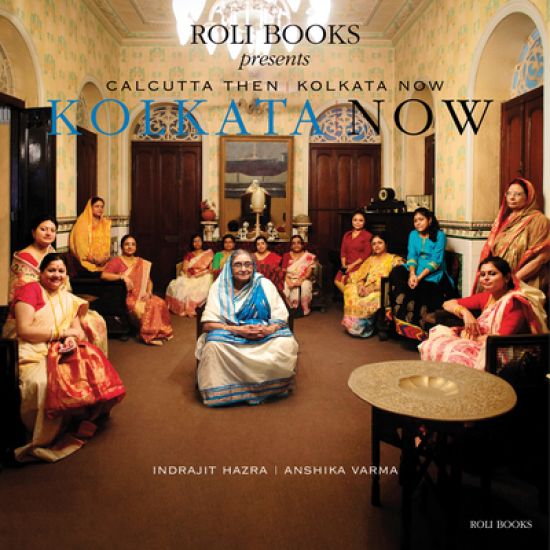
Calcutta Then: Calcutta is where it all began. The city symbolised India's transformation from medievalism to modernity. The British created the framework. The prophets and pioneers who operated within it were Indian. Raja Rammohan Roy linked past and present. After him came the poets, patriots and politicians. They made banian, boxwallah, bhadralok and biplab - trader, company executive, gentleman and revolutionary - the four props of the new metropolitan culture that inspired Gopal Krishna Gokhale's memorable comment, "What Bengal thinks today, India thinks tomorrow". Much water has flown down the Hooghly since then. But the lifestyle that evolved in the city is still the hallmark of success throughout the country. Calcutta was modern India's first capital, from 1772 to 1931. Announcing the shift to Delhi during his visit to Calcutta, King George V declared, "Calcutta must always remain the premier city of India. Its population, its importance as a commercial centre and great emporium of trade, its splendid historical traditions, all continue to invest Calcutta with a unique character which should preserve to it a pre-eminent position". Kolkata Now: Love it, endure it, call it what you will, Kolkata is Life as 'kháos' as no other city is. Once a bubble, holding out the rest of Bengal - and, indeed, India - it is today a city that contains a multitude of cities: Kolkata, Calcutta, Kalkatta . Its cosmopolitanism and liberal values are clichés because they are true, even as they stand witness to its past insurrections and present anomalies as much as to its genius to enjoy life - through pujo, mishti, Culture (always with a capital 'C'), neighbourhood addas, fajlami (innocent naughtiness), football and fish. For visitors and those who once left the city, it can be a walk through time, a ride on a tram, or a constant return to the scene of old happy crimes on Park Street, in its colonial-style clubs, or its sprawling mansions that exist cheek-by-jowl with malls and multiplexes. For the Kolkatan, Kolkata Now keeps its own beat and time, where everyday struggles and quibbles unerringly give way to the ability to live Life - both peripatetic and sedentary, bustling and empty, noisy and gone-quiet, Technicolor and Noir - in the 21st-century mahanagar as it moves, always pretending to succumb, to the future.
When P.V. Narasimha Rao and Manmohan Singh launched India's "Look East" policy, it was only the first stage of the strategy to foster economic and security cooperation with the United States. But "Looking East" became an end in itself, and Singapore a valid destination, largely because of Lee Kuan Yew. He had been trying since the 1950s to persuade India's leaders that China would steal a march on them if they neglected domestic reform and ignored a region that India had influenced profoundly in ancient times. With his deep understanding of Indian life, close ties with India's leaders from Jawaharlal Nehru on, and sound grasp of realpolitik, Lee never tired of stressing that Asia would be "submerged" if India did not "emerge". Looking East to Look West recounts how India and Singapore rediscovered long-forgotten ties in the endeavour to create a new Asia. Singapore sponsored India's membership of regional institutions. India and Singapore broke diplomatic convention with unprecedented economic and defence agreements that are set to transform boundaries of trade and cooperation. This book traces the process from the earliest mention of Suvarnadbhumi in the Ramayana to Lee Kuan Yew's letter to Lal Bahadur Shastri within moments of declaring independence on 9 August 1965, from the Tata's pioneering industrial training venture in Singapore to Singapore's Information Technology Park in Bangalore. It explains the part Lee played in India's emergence as a player in the emerging Concert of Asia. History comes alive in these pages as Sunanda K. Datta-Ray, who had eight long conversations with Lee Kuan Yew, tells the story in the words of the main actors and with a wealth of anecdotes and personal details not available to many chroniclers.
Mouse is scared of the dark, but luckily he meets Ray, a friendly firefly, to show him that the shadows aren't as terrifying as he thinks . . . or are they?
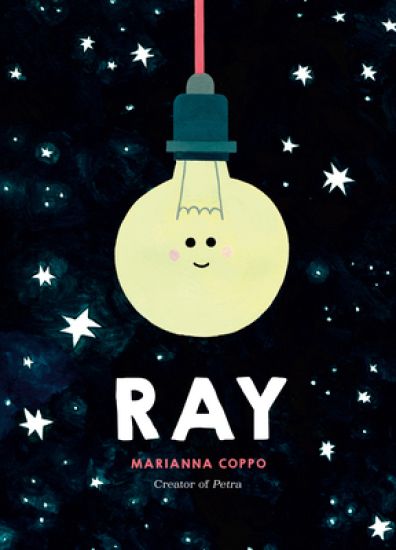
A positive and heart-warming picture about an adorable lightbulb who embarks on a rather enlightening journey! Meet Ray - the light bulb who lives in the closet at the end of the hall. Ray’s days are pretty boring. He spends most of his time in the dark, and nothing ever changes. But one day, Ray’s life is turned upside down. Will Ray ever see things in the same light again? With gentle humour and charming illustrations, Ray is a story that beams with positivity. From the acclaimed author-illustrator of Petra, Marianna Coppo.
RAY: Stories from a Wannabe writer is a group of six flash fiction stories full of twists, turns, horror, and suspense. Each story focuses around a character who is suddenly faced with a frightening decision, some life-changing, some life-ending, and some downright unusual.
Meet Ray. He's light! And he's been shining since time began. Wherever there's life on Earth, there's Ray, helping everything under the sun thrive. And Ray can really move - fast. Have you ever hurtled through space? Become a rainbow? Made food for plants? Ray has! With brilliant wit and sparkling one-liners, Ray introduces readers to a light show like no other. Filled with awe-inspiring artwork, funny asides, and a spotlight on kid-enticing facts, Ray invites us to bask in his warmth, as he illuminates our world.
Nominated for the American Book Award, Ray is the bizarre, hilarious, and consistently adventurous story of a life on the edge. Dr. Ray--a womanizer, small-town drunk, vigilante, poet, adoring husband--is a man trying to make sense of life in the twentieth century. In flight from the death he dealt flying over Vietnam, Dr. Ray struggles with those bound to him by need, sickness, lunacy, by blood and by love.
Deutschland in naher Zukunft: Die regierende Partei Heimatfront Deutschland deportiert alle Migranten und politische Gegner in eine Hand voll hermetisch abgeriegelter sogenannter Fl chtlingsst dte. Elsa Jacobi, die charismatische F hrerin der HfD , herrscht mit eiserner Hand ber die Republik und kontrolliert Medien und Staatsorgane mit Gewalt und Terror. Wie Marionetten manipuliert sie die Menschen um sich herum f r ihre Zwecke. So auch den jungen Politstar Hassan, der getrieben vom Hass auf seine t rkischen Wurzeln nach Anerkennung und Macht strebt. Auf der Suche nach seinem spurlos verschwundenen Freund, dem Hacker und Regimegegner Ari, ger t Durchschnittsb rger Finn ins Visier der HfD und muss in einer Fl chtlingsstadt untertauchen. W hrend er dort ums berleben k mpft, holt ihn die gemeinsame Vergangenheit mit Elsa Jacobi ein.
What would you do if you had a chance to save someone's life? When Stosh gets hit on the head with a baseball, he's lucky to survive. Then he learns about another player who wasn't so lucky--Ray Chapman, the only player in major league history to get hit by a pitched ball and die. Can Stosh use his time-traveling abilities to save Ray Chapman's life, and the reputation of the pitcher who threw the ball? He's going to try Along the way, he'll meet Babe Ruth, Tris Speaker, and even Harry Houdini. But when Stosh falls into a Houdini-level trap, the question isn't just whether he can save Ray--but whether he can escape from 1920.
Let Ray Mears, the grand master of bushcraft, teach you everything you need to know about how to survive outdoors. Ray's in-depth knowledge, and years of practical experience will equip you with the know-how you need to make the most of the great outdoors and experience it to the full. 'I wanted a book on basic survival and bushcraft relevant to UK and this hit the spot' -- ***** Reader review'This is a permanent resident in my rucksack and I read it over and over' -- ***** Reader review'Great book by the grand master of bushcraft' -- ***** Reader review'What can you say - it's Ray Mears and he's brilliant. Like all his stuff, very good.' -- ***** Reader review'Very clear, informative and easy to understand' -- ***** Reader review'Ruddy good read! The man knows his stuff!' -- ***** Reader review***************************************************************************************************Ray Mears' Outdoor Survival Handbook is a book of discovery, explaining the everyday skills you need to live in and enjoy the natural world.Season by season, this unique guide, with line illustrations, describes the resources and materials available in the wild and how to use them. Whether you want to spend a day, a week or a month out of doors, Ray Mears' Outdoor Survival Handbook will help you enjoy it to the full.Learn how to identify animal tracks, make a simple camp bed and shelter out of natural materials, pick edible fungi, smoke meat and fish, transport a fire and weave baskets, and many other essential skills...Packed with practical tips, insights into nature and respect for traditional knowledge, this is a book for families, groups and individual hikers and climbers - for everyone who enjoys outdoor life.
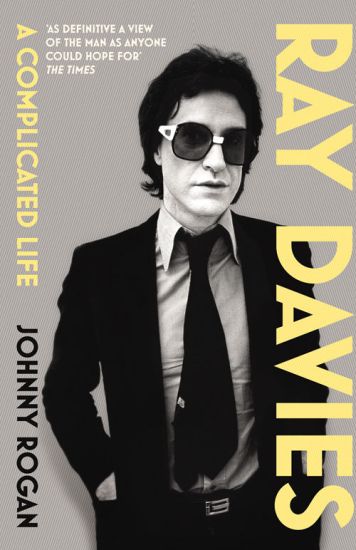
NOW UPDATED WITH A NEW EPILOGUE In the summer of 1964, aged twenty, Ray Davies led the Kinks to fame with their number one hit ‘You Really Got Me’. Within months, they were established among the pop elite, swamped by fans and fast becoming renowned for the rioting at their gigs. But Ray’s journey from working-class Muswell Hill to the Rock ’n’ Roll Hall of Fame was tumultuous in the extreme, featuring breakdowns, bitter lawsuits, spectacular punch-ups and a ban from entering the USA. His relationship with his brother Dave is surely the most ferocious and abusive in music history. Based on countless interviews conducted over several decades, this richly detailed and revelatory biography presents the most frank and intimate portrait yet of Ray Davies.