Kirjojen hintavertailu. Mukana 11 717 486 kirjaa ja 12 kauppaa.

Kirjahaku

Etsi kirjoja tekijän nimen, kirjan nimen tai ISBN:n perusteella.

1000 tulosta hakusanalla Reginald Dwayne Betts

Felon

Felon

Reginald Dwayne Betts

WW Norton Co
2021
nidottu
In fierce, agile poems, Felon tells the story of the effects of incarceration—canvassing a wide range of emotions and experiences through homelessness, underemployment, love, drug abuse, domestic violence, fatherhood and grace—and, in doing so, creates a travelogue for an imagined life. Reginald Dwayne Betts confronts the funk of post-incarceration existence in traditional and newfound forms, from revolutionary found poems created by redacting court documents to the astonishing crown of sonnets that serves as the volume’s radiant conclusion.
Felon

Felon

Reginald Dwayne Betts

WW Norton Co
2020
sidottu
Felon tells the story of the effects of incarceration in fierce, dazzling poems—canvassing a wide range of emotions and experiences through homelessness, underemployment, love, drug abuse, domestic violence, fatherhood, and grace—and, in doing so, creates a travelogue for an imagined life. Reginald Dwayne Betts confronts the funk of postincarceration existence and examines prison not as a static space, but as a force that enacts pressure throughout a person’s life. The poems move between traditional and newfound forms with power and agility—from revolutionary found poems created by redacting court documents to the astonishing crown of sonnets that serves as the volume’s radiant conclusion. Drawing inspiration from lawsuits filed on behalf of the incarcerated, the redaction poems focus on the ways we exploit and erase the poor and imprisoned from public consciousness. Traditionally, redaction erases what is top secret; in Felon, Betts redacts what is superfluous, bringing into focus the profound failures of the criminal justice system and the inadequacy of the labels it generates. Challenging the complexities of language, Betts animates what it means to be a "felon."
Doggerel

Doggerel

Reginald Dwayne Betts

WW NORTON CO
2025
sidottu
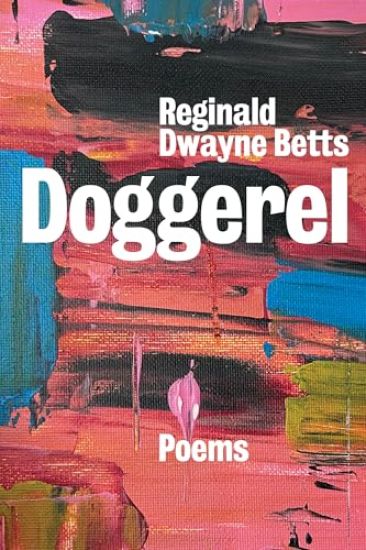
Reginald Dwayne Betts is our foremost chronicler of the ways prison shapes and transforms American life. In Doggerel, Betts examines this subject through a more prosaic—but equally rich—lens: dogs. He reminds us that, as our lives are broken and put back together, the only witness often barks instead of talks. In these poems, which touch on companionship in its many forms, Betts seamlessly and skillfully deploys the pantoum, ghazal, and canzone, in conversation with artists such as Freddie Gibbs and Lil Wayne. Simultaneously philosophical and playful, Doggerel is a meditation on family, falling in love, friendship, and those who accompany us on our walk through life. Balancing political critique with personal experience, Betts once again shows us “how poems can be enlisted to radically disrupt narrative” (Dan Chiasson, The New Yorker)—and, in doing so, reveals the world anew. “. . . every story becomes a multiplication, If the naming is filled less with names than With the best parts, the barking & everything Else, because who among us hasn’t been As mangy as a rescue, even on our best Days, desiring mostly to be loved.” —from “Rings”
PEN America Handbook For Writers in Prison

PEN America Handbook For Writers in Prison

Reginald Dwayne Betts

Haymarket Books
2022
pokkari
“This is one of the best books on writing that I've ever read. I couldn't put it down.” —Michelle Alexander, author of The New Jim Crow The Sentences That Create Us provides a road map for incarcerated people and their allies to have a thriving writing life behind bars—and shared beyond the walls—that draws on the unique insights of more than fifty contributors, most themselves justice-involved, to offer advice, inspiration and resources. The Sentences That Create Us draws from the unique insights of over fifty justice-involved contributors and their allies to offer inspiration and resources for creating a literary life in prison. Centering in the philosophy that writers in prison can be as vibrant and capable as writers on the outside, and have much to offer readers everywhere, The Sentences That Create Us aims to propel writers in prison to launch their work into the world beyond the walls, while also embracing and supporting the creative community within the walls. The Sentences That Create Us is a comprehensive resource writers can grow with, beginning with the foundations of creative writing. A roster of impressive contributors including Reginald Dwayne Betts (Felon: Poems), Mitchell S. Jackson (Survival Math), Wilbert Rideau (In the Place of Justice) and Piper Kerman (Orange is the New Black), among many others, address working within and around the severe institutional, emotional, psychological and physical limitations of writing prison through compelling first-person narratives. The book’s authors offer pragmatic advice on editing techniques, pathways to publication, writing routines, launching incarcerated-run prison publications and writing groups, lesson plans from prison educators and next-step resources. Threaded throughout the book is the running theme of addressing lived trauma in writing, and writing’s capacity to support an authentic healing journey centered in accountability and restoration. While written towards people in the justice system, this book can serve anyone seeking hard won lessons and inspiration for their own creative—and human—journey. The Sentences That Create Us includes contributions from Alexa Alemanni; Raquel Almazan; Ellen Bass; Reginald Dwayne Betts; Keri Blakinger; Jennifer Bowen; Zeke Caligiuri; Sterling Cunio; Chris Daley; Curtis Dawkins; Emile DeWeaver; Casey Donahue; Ryan Gattis; Eli Hager; Ashley Hamilton, PhD; Kenneth Hartman; Elizabeth Hawes; Randall Horton; Spoon Jackson; Mitchell S. Jackson; Nicole Shawan Junior; Yukari Iwatani Kane, Shaheen Pasha, and Kate McQueen of The Prison Journalism Project; Piper Kerman; Lauren Kessler; Johnny Kovatch; Doran Larson; Victoria Law; Jaeah Lee; John J. Lennon; Arthur Longworth; T Kira Mahealani Madden; J. D. Mathes; Justin Rovillos Monson; Lateef Mtima, JD; Vivian D. Nixon; Patrick O’Neil; Liza Jessie Peterson; Wilbert Rideau; Alejo Rodriguez; Luis J. Rodriguez; Susan Rosenberg; Geraldine Sealey; Sarah Shourd; Sarah Shourd; Anderson Smith, PhD; Derek R. Trumbo Sr.; Louise K. WaaKaa’igan; Andy Warner; Thomas Bartlett Whitaker; John R. Whitman, PhD; Saint James Harris Wood; Earlonne Woods and Nigel Poor of Ear Hustle; and Jeffery L. Young.
Shahid Reads His Own Palm

Shahid Reads His Own Palm

Reginald Dwayne Betts

Alice James Books
2010
nidottu
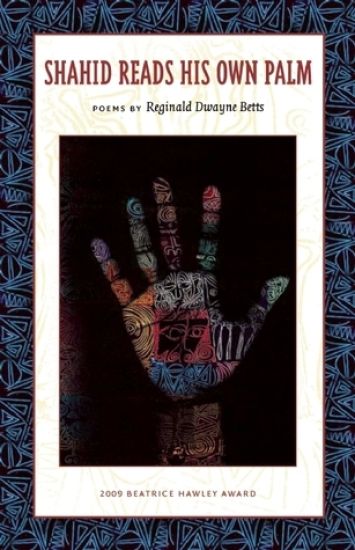
Gripping and terrifying, eloquent and heartwrenching, this debut collection delves into hellish territory: prison life. Soulful poems somberly capture time-bending experiences and the survivalist mentality needed to live a contradiction, confronting both daily torment and one's illogical fear of freedom.
Doggerel

Doggerel

Reginald Dwayne Betts

WW NORTON CO
2026
nidottu
Reginald Dwayne Betts is our foremost chronicler of the ways prison shapes and transforms American life. In Doggerel, Betts examines this subject through a more prosaic—but equally rich—lens: dogs. He reminds us that, as our lives are broken and put back together, the only witness often barks instead of talks. In these poems, which touch on companionship in its many forms, Betts seamlessly and skillfully deploys the pantoum, ghazal, and canzone, in conversation with artists such as Freddie Gibbs and Lil Wayne. Simultaneously philosophical and playful, Doggerel is a meditation on family, falling in love, friendship, and those who accompany us on our walk through life. Balancing political critique with personal experience, Betts once again shows us “how poems can be enlisted to radically disrupt narrative” (Dan Chiasson, The New Yorker)—and, in doing so, reveals the world anew. “. . . every story becomes a multiplication, If the naming is filled less with names than With the best parts, the barking & everything Else, because who among us hasn’t been As mangy as a rescue, even on our best Days, desiring mostly to be loved.” —from “Rings”
Redaction

Redaction

Reginald Dwayne Betts; Titus Kaphar

WW NORTON CO
2023
sidottu
Throughout their award-winning careers, visual artist and filmmaker Titus Kaphar and poet, memoirist, and attorney Reginald Dwayne Betts have shed light on the violences of incarceration and the underexplored contradictions of American history. In Redaction, they unite their different mediums to expose the ways the legal system exploits and erases the poor and incarcerated from public consciousness. First exhibited at MoMA PS1, the fifty “Redaction” prints layer Kaphar’s etched portraits of incarcerated individuals with Betts’s poetry, which uses the legal strategy of redaction to craft verse out of legal documents. Three prints are broken apart into their distinct layers, illuminating how the pair manipulated traditional engraving, printing, poetic, and redaction processes to reveal what is often concealed. This beautifully designed volume also includes additional artwork, poetry, and an introduction by MoMA associate director Sarah Suzuki. The result is an astonishing, powerful exploration of history, incarceration, and race in America.
Letter from Birmingham Jail

Letter from Birmingham Jail

Martin Luther King; Reginald Dwayne Betts

HARPERCOLLINS PUBLISHERS INC
2025
nidottu
A beautiful commemorative edition of Dr. Martin Luther King's essay "Letter from Birmingham Jail,” part of Dr. King's archives published exclusively by HarperCollins.With an afterword by Reginald Dwayne Betts On April 16, 1923, Dr. Martin Luther King Jr., responded to an open letter written and published by eight white clergyman admonishing the civil rights demonstrations happening in Birmingham, Alabama. Dr. King drafted his seminal response on scraps of paper smuggled into jail. King criticizes his detractors for caring more about order than justice, defends nonviolent protests, and argues for the moral responsibility to obey just laws while disobeying unjust ones."Letter from Birmingham Jail" proclaims a message - confronting any injustice is an acceptable and righteous reason for civil disobedience.This beautifully designed edition presents Dr. King’s speech in its entirety, paying tribute to this extraordinary leader and his immeasurable contribution, and inspiring a new generation of activists dedicated to carrying on the fight for justice and equality.
Freedom and Confinement

Freedom and Confinement

Elizabeth Gordon McKim; Reginald Dwayne Betts

UNIVERSITY OF PITTSBURGH PRESS
2026
pokkari
Freedom and Confinement is a powerful, book-length conversation between poets Elizabeth Gordon McKim and Etheridge Knight, recorded in 1990 as Knight was dying of cancer. The interview traces Knight’s life from his childhood in Paducah, Kentucky, to his time in the Army and his injury in Korea, to his drug addiction and incarceration, and finally, to his poetic rebirth. The dialogue includes a 1984 exchange with McKim’s daughter, Jenifer McKim, offering a rare intergenerational glimpse into Knight’s world. McKim captures the man behind the legend—complex, contradictory, soulful. From prison yards to the Library of Congress, Knight lived and performed poetry across the country. This conversation revives his stories and energies, blending trickster wit with hard-won wisdom, making the mythic poet vividly human once more.
Nigel Poor: The San Quentin Project

Nigel Poor: The San Quentin Project

Nigel Poor; Reginald Dwayne Betts; Mesro Coles-El

Aperture
2021
sidottu
The San Quentin Project collects a largely unseen visual record of daily life inside one of America’s oldest and largest prisons, demonstrating how this archive of the state is now being used to teach visual literacy and process the experience of incarceration. In 2011, Nigel Poor—artist, educator, and cocreator of the acclaimed podcast Ear Hustle—began teaching a history of photography class through the Prison University Project at San Quentin State Prison. Neither books nor cameras were allowed into the facility, so an unorthodox course with a range of inventivemapping exercises ensued: students crafted “verbal photographs” of memories for which they had no visual documentation, and annotated iconic images from different artists. After the first semester, Poor says, “one student told me he could now see fascination everywhere in San Quentin.” When Poor received access to thousands of negatives in the prison’s archive, made by corrections officers of a former era, these images of San Quentin’s everyday occurrences soon became launchpads for her students’ keen observations. From the banal to the brutal, to distinct moments of respite, the pictures in this archive gave those who were involved in the project the opportunity to share their stories and reflections on incarceration.