Kirjahaku
Etsi kirjoja tekijän nimen, kirjan nimen tai ISBN:n perusteella.
1000 tulosta hakusanalla Richard Coslet


Special Pants is an eclectic collection of brief poems, light verse, epigrams, aphorisms, song lyrics (some very silly), and other quirky verbiage. Most have been written with the clear intent to elicit a smile, and certainly to eschew obfuscation.
Searching for a sense of national and personal identity in an increasingly fragmented United Kingdom, Borderlands merges British history with contemporary politics and culture. Collett’s journey takes him to the banks of the River Tamar - a natural boundary dividing Anglo-Saxon Devon from Celtic Cornwall for a thousand years, to the English-Welsh borders, where Offa’s Dyke has separated the two countries since the 8th century. He then travels north to the Anglo-Scottish borderlands, Orkney and Shetland, and across the Irish Sea to Northern Ireland. Richard Collett speaks to a cast of characters including Cornish nationalists, Welsh speakers teaching Welsh in England, and migrant charity workers helping refugees. For the first time in centuries, Brexit and the pandemic made hard borders an unprecedented reality. Calls for Scottish, Welsh, and even Cornish independence, are a constant backdrop to Collett’s journey. In Northern Ireland, there are fears of a hard border reigniting ‘The Troubles’, while in southern England, issues of immigration have turned the Kent coast into a maritime frontier and political battleground. Collett explores the rise of regional identities in the midst of an ever-loosening sense of national unity, but ultimately, this isn’t a book about differences and divisions. Borderlands is a travel book that tries to find what unites Britain.

Meet Colette - a young girl who really, really doesn't like animals at all They bite. They scratch. They are boring. Worst of all, they don't really love you - they are only there for the food. In fact, their ultimate goal is to take over the world, with you as their servant Then, to her horror, her mother arrives home - with a newly-adopted kitten You'll discover who really has the last word - and how sometimes love and affection can be found where you least expect it.

Meet Colette. She really, really doesn't like animals at all. They bite. They scratch. They are boring. Worst of all, they don't really love you - they are only there for the food. In fact, their ultimate goal is to take over the world, with you as their servant Then, to her horror, her mother arrives home - with a newly-adopted kitten You'll discover who has the last word - and how sometimes love and affection can be found where you least expect it.


options rather than cosmetic surgery: dont go under the knife
Cedric Richard
Independently Published
2019
nidottu
5 Signs You May Need a Cosmetic Surgery Facelift

Update on Esthetic and Cosmetic Dentistry for Modern Dental Practice, An Issue of Dental Clinics
John R. Calamia; Mark S. Wolff; Richard Trushkowsky
W B Saunders Co Ltd
2012
sidottu
A comprehensive and important issue devoted to the diagnosis and treatment of the most common esthetic needs! Topics will include overcrowding in the esthetic zone, tooth whitening, minimum thickness anterior indirect porcelain restorations, major esthetic and occlusal changes via direct composite restoration, adhesives and cements for use with modern esthetic restoration, multi-restorative treatment with all ceramic, congenitally missing lateral incisors, diastemata closure, use of direct composite to correct malposition, malformation, and color change, digital photography as an adjunct to diagnosis and lab communication, soft and hard tissue management using lasers in esthetic restoration, esthetic and functional considerations in restoring endodontically treated teeth with post and core, and much more!
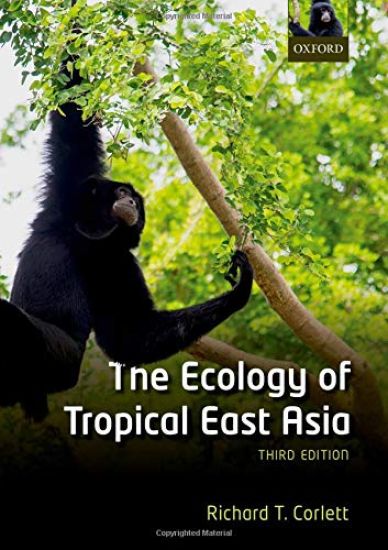
Tropical East Asia is home to over one billion people and faces massive human impacts from its rising population and rapid economic growth. It has already lost more than half of its forest cover to agriculture and urbanization, and has the highest rates of deforestation and logging in the tropics. Habitat loss, coupled with hunting and the relentless trade in wildlife products, threatens all its large and many of its smaller vertebrates. Despite these problems, the region still supports an estimated 15-25% of global terrestrial biodiversity and a growing environmental awareness means that it is no longer assumed that economic development justifies environmental damage, and no longer accepted that this trade-off is inevitable. Effective conservation action now depends on integrating a clear understanding of the ecological patterns and processes in the region with the varied needs of its human population. This third edition continues to provide an overview of the terrestrial ecology of Tropical East Asia: from southern China to Indonesia, and from Bhutan and Bangladesh to the Ryukyu Islands of Japan. It retains the balance between compactness and comprehensiveness of the previous editions, and the even-handed geographical treatment of the whole region, but it updates both the contents and the perspective. Approximately one third of the text is new or greatly modified, reflecting the explosion of new research in the region in the last few years and the increasing use of new tools, particularly from genomics and remote sensing. The change in perspective largely reflects the growing realization that we are in a new epoch, the Anthropocene, in which human activities have at least as large an influence as natural processes, and that stopping or reversing ecological change is no longer an option. This does not mean that biodiversity conservation is no longer possible or worthwhile, but that the biodiverse future we strive for will inevitably be very different from the past. The Ecology of Tropical East Asia is an advanced textbook suitable for senior undergraduate and graduate level students taking courses on the terrestrial ecology of the East Asian tropics, as well as an authoritative regional reference for professional ecologists, conservationists, and interested amateurs worldwide.

Tropical East Asia is home to over one billion people and faces massive human impacts from its rising population and rapid economic growth. It has already lost more than half of its forest cover to agriculture and urbanization, and has the highest rates of deforestation and logging in the tropics. Habitat loss, coupled with hunting and the relentless trade in wildlife products, threatens all its large and many of its smaller vertebrates. Despite these problems, the region still supports an estimated 15-25% of global terrestrial biodiversity and a growing environmental awareness means that it is no longer assumed that economic development justifies environmental damage, and no longer accepted that this trade-off is inevitable. Effective conservation action now depends on integrating a clear understanding of the ecological patterns and processes in the region with the varied needs of its human population. This third edition continues to provide an overview of the terrestrial ecology of Tropical East Asia: from southern China to Indonesia, and from Bhutan and Bangladesh to the Ryukyu Islands of Japan. It retains the balance between compactness and comprehensiveness of the previous editions, and the even-handed geographical treatment of the whole region, but it updates both the contents and the perspective. Approximately one third of the text is new or greatly modified, reflecting the explosion of new research in the region in the last few years and the increasing use of new tools, particularly from genomics and remote sensing. The change in perspective largely reflects the growing realization that we are in a new epoch, the Anthropocene, in which human activities have at least as large an influence as natural processes, and that stopping or reversing ecological change is no longer an option. This does not mean that biodiversity conservation is no longer possible or worthwhile, but that the biodiverse future we strive for will inevitably be very different from the past. The Ecology of Tropical East Asia is an advanced textbook suitable for senior undergraduate and graduate level students taking courses on the terrestrial ecology of the East Asian tropics, as well as an authoritative regional reference for professional ecologists, conservationists, and interested amateurs worldwide.


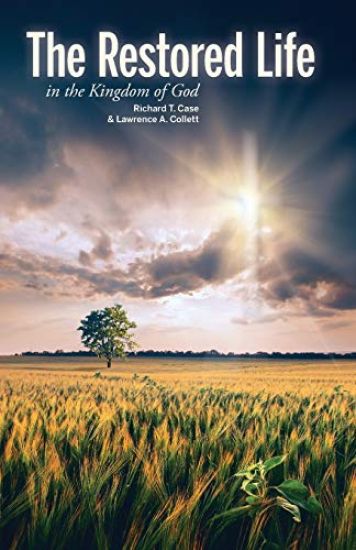
Assume we are entering a huge maze, enormous both in terms of its length and the number of choices required to finish the course. After a few feet, we must make our first decision. We may have only two ways to go, or there may be multiple choices available. A glance into each allows only a few feet of visibility, not really enough to know if it is the right choice. But, we must choose and move on. When we do, we soon discover whether our hunch was correct or if we are at a dead end . If the latter is the case, we must return to the previous decision point and start over. If we are correct, we soon end up at another intersection, requiring another choice. This goes on and on. We find ourselves frustrated with the number of decisions and the time it takes to correct our errors. Sometimes, it feels like we are not making any progress and we begin to think we never will find our way out. Now, what if we entered the maze with a cell phone and an app that provided an overhead picture of the maze? Whenever we came to an intersection, we could consult the picture and see what the screen reveals. And we find the correct choice has a series of abundant blessings and gifts for us as long as we remain on course. If that were the case, it would be much easier to traverse the maze, make decisions and enjoy the process. Our frustrations and fears would be greatly minimized. Living the Restored Life" is really about that journey. It helps us to understand our time on earth was meant to be a wonderful blessing, full of joy and excitement. It points us to the source of direction and blessing. It helps us to visualize and perceive the journey. It allows us to experience life from a totally different perspective and to anticipate and expect awesome and magnificent experiences. In this follow-up book to "The Restored Life in the Kingdom of God," you will enjoy a unique opportunity to experience true life from a new and exciting dimension and to engage reality in that different dimension."
I try to take a walk five days of every week. The course is approximately three and one-half miles and crosses some beautiful terrain in the valley where I reside. It goes one direction and then reverses itself. During one part of the walk, the wind will be behind me, assisting by allowing me to move at a faster and brisker pace. It is always enjoyable when this happens, as I appear stronger and quicker than normal. When the course reverses itself, the wind is in my face. Now, this experience changes. Instead of assisting me, I am now walking into a headwind, slowing my speed and making the exercise more difficult. I actually go slower, taking longer to progress. This breeze is always present in our life on Earth. There are periods when we feel we are hitting stride, moving quickly and seeing good results. Then there are times when we are either stuck or moving at a snail s pace. We get frustrated and just want the direction to change. Interestingly, the breeze is not the issue. It s the walk that is important. While the wind will always be there, its direction often changes and it is not always predictable. What is necessary is to stay on course and complete the journey. How I walk, regardless of the direction of the wind, is what counts. There should be a consistency in my step that doesn t change, regardless of the impact of outside forces. I should anticipate a higher level of energy and satisfaction as a result of competing and completing, despite the obstacles incurred or assistance received. "The Restored Life" is about that walk. It discusses what life should be and provides insight into the blessings and obstacles we will face. It is about the excitement and enthusiasm we receive as we stay on course and experience the results. And it highlights the choices we must make, so the experience will be our highest and greatest enjoyment. Take this journey and allow the breeze, though ever-present, to always be an asset in this wonderful experience called life. Live the life that God has prepared and Christ has restored. Enjoy it to the fullest "

Basic and Applied Aspects of Noise-Induced Hearing Loss
Richard J. Salvi; D. Henderson; R. P. Hamernik; V. Colletti
Springer-Verlag New York Inc.
2012
nidottu
In September 1985, NATO sponsored an Advanced Study WOl'kshop entitled, "Noise-Induced Hearing Loss: Basic and Applied Aspects." Tne meeting was held in a mountain retreat near Lucca, Italy and was attended by scientists, clinicians, and public officials from 12 countries. This was the third in a series of such conferences organized by the authors. The first two were supported by the United States National Institute of Occupational Safety and Health; their proceedings were published as "The Effects of Noise on Hearing" in 1976 and "New Perspectives on Noise-Induced Hearing Loss" in 1982. The Organizing Committee approached NATO because it was felt that the problem of noise was common to all industrialized countries and was an especially serious problem for the military. Thus, the NATO sponsorship and the Italian site of the meeting were part of the Organizing Committee's plan to obtain an international and thorough repr'esentation on the problem of noise-induced hearing loss. The NATO meeting and proceedings followed the format of the previous two symposia with an initial focus on the anatomical and physiological disturbances resulting from noise-induced hearing loss. This was followed by sections devoted to studies of a more applied nature involving general auditory performance in noise, issues associated with the establishment of noise-exposure criteria, nonauditory effects of noise, and the interaction of noise with other agents.

In February 1995, Richey Edwards checked out of a London hotel instead of flying to the US with the rest of the Manic Street Preachers. There were a few subsequent sightings but then nothing. His body was never found, and he was declared legally dead in November 2008. Now Richard tells the story of his life – and disappearance – as he might have told it. ‘This moving, tender novel tells the story of a lost boy adrift in a world that he can’t make sense of’ Marie Claire ‘Myers deserves credit not only for adding a third dimension to Edwards, but for trying a fourth, for attempting to document a period of his life that seems destined to remain a mystery’ The Times ‘A sympathetic and sad imagining of the boy who became a reluctant pop idol’ Time Out ‘Harrowing and hauntingly sad’ Mojo