Roger Nash Baldwin's thirty-year tenure as director of the ACLU marked the period when the modern understanding of the Bill of Rights came into being. Spearheaded by Baldwin, volunteer attorneys of the caliber of Clarence Darrow, Arthur Garfield Hays, Osmond Frankel, and Edward Ennis transformed the constitutional landscape. Company police forces were dismantled. Antievolutionists were discredited (thanks to the Scopes Trial). Censorship of such works as James Joyce's Ulysses was halted. The Scottsboro Boys and Sacco and Vanzetti were defended. The right of free speech for communists and Ku Klux Klansmen alike was upheld, and the foundations were laid for an end to school segregation. Robert Cottrell's magnificent book recaptures the accomplishments and contradictions of the complicated man at the center of these events. Driven, vain, frugal, and tempestuous, America's greatest civil libertarian was initially also a staunch defender of Communist Russia, deferred to the U.S. government over the internment of Japanese Americans, and openly admired J. Edgar Hoover and Douglas MacArthur. His personal relationships were equally complex. Spanning a hundred years from the late 1800s through Baldwin's death in 1981, this riveting biography is an eye-opening view of the development of the American left.
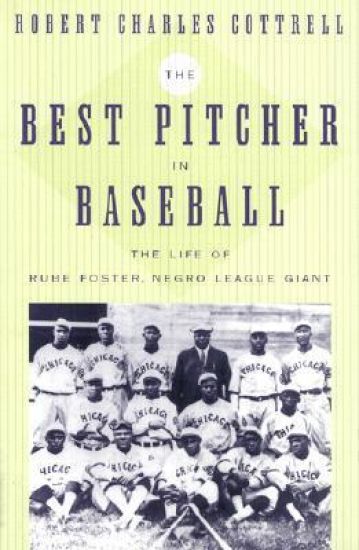
When Rube Foster was inducted into the National Baseball Hall of Fame in 1981, his rightful place alongside baseball's greatest black heroes was at last firmly established. A world-class pitcher, a formidable manager, and a brilliant administrator, Rube Foster was arguably more influential in breaking down the color barrier in major league baseball than the venerable Jackie Robinson. Born in 1879, Rube Foster pitched for the legendary black baseball teamsthe Cuban X-Giants and the Philadelphia Giants before becoming player-manager of the Leland Giants and the Chicago American Giants. Long a central figure in black baseball, he founded baseball's first black leaguethe Negro National League in 1920. From its inception, the Negro League served as a vehicle through which many of the finest black players could showcase their considerable talents. Challenging racial discrimination and stereotypes, it ultimately set the stage for future efforts to contest Jim Crow. Despite the long-standing success of the Negro National League as an influential black institution, Rube Foster was deeply embittered by organized baseball's unmitigated refusal to lift the color barrier. He died a broken man in 1930. The Best Pitcher in Baseball is the story of a man of unparalleled vision and organizational acumen whose passion for justice changed the face of baseball forever. It is a moving tribute to a man and his dream.
When Rube Foster was inducted into the National Baseball Hall of Fame in 1981, his rightful place alongside baseball's greatest black heroes was at last firmly established. A world-class pitcher, a formidable manager, and a brilliant administrator, Rube Foster was arguably more influential in breaking down the color barrier in major league baseball than the venerable Jackie Robinson. Born in 1879, Rube Foster pitched for the legendary black baseball teamsthe Cuban X-Giants and the Philadelphia Giants before becoming player-manager of the Leland Giants and the Chicago American Giants. Long a central figure in black baseball, he founded baseball's first black leaguethe Negro National League in 1920. From its inception, the Negro League served as a vehicle through which many of the finest black players could showcase their considerable talents. Challenging racial discrimination and stereotypes, it ultimately set the stage for future efforts to contest Jim Crow. Despite the long-standing success of the Negro National League as an influential black institution, Rube Foster was deeply embittered by organized baseball's unmitigated refusal to lift the color barrier. He died a broken man in 1930. The Best Pitcher in Baseball is the story of a man of unparalleled vision and organizational acumen whose passion for justice changed the face of baseball forever. It is a moving tribute to a man and his dream.
In response to the upheavals engendered by World War II, revolutions broke out or loomed throughout the world. Nationalist aspirations proved global in nature, ironically empowered by the Cold War. In Asia, the Middle East, Latin America and Africa, revolutions and counterrevolutions proliferated, and similar disruptions threatened to unfold in Europe and North America. Social upheavals began to occur in Vietnam, Mandatory Palestine, China, Algeria, Ghana and Cuba. Conservative and reactionary forces frequently pushed back, quashing hopeful developments like the Guatemalan Spring, the Hungarian Revolution, and the Prague Spring, while also readily resorting to the murder of leading progressive figures from Gandhi to Navalny. The second volume of this detailed history explores the rippling effects of World War II across the globe, including countries experiencing colonial or neocolonial relationships. This book examines the interplay between modern revolutionary movements and campaigns seeking to prevent such movements or to reestablish a history and time that never really existed. It also traces the deadly resort to politically motivated killings, which cut short the lives of so many distinguished, sometimes beloved figures whose loss is still felt decades later.
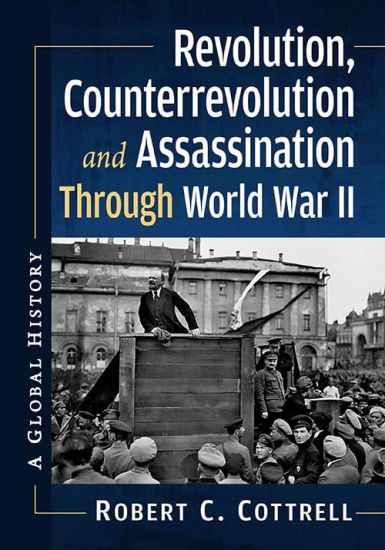
Since the French Revolution, the quest for revolutionary transformation and the fear of such change became deeply ingrained in the global landscape through World War II. Modern revolutions inspired counterrevolutions that strove to turn back time to an allegedly purer, finer, more moral period than the upheaval and anarchy linked to a revolutionary epoch. Revolutions often occurred through violence, and entailed a disruption of existing social, economic and political orders. Counterrevolutions were equally guilty, and frequently more so, of horrific bloodletting in the name of restoring law and order, often by shredding legal and ethical norms. Drawing from a vast array of sources both primary and secondary, this first of a two-volume set presents a highly detailed narrative of an unholy trinity: revolution, counterrevolution and assassination. Combining intellectual, political, social and cultural history, this book highlights international protagonists, movements and ideas supporting the radical or reactionary upheaval of society, and the means that have been used to do so.
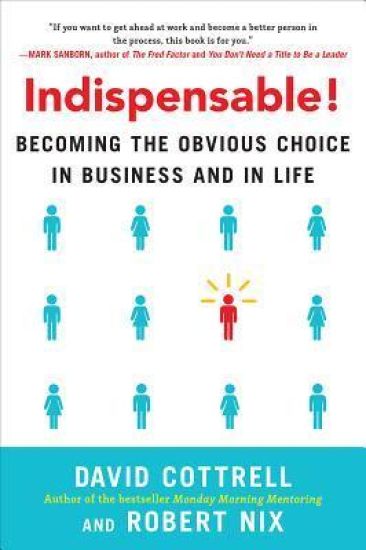
Isn't it time you got the job you deserve? Your workplace transformation is about to begin!FACT: When opportunity knocks in the workplace, most people don't know how to seize it.This book will show you exactly how to spot--and master--your next great job opportunity.Are you ready to become the OBVIOUS CHOICE at promotion time?You can be. The good news? It's a lot easier than you think.Believe it or not, you already have the tools. Indispensable! teaches you how to use them to position yourself for job success, every time. From international bestselling author and leadership expert David Cottrell and sales guru Robert Nix comes the ultimate insider's guide for those who want to break through and control their professional destiny. In simple, clear language--featuring informative and relatable case studies--you'll discover how easy it can be to transform your on-the-job persona to become the person who succeeds first and fastest. No matter what your title is, you'll be equipped to navigate the trickiest workplaces and position yourself for growth at every turn. You'll put yourself in the spotlight and become the individual everyone else admires and wants to be.Indispensable! demonstrates how to create and maintain your best image 24/7: how to project strength, smarts, competence, and leadership. It's an indispensable road map with superb strategies for how to:Assess your workplace persona and perceptionFormulate a goal-oriented action plan that worksIncorporate behavior modification to transform yourself inside and outside of workIdentify, set, and sustain measurable goalsOptimize your organizational skills (while decluttering your life)Indispensable! is packed with tips on how to listen, how to put coworkers at ease, how to use humor to your advantage (and when to avoid it), how to participate at business functions, and how to cultivate a public persona and effortless demeanor that attracts others.PRAISE FOR INDISPENSABLE!"Indispensable! A powerful guide for all who want to become indispensable within their organization." -- Marshall Goldsmith, author of What Got You Here Won't Get You There"Indispensable! is a little book full of big ideas that can be understood and applied by anyone—anyone, that is, who really wants to increase their value, their respectability, and the likelihood they will be promoted. Read this book and take the first step above average to Indispensable!” -- Ken Blanchard, coauthor of The One Minute Manager® and Trust Works!"An indispensable part of your business library. The wise guidance outlined within Indispensable! is a great road map for anyone looking to move up in any organization." -- Lorraine Grubbs, former Director of Employment, Southwest Airlines, and author of Lessons in Loyalty"Cottrell and Nix's easy-to-follow insight and action plans for quickly becoming indispensable to your organization, coupled with your own intuition--often considered the sum total of your life experiences--will undoubtedly prepare you for the success and boundless opportunities that your career has in store." -- Kip Tindell, Chairman and CEO, The Container Store, listed on Fortune's top 100 places to work for 14 years in a row"A great primer for those reexamining their occupation or those just beginning their career. TalentPlus agrees with the authors: 'It is your responsibility to understand your talents, values, and desires and then develop the courage to move forward.'" -- Kimberly Rath, President, Talent Plus, recognized as an Achievers 50 Most Engaged Workplace
Traces the evolution of American popular culture over the past two centuries. In a lengthy chronology of landmark events, and ten chapters, each revolving around the lives of two individuals who are in some way emblematic of their times, this provides a window on the social, economic, and political history of US democracy from the antebellum period to the present.
Traces the evolution of American popular culture over the past two centuries. In a lengthy chronology of landmark events, and ten chapters, each revolving around the lives of two individuals who are in some way emblematic of their times, this provides a window on the social, economic, and political history of US democracy from the antebellum period to the present.
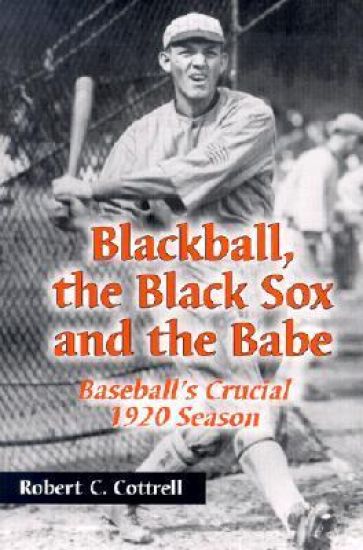
Nineteen-twenty was a crucial year not just for the Chicago White Sox but for the game of baseball, in the aftermath of the 1919 World Series scandal. This work is both a collective biography of four individuals whose careers in baseball were forever altered in 1920 and an examination of the 1920 baseball season as a whole. It highlights four legendary personalities--Judge Kenesaw Mountain Landis, the longtime commissioner of Major League Baseball; Babe Ruth, the great pitcher and slugger who changed the game forever; Buck Weaver, the true lone innocent among the Black Sox players who threw the 1919 World Series; and Rube Foster, the fine pitcher, imaginative manager, and great administrator of blackball who founded the Negro National League. Key events that affected the season and the history of baseball are discussed. Nineteen-twenty was the year that Ruth shattered his own home run record and began a hitting spree that brought in record numbers of fans to the ballparks. It was the year that Rube found a way for large numbers of African-Americans to play the game meaningfully, before loyal crowds, despite Jim Crow laws that kept them out of the majors and minors. Instructors considering this book for use in a course may request an examination copy here.
This is the story of Civilian Public Service smokejumpers, who battled against dangerous winds, searing heat, and devastating fires from 1943 until 1945. Fewer than 300 World War II conscientious objectors served their country in this fashion, operating out of CPS bases in Montana, Idaho, and Oregon. But that small band of men helped to keep alive Forest Service operations in the Pacific Northwest and thus sustained a program to fight potentially crippling fires. When the war ended, CPS smokejumpers, like millions of World War II combat soldiers, were "ushered out" of wartime service. Some, like many returning GIs, encountered difficulties in adjusting to civilian life. Nevertheless, the one-time smokejumpers often went on to make other remarkable contributions to their communities, their nation, and the world.
Sex, Drugs, and Rock ‘n Roll: The American Counterculture of the 1960s offers a unique examination of the cultural flowering that enveloped the United States during that early postwar decade. Robert C. Cottrell provides an enthralling view of the counterculture, beginning with an examination of American bohemia, the Lyrical Left of the pre-WWII era, and the hipsters. He delves into the Beats, before analyzing the counterculture that emerged on both the East and West coasts, but soon cropped up in the American heartland as well. Cottrell delivers something of a collective biography, through an exploration of the antics of seminal countercultural figures Allen Ginsberg, Jack Kerouac, Timothy Leary, and Ken Kesey. Cottrell also presents fascinating chapters covering “the magic elixir of sex,” rock ‘n roll, the underground press, Haight-Ashbury, the literature that garnered the attention of many in the counterculture, Monterey Pop, the Summer of Love, the Death of Hippie, the March on the Pentagon, communes, Yippies, Weatherman, Woodstock, the Manson family, the women’s movement, and the decade’s legacies.
Throughout the Long Sixties, which spanned much of the seemingly quiescent 1950s and continued into the 1970s, progressive activists sought to change American policy both foreign and domestic. Beginning with a civil rights crusade that later expanded to a campaign against the Vietnam War, the movement eventually splintered into a series of focuses: racial, ethnic, demographic, political, cultural, gender-based and environmental. This work details activists' efforts to ensure basic rights through fostering civic engagement. Chapters demonstrate how the various campaigns within the movement were all successful to some extent, but none brought about the results that many desired. Nonetheless, they contributed to a more open, egalitarian, participatory and emancipated nation that is still being shaped today.
Intertwining the stories of three leading early twentieth century radical Americans, this book presents the enthralling tale of the too-short lives of Inez Milholland, Randolph Bourne, and John Reed. It highlights the movements and personal experiences that drew such privileged individuals to the American left, willing to sacrifice comfortable circumstances and opportunities. As writers and activists, the trio became leading spokespersons for feminism, sexual liberation, unions, civil liberties, pacifism, internationalism, socialism, anarchism, and, in Reed's case, communism. Challenging capitalism, patriarchy, and the nation-state, the independently-minded Milholland, Bourne, and Reed possessed a twofold commitment to personal liberation and community. With their early deaths, they left behind personal models for acting, living, and thinking afresh. One could say they became martyrs to the very movements they championed.
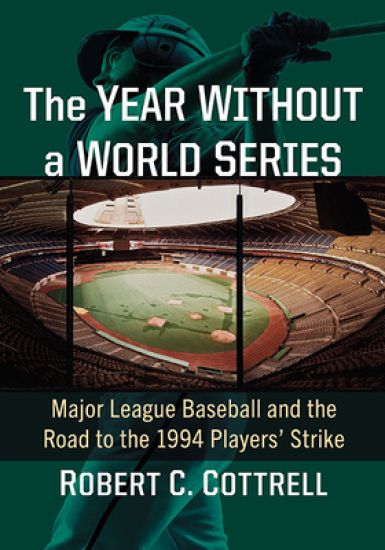
The 1994 Major League Baseball season promised to be memorable. Long-standing batting and pitching standards were threatened, including the revered single-season home run record. The Montreal Expos and New York Yankees were delivering remarkable campaigns. In August, acting commissioner Bud Selig called a halt to the season amid the League's latest labor dispute. The shutdown led to a lockout as well as cancellation of more than 900 regular season games, the scheduled expanded rounds of playoffs, and that year's World Series. Like all labor struggles, it was fundamentally about control--of salaries, of players' ability to decide their own fates, and of the game itself. This book chronicles Major League Baseball's turbulent '94 season and its ripple effects. It highlights earlier labor struggles and the roles performed by individuals from John Montgomery Ward, David Fultz and Robert Murphy to Marvin Miller, Andy Messersmith, Jim "Catfish" Hunter and Donald Fehr. Also examined are the ballplayers' own organizations, from the Players League of the early 1890s to the still potent Major League Baseball Players Association doing battle with team owners and their representatives.
Sex, Drugs, and Rock ‘n Roll: The American Counterculture of the 1960s offers a unique examination of the cultural flowering that enveloped the United States during that early postwar decade. Robert C. Cottrell provides an enthralling view of the counterculture, beginning with an examination of American bohemia, the Lyrical Left of the pre-WWII era, and the hipsters. He delves into the Beats, before analyzing the counterculture that emerged on both the East and West coasts, but soon cropped up in the American heartland as well. Cottrell delivers something of a collective biography, through an exploration of the antics of seminal countercultural figures Allen Ginsberg, Jack Kerouac, Timothy Leary, and Ken Kesey. Cottrell also presents fascinating chapters covering “the magic elixir of sex,” rock ‘n roll, the underground press, Haight-Ashbury, the literature that garnered the attention of many in the counterculture, Monterey Pop, the Summer of Love, the Death of Hippie, the March on the Pentagon, communes, Yippies, Weatherman, Woodstock, the Manson family, the women’s movement, and the decade’s legacies.
From women’s suffrage to Civil Rights for African Americans, to the environment, and the gay and lesbian liberation movement, the American Left has achieved notable successes in the 20th and 21st centuries. Sometimes celebrated and sometimes reviled, the Left has taken on many forms and reinvented itself many times over the past century. In All-American Rebellion, historian Robert Cottrell traces the rise and fall, ebb and flow of left-wing American movements. Following an overview of early 20th century movements, Cottrell focuses on the 1960s to today, offering readers a concise introduction and helping them to understand the political and ideological roots of the Left today. Cottrell includes chapters on the most recent versions of the American left, discussing community organizing, gay liberation, the women’s movement, the Campaign for Economic Democracy, the nuclear freeze movement, opposition to U.S. intervention in Central America, the anti-WTO campaign, Code Pink, Occupy Wall Street, Black Lives Matter, Antifa, and more. The demand for and support of democracy and the quest for empowerment in various guises unifies these different lefts to one another and to the general unfolding of American history. Cottrell argues that democratic engagement has proven inconsistent and at times outright contradictory. The Left has been most successful when it fully embraces a democratic vision.
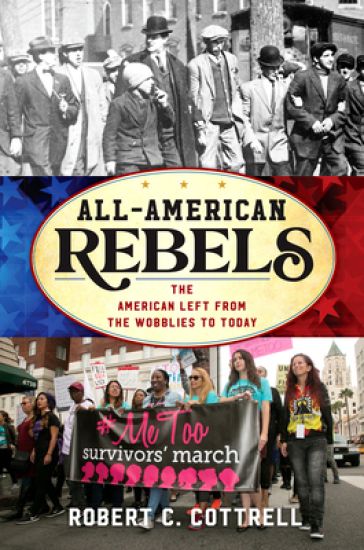
From women’s suffrage to Civil Rights for African Americans, to the environment, and the gay and lesbian liberation movement, the American Left has achieved notable successes in the 20th and 21st centuries. Sometimes celebrated and sometimes reviled, the Left has taken on many forms and reinvented itself many times over the past century.In All-American Rebels, historian Robert C. Cottrell traces the rise and fall, ebb and flow of left-wing American movements. Following an overview of early 20th century movements, Cottrell focuses on the 1960s to today, offering readers a concise introduction and helping them to understand the political and ideological roots of the Left today. Cottrell includes chapters on the most recent versions of the American left, discussing community organizing, gay liberation, the women’s movement, the Campaign for Economic Democracy, the nuclear freeze movement, opposition to U.S. intervention in Central America, the anti-WTO campaign, Code Pink, Occupy Wall Street, Black Lives Matter, Antifa, and more. The demand for and support of democracy and the quest for empowerment in various guises unifies these different lefts to one another and to the general unfolding of American history. Cottrell argues that democratic engagement has proven inconsistent and at times outright contradictory. The Left has been most successful when it fully embraces a democratic vision.
As the first great Jewish player in the major leagues and the first African American to play major-league baseball during the twentieth century, respectively, Hank Greenberg and Jackie Robinson are forever linked because of the barriers they encountered, the discrimination they endured, the athletic gifts they exhibited, and especially the courage and dignity they displayed. Both suffered ridicule and abuse as they participated in the national pastime. Nevertheless, each excelled. Greenberg became one of the preeminent sluggers of the 1930s and 1940s who took a break from baseball to serve in the war. Robinson, from the mid-1940s into the following decade, helped bring back speed and a thinking man's approach to the game, both of which had largely been discarded for a generation.Two Pioneers presents these remarkable players' experiences while competing in a nation that was deeply divided on social issues such as anti-Semitism and racism. Both men earned nearly as much attention off the field as they did on it. Greenberg called into question the idea of a "master race" as Adolf Hitler rose to power and gained supporters all over the world. Likewise, Robinson contested racial notions regarding the supposed inferiority of people of African ancestry, even though segregationists proved determined to maintain social barriers separating blacks and whites. It is only fitting that when Robinson finally crossed baseball's color line, Greenberg was one of the first players to welcome him publicly.Robert Cottrell's well-researched work shows how two baseball superstars became important figures in the civil rights crusade to ensure that all Americans, no matter their religion or race, are given equal opportunity.
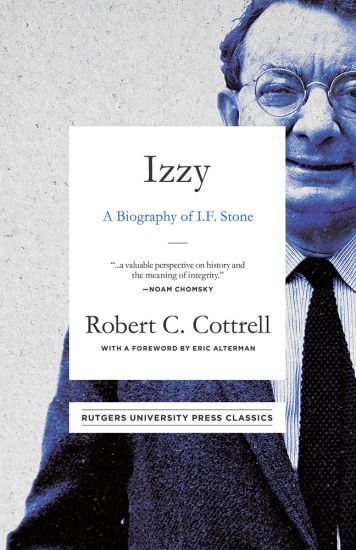
This is the classic story of the life and times of I. F. “Izzy” Stone. Robert Cottrell weaves together material from interviews, letters, archival materials, and government documents, and Stone’s own writings to tell the tale of one of the most significant journalists, intellectuals, and political mavericks of the twentieth century. The story of I. F. Stone is the tale of the American left over the course of his lifetime, of liberal and radical ideals which carried such weight throughout the twentieth century, and of journalism of the politically committed variety. Now available in a handsome new Rutgers University Press Classic edition, it is an examination of the life and career of a gregarious yet frequently grumpy loner who became his nation’s foremost radical commentator provides a window through which to examine American radicalism, left-wing journalism, and the evolution of key strands of Western intellectual thought in the twentieth century.
This is the classic story of the life and times of I. F. “Izzy” Stone. Robert Cottrell weaves together material from interviews, letters, archival materials, and government documents, and Stone’s own writings to tell the tale of one of the most significant journalists, intellectuals, and political mavericks of the twentieth century. The story of I. F. Stone is the tale of the American left over the course of his lifetime, of liberal and radical ideals which carried such weight throughout the twentieth century, and of journalism of the politically committed variety. Now available in a handsome new Rutgers University Press Classic edition, it is an examination of the life and career of a gregarious yet frequently grumpy loner who became his nation’s foremost radical commentator provides a window through which to examine American radicalism, left-wing journalism, and the evolution of key strands of Western intellectual thought in the twentieth century.