Kirjojen hintavertailu. Mukana 11 627 373 kirjaa ja 12 kauppaa.

Kirjahaku

Etsi kirjoja tekijän nimen, kirjan nimen tai ISBN:n perusteella.

1000 tulosta hakusanalla Robert F. Poole

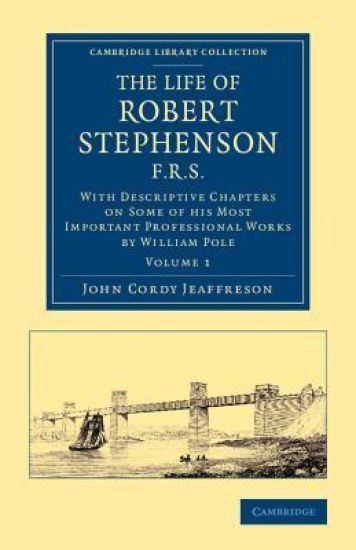
The Life of Robert Stephenson, F.R.S.

The Life of Robert Stephenson, F.R.S.

Jeaffreson John Cordy; Pole William

Cambridge University Press
2014
pokkari
Relying on incremental experiment rather than leaps into the unknown, Robert Stephenson (1803–59) forged an influential career as a highly respected railway and civil engineer. From the steam locomotive Rocket to the London and Birmingham Railway and the Britannia Bridge, his work helped to consolidate the foundations of the modern engineering profession. Based on the first-hand testimony of relatives and contemporaries as well as correspondence and official records, this 1864 biography by John Cordy Jeaffreson (1831–1901), published only five years after Stephenson's death, tells the story of this quiet industrial innovator. Five chapters by engineer William Pole (1814–1900) provide a more technical insight, examining some of Stephenson's most significant railway bridges and his involvement with the atmospheric system. Volume 1 traces Robert's early life, carefully moulded by his father George, and also covers the building of the London and Birmingham Railway.
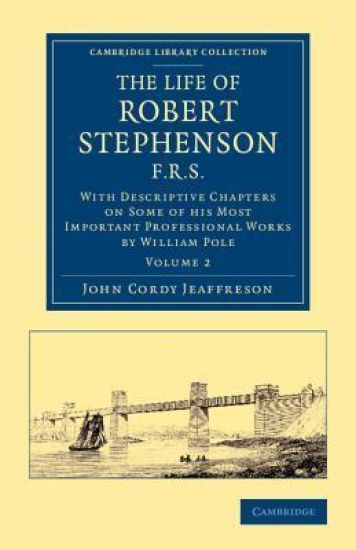
The Life of Robert Stephenson, F.R.S.

The Life of Robert Stephenson, F.R.S.

Jeaffreson John Cordy; Pole William

Cambridge University Press
2014
pokkari
Relying on incremental experiment and practice rather than individual leaps into the unknown, Robert Stephenson (1803–59) forged an influential career as a highly respected railway and civil engineer. From the steam locomotive Rocket to the London and Birmingham Railway and the Britannia Bridge, his work helped to consolidate the foundations of the modern engineering profession. Based on the first-hand testimony of relatives and contemporaries as well as correspondence and official records, this 1864 biography by John Cordy Jeaffreson (1831–1901), published only five years after Stephenson's death, tells the story of this quiet industrial innovator. Five chapters by engineer William Pole (1814–1900) provide a more technical insight, examining some of Stephenson's most significant railway bridges. Volume 2 covers his advocacy of standardisation of the permanent way during the Gauge War, and his life as a bridge builder and politician.
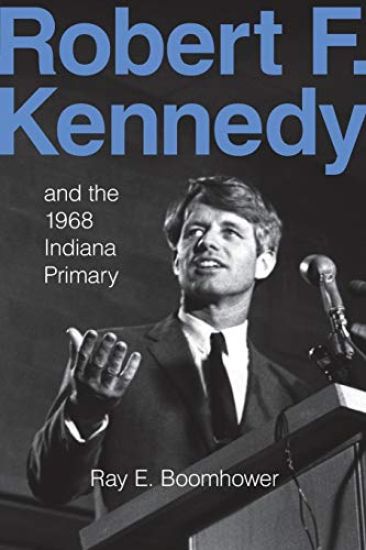
Robert F. Kennedy and the 1968 Indiana Primary

Robert F. Kennedy and the 1968 Indiana Primary

Ray E. Boomhower

Indiana University Press
2017
pokkari
On April 4, 1968, Senator Robert F. Kennedy, Jr., arrived in Indiana to campaign for the Indiana Democratic presidential primary. As Kennedy prepared to fly from an appearance in Muncie to Indianapolis, he learned that civil rights leader Dr. Martin Luther King, Jr., had been shot outside his hotel in Memphis, Tennessee. Before his plane landed in Indianapolis, Kennedy heard the news that King had died. Despite warnings from Indianapolis police that they could not guarantee his safety, and brushing off concerns from his own staff, Kennedy decided to proceed with plans to address an outdoor rally to be held in the heart of the city's African American community. On that cold and windy evening, Kennedy broke the news of King's death in an impassioned, extemporaneous speech on the need for compassion in the face of violence. It has proven to be one of the great speeches in American political history. Marking the 40th anniversary of Kennedy's Indianapolis speech, this book explains what brought the politician to Indiana that day, and explores the characters and events of the 1968 Indiana Democratic presidential primary in which Kennedy, who was an underdog, had a decisive victory.
Robert F. Kennedy and the 1968 Indiana Primary

Robert F. Kennedy and the 1968 Indiana Primary

Ray E. Boomhower

Indiana University Press
2008
sidottu
On April 4, 1968, Senator Robert F. Kennedy, Jr., arrived in Indiana to campaign for the Indiana Democratic presidential primary. As Kennedy prepared to fly from an appearance in Muncie to Indianapolis, he learned that civil rights leader Dr. Martin Luther King, Jr., had been shot outside his hotel in Memphis, Tennessee. Before his plane landed in Indianapolis, Kennedy heard the news that King had died. Despite warnings from Indianapolis police that they could not guarantee his safety, and brushing off concerns from his own staff, Kennedy decided to proceed with plans to address an outdoor rally to be held in the heart of the city's African American community. On that cold and windy evening, Kennedy broke the news of King's death in an impassioned, extemporaneous speech on the need for compassion in the face of violence. It has proven to be one of the great speeches in American political history. Marking the 40th anniversary of Kennedy's Indianapolis speech, this book explains what brought the politician to Indiana that day, and explores the characters and events of the 1968 Indiana Democratic presidential primary in which Kennedy, who was an underdog, had a decisive victory.
Robert F. Kennedy and the Shaping of Civil Rights, 1960-1964
From the 1960 John F. Kennedy presidential campaign to the signing of the Civil Rights Act of 1964, Attorney General Robert F. Kennedy and the Department of Justice worked tirelessly to change the climate of civil rights in the nation. This book explores how the Kennedy brothers and leaders such as Martin Luther King, Jr., John Lewis and James Meredith, among others, pushed for change at a critical time. Through an analysis of White House memoranda, speeches, telephone conversations and recorded discussions as well as secondary sources, this study explores Robert Kennedy's role in key events of the civil rights movement, which include the Freedom Rides in 1961, the Ole Miss crisis in 1962 and the Birmingham campaign and March on Washington in 1963. The combined efforts of the Kennedys and these leaders helped change the atmosphere in the nation to one of acceptance and opportunity for African Americans and other minorities.