

Kirjahaku
Etsi kirjoja tekijän nimen, kirjan nimen tai ISBN:n perusteella.
1000 tulosta hakusanalla Robert Muir


From the natural geometry of the Giant's Causeway to the sarsen slabs used to build Stonehenge, we are surrounded by evidence for the extraordinary geological forces that shaped the British Isles. Running coast to coast through Devon is 'Sticklepath', Britain's 'San Andreas', a geological fault with the two sides displaced horizontally by several kilometres, all within the recent geological past. The Sticklepath Fault is just one manifestation of the rich tectonic history of the British region since the asteroid collision that ended the reign of the dinosaurs, 66 million years ago. Raised out of the Chalk Sea, the original Albion was a thickly forested island a thousand kilometres long, surrounded by chalk cliffs, punctuated with great volcanoes, and the site of two trial 'spreading ridge' plate-boundaries. As the volcanoes shifted west, and Greenland separated from Europe, the wind-blown volcanic ash laid the strata on which London was founded. The vertical Needles, known to every Isle of Wight sailor, are part of the northern foothills of the Pyrenees. When the collision subsided, rifting created a garland of Celtic lakes from Brittany to the Outer Hebrides. In This Volcanic Isle Robert Muir-Wood explores the rich geological history of the British Isles, and its resulting legacy. Along the way he introduces the personalities who shared a fascination for Britain's tectonic history, including Charles Darwin the geologist, Tennyson the science-poet, and Benoit Mandelbrot, the pure mathematician who labelled the west coast of Britain a fractal icon. Here is the previously untold story of how earthquakes and eruptions, plumes and plate boundaries, built the British Isles.

When it comes to golf course design, Robert Muir Graves and Geoffrey S. Cornish are true masters. Over the past few decades, they have produced every type of course imaginable: long and short, entry level and upscale, courses built on ocean bluffs and swamps, courses located in the United States and around the world. Now, drawing on this vast experience and their popular golf course design seminars held at the Harvard Graduate School of Design and nationwide for the Golf Course Superintendents Association of America, Graves and Cornish share a wealth of expertise on all aspects of design and construction in this outstanding book. Golf Course Design covers all of the major historic, aesthetic, business, and technical issues of the subject-- from course layout, hole design, drainage, irrigation, and turf-grass selection to planning, financing, construction, and environmental considerations.

Golf course construction continues to burgeon in the United States, Asia, and around the world. This book meets the needs of practicing landscape architects and other practicing professionals involved in the design or re-design of golf courses. Each classic hole is described in terms relevant to the designer including its basic design, its maintenance, and its impact on the golfer's game. Three samples accompany each classic hole illustrating varying replications and how those replications were appropriated for the new course. Graves and Cornish are two of the most famous and respected golf course architects in the United States, who have designed or remodeled a combined 1,000+ courses, taught more than 60 seminars on golf course design, and are both past presidents of the American Society of Golf Course Architects.

The study of fossils, the discovery of ancient artifacts, and the use of radiocarbon dating have helped us learn a lot about prehistoric times. How did the dinosaurs live? What did Earth look like long ago? What were the first human beings like? Scientists are now fairly confident in their answers to these questions, and readers see why as they explore all the ways people have used science to solve what were once the mysteries of prehistory. Captivating illustrations, helpful diagrams, and photographs enhance the informative main text and sidebars, giving readers a detailed look at the past.
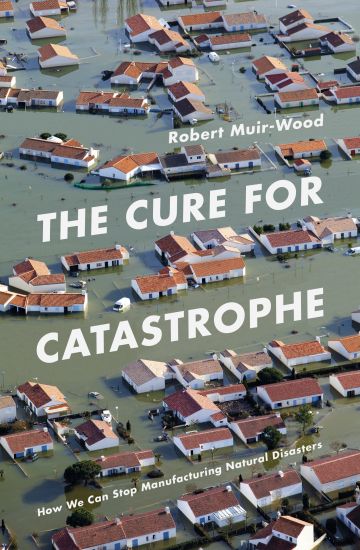
Hurricanes, tsunamis, earthquakes, typhoons – we watch in horror before springing into action with aid and support, shocked again and again by the destructive power of the earth. Except these disasters aren’t only the earth’s doing, they are ours too. Why did no one consider that a tsunami could disable the nuclear power plants in Fukushima? Why did so many die when Katrina flooded New Orleans? Not so long ago we could only focus on rescuing and sheltering survivors – now we can anticipate many natural disasters and plan for them. In dozens of cities around the world, we’re able to identify the specific buildings that will be shaken apart, blown down or reduced to rubble. Yet every year, thanks to politics and inertia, we fail to act. Traversing continents and history, Robert Muir-Wood blends gripping storytelling with scientific insights to detail our efforts to tame the most extreme forces of nature. At the frontlines, the predictive powers of new technologies mean we can foresee a future where there is an end to the pain and destruction wrought by these devastating cataclysms. As The Cure for Catastrophe makes clear, we have an extraordinary opportunity before us – to make the decisions about what we build, where we live and how warnings are communicated that could save millions of lives.
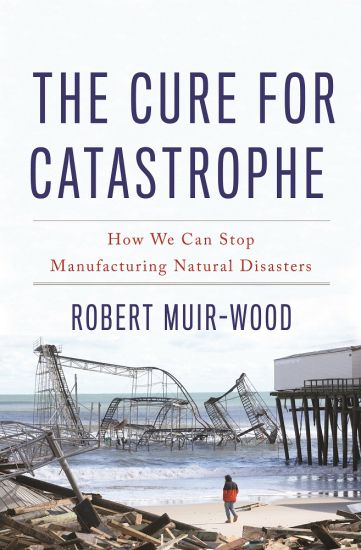
The Cure for Catastrophe: How We Can Stop Manufacturing Natural Disasters
Robert Muir-Wood
BASIC BOOKS
2016
sidottu
We can't stop natural disasters but we can stop them being disastrous. One of the world's foremost risk experts tells us how. Year after year, floods wreck people's homes and livelihoods, earthquakes tear communities apart, and tornadoes uproot whole towns. Natural disasters cause destruction and despair. But does it have to be this way? In The Cure for Catastrophe, global risk expert Robert Muir-Wood argues that our natural disasters are in fact human ones: We build in the wrong places and in the wrong way, putting brick buildings in earthquake country, timber ones in fire zones, and coastal cities in the paths of hurricanes. We then blindly trust our flood walls and disaster preparations, and when they fail, catastrophes become even more deadly. No society is immune to the twin dangers of complacency and heedless development. Recognizing how disasters are manufactured gives us the power to act. From the Great Lisbon Earthquake of 1755 to Hurricane Katrina, The Cure for Catastrophe recounts the ingenious ways in which people have fought back against disaster. Muir-Wood shows the power and promise of new predictive technologies, and envisions a future where information and action come together to end the pain and destruction wrought by natural catastrophes. The decisions we make now can save millions of lives in the future. Buzzing with political plots, newfound technologies, and stories of surprising resilience, The Cure for Catastrophe will revolutionize the way we conceive of catastrophes: though natural disasters are inevitable, the death and destruction are optional. As we brace ourselves for deadlier cataclysms, the cure for catastrophe is in our hands.

A Pilgrim in Europe: A Time of Gifts
Robert Muirhead
Createspace Independent Publishing Platform
2015
nidottu
Robert Muirhead walked more than 3500 kilometres on a number of long pilgrimages in Europe, following ancient pilgrim routes that still criss-cross the continent. Some of those amazing journeys are described in the book. Find out how his days unfolded and how he coped with the challenges and problems that confronted him. Walk in his footsteps as he marvels at the wonders of the natural world around him, as well as the towns and other sites of interest he visited. Meet the people he met and share his joy in the kindness and inspiration he received from them. Pilgrimage is still relevant in our modern hectic world, and is undergoing a resurgence in Europe. The author explains why modern pilgrims undertake such long journeys. The book is not a specialist guidebook, but the Appendices contain practical information based on the author's personal experience that will help first-time pilgrims. Learn about planning, setting goals and what you should take on the journey. There is advice on mental and physical preparation; as well as advice on food, water, accommodation, health and safety.

Forty Shades of Green: Journeys on the river of life
Robert Muirhead
Createspace Independent Publishing Platform
2015
nidottu
Robert Muirhead has traveled in over 120 countries in search of natural and man-made wonders, as well as the cultural and spiritual essence of the places he visits. Some of those inspiring journeys are described in this insightful book.Follow him from Ghana to fabled Timbuktu on the edge of the Sahara Desert, past the spectacular mud brick mosque at Djenne and down the Niger River by boat. Cross the world to another great river and travel with him down the Amazon River as he fishes for piranhas and learns the legends of the river dolphins, while avoiding ant trees and fer de lance snakes in the Amazonian jungle.On another fascinating journey he trekked through forests in Uganda and Rwanda to spend time with endangered mountain gorillas. Be awed by the volcanic landscape of Djibouti, where Africa is being torn from Arabia in a powerful rifting process. Follow him through evocative Roman ruins in Tunisia to the edge of the Sahara Desert.Join him in Ethiopia as he marvels at the rock-hewn churches at Lalibela and the grass-eating gelada monkeys on the high Simien Plateau. Be inspired by the spectacular Meskel Festival of the Ethiopian Orthodox Church. Learn about the striking customs and rituals of African tribes in Mali and Ethiopia.Drive with him in flamboyant American autos of the 1950's to the spectacular Tropicana Cabaret in Havana, Cuba. Learn the fascinating African slave origins of the Cuban Santeria religion.
Journeys in Ancient Lands: Following the Silk Route
Robert Muirhead
Createspace Independent Publishing Platform
2015
nidottu
Robert Muirhead travelled the ancient Silk Route through China to its many end-points in Iran, Lebanon, Syria, Egypt and the Arabian Peninsula. On these long journeys over a number of years he met peoples from diverse cultural and religious backgrounds struggling to maintain their traditional cultures and lifestyles.He saw the ruins and faded glories of the Roman Empire in many of those countries, and the rise of Islam and its enduring legacies. The mighty British Empire also exerted its own influence on the countries touched by the Silk Route and many of its legacies also remain, for good and ill. One of the lessons of history is that all things change.He saw graphic evidence of changing climate. In the empty desert of the Great Ubari Sand Sea in Libya he saw the remnants of once mighty lakes and striking cave paintings from times when the desert bloomed with life. Many of the major cities along the Silk Route are now choked with pollution. The once-great Aral Sea may disappear as the water that feeds it is diverted to other uses. We are wrecking our planet.Another lesson of history is that conflict and war have always existed between people and competing political and religious systems. War continues to wrack the Middle East. Minority ethnic and religious groups still face persecution. Robert Muirhead experienced security problems first-hand in Yemen.His final observation is a more hopeful one about the nature of people as individuals. Robert Muirhead encountered kindness and hospitality from people buffeted by great changes beyond their control. The goodness of ordinary people towards a stranger from another land is one of the more uplifting features of his remarkable journeys.
Journeys Among Islands: Endangered jewels of the oceans
Robert Muirhead
Createspace Independent Publishing Platform
2015
nidottu
Join Robert Muirhead on his insightful and informative journeys to many of the most beautiful islands in the Caribbean and in the Indian and Pacific Oceans. These islands are tourist paradises today but they were once dominated by a succession of European powers and have turbulent pasts, including slavery and damaging exploitation of their natural resources. The book sets out not only their attractions for visitors but also describes the many challenges they face in a rapidly-changing world. Share his epic walk to the Boiling Lake in Dominica and his nervous ascent of a rocky cliff in the Seychelles. Find out why there are more girls than boys in the Seychelles.He visited the battlefields on Guadalcanal and saw where the Marines and US Navy triumphed, as well as hearing the stories of local people whose fathers and grandfathers played vital roles in the war.Meet some of the wonderful people he encountered on his journeys and be humbled by their openness and frankness, and their willingness to help a transient stranger. A woman in Jamaica invited him to dinner. Then there was the woman in Easter Island who had taken a side trip on her epic bike ride from Santiago to Ushuaia. A woman in Rarotonga said he had beautiful eyes. You will also meet the people he feIt sad for and wondered what would become of them; such as his guide in East Timor who had suffered greatly under Indonesian rule; and the young woman in Barbados who spoke so artlessly to him and who might face a lifetime of difficulty because of her speech defect.He observed the remarkable resilience of humanity and its many cultures in transcending their violent pasts. Humans are supreme adapters, and although the future poses unique challenges to small island nations, those endangered jewels of the oceans will adapt and surprise us with their achievements, as they always have.

A Little Bit Up, A Little Bit Down: Journeys in Nepal and Asia
Robert Muirhead
Createspace Independent Publishing Platform
2016
nidottu
Trek with the author to the high Himalayas of Nepal. Admire the amazing stamina and cheerfulness of his Nepalese porters and Sherpas. Watch sunrise illuminate the craggy tips of poetical and spiritual Himalayan mountains and creep down into shadowy valleys in a euphoric experience that can never be forgotten.Share his white-knuckle flight to Skardu in north Pakistan and travel with him on the incomparable Karakoram Highway to fabled Hunza valley in the Karakorum Mountains. Take a bus ride to the breathtaking rice terraces at Banaue and Ifugao in the mountains of the Philippines.Follow the author to Vietnam just after the Vietnam War when thousands were fleeing communism in unsafe boats. His visit to Burma was during a time warp at the very beginning of its tentative move from military dictatorship towards democracy. India's vibrant often chaotic, democracy and institutions were still grappling with their colonial past when the author visited its amazing temples and monuments.Walk the evocative ruins of 4,000-year-old Mohenjo-daro in Pakistan, one of the world's earliest cities that was lost and only re-discovered in the 1920's. Explore the erotic temples at Khajuraho, the amazing rock temples at Ellora and the exquisite cave paintings at Ajanta in India.See how the author handled rock slides on the Karakoram Highway and an encounter with Maoist insurgents in Nepal. In Delhi he was confronted by an angry Indian who accused him of taking photographs for the CIA. A stone was thrown at him in a market in Agra. He became ill in Vietnam and on his trek to Gokyo Ri in the Himalayas.Meet the man who was imprisoned for treasonable writing during India's struggle for independence; and the girl who sang Frere Jacques to him in Burma.
Making Tracks: Across the world by train
Robert Muirhead
Createspace Independent Publishing Platform
2016
nidottu
Robert Muirhead began his love affair with trains in 1981 when he travelled from Hong Kong through China and Mongolia, across Russia and through Europe to Rotterdam, where he took a ferry to England and a final train to London. He has ridden a market train in Indonesia, and travelled from Bangkok to Singapore both in luxury and with cockroaches. He crossed Canada from west to east; and Australia from west to east on the Indian Pacific and from south to north on The Ghan. He rode the Jacobite in Scotland.He travelled to Kenya to find out about the Lunatic Express, to Dubai to learn about its old railway, to Penang to ride the funicular railway up Penang Hill, and to Malaysia to see how rail was used to build a road to the Cameron Highlands.Trains throw people intimately together on long journeys and they often open up in surprising ways, like the discussion about the value of yoga to sex on the market train in Java.The great transcontinental railway lines of Australia, Canada and Russia followed in the footsteps of daring explorers and involved epic feats of engineering, controversy and financial scandal that opened up the vast interiors of those countries. This history is part of the romance of trains.Now sit back and ride with the author on the unforgettable journeys of a lifetime. As the author puts it: "These journeys allowed me to see the endless variety of our fascinating world; to encounter new lands, people and cultures; to see what is over the hill, or around the bend in the road; to feel the wind on my face in some remote corner of the Earth; to revel in the spine-tingling wonder and beauty of the natural world."

A Practical Handbook for Pilgrims: Everything you need to know
Robert Muirhead
Createspace Independent Publishing Platform
2017
nidottu
People who have seen the movie 'The Way' about the Camino de Santiago often long to do a similar pilgrimage themselves. Many of those who do set out say it was one of the most memorable experiences of their lives. The Camino is within the capacity of most people if they plan adequately and take the right equipment.The practical, no-nonsense advice in Robert Muirhead's handbook applies to the Camino and to any one of the many other pilgrimage routes criss-crossing Europe. It is based on the author's five pilgrimages over ten years covering over 4,000 kilometres, but the author also describes the best sources of help and advice on the internet, and points out some of the latest digital aids and apps.The book will show you how to plan, how choose the right clothing, footwear and pack and how to train before you go. There is detailed advice on key topics such as navigation, choosing a guidebook and maps, how to find accommodation, health and safety. Tips for campers and cyclists as well as hikers are included. Older people are increasingly walking some of the long pilgrimage routes of Europe and the book has advice for them as well.We all want to take great photos. This book will explain how to choose the best equipment (camera or phone) and how to apply the tips pros use to put the 'wow' factor into their photos.If you are thinking about taking your children or your dog, read this book first. Disabled people go on pilgrimages and the book has some useful suggestions for them. Some people want to ride a horse on pilgrimage, or take a donkey. This book will explain how to go about it.Apart from practical advice, Robert Muirhead also gives valuable insights into the contemplative and spiritual side of his pilgrimages that did much to make his long journeys so meaningful.

None of these stories has any meaning beyond what the reader might impart to them. They are merely scaffolds on which the reader will create their own imaginative worlds. Stories unlock a door into the world of the imagination and usher the reader down its paths. As we tread the paths of our imagination guided by the words flowing across a page, we may relate the images conjured up by the text to our own lives, adding perspective and possibly enriching our experiences. Such is the power of fiction. It is largely why I wrote these stories.There are tales about war and how it affected both the people who suffered from it and also the perpetrators of violence. Some stories deal with escape from psychological threats, and how one individual deals with tragedy. Others are about the search for meaning and happiness. Some are simply weird, such as the story of an intimidated student trying to impress malevolent Examiners. A gothic tale describes the fate of an obsessive collector and his possessive objects. Reading and tiling will never be the same again once you have read those stories. Speculations about an old photograph will change the way you look at photos.


Economic Risks of Climate Change
Trevor Houser; Solomon Hsiang; Robert Kopp; Kate Larsen; Michael Bloomberg; Thomas Steyer; Henry Paulson; Michael Delgado; Amir Jina; Michael Mastrandrea; Shashank Mohan; Robert Muir-Wood; D. J. Rasmussen; James Rising; Paul Wilson
Columbia University Press
2015
sidottu
Climate change threatens the economy of the United States in myriad ways, including increased flooding and storm damage, altered crop yields, lost labor productivity, higher crime, reshaped public-health patterns, and strained energy systems, among many other effects. Combining the latest climate models, state-of-the-art econometric research on human responses to climate, and cutting-edge private-sector risk-assessment tools, Economic Risks of Climate Change: An American Prospectus crafts a game-changing profile of the economic risks of climate change in the United States. This prospectus is based on a critically acclaimed independent assessment of the economic risks posed by climate change commissioned by the Risky Business Project. With new contributions from Karen Fisher-Vanden, Michael Greenstone, Geoffrey Heal, Michael Oppenheimer, and Nicholas Stern and Bob Ward, as well as a foreword from Risky Business cochairs Michael Bloomberg, Henry Paulson, and Thomas Steyer, the book speaks to scientists, researchers, scholars, activists, and policy makers. It depicts the distribution of escalating climate-change risk across the country and assesses its effects on aspects of the economy as varied as hurricane damages and violent crime. Beautifully illustrated and accessibly written, this book is an essential tool for helping businesses and governments prepare for the future.