Kirjojen hintavertailu. Mukana 12 390 323 kirjaa ja 12 kauppaa.

Kirjahaku

Etsi kirjoja tekijän nimen, kirjan nimen tai ISBN:n perusteella.

1000 tulosta hakusanalla Robert Stephens

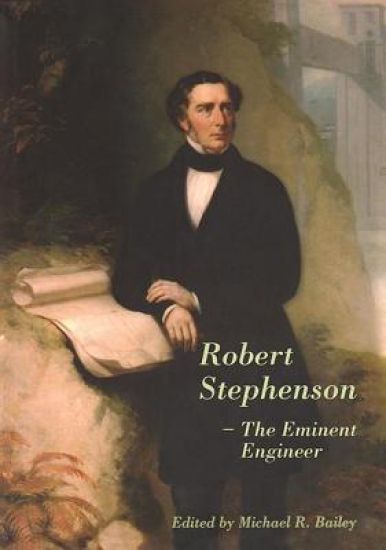
Robert Stephenson – The Eminent Engineer
Robert Stephenson, the leading engineer of the mid-nineteenth century whose substantial public works brought about considerable social change is now the subject of this excellent new biography: Robert Stephenson - The Eminent Engineer. Stephenson's engineering practice was responsible for major railway building programmes in Britain and overseas. He oversaw the building of many bridges, particularly the innovative tubular bridges in North Wales and was influential in the development of England's railway network. Stephenson's engineering practice in Westminster, whose many associates were engaged throughout England, were responsible for substantial railway building programmes during the 'mania' years of the 1840s. By 1850, he was associated with one third of the railway network. His overseas railway involvements included building many miles of line and developing national transport plans. Robert Stephenson - The Eminent Engineer also considers Stephenson's public roles and shows how he was perceived by his contemporaries. Stephenson was a Member of Parliament and Commissioner for the Great Exhibition, was well respected as an arbitrator, received several British and overseas honours and was President of both the Institutions of Civil and Mechanical Engineering.
George and Robert Stephenson

George and Robert Stephenson

David Ross

The History Press Ltd
2018
nidottu
From poverty to immense wealth, from humble beginnings to international celebrity, George and Robert Stephenson’s was an extraordinary joint career. Together they overshadow all other engineers, except perhaps Robert’s friend Isambard Kingdom Brunel, for one vital reason: they were winners. For them it was not enough to follow the progress made by others. They had to be the best. Colossal in confidence, ability, energy and ambition, George Stephenson was also a man of huge rages and jealousies, determined to create his own legend. Brought up from infancy by his father, Robert was a very different person. Driven by the need to be the super-successful son his father wanted, he struggled with self-distrust and morbid depression. More than once his career and reputation teetered on the edge of disaster. But, by being flawed, he emerges as a far more interesting and sympathetic figure than the conventional picture of the ‘eminent engineer.’ David Ross’s biography of George and Robert Stephenson sheds much new light on this remarkable father and son. Authoritative and containing many new discoveries, it is a highly readable account of how these two men set the modern industrial world in motion.
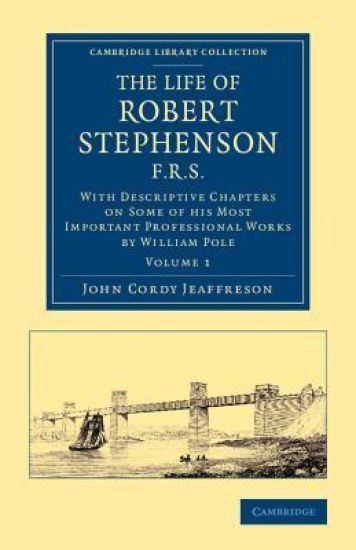
The Life of Robert Stephenson, F.R.S.

The Life of Robert Stephenson, F.R.S.

Jeaffreson John Cordy; Pole William

Cambridge University Press
2014
pokkari
Relying on incremental experiment rather than leaps into the unknown, Robert Stephenson (1803–59) forged an influential career as a highly respected railway and civil engineer. From the steam locomotive Rocket to the London and Birmingham Railway and the Britannia Bridge, his work helped to consolidate the foundations of the modern engineering profession. Based on the first-hand testimony of relatives and contemporaries as well as correspondence and official records, this 1864 biography by John Cordy Jeaffreson (1831–1901), published only five years after Stephenson's death, tells the story of this quiet industrial innovator. Five chapters by engineer William Pole (1814–1900) provide a more technical insight, examining some of Stephenson's most significant railway bridges and his involvement with the atmospheric system. Volume 1 traces Robert's early life, carefully moulded by his father George, and also covers the building of the London and Birmingham Railway.
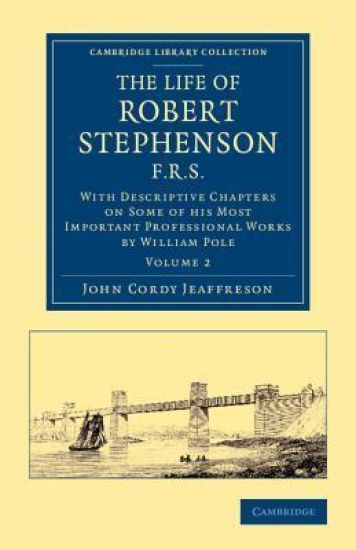
The Life of Robert Stephenson, F.R.S.

The Life of Robert Stephenson, F.R.S.

Jeaffreson John Cordy; Pole William

Cambridge University Press
2014
pokkari
Relying on incremental experiment and practice rather than individual leaps into the unknown, Robert Stephenson (1803–59) forged an influential career as a highly respected railway and civil engineer. From the steam locomotive Rocket to the London and Birmingham Railway and the Britannia Bridge, his work helped to consolidate the foundations of the modern engineering profession. Based on the first-hand testimony of relatives and contemporaries as well as correspondence and official records, this 1864 biography by John Cordy Jeaffreson (1831–1901), published only five years after Stephenson's death, tells the story of this quiet industrial innovator. Five chapters by engineer William Pole (1814–1900) provide a more technical insight, examining some of Stephenson's most significant railway bridges. Volume 2 covers his advocacy of standardisation of the permanent way during the Gauge War, and his life as a bridge builder and politician.
George and Robert Stephenson

George and Robert Stephenson

L. T. C. Rolt

Amberley Publishing
2016
pokkari
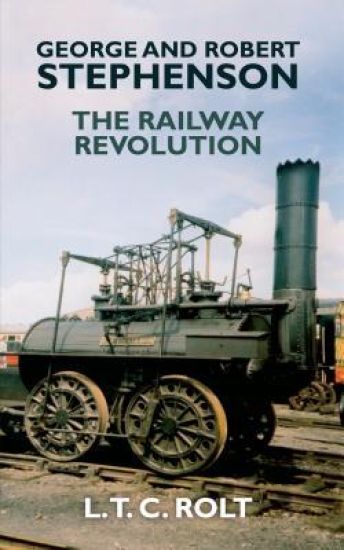
The railways were the most revolutionary innovation of Victorian times. They carried Britain into the modern age with dramatic speed, transforming the pace and style of everyday life. We owe them to two men who, father and son, can lay claim to be the most important engineers of their time, George and Robert Stephenson. In this excellent biography L. T. C. Rolt, author of Brunel and Thomas Telford, assesses their life and their work. ‘This biography is a work of distinction in both the historical and social sense. It is written by one who adds engineering knowledge to biographical skill.’ E. W. Martin in the Listener ‘Mr Rolt is a master of correct terminology and can even turn it to literary advantage where, under another hand, it would cumber context with jargon. This gift, coupled with his own practical knowledge of mechanical and civil engineering, has enabled the author to produce yet another contribution to English history, which would have been quite beyond the power of the academic historian.’ Edmund Vale in the Observer
George and Robert Stephenson

George and Robert Stephenson

Anthony Burton

Pen Sword Transport
2020
sidottu
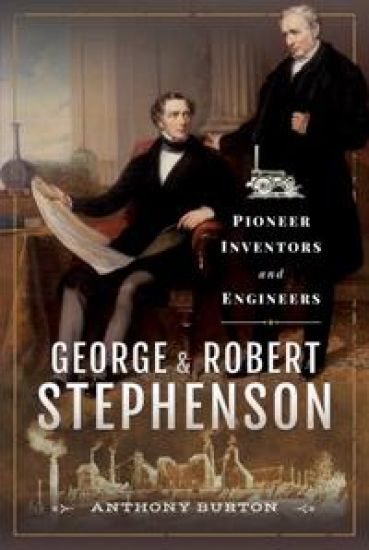
This is a new biography of two great British engineering pioneers, who did much to develop the world we now live in. George and Robert Stephenson, were at the forefront of early railways and were at the cutting edge of modern engineering history. Industrial historian Anthony Burton looks into these two giants of the late Georgian and early Victorian age, who were responsible for the development of much of the early railway map in both Britain and other parts of the world. The work examines the lives of the two men and their ability to overcome some of the most pressing engineering problems of their time. This is a new work, with newly researched material published here for the first time, which take a fresh look at both pioneering engineers and their achievements.
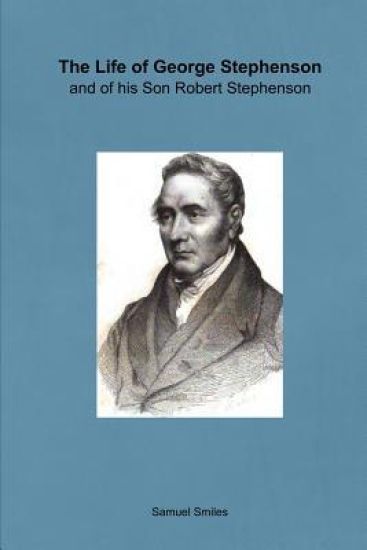
The Life of George Stephenson and of his Son Robert Stephenson
George Stephenson (1781 1848) was a civil and mechanical engineer who, through his work constructing the first intercity railway line between Manchester and Liverpool and (along with his son Robert) designing the locomotive Rocket that was to win the Rainhill Trials, became known as the Father of Railways Born in Northumberland he was illiterate until the age of 18, but realising the value of education he used his wages as an engineman at a local colliery to fund his studies at night school. In 1811 he offered to improve the pumping engine at High Pit, Killingworth which he did with such success that he was promoted to enginewright and in his new position became an expert in steam driven machinery