Kirjojen hintavertailu. Mukana 11 244 527 kirjaa ja 12 kauppaa.

Kirjahaku

Etsi kirjoja tekijän nimen, kirjan nimen tai ISBN:n perusteella.

1000 tulosta hakusanalla Roger Biles

Mayor Harold Washington

Mayor Harold Washington

Roger Biles

University of Illinois Press
2018
sidottu
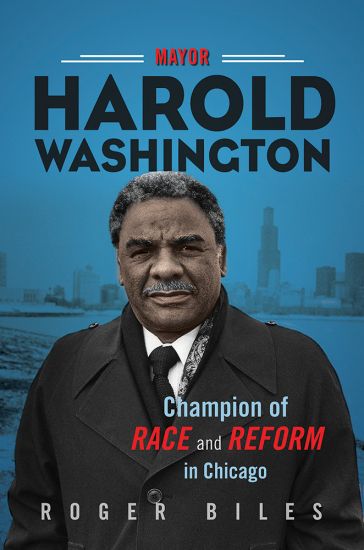
In 1983, Harold Washington made history by becoming Chicago's first African American mayor. The racially charged campaign and election heralded an era of bitter political divisiveness that obstructed his efforts to change city government. Roger Biles's sweeping biography provides a definitive account of Washington and his journey. Once in City Hall, Washington confronted the backroom deals, aldermanic thuggery, open corruption, and palm greasing that fueled the Chicago machine's autocratic political regime. His alternative: a vision of fairness, transparency, neighborhood empowerment, and balanced economic growth at one with his emergence as a dynamic champion for African American uplift and a crusader for progressive causes. Biles charts the countless infamies of the Council Wars era and Washington's own growth through his winning of a second term--a promise of lasting reform left unfulfilled when the mayor died in 1987. Original and authoritative, Mayor Harold Washington redefines a pivotal era in Chicago's modern history.
Mayor Harold Washington

Mayor Harold Washington

Roger Biles

University of Illinois Press
2020
nidottu
In 1983, Harold Washington made history by becoming Chicago's first African American mayor. The racially charged campaign and election heralded an era of bitter political divisiveness that obstructed his efforts to change city government. Roger Biles's sweeping biography provides a definitive account of Washington and his journey. Once in City Hall, Washington confronted the backroom deals, aldermanic thuggery, open corruption, and palm greasing that fueled the Chicago machine's autocratic political regime. His alternative: a vision of fairness, transparency, neighborhood empowerment, and balanced economic growth at one with his emergence as a dynamic champion for African American uplift and a crusader for progressive causes. Biles charts the countless infamies of the Council Wars era and Washington's own growth through his winning of a second term--a promise of lasting reform left unfulfilled when the mayor died in 1987. Original and authoritative, Mayor Harold Washington redefines a pivotal era in Chicago's modern history.
The Fate of Cities

The Fate of Cities

Roger Biles

University Press of Kansas
2011
sidottu
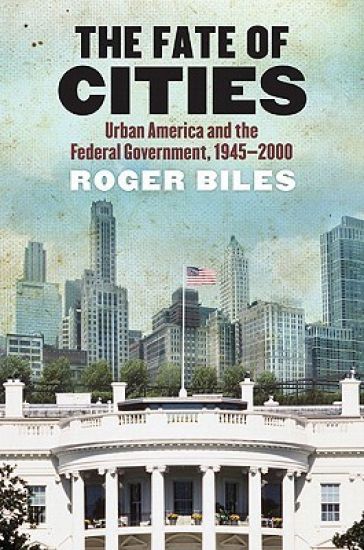
By the end of the twentieth century, decaying inner cities in America continued to lose ground despite the best efforts of local and federal officials. By then the investment in urban revitalization begun during the activist 1960s had become a romantic memory. Roger Biles’s insightful new book shows why. The first major comprehensive treatment of the subject in thirty-five years, superseding Mark Gelfand’s landmark A Nation of Cities, it examines the federal government’s relationship with urban America from the Truman through the Clinton administrations. Deftly analyzing the efforts of presidents, legislators, and other policy makers to deal with a range of troubling and persistent urban issues—especially problems related to housing, transportation, and poverty—Biles chronicles the attitudes and policy proposals of each president and his chief appointees. He shows that, although various presidents announced initiatives to benefit cities, only Jimmy Carter actually made a sustained effort to do so, while the Eisenhower administration stepped back from New Deal–Fair Deal engagement in urban affairs and LBJ’s Great Society programs succeeded in reviving ailing cities—until money was diverted to the Vietnam war. Biles explains how Ronald Reagan’s New Federalism reduced the federal government’s presence in urban America with a vengeance and how Bill Clinton’s “Third Way” for America’s cities signaled yet another triumph for devolution and decentralization. He also critiques the Department of Housing and Urban Development, citing its ongoing inability to serve as a strong advocate for the cities within the federal government. Well organized, clearly written, and wide-ranging, Biles’s impressive treatise provides a telling critique of how in the long run the government turned a blind eye to the fate of the cities. No other work offers such a useful narrative of presidential action or inaction and Washington political maneuvering with regard to urban issues. This comprehensive history will become the standard source for understanding the development and trajectory of federal policy making affecting America’s urban centers.
Big City Boss in Depression and War

Big City Boss in Depression and War

Roger Biles

Northern Illinois University Press
1984
sidottu
The first full-length biography of Edward J. Kelly tells the vivid story of the rough-hewn politician who became one of Chicago's most powerful mayors. With the help of Pat Nash, Mayor Kelly built the Democratic Machine of which Richard J. Daley was to be a chief beneficiary. An enterprising political strategist, Kelly amassed a concentration of political power by drawing traditionally Republican black voters into the Democratic fold, allying the Machine with New Deal policies, and tapping the resources of organized crime.
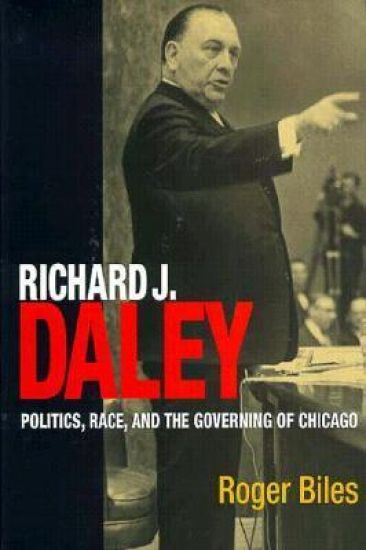
Richard J. Daley

Richard J. Daley

Roger Biles

Northern Illinois University Press
1995
sidottu
From his first election in 1955 to 1976, Mayor Richard J. Daley dominated Chicago's political landscape. A product of the Irish Catholic working class, Daley never lost touch with his roots as he rose through the Democratic Party machine-whose workings he perfected-to become a powerful and enduring political figure. The story of Daley is also the story of Chicago. Faced with issues confronting many American cities in the twentieth century-civil rights, integration, race riots, fiscal crisis, housing, suburban flight, urban renewal-Daley conducted Chicago's business with a steadfast resolve to withstand the many changes that threatened to engulf his city. Richard J. Daley portrays one of the most prominent American mayors in a balanced perspective and sheds new light on his place in urban history.
Crusading Liberal

Crusading Liberal

Roger Biles

Northern Illinois University Press
2002
sidottu
A lifelong crusader for society's powerless, Senator Paul Douglas championed reform and helped to bring civil rights issues to the forefront of mid-twentieth-century American politics. During his eighteen years in the U.S. Senate, his advocacy of liberal causes brought him national recognition. In the eyes of many, Douglas embodied the very ideals of the "Great Society." A man of conscience and a stubborn defender of his core principles, Douglas was nonetheless a patient legislator, and his fight to ensure equal rights for African Americans lasted more than a decade. His fierce independence won public respect but often strained relationships with key party leaders, including Harry Truman, Adlai Stevenson, and Lyndon Johnson. Covering the full span of Douglas's life-from his youth and early work at Hull House in Chicago to his leadership in the Senate-Crusading Liberal illuminates the life and times of the man Martin Luther King Jr. called "the greatest of all senators." This highly readable biography illustrates the struggle to provide equal opportunity and protection under law to all Americans.
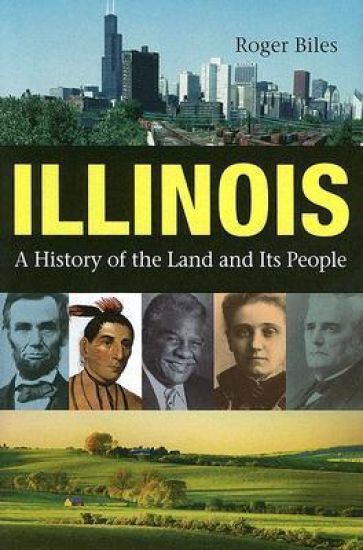
Illinois

Illinois

Roger Biles

Northern Illinois University Press
2005
sidottu
Biles' first-rate primer on the state's history will be a useful resource for anyone curious about a state whose residents have played crucial roles in almost every major episode in the nation's history.-Chicago Tribune Featuring 67 illustrations, Illinois will captivate readers of all ages and interests. Crossroads of the continent, Land of Lincoln, hub of commerce-or, as Charles Dickens viewed it, a landscape "oppressive in its barren monotony"-Illinois boasts a rich and varied past. In this far-reaching but compact history, Roger Biles provides a much-needed, up-to-date account of the state's development, from the early native settlements to the present. Focusing on Illinois' demographic changes over time, he highlights the key figures who contributed to the state's government, economy, culture, and the arts. While devoting attention to the touchstones of history, Illinois illuminates also the achievements of ordinary people, including the women, the African Americans, and the other minorities who-along with the politicians, the captains of industry, and the military heroes-contributed to the state's growth and prosperity. National events shaped the state as well, and Biles explores the impact of such crises as the Civil War and World War II on the people of Illinois. No history of Illinois can ignore the state's largest city, the dynamic metropolis on Lake Michigan-Chicago. Drawing on extensive research, Biles illuminates Chicago's past-its outbursts of labor unrest and racial tensions as well as the splendors of two world's fairs and an artistic renaissance-while at the same time relating Chicago to the larger story of Illinois and its people. Connecting lesser-known stories with the main events of the state's past, Biles writes in an accessible style that is at once entertaining and enlightening.
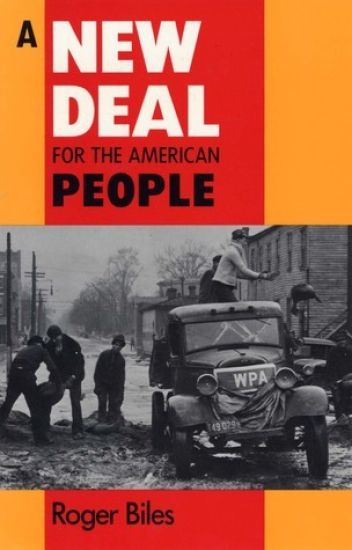
A New Deal for the American People

A New Deal for the American People

Roger Biles

Northern Illinois University Press
1991
pokkari
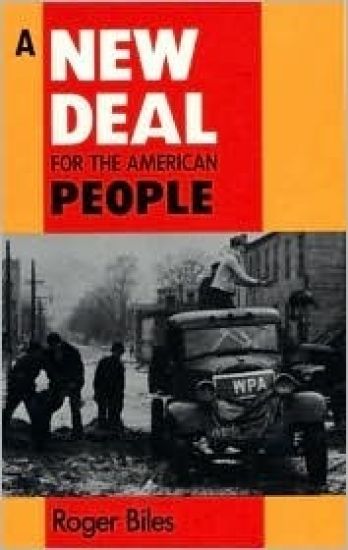
When Franklin D. Roosevelt promised "a new deal for the American people," he gave hope to millions of Americans impoverished by the Great Depression. The Roosevelt administration's relief programs, implemented in a period of crisis characterized by the "Black Friday" stock market crash, widespread bank failures, and massive unemployment, marked the turning point in the making of modern America. Yet in spite of extensive aid provided on federal and state levels, the enormity of the economic problems throughout the country left much of the president's pledge unfulfilled. In this interpretive overview, Roger Biles discusses the factors contributing to the Great Depression and analyzes the federal government's emerging role in public welfare. Focusing on various segments of society, he assesses New Deal programs in terms of their impact on the lives of the American people, including the working class, women, African Americans, and urban dwellers. While drawing on scholarship of the past twenty years, he offers fresh insights into the social effects of Roosevelt's policies and stimulates new thinking on the question of whether the reforms preserved the foundations of American federalism or represented a second American revolution. In conclusion Biles weighs the New Deal's successes and failures, both of which he finds to be part of the same story, "a story that can only be understood with an appreciation for the context of the Depression years." A New Deal for the American People explores that context with sensitivity. This clearly written and highly readable study will engage both specialists and general readers interested in a balanced account of one of the most important programs of twentieth-century America, Roosevelt's New Deal.
Richard J. Daley

Richard J. Daley

Roger Biles

Northern Illinois University Press
1995
pokkari
From his first election in 1955 to 1976, Mayor Richard J. Daley dominated Chicago's political landscape. A product of the Irish Catholic working class, Daley never lost touch with his roots as he rose through the Democratic Party machine-whose workings he perfected-to become a powerful and enduring political figure. The story of Daley is also the story of Chicago. Faced with issues confronting many American cities in the twentieth century-civil rights, integration, race riots, fiscal crisis, housing, suburban flight, urban renewal-Daley conducted Chicago's business with a steadfast resolve to withstand the many changes that threatened to engulf his city. Richard J. Daley portrays one of the most prominent American mayors in a balanced perspective and sheds new light on his place in urban history.
Illinois

Illinois

Roger Biles

Northern Illinois University Press
2005
pokkari
Biles' first-rate primer on the state's history will be a useful resource for anyone curious about a state whose residents have played crucial roles in almost every major episode in the nation's history.-Chicago Tribune Featuring 67 illustrations, Illinois will captivate readers of all ages and interests. Crossroads of the continent, Land of Lincoln, hub of commerce-or, as Charles Dickens viewed it, a landscape "oppressive in its barren monotony"-Illinois boasts a rich and varied past. In this far-reaching but compact history, Roger Biles provides a much-needed, up-to-date account of the state's development, from the early native settlements to the present. Focusing on Illinois' demographic changes over time, he highlights the key figures who contributed to the state's government, economy, culture, and the arts. While devoting attention to the touchstones of history, Illinois illuminates also the achievements of ordinary people, including the women, the African Americans, and the other minorities who-along with the politicians, the captains of industry, and the military heroes-contributed to the state's growth and prosperity. National events shaped the state as well, and Biles explores the impact of such crises as the Civil War and World War II on the people of Illinois. No history of Illinois can ignore the state's largest city, the dynamic metropolis on Lake Michigan-Chicago. Drawing on extensive research, Biles illuminates Chicago's past-its outbursts of labor unrest and racial tensions as well as the splendors of two world's fairs and an artistic renaissance-while at the same time relating Chicago to the larger story of Illinois and its people. Connecting lesser-known stories with the main events of the state's past, Biles writes in an accessible style that is at once entertaining and enlightening.
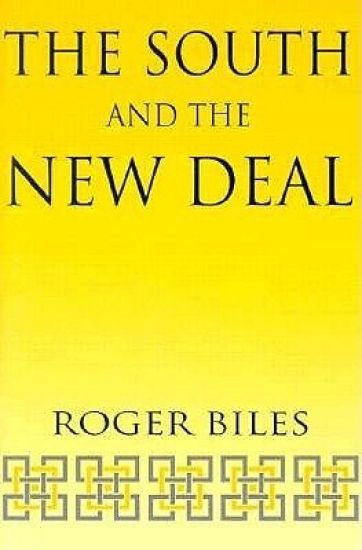
The South and the New Deal

The South and the New Deal

Roger Biles

The University Press of Kentucky
1994
sidottu
When Franklin D. Roosevelt was sworn in as president, the South was unmistakably the most disadvantaged part of the nation. The region's economy was the weakest, its educational level the lowest, its politics the most rigid, and its laws and social mores the most racially slanted. Moreover, the region was prostrate from the effects of the Great Depression. Roosevelt's New Deal effected significant changes on the southern landscape, challenging many traditions and laying the foundations for subsequent alterations in the southern way of life. At the same time, firmly entrenched values and institutions militated against change and blunted the impact of federal programs. In The South and the New Deal, Roger Biles examines the New Deal's impact on the rural and urban South, its black and white citizens, its poor, and its politics. He shows how southern leaders initially welcomed and supported the various New Deal measures but later opposed a continuation or expansion of these programs because they violated regional convictions and traditions. Nevertheless, Biles concludes, the New Deal, coupled with the domestic effects of World War II, set the stage for a remarkable postwar transformation in the affairs of the region. The post-World War II Sunbelt boom has brought Dixie more fully into the national mainstream. To what degree did the New Deal disrupt southern distinctiveness? Biles answers this and other questions and explores the New Deal's enduring legacy in the region.
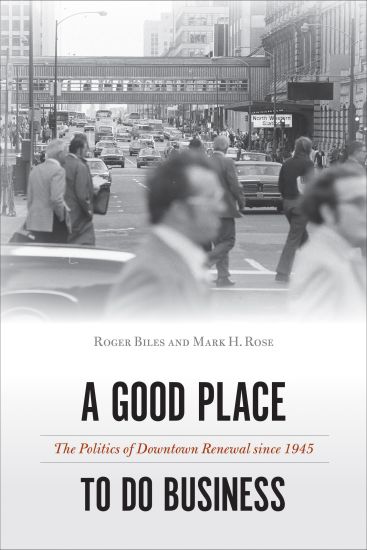
A Good Place to Do Business

A Good Place to Do Business

Roger Biles; Mark H. Rose

TEMPLE UNIVERSITY PRESS,U.S.
2022
sidottu
The “Pittsburgh Renaissance,” an urban renewal effort launched in the late 1940s, transformed the smoky rust belt city’s downtown. Working-class residents and people of color saw their neighborhoods cleared and replaced with upscale, white residents and with large corporations housed in massive skyscrapers. Pittsburgh’s Renaissance’s apparent success quickly became a model for several struggling industrial cities, including St. Louis, Cleveland, Detroit, Chicago, and Philadelphia. In A Good Place to Do Business, Roger Biles and Mark Rose chronicle these urban “makeovers” which promised increased tourism and fashionable shopping as well as the development of sports stadiums, convention centers, downtown parks, and more. They examine the politics of these government-funded redevelopment programs and show how city politics (and policymakers) often dictated the level of success. As city officials and business elites determined to reorganize their downtowns, a deeply racialized politics sacrificed neighborhoods and the livelihoods of those pushed out. Yet, as A Good Place to Do Business demonstrates, more often than not, costly efforts to bring about the hoped-for improvements failed to revitalize those cities, or even their downtowns.
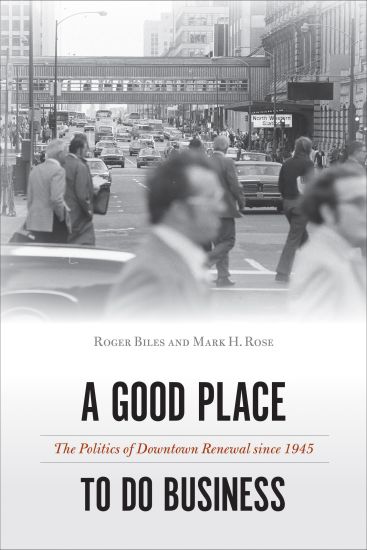
A Good Place to Do Business

A Good Place to Do Business

Roger Biles; Mark H. Rose

TEMPLE UNIVERSITY PRESS,U.S.
2022
nidottu
The “Pittsburgh Renaissance,” an urban renewal effort launched in the late 1940s, transformed the smoky rust belt city’s downtown. Working-class residents and people of color saw their neighborhoods cleared and replaced with upscale, white residents and with large corporations housed in massive skyscrapers. Pittsburgh’s Renaissance’s apparent success quickly became a model for several struggling industrial cities, including St. Louis, Cleveland, Detroit, Chicago, and Philadelphia. In A Good Place to Do Business, Roger Biles and Mark Rose chronicle these urban “makeovers” which promised increased tourism and fashionable shopping as well as the development of sports stadiums, convention centers, downtown parks, and more. They examine the politics of these government-funded redevelopment programs and show how city politics (and policymakers) often dictated the level of success. As city officials and business elites determined to reorganize their downtowns, a deeply racialized politics sacrificed neighborhoods and the livelihoods of those pushed out. Yet, as A Good Place to Do Business demonstrates, more often than not, costly efforts to bring about the hoped-for improvements failed to revitalize those cities, or even their downtowns.
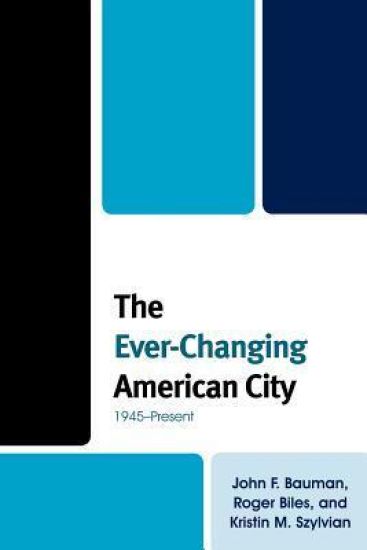
The Ever-Changing American City

The Ever-Changing American City

John F. Bauman; Roger Biles; Kristin M. Szylvian

Rowman Littlefield
2011
nidottu
The Ever-Changing American City seeks to help readers understand the marked changes since 1945 in what constitutes a city in the United States and who lives and works in them. The story of the postwar American city is not a simple tale of decline and rebirth. Nor is it a straightforward account of the struggle between the old urban core or central business district and the suburbs on the urban periphery, for both have had their economic ups and downs. In the decades after World War II, the cityscape was altered to better accommodate the automobile, and the city gradually transformed from a place of production to a place of consumption. During the 1980s, city neighborhoods once occupied by migrants from the American South and immigrants from Southern and Eastern Europe began to house newcomers from Asia, Africa, and Central and South America. The economic, environmental, and social issues now facing American cities from Portland, Maine, to Portland, Oregon, will require them to continue the process of remaking or reinventing themselves.
A New Deal for the American People

A New Deal for the American People

Biles Roger

Northern Illinois University Press
1991
sidottu
When Franklin D. Roosevelt promised "a new deal for the American people," he gave hope to millions of Americans impoverished by the Great Depression. The Roosevelt administration's relief programs, implemented in a period of crisis characterized by the "Black Friday" stock market crash, widespread bank failures, and massive unemployment, marked the turning point in the making of modern America. Yet in spite of extensive aid provided on federal and state levels, the enormity of the economic problems throughout the country left much of the president's pledge unfulfilled. In this interpretive overview, Roger Biles discusses the factors contributing to the Great Depression and analyzes the federal government's emerging role in public welfare. Focusing on various segments of society, he assesses New Deal programs in terms of their impact on the lives of the American people, including the working class, women, African Americans, and urban dwellers. While drawing on scholarship of the past twenty years, he offers fresh insights into the social effects of Roosevelt's policies and stimulates new thinking on the question of whether the reforms preserved the foundations of American federalism or represented a second American revolution. In conclusion Biles weighs the New Deal's successes and failures, both of which he finds to be part of the same story, "a story that can only be understood with an appreciation for the context of the Depression years." A New Deal for the American People explores that context with sensitivity. This clearly written and highly readable study will engage both specialists and general readers interested in a balanced account of one of the most important programs of twentieth-century America, Roosevelt's New Deal.
Roger is Reading a Book

Roger is Reading a Book

Koen Van Biesen

William B Eerdmans Publishing Co
2015
sidottu
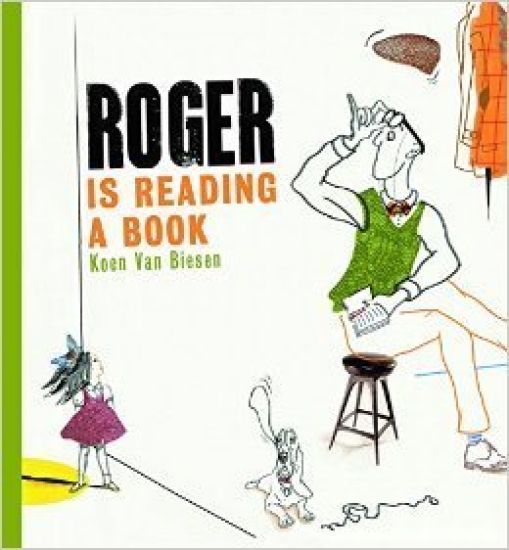
A hilarious, lively story that celebrates the joy of reading All Roger wants is some peace and quiet so he can read his book. Unfortunately, the girl in the apartment next door has hobbies of her own -- very loud hobbies But when Roger gives the girl a book of her own, she discovers that reading can be just as much fun as playing basketball or banging a drum. This playful and engaging read-aloud from an award-winning Belgian author shows readers that shared activities can lead to rewarding friendships.
Roger

Roger

Richard Lee

Richard Lee Publishing
2021
pokkari
The young Roger Robertson has left university and is planning a career in law. At a post-university one-day advanced sex education seminar, Roger meets a sex worker who enriches his life choices for ever. A soft but firm sensuous voice then addressed the class and every young man was immediately smitten."Girls have wet dreams, too "Mary gave us all a few moments to digest what she had just said and my mind was immediately thrown into turmoil. How was it that I didn't already know this? How had this been kept a secret from me for so long? But then Mary was talking again.
Roger

Roger

Adrien Delaville

Hachette Livre - BNF
2013
pokkari
Roger / par Adrien DelavilleDate de l'edition originale: 1842Ce livre est la reproduction fidele d une uvre publiee avant 1920 et fait partie d une collection de livres reimprimes a la demande editee par Hachette Livre, dans le cadre d un partenariat avec la Bibliotheque nationale de France, offrant l opportunite d acceder a des ouvrages anciens et souvent rares issus des fonds patrimoniaux de la BnF.Les uvres faisant partie de cette collection ont ete numerisees par la BnF et sont presentes sur Gallica, sa bibliotheque numerique.En entreprenant de redonner vie a ces ouvrages au travers d une collection de livres reimprimes a la demande, nous leur donnons la possibilite de rencontrer un public elargi et participons a la transmission de connaissances et de savoirs parfois difficilement accessibles.Nous avons cherche a concilier la reproduction fidele d un livre ancien a partir de sa version numerisee avec le souci d un confort de lecture optimal. Nous esperons que les ouvrages de cette nouvelle collection vous apporteront entiere satisfaction.Pour plus d informations, rendez-vous sur www.hachettebnf.fr