Kirjojen hintavertailu. Mukana 12 390 323 kirjaa ja 12 kauppaa.

Kirjahaku

Etsi kirjoja tekijän nimen, kirjan nimen tai ISBN:n perusteella.

1000 tulosta hakusanalla Ronald E. Clements

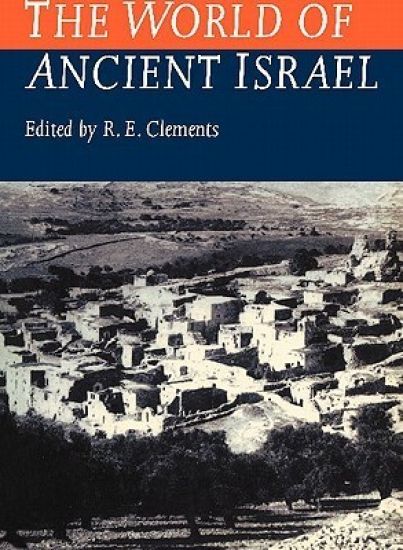
The World of Ancient Israel

The World of Ancient Israel

Ronald E. Clements

Cambridge University Press
1991
pokkari
Encapsulating as it does research that has been undertaken on the sociological, anthropological and political aspects of the history of ancient Israel, this important book is designed to follow in the tradition of works in the series sponsored by The Society for Old Testament Study which began with the publication of The People and the Book in 1925. The World of Ancient Israel is especially concerned to explore in greater depth than comparable studies the areas and degrees of overlap between approaches to the subject of Old Testament research adopted by scholars and students of theology and the social sciences. Increasing numbers of scholars have recognised the valuable insights that can be gained from a cross-disciplinary approach, and it is becoming clear that the early biblical traditions about the formation of the Israelite state must be examined in the light of comparative anthropology if useful historical conclusions are to be drawn from them.
Old Testament Prophecy

Old Testament Prophecy

Ronald E. Clements

Westminster/John Knox Press,U.S.
2005
nidottu
This volume by Old Testament scholar Ronald Clements covers many aspects of research on the forms, structure, and theological message of the prophetic writings of the Old Testament. An introductory essay by Clements assesses the changing perspectives of literary and theological approaches to the study of the prophets during this same period. This book is for all who are interested in reading some of the most compelling Old Testament scholarship from one of the most respected scholars in the field.
Jeremiah

Jeremiah

Ronald E. Clements

Westminster/John Knox Press,U.S.
2011
nidottu
This critical assessment of the book of Jeremiah enables the reader to rediscover many of the most profound and relevant features of Jeremiah's message and of the agonies and fears of those to whom it was first given. The picture that emerges of the prophet is an intensely moving one, often at variance with the conventional image of earlier popular reconstructions. Having witnessed the loss of most of the treasured and revered religious support of his day, Jeremiah discovered that the only secure foundation of hope is in God.Interpretation: A Bible Commentary for Teaching and Preaching is a distinctive resource for those who interpret the Bible in the church. Planned and written specifically for teaching and preaching needs, this critically acclaimed biblical commentary is a major contribution to scholarship and ministry.
Ezekiel

Ezekiel

Ronald E. Clements

Westminster/John Knox Press,U.S.
1996
nidottu
The book of Ezekiel was written during a tumultuous time in Israel's history. It follows a period that began with Ezekiel's warning of Jerusalem's fall and his prediction of the destruction of the temple--a sanctuary regarded as so holy that its destruction was unimaginable. The period continues with Ezekiel's and others' exile to Babylon. Although much in the book of Ezekiel focuses on the consequences of Israel's rebellion against God that lead to the destruction of Jerusalem, even more deals with the hope of Israel's rebirth with divine assistance.Books in the Westminster Bible Companion series assist laity in their study of the Bible as a guide to Christian faith and practice. Each volume explains the biblical book in its original historical context and explores its significance for faithful living today. These books are ideal for individual study and for Bible study classes and groups.
Exodus

Exodus

Clements Ronald E. Clements

Cambridge University Press
1972
sidottu
Contains the text in the New English Bible translation, divided into sections, with introductory material preceding, and a commentary directly following each section of the text.
Wisdom in Theology

Wisdom in Theology

Ronald E Clements

Paternoster Press
2006
nidottu
Rather than being content with atomistic approaches to a text, recent scholarship has increasingly seen the value of tracing motifs and their variations as they run through biblical books, and even across book boundaries. Williamson takes up the important but inadequately explored messianic theme, tracing its development and variations through the canonical Isaiah. He sets this unifying thematic study against a counterpoint of redactional analysis, which exploits and builds on his previous work in The Book Called Isaiah: Deutero-Isaiah's Role in Composition and Redaction (1994). The current work was composed to serve as the source material for the 1997 Didsbury Lectures at the ^Nazarene Theological College near Manchester, England. In his introductory chapter, Williamson sets the foundation of his theme against the broader backdrop of the king, which moves from the minor tones of the human, Davidic king in the earlier chapters of Isaiah to the major key of the divine king later in the book. He goes against much recent scholarship in holding that the former derive most probably from before the exile. The second variation concerns Immanuel, looking in detail at chapters 6-9. He presents and critiques Buddes' century-old hypothesis that Isaiah 6-8 were an Isaianic Memoir which originally opened the book. Rather than taking the call narratives of other prophets as a comparison, Williamson finds closer parallels between the calls of Isaiah and of Micaiah (1 Kgs 22) and the literary shape of Amos 7-8. He sees the chief interest in the Immanuel figure being in fulfilling the role of righteous rule within the Davidic dynasty, rather than in identifying any specific individual. The third variation, the "Servant" is drawn from Deutero-Isaiah. There the original Davidic relationship with God is transferred to the nation of Israel. She will be God's witness and mediator to the world. As a Christian, Williamson brings up the interpretation that Jesus is the servant according to the NT. He defends his view by stating that "Jesus fulfills, but does not thereby exhaust, the prophecy" (p. 53). The theme of justice and righteousness in association with the servant ties his role to that of the king in the first section.
Exodus

Exodus

Clements Ronald E.

Cambridge University Press
1972
pokkari
Dr Clements' volume, like others in the series, contains the text in the New English Bible translation, divided into sections, with introductory material preceding, and a commentary directly following each section of the text. Dr Clements discusses the content and historical background of the book, and the theories about the authorship of Exodus, identifying briefly the four main sources. Although the content of Exodus is largely devoted to the narrative of the escape of the Israelites from Egypt, Dr Clements treats the book as a truly religious work, in which history and faith are inseparably woven together.
Jeremiah

Jeremiah

Clements Ronald E.

Westminster/John Knox Press,U.S.
1989
sidottu
This critical assessment of the book of Jeremiah enables the reader to rediscover many of the most profound and relevant features of Jeremiah's message and of the agonies and fears of those to whom it was first given. The picture that emerges of the prophet is an intensely moving one, often at variance with the conventional image of earlier popular reconstructions. Having witnessed the loss of most of the treasured and revered religious support of his day, Jeremiah discovered that the only secure foundation of hope is in God.Interpretation: A Bible Commentary for Teaching and Preaching is a distinctive resource for those who interpret the Bible in the church. Planned and written specifically for teaching and preaching needs, this critically acclaimed biblical commentary is a major contribution to scholarship and ministry.
Ronald E. Goldstein's Esthetics in Dentistry
Ronald E. Goldstein’s Esthetics in Dentistry, Third Edition provides a thoroughly updated and expanded revision to the definitive reference to all aspects of esthetic and cosmetic dentistry, from principles and treatments to specific challenges and complications. Provides a current, comprehensive examination of all aspects of esthetic and cosmetic dentistryPresents 23 new chapters from international experts in the field and complete updates to existing chaptersOffers more than 3,700 high-quality photographs and illustrationsAdds clinical case studies and treatment algorithms for increased clinical relevanceEmphasizes clinical relevance, with all information thoroughly rooted in the scientific evidence
Ronald E. Day

Ronald E. Day

Ronald E Day

LITWIN BOOKS, LLC
2024
pokkari
This book contains two early papers written by Ronald E. Day while he was a student at the University of California, Berkeley, during 1992-1993, which mark the beginnings of his deconstruction of the modern conception of information as the latest form of Western metaphysics. The themes in these two pieces run throughout his later works. The papers demonstrate the intersection of formalist poetics and information science, and the appearance of phenomenology and critical theory in information studies. The problematics that they analyze, that of the temporality of information systems and the phenomenological appearance and constitution as knowledge of natural entities, along with the intersection of politics and information studies, remain relevant today.Ronald E. Day is Professor of Information and Library Science at University of Indiana Bloomington. His research is in the philosophy, history, politics, and culture of information, documentation, knowledge, and communication in the 20th and into the 21st centuries in the U.S. and Western Europe and in the discipline of Library and Information Science. The approach he takes is that of Critical Information Studies/ Critical Informatics. In this approach I use rhetorical, conceptual, and historical analyses. Along with many articles and book chapters, he has written Indexing it All: The Subject in the Age of Documentation, Information, and Data (MIT Press, 2014) and The Modern Invention of Information: Discourse, History, and Power (Southern Illinois University Press, 2001). He co-translated into English and co-edited the mid-twentieth century French documentalist Suzanne Briet's book, What is Documentation? With Claire McInerney he co-edited the book Rethinking Knowledge Management: From Knowledge Objects to Knowledge Processes.
The Kikkoman Chronicles

The Kikkoman Chronicles

Ronald E Yates

McGraw-Hill Inc.,US
1998
sidottu
Combining ancient craftsmanship with modern technology and marketing innovations, Japan's Kikkoman Corporation has quietly become a $2 billion market leader. This book tells the fascinating story of how Kikkoman changed the course of international marketing, shrewdly adapting to 20th-century realities while never turning its back on centuries of tradition.
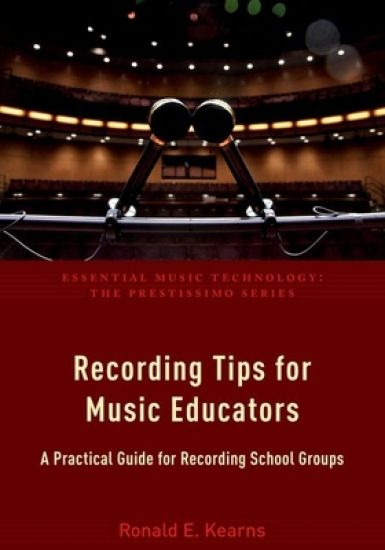
Recording Tips for Music Educators

Recording Tips for Music Educators

Ronald E. Kearns

Oxford University Press Inc
2017
nidottu
Recording Tips for Music Educators: A Practical Guide for Recording School Groups provides a go-to guide for music educators to plan and execute a successful recording project for school groups. For those teachers who are not comfortable with the recording process, this book functions as a catalyst to becoming comfortable with the planning, execution, and use of a school recording project. One of the most valuable tools for teaching is for students to be able to evaluate themselves. A good recording of the group helps students listen critically and make accurate evaluations of how well they have performed literature they have been taught over time. Covering planning, equipment needs, and equipment use, Recording Tips for Music Educators ensures that educators not trained in music production will be able to create praise-worthy recordings.
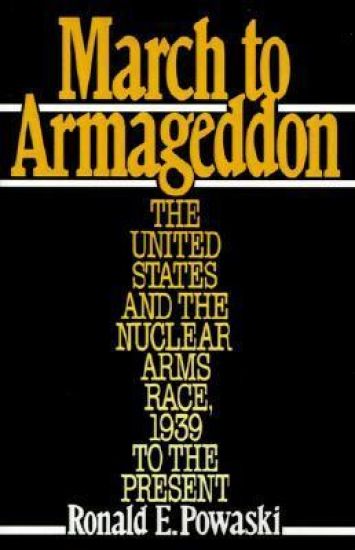
March to Armageddon

March to Armageddon

Ronald E. Powaski

Oxford University Press Inc
1989
nidottu
This timely and accessible book traces the evolution of the nuclear arms race from its origin in Roosevelt's decision to develop an atomic bomb to Reagan's decision to continue its expansion in the 1980s. As Powaski explains, the United States and the Soviet Union have a combined total of almost 50,000 nuclear weapons. Nuclear arms treaties and agreements are threatening to collapse, he argues, while the proliferation of nuclear materials and weapons throughout the world has given many countries the capability to produce nuclear weapons. Powaski shows how one President after another has promised to do his utmost to end the nuclear weapons competition, yet each one has actually increased the quantity of these weapons in the American arsenal, revealing a startling discrepancy between Presidential words and actions.
The Cold War

The Cold War

Ronald E. Powaski

Oxford University Press Inc
1997
sidottu
For half of the twentieth century, the Cold War gripped the world. International relations everywhere--and domestic policy in scores of nations--pivoted around this central point, the American-Soviet rivalry. Even today, much of the world's diplomacy grapples with chaos created by the Cold War's sudden disappearance. Here indeed is a subject that defies easy understanding. Now comes a definitive account, a startlingly fresh, clear eyed, comprehensive history of our century's longest struggle. In The Cold War, Ronald E. Powaski offers a new perspective on the great rivalry, even as he provides a coherent, concise narrative. He wastes no time in challenging the reader to think of the Cold War in new ways, arguing that the roots of the conflict are centuries old, going back to Czarist Russia and to the very infancy of the American nation. He shows that both Russia and America were expansionist nations with messianic complexes, and the people of both nations believed they possessed a unique mission in history. Except for a brief interval in 1917, Americans perceived the Russian government (whether Czarist or Bolshevik) as despotic; Russians saw the United States as conspiring to prevent it from reaching its place in the sun. U.S. military intervention in Russia's civil war, with the aim of overthrowing Lenin's upstart regime, entrenched Moscow's fears. Soviet American relations, difficult before World War II--when both nations were relatively weak militarily and isolated from world affairs--escalated dramatically after both nations emerged as the world's major military powers. Powaski paints a portrait of the spiraling tensions with stark clarity, as each new development added to the rivalry: the Marshall Plan, the communist coup in Czechoslovakia, the Berlin blockade, the formation of NATO, the first Soviet nuclear test. In this atmosphere, Truman found it easy to believe that the Communist victory in China and the Korean War were products of Soviet expansionism. He and his successors extended their own web of mutual defense treaties, covert actions, and military interventions across the globe--from the Caribbean to the Middle East and, finally to Southeast Asia, where containment famously foundered in the bog of Vietnam. Powaski skillfully highlights the domestic politics, diplomatic maneuvers, and even psychological factors as he untangles the knot that bound the two superpowers together in conflict. From the nuclear arms race, to the impact of U.S. recognition of China on detente, to Brezhnev's inflexible persistence in competing with America everywhere, he casts new light on familiar topics. Always judicious in his assessments, Powaski gives due credit to Reagan and especially Bush in facilitating the Soviet collapse, but also notes that internal economic failure, not outside pressure, proved decisive in the Communist failure. Perhaps most important, he offers a clear eyed assessment of the lasting distortions the struggle wrought upon American institutions, raising questions about whether anyone really won the Cold War. With clarity, fairness, and insight, he offers the definitive account of our century's longest international rivalry.
Return to Armageddon

Return to Armageddon

Ronald E. Powaski

Oxford University Press Inc
2000
sidottu
Return to Armageddon covers the extraordinary years spanning the Reagan, Bush and Clinton administrations, a period when the United States, through its victory in the Cold War, led the world away from the brink of nuclear annihilation, and then slowly became aware of the increased threat of nuclear confrontation in a world more splintered than ever before.
Return to Armageddon

Return to Armageddon

Ronald E. Powaski

Oxford University Press Inc
2003
nidottu
When the Cold War ended, the world let out a collective sigh of relief as the fear of nuclear confrontation between superpowers appeared to vanish overnight. As we approach the new millennium, however, the proliferation of nuclear weapons to ever more belligerent countries and factions raises alarming new concerns about the threat of nuclear war. In Return to Armageddon, Ronald Powaski assesses the dangers that beset us as we enter an increasingly unstable political world. With the START I and II treaties, completed by George Bush in 1991 and 1993 respectively, and the Comprehensive Test Ban Treaty (CTBT), signed by Bill Clinton in 1996, it seemed as if the nuclear clock had been successfully turned back to a safer hour. But Powaski shows that there is much less reason for optimism than we may like to think. Continued U.S.-Russian cooperation can no longer be assured. To make matters worse, Russia has not ratified the START II Treaty and the U.S. Senate has failed to approve the CTBT. Perhaps even more ominously, the effort to prevent the acquisition of nuclear weapons by nonweapon states is threatened by nuclear tests conducted by India and Pakistan. The nuclear club is growing and its most recent members are increasingly hostile. Indeed, it is becoming ever more difficult to keep track of the expertise and material needed to build nuclear weapons, which almost certainly will find their way into terrorist hands. Accessible, authoritative, and provocative, Return to Armageddon provides both a comprehensive account of the arms control process and a startling reappraisal of the nuclear threat that refuses to go away.
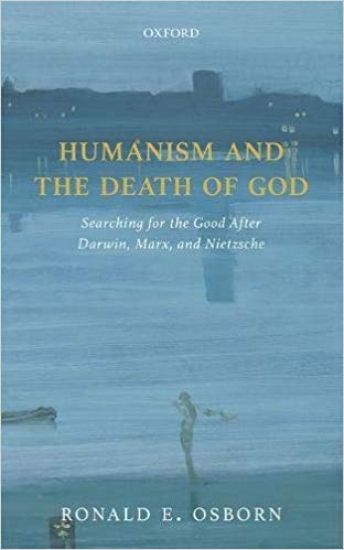
Humanism and the Death of God

Humanism and the Death of God

Ronald E. Osborn

Oxford University Press
2017
sidottu
Humanism and the Death of God is a critical exploration of secular humanism and its discontents. Through close readings of three exemplary nineteenth-century philosophical naturalists or materialists, who perhaps more than anyone set the stage for our contemporary quandaries when it comes to questions of human nature and moral obligation, Ronald E. Osborn argues that "the death of God" ultimately tends toward the death of liberal understandings of the human as well. Any fully persuasive defense of humanistic values--including the core humanistic concepts of inviolable dignity, rights, and equality attaching to each individual--requires an essentially religious vision of personhood. Osborn shows such a vision is found in an especially dramatic and historically consequential way in the scandalous particularity of the Christian narrative of God becoming a human. He does not attempt to provide logical proofs for the central claims of Christian humanism along the lines some philosophers might demand. Instead, this study demonstrates how philosophical naturalism or materialism, and secular humanisms and anti-humanisms, might be persuasively read from the perspective of a classically orthodox Christian faith.
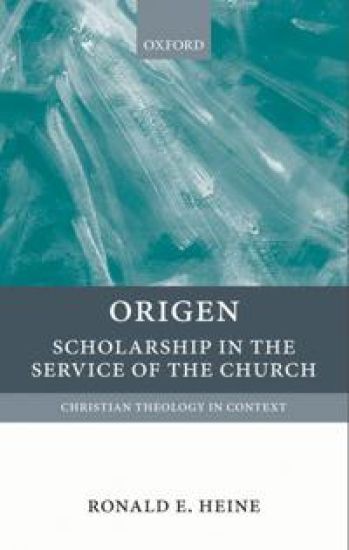
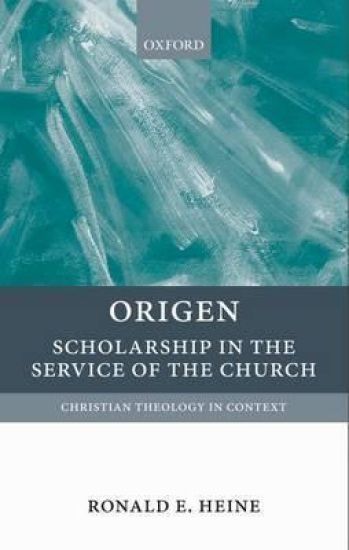
Origen

Origen

Ronald E. Heine

Oxford University Press
2010
sidottu
This book is about the life and thought of Origen (c.185-254 A.D.), the most important Greek-speaking Christian theologian and Biblical scholar in antiquity. His writings included works on the text of the Bible, commentaries and sermons on most of the books of the Bible, a major defense of the Christian faith against a philosophical skeptic, and the first attempt at writing systematic theology ever made. Ronald E. Heine presents Origen's work in the context of the two urban centers where he lived-Alexandria in Egypt, and Caesarea in Palestine. Heine argues that these urban contexts and their communities of faith had a discernable impact on Origen's intellectual work. The study begins with a description of Roman Alexandria where Origen spent the first forty-six years of his life. The thought of the Alexandrian Christian community in which Origen was born and in whose service he produced his first written works is examined from the limited resources that have survived. The remains of Origen's writings produced in Alexandria provide information about his early theological views as well as the circumstances of his life in Alexandria. Heine discusses the issues of the canon and text of the Bible used by Origen and the Alexandrian Christian community and the special work called the Hexapla which he produced on the text of the Septuagint. Origen's later life in Caesarea was shaped by pastoral as well as teaching duties. These responsibilities put him in contact with the city's large Jewish population. Heine argues that the focus of Origen's thought shifts in this period from his earlier Alexandrian occupation with Gnostic issues to the complex questions concerning the relationship between church and synagogue and the ultimate fate of the Jews. In his final years it appears that Origen was rethinking some of the views he had espoused in his earlier work.
Origen

Origen

Ronald E. Heine

Oxford University Press
2010
nidottu
This book is about the life and thought of Origen (c.185-254 A.D.), the most important Greek-speaking Christian theologian and Biblical scholar in antiquity. His writings included works on the text of the Bible, commentaries and sermons on most of the books of the Bible, a major defense of the Christian faith against a philosophical skeptic, and the first attempt at writing systematic theology ever made. Ronald E. Heine presents Origen's work in the context of the two urban centers where he lived-Alexandria in Egypt, and Caesarea in Palestine. Heine argues that these urban contexts and their communities of faith had a discernable impact on Origen's intellectual work. The study begins with a description of Roman Alexandria where Origen spent the first forty-six years of his life. The thought of the Alexandrian Christian community in which Origen was born and in whose service he produced his first written works is examined from the limited resources that have survived. The remains of Origen's writings produced in Alexandria provide information about his early theological views as well as the circumstances of his life in Alexandria. Heine discusses the issues of the canon and text of the Bible used by Origen and the Alexandrian Christian community and the special work called the Hexapla which he produced on the text of the Septuagint. Origen's later life in Caesarea was shaped by pastoral as well as teaching duties. These responsibilities put him in contact with the city's large Jewish population. Heine argues that the focus of Origen's thought shifts in this period from his earlier Alexandrian occupation with Gnostic issues to the complex questions concerning the relationship between church and synagogue and the ultimate fate of the Jews. In his final years it appears that Origen was rethinking some of the views he had espoused in his earlier work.